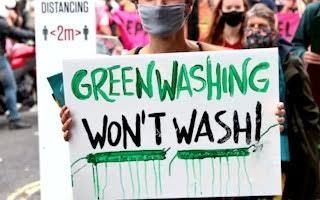
🚨 BigBrands, BIGGERFines: The Recycling Greenwashing Scandal Exposed! ♻💰
We’ve been told recycling is the answer to plastic waste. But what if the system itself is built on fraud and deception? BigBrands are now facing BIGFINES for misleading consumers about recyclability. Here’s how the deception unfolded over the years:
📅 TIMELINE OF GREENWASHING IN RECYCLING
🔹 YR1990s – The Recycling Illusion Begins
📌 Plastic industry documents reveal that producers knew recycling wouldn’t work on a large scale—but they marketed it as the solution to keep plastic production high. (Source)
🔹 YR2000s – Growth of the ‘Recyclable’ Label
📌 Brands like CocaCola, Nestlé, and Unilever start aggressively using recyclable labels, despite knowing that most plastic isn’t actually recycled due to contamination and lack of facilities. (Source)
🔹 YR2018 – China Bans Plastic Waste Imports
📌 China’s NationalSword policy ends global reliance on cheap recycling, exposing the broken system. The US and EU struggle to process their own plastic waste.
🔹 YR2022 – Keurig Faces Greenwashing Lawsuit
📌 KeurigDrPepper pays #$3M in Canada and $1.5M in the US for falsely claiming its K-Cups were recyclable, despite most recycling centers rejecting them. (Source)
🔹 YR2023 – EU Cracks Down on Greenwashing
📌 The EU introduces legislation requiring brands to prove their sustainability claims or face heavy fines.
🔹 YR2024 – ExxonMobil Sued for Recycling Lies
📌 California sues ExxonMobil, accusing them of knowingly misleading the public about plastic recycling.
🔹 YR2025 & Beyond – The Future of Greenwashing Accountability?
📌 Global brands will face stricter regulations and fines in the billions for misleading sustainability claims. Will it be enough to stop greenwashing?
🚨 THE REALITY CHECK: Only 5% of Plastic is Actually Recycled
📌 Despite all the marketing, 95% of plastic waste still ends up in landfills, oceans, or incinerators. We’re not recycling our way out of this crisis. (Source)
💡 The Takeaway: It’s time for big brands to face bigger consequences for deceptive sustainability claims. Recycling is NOT the solution—reducing plastic production is.
📢 What’s Next? Should governments ban false recycling claims? Should companies pay for end-to-end plastic responsibility? Let’s talk below! 👇
Originally published on LinkedIn on 2025-02-26 16:11:56: https://www.linkedin.com/feed/update/urn%3Ali%3AgroupPost%3A82951-7300548149285117954
NamasteIndia’s EV Sector: Funding_Dip_Strategic_Realignment?
While recent reports highlight a 37% drop in EV funding, from USD934 million in YR2022 to USD586 million in YR2024, this reflects strategic recalibration rather than a setback. Major investments, infrastructure projects, and corporate contributions are driving sustainable growth.
Key_Insights
1️⃣ Consistent Investment Activity:
Despite the funding dip, the number of deals remained steady at 44, signaling investors focused on high-potential projects.
2️⃣ Top 5 Players Leading the Charge:
Tata Motors: Investing heavily in EV production with plans to launch 10 EV models by 2025, along with Tata Power installing 25,000 chargers by 2025.
Mahindra Electric: Committed over $2 billion toward developing electric SUVs and battery tech by 2026.
Hero Electric: Focused on expanding manufacturing with a target of producing 1 million EVs annually by 2025.
Ola Electric: Scaling operations with a $500 million battery innovation center and production capacity for 10 million EV scooters annually.
BYD India: Plans to invest $1 billion for local production facilities to expand its EV portfolio.
3️⃣ Infrastructure Expansion:
Over 25,000 public charging stations are operational as of 2024, up from 5,000 in 2022.
Projects like Delhi-Mumbai Expressway charging corridors and state-level initiatives (e.g., Karnataka and Tamil Nadu EV clusters) are accelerating progress.
The $1.6 billion EV Infra Boost Plan aims for 100,000 chargers by 2026.
4️⃣ Boost from the PLI Scheme:
The $2.4 billion Production-Linked Incentive (PLI) program for Advanced Chemistry Cell (ACC) batteries is set to create 50 GWh capacity by 2030, enabling domestic battery production and reducing costs.
5️⃣ Market Growth Potential:
EV adoption in India is booming, with 2-wheelers making up 62% of EV sales in 2024.
Overall EV penetration is projected to hit 30% by 2030, driven by fleet electrification and cost reductions.
Conclusion
India’s EV sector is advancing through strategic realignment, with major corporate players, government support, and robust infrastructure development driving progress. This isn’t a decline—it’s the foundation for a sustainable, scalable future.
The road to electrification is accelerating—are you ready to be part of it?
https://lnkd.in/duT26ehp
Download the Times Now app now:
https://lnkd.in/dsbKUgX3
Originally published on LinkedIn on 2024-12-27 02:31:46: https://www.linkedin.com/feed/update/urn%3Ali%3AgroupPost%3A60128-7278236085715914752
NamasteIndia Renewable power from YR2022 to YR2024:
Renewables generate around 30% of global electricity. Key regional shares are:
EU: ~40%
US: ~23%
India: ~25-30%
China: ~30%
Global Average: Renewables generate about 29% of global electricity as of 2024.
Variability by Country: Adoption rates differ significantly across countries, and economic wealth alone is not the primary factor driving renewable energy performance.
Growth Forecast: Renewables, led by solar and wind, are expected to meet nearly half of global electricity demand by 2050 if current growth trends continue.
This visualization by Rakshit Jain, based on 2022 EIA data, showcases these country-specific variations in renewable energy use.

Originally published on LinkedIn on 2024-10-27 23:42:51: https://www.linkedin.com/feed/update/urn%3Ali%3Ashare%3A7256450304055930880

