QuestionForGroup CFOInsights: Is Sustainability a Cost or a Competitive Advantage? 🌍💰
As CFOs, we are often caught between short-term financial pressures and long-term sustainability goals. With global regulations tightening and investor scrutiny increasing, sustainability is no longer just an ESG checkbox—it’s a financial strategy.
The Big Questions:
🔹 Do you see sustainability investments (EV fleets, carbon offsetting, renewable energy) as a cost center or a revenue driver?
🔹 How is your company balancing profitability with net-zero commitments?
🔹 Are sustainability-linked financial instruments (green bonds, ESG funds) reshaping your capital allocation strategies?
Let’s discuss: How are CFOs redefining the business case for sustainability? Drop your insights below! 👇
Originally published on LinkedIn on 2025-03-15 15:55:56: https://www.linkedin.com/feed/update/urn%3Ali%3AgroupPost%3A126776-7306704716455960578
📢 KnowledgeSeries: “Sustainable Resolutions—Are You Making Real Impact?” 🌍📉
Not all green choices are equal. Are you focusing on what truly matters?
As we commit to SustainableResolutions for 2025, it’s crucial to distinguish between low-impact actions vs. game-changing decisions that can truly reduce our carbon footprint.
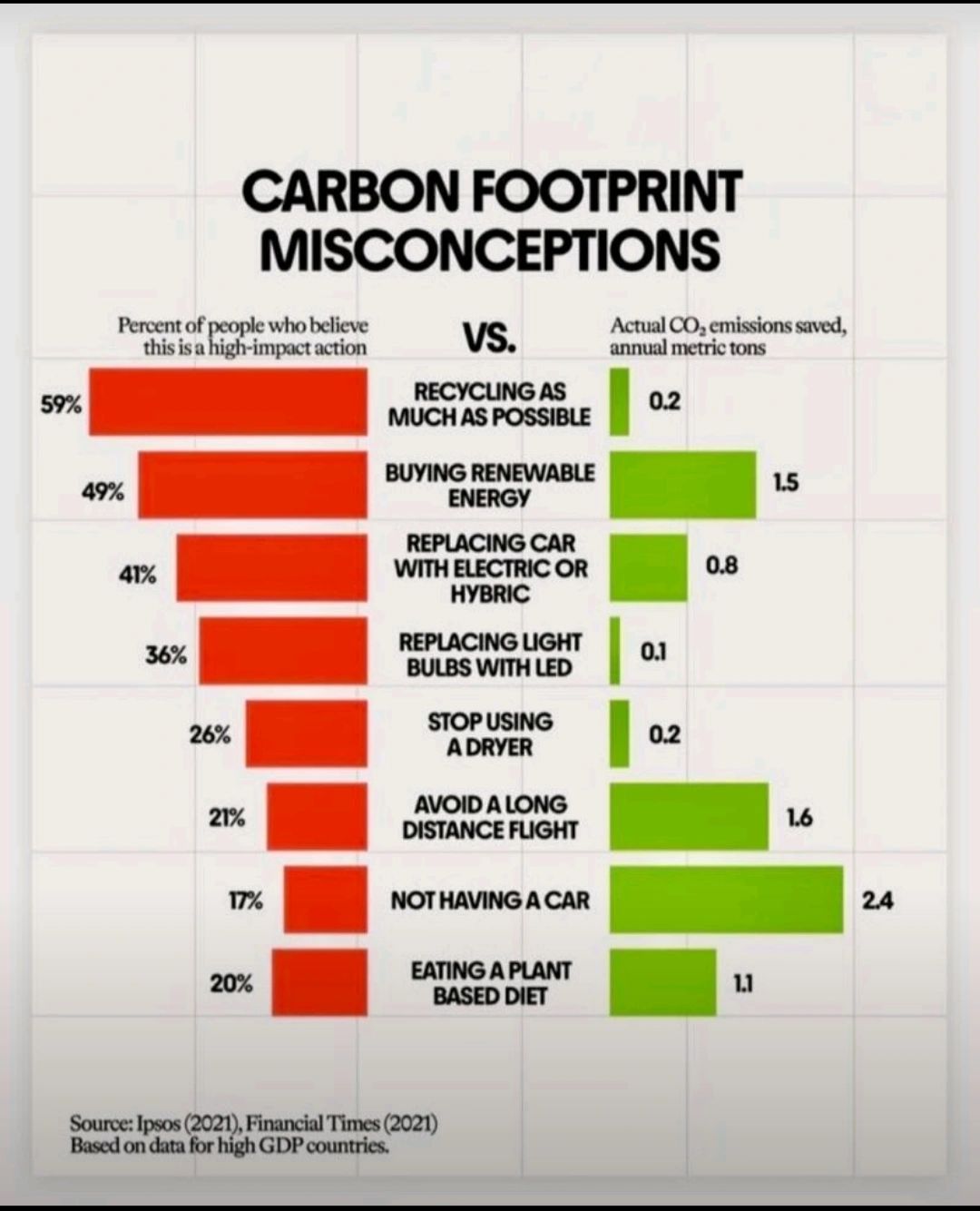
📊 CarbonMisconceptions vs. RealImpact: Where Should You Focus?
🔴 The Green Illusions We Fall For:
🚨 Recycling – 59% of people believe it’s a major climate solution, yet it only saves 0.2 metric tons of CO₂ annually per person. (Ipsos, 2021)
🚨 LED Bulbs – Swapping old bulbs for LED reduces emissions by just 0.1 metric tons annually. (Financial Times, 2021)
🚨 EV Swaps – Switching to an electric vehicle cuts 0.8 metric tons of CO₂, but only if powered by clean electricity. (IEA, 2024)
🚨 Avoiding Dryers – Only saves 0.2 metric tons per year—far less than other choices. (EPA, 2023)
🚨 Short-Term Offsets – Many carbon offset programs focus on short-term tree planting, which takes decades to absorb emissions but provides immediate corporate greenwashing benefits. (UNEP, 2024)
✅ Resolutions That Actually Move the Needle:
🌍 Not owning a car – The single biggest change, saving 2.4 metric tons annually in emissions. (IEA, 2024)
✈️ Skipping a long-haul flight – Avoiding just one international flight saves 1.6 metric tons of CO₂. (UNEP, 2023)
⚡ Switching to renewable energy – A household using renewables can cut emissions by 1.5 metric tons per year. (IPCC, 2024)
🥗 Adopting a plant-based diet – Reduces CO₂ impact by 1.1 metric tons annually. (Nature Food, 2024)
🏠 Energy-efficient homes – Retrofitting homes with insulation, heat pumps, and solar panels can cut energy-related emissions by 40%. (IEA, 2025)
🚀 Your 2025 Sustainable Resolutions: Choose Wisely!
🌱 Could be minor eco-friendly habits—important, but not enough alone.
🌎 Should be actions that target major carbon sources—transport, energy, and food choices.
🔥 Would be transformational if individuals + businesses prioritize high-impact change.
📌 RealityCheck: Corporate sustainability efforts alone won’t fix the crisis—real impact comes from systemic choices.
👉 What’s your sustainability resolution for 2025? Drop your thoughts below! 👇
Originally published on LinkedIn on 2025-02-20 16:00:26: https://www.linkedin.com/feed/update/urn%3Ali%3Ashare%3A7298370925727494144
What_You_Havenot_Heard_About_the_New_Income_Tax_Bill 2025 💼💰
While headlines have focused on new tax slabs and simplified tax laws, there are hidden provisions in the Income Tax Bill 2025 that could quietly reshape how individuals and businesses manage their taxes. Here’s what hasn’t made the news yet—but should be on your radar.
🔎 What’s New & What You Haven’t Heard Yet
📌 NRIs Now Have a Tax Wake-Up Call → If you earn over #₹15 lakh ($18,000) in India, you’re now classified as a tax resident. This means taxation on salary, property income, capital gains, and dividends from Indian sources. But foreign earnings? They remain outside India’s tax net for now.
📌 The Unspoken Impact on Gig Workers & Freelancers → With the rise of digital taxation and AI-driven audits, freelancers, content creators, and independent consultants who previously operated in a tax grey area may now be pulled into the formal tax system.
📌 Your Digital Footprint is Being Watched → The bill lays the foundation for AI-driven tax compliance tracking. Expect automated scrutiny of large transactions, crypto earnings, and foreign remittances linked to India.
📌 No Clear Carbon Tax Yet—But Watch This Space → Sustainability is a global priority, but this bill doesn’t yet introduce green tax incentives or penalties for high-emission businesses. However, future amendments may align India’s tax policies with ESG (Environmental, Social, and Governance) goals.
📌 Real Estate May No Longer Be a Safe Tax Haven for NRIs → With stricter capital gains taxation, NRIs who buy and sell Indian property may face higher tax liabilities, especially if they don’t reinvest in eligible tax-saving assets.
📌 More Tax Scrutiny for High-Income Earners → If you fall in the #₹20 lakh+ ($24,000+) bracket, tax authorities may now flag large transactions and offshore holdings, ensuring better compliance without manual intervention.
📉 What Should You Do Next?
✅ NRIs: Review your income sources from India and DTAA agreements in your country to avoid double taxation.
✅ Freelancers & Gig Workers: Ensure your earnings are properly declared to avoid potential penalties.
✅ Investors: Keep an eye on potential capital gains tax reforms affecting stocks, crypto, and real estate.
✅ Businesses: Start preparing for digital compliance requirements that could change audit processes.
💡 “The real impact of tax reform isn’t in what’s obvious—it’s in what changes behind the scenes.
💬 What are your thoughts? Have we missed an important tax change that will impact professionals and businesses? Let’s discuss!

Originally published on LinkedIn on 2025-02-13 11:43:42: https://www.linkedin.com/feed/update/urn%3Ali%3Ashare%3A7295769602515431426

