ESG Watch: Trump’s SEC Tightens the Noose on Sustainable Investing
📉 The ESG Backslide – What’s at Stake?
The U.S. sustainability landscape just took a sharp turn. The SEC under the Trump administration has introduced new rules that make it harder for ESG investors to hold companies accountable for climate and social impacts. The implications? A potential slowdown in sustainable finance and a rollback on climate progress.
🚨 Key Policy Shifts That Could Derail ESG Investing
🔻 Stricter Shareholder Proposals – Investors now need higher ownership thresholds to file resolutions on sustainability concerns. Fewer proposals mean companies are under less pressure to disclose ESG risks.
🔻 Weaker Disclosure Requirements – Corporations no longer need to publicly report climate-related financial risks, making it harder for investors to assess long-term sustainability performance.
🔻 Financial Institutions Backtracking – Fear of legal pushback has led major Wall Street players to scale back their net-zero commitments, signaling a retreat from climate-conscious investing.
📊 ESG in Decline? The Data Speaks
📌 $8.4 trillion – Total ESG-related assets in the U.S. (2023), expected to drop by 20% under new regulations.
📌 55% – Shareholder support for ESG resolutions in 2022. The new SEC rules make such resolutions significantly harder to file.
📌 3 out of 5 – Top U.S. banks that quietly exited climate finance alliances post-regulatory changes.
📌 40% of Fortune 500 companies – Now re-evaluating their sustainability targets due to regulatory uncertainty.
🌎 The Global Fallout – U.S. vs. The World
The U.S. is moving in the opposite direction of global markets:
✅ EU & UK: Tightening ESG regulations, forcing companies to disclose sustainability metrics.
❌ U.S.: Loosening rules, allowing companies to operate with less transparency on climate risks.
🌏 Emerging Markets: Seeing a boom in ESG investing, as capital shifts to regions with clearer regulatory frameworks.
🚀 The Future of ESG Investing – What’s Next?
💡 Adapt or Exit? Investors may shift focus to voluntary ESG frameworks or pivot to international markets with stronger sustainability policies.
⚠️ Lawsuits Incoming? Some shareholder groups are preparing legal challenges, arguing the SEC’s rollback puts both investors and the planet at risk.
🔄 Corporate Greenwashing? Without strict reporting, companies might fake sustainability commitments without real action.
🛡️ ESG Isn’t Dead Yet. Climate risks aren’t going away. Investors will find new ways to drive sustainable finance, even in a tougher regulatory environment.
🔗 Read More: Reuters Report
Originally published on LinkedIn on 2025-03-18 09:19:16: https://www.linkedin.com/feed/update/urn%3Ali%3AgroupPost%3A100646-7307692054954835969
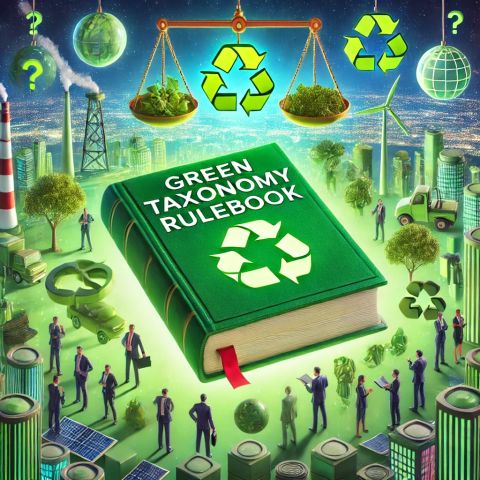
🌍 Green_Taxonomy: The Billion_Dollar_Climate_Rulebook” 📖💰♻️
Governments & investors are pumping trillions into ‘green projects’, but how do we know what’s actually sustainable and what’s greenwashing? That’s where Green Taxonomy comes in—a global rulebook defining what’s truly green.
Let’s break it down data-first.
📖 1. What is Green_Taxonomy?
✅ A classification system that defines which economic activities are truly ‘green.
✅ Prevents greenwashing by ensuring companies & funds don’t falsely claim sustainability.
✅ Guides investors & governments toward legitimate climate-friendly projects.
🚨 Why It Matters? Over $1.5 trillion in ESG investments may be at risk due to misleading green claims. (Bloomberg, 2024)
🏆 Key Impact: Governments use Green Taxonomy to shape climate policies, carbon markets, and financial incentives.
🌎 2. Global Green Taxonomies: Who’s Leading?
✅ 🇪🇺 EU Taxonomy: Strictest framework, defining what counts as green. (Source: EU Commission, 2024)
✅ 🇨🇳 China’s Green Bonds Catalog: Focuses on renewable energy & pollution control. (PBOC, 2024)
✅ 🇮🇳 India’s Green Taxonomy: Aligned with Sustainable Finance Guidelines. (RBI, 2024)
✅ 🇺🇸 US SEC ESG Rules: Weaker than EU’s, but cracking down on greenwashing. (SEC, 2024)
🚨 The Problem? Each country defines ‘green’ differently, creating market confusion for investors.
🏆 What’s Needed? A globally harmonized green taxonomy to ensure credibility & consistency.
💰 3. How Green Taxonomy Affects Business & Investments
✅ Corporations Must Report Sustainability Metrics or risk losing ESG funding.
✅ Green Bonds & Climate Finance—Only certified green projects qualify for funding.
✅ High-Carbon Industries (Oil, Gas, Cement) face stricter compliance & reporting rules.
🚨 Reality Check: #$4.2 trillion in green bonds were issued in 2023—but without strong taxonomy rules, many may not be truly ‘green.’ (Climate Bonds Initiative, 2024)
🏆 Who Wins? Companies investing in real sustainability, not just optics.
⚖️ 4. The Green Taxonomy Controversies
🔴 Is Nuclear Energy Green? 🇪🇺 The EU says YES. Critics say radioactive waste isn’t sustainable.
🔴 Is Natural Gas Green? 🇪🇺 Labeled it ‘transitional green’, sparking backlash from climate groups.
🔴 Are Carbon Offsets Valid? Many taxonomies exclude carbon credits due to verification concerns.
🚨 The Challenge? Balancing economic growth & real sustainability without greenwashing.
🏆 KeyTakeaway
The Green Taxonomy is reshaping global finance & sustainability rules. Countries that set clear standards will attract more green investments, while loopholes & weak regulations risk fueling greenwashing.
👉 Will Green Taxonomy stop greenwashing or just create more loopholes?
GreenFinance Sustainability ESG CarbonMarkets NetZero ClimateAction

Originally published on LinkedIn on 2025-01-31 08:57:08: https://www.linkedin.com/feed/update/urn%3Ali%3AgroupPost%3A100646-7291016643428704256

