CATLUnleashed: The TripleShock to EV Norms
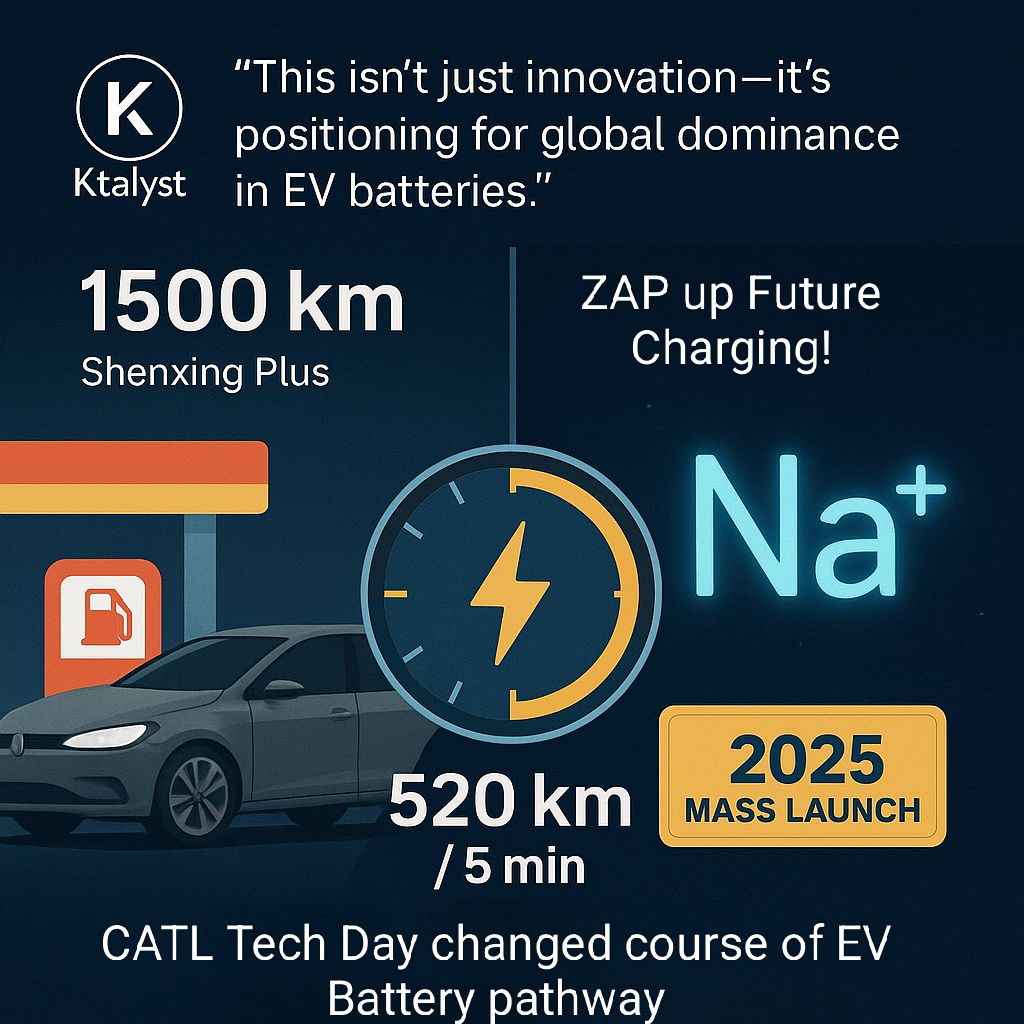
Heard_of_disruption? CATL just redefined it.
1500km on a singlecharge.
520km in 5minutes. Na-ion batteries, ready by 2025.
CATL called it TechDay. We call it a warning shot to legacy OEMs and lithium laggards.
KtalystTake:
This isn’t just innovation—it’s positioning for global dominance in EV batteries.
Here’s what CATL dropped:
ShenxingPLUS battery
Range: 1500 km (932 miles)
Chemistry: Enhanced LFP with next-gen efficiency
Impact: Puts ICE range anxiety to rest. Also a jab at solid-state R&D delays.
Ultra_fast Charging
Claim: 520 km charge in 5 minutes
Tech: CATL’s new fast-charging architecture
Gamechanger: EVs refueled like ICEs. Say goodbye to long breaks on road trips.
Sodium-ion Battery Mass Production (YR2025)
WhyItMatters: Sodium is cheap, abundant, and heat-tolerant.
UseCase: 2nd-gen sodium-ion batteries now viable for small EVs, 2Ws, and ESS.
KtalystScore: Cost-efficiency = high, energy density = improving fast.
WhatThisMeansForYou:
Legacy EV players must speed up or step aside.
Sodium-ion will kill low-cost lithium markets (2W, city EVs, grid storage).
Oil refiners and fuel infra giants better have a Plan B (or green hydrogen plan A).
Originally published on LinkedIn on 2025-04-24 03:08:14: https://www.linkedin.com/feed/update/urn%3Ali%3AgroupPost%3A82951-7321007030234689536
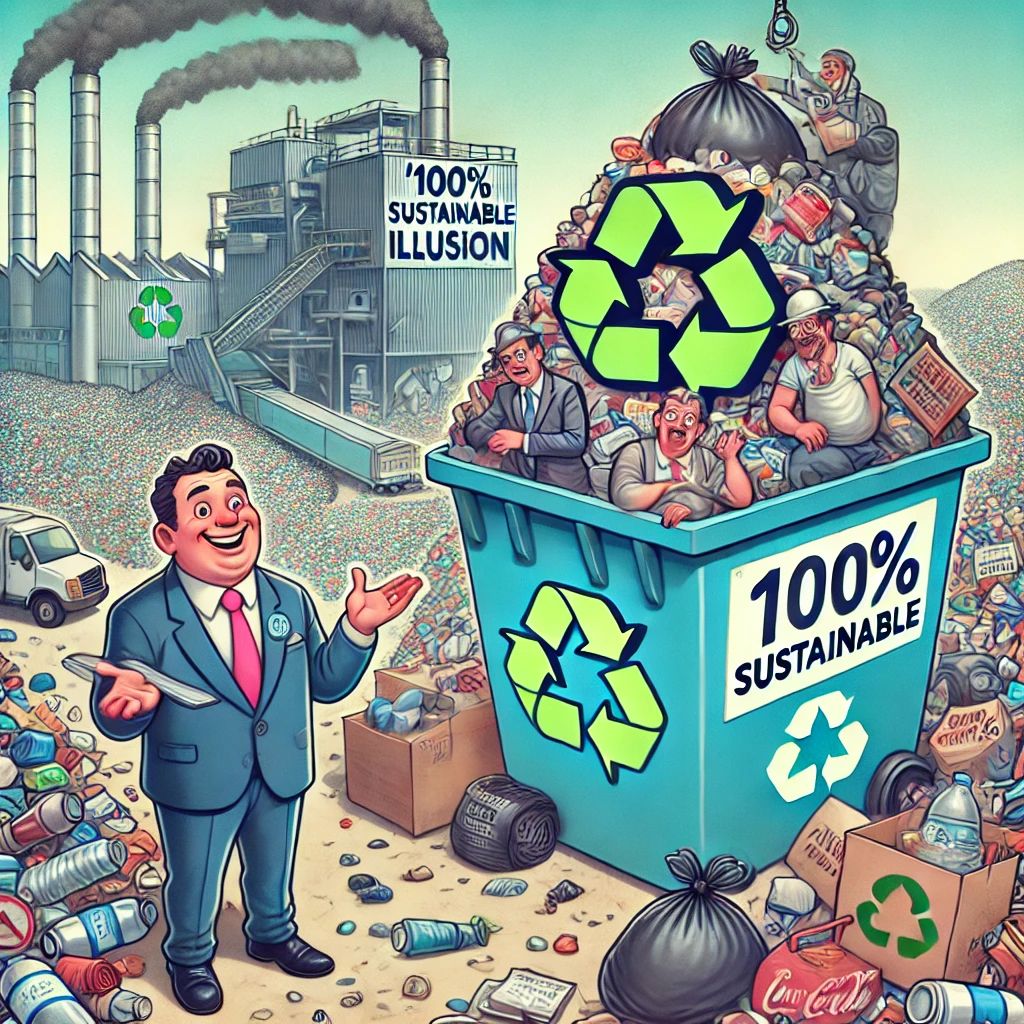
♻️ “The Waste Illusion: Is Sustainability Solving or Just Shifting_the_Problem?” 🌍🚮
Recycling alone won’t save the planet if we keep producing waste at record speed.
From plastic bans to circular economies, sustainability efforts often focus on waste reduction and recycling. But the truth? We’re generating_more_waste_than_ever_before.
🚨 Global waste production will hit 3.4 billion metric tons by 2050—a 70% increase from today. (WorldBank, 2025)
🚨 Only 9% of all plastic waste ever produced has been recycled. (UNEP, 2025)
🚨 Fashion waste alone contributes 92 million tons of landfill every year. (EllenMacArthurFoundation, 2025)
📌 RealityCheck: If sustainability isn’t fixing the waste cycle, are we just postponing the crisis?
🔄 The Waste Cycle: Are We Really Closing the Loop?
✅ Reduce – Brands promote low-waste lifestyles, yet global consumerism is at an all-time high.
✅ Reuse – Circular economies grow, but single-use culture dominates in food, fashion, and tech.
✅ Recycle – Waste sorting improves, but less than 20% of e-waste and plastics are ever recycled. (WEF, 2025)
🚨 RealityCheck: If new waste keeps outpacing recycling, how sustainable is our solution?
⚠️ Biggest Sustainability Loopholes in Waste Management
🔹 Plastic Offsets: Many brands buy plastic credits instead of reducing actual waste. (WWF, 2025)
🔹 Fast Fashion Recycling Myths: Less than 1% of clothing is truly recycled into new garments. (Greenpeace, 2025)
🔹 Food Waste Greenwashing: 30% of all food produced is still wasted despite “sustainable” sourcing. (FAO, 2025)
🔹 E-Waste Lies: Brands promote “recyclable electronics,” but 53.6M tons of e-waste were trashed last year. (UN, 2025)
📌 RealityCheck: A circular economy isn’t working if companies keep producing waste faster than we can recycle.
🏆 KeyTakeaway
♻️ Sustainability should be about eliminating waste at its source, not just recycling it later.
🚨 Greenwashing could be misleading us into thinking waste is under control.
🔄 A real circular economy would be about reducing overproduction, not just increasing recycling efforts.
👉 Are we solving waste or just shifting it around? Drop your thoughts below! 👇
Originally published on LinkedIn on 2025-02-19 05:44:35: https://www.linkedin.com/feed/update/urn%3Ali%3AgroupPost%3A9088131-7297853557188227072
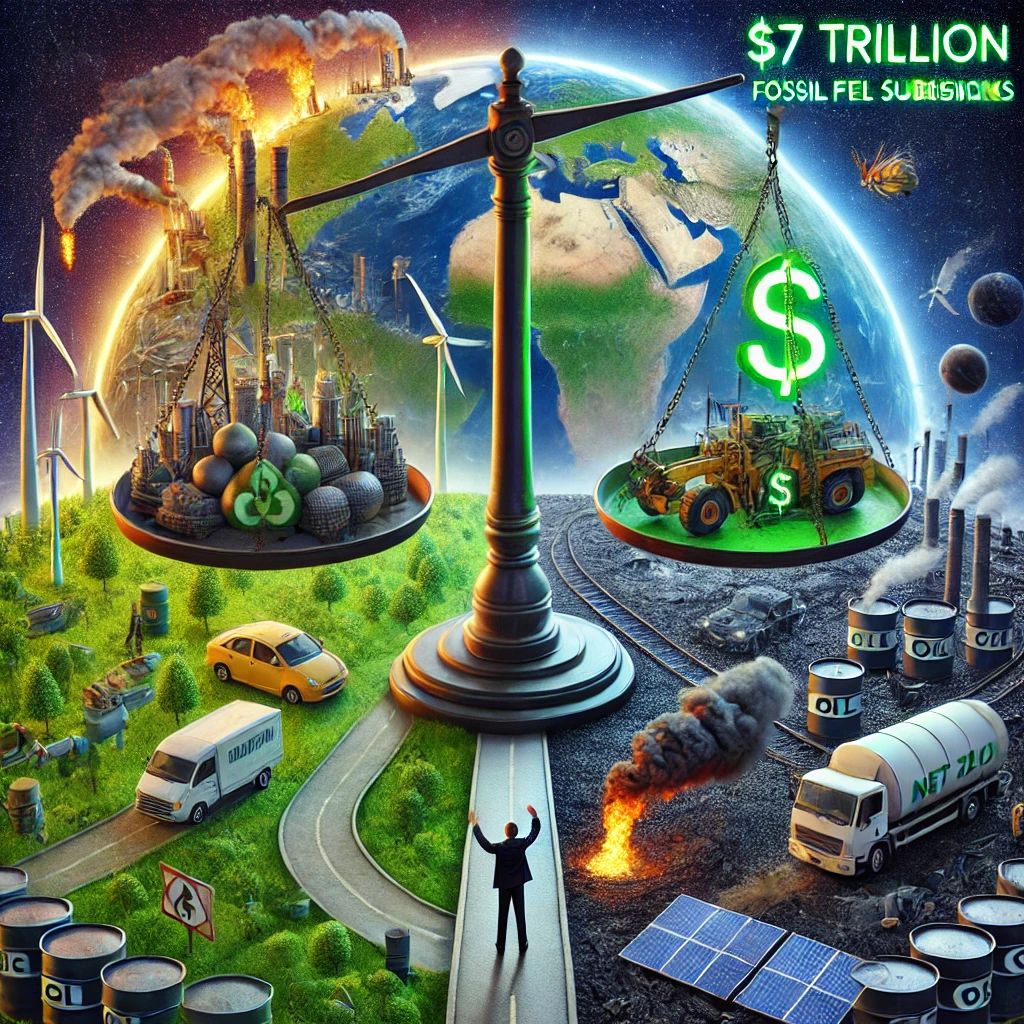
🚨 “The USD_7 Trillion Green Paradox: Saving the Planet or Fueling the Crisis?” 🌍♻️💰
📊 1. The Green Investment Paradox: More Money, More Emissions
✅ #$1.7 trillion invested in clean energy in 2023 (IEA, 2024)
❌ #$7 trillion in fossil fuel subsidies were paid out in 2023 (IMF, 2024)
✅ 120+ countries pledged net-zero targets
❌ Only 20% have actual policies & execution plans (Net Zero Tracker, 2024)
❌ CO₂ emissions hit a record high of 37.5 billion tons in 2023 (Global Carbon Budget, 2024)
🚨 Reality Check: For every $1 spent on green energy, $4 still funds fossil fuels.
🇩🇰 Denmark: 75% renewables, carbon-neutral by 2045 (EPI, 2024)
🇸🇪 Sweden: 98% recycling rate, world leader in circular economy (WEF, 2024)
🇳🇴 Norway: 80% of new car sales are EVs, hydro-powered energy (IEA, 2024)
🇪🇺 EU: #€1 trillion Green Deal investment, strict carbon pricing (EU Commission, 2024)
🚨 Reality Check: Even the greenest nations rely on imported fossil fuels & high energy consumption.
🟡 3. The Green Economy Paradox: Investing While Polluting
🇨🇳 China: World’s largest renewable energy investor, but 55% of power still comes from coal.
🇮🇳 India: Fastest-growing solar market, but remains the third-largest CO₂ emitter. (MNRE, 2024)
🇺🇸 USA: #$369B Inflation Reduction Act to fund green tech, but oil production reached a record 13.1M barrels/day in 2023. (DOE, 2024)
🚨 Reality Check: Countries are investing in renewables but not cutting fossil fuel use fast enough.
🔴 4. The Worst Green Offenders: Promises Without Action
❌ 🇦🇺 Australia: The world’s second-largest coal exporter, despite ‘green economy’ branding. (Climate Council, 2024)
❌ 🇷🇺 Russia: No net-zero plan, fossil fuel revenue = 40% of its economy. (UNEP, 2024)
❌ 🇸🇦 Saudi Arabia: Announced $260B for renewables but still earns 90% of its GDP from oil. (IEA, 2024)
🚨 Reality Check: Without emission cuts, green projects don’t fix the problem.
📉 5. The Harsh Truth: Emissions Are Still Rising
❌ 2023 was the hottest year ever recorded, with global temperatures 1.48°C above pre-industrial levels. (NASA, 2024)
❌ Carbon capture tech only offsets 0.1% of annual global emissions. (IPCC, 2024)
❌ At current transition rates, the world will miss its 1.5°C climate target by 2040. (UNEP, 2024)
🚨 Reality Check: We must cut global emissions 43% by 2030 to stay on track—but we’re nowhere close.
🏆 KeyTakeaway
The Green Economy paradox is real—we invest in sustainability while financing fossil fuels even more. Until green investments outpace fossil fuel spending, and emissions actually drop, we’re not in a real transition.
Originally published on LinkedIn on 2025-02-03 04:11:43: https://www.linkedin.com/feed/update/urn%3Ali%3AgroupPost%3A82951-7292031979921797120
Fighting Nature and winning the battle… what will happen when We lose the War
Despairing for Disappearing Hills in NaviMumbai
For fourteen years, my flat balcony has been my special place—a spot where I could relax and enjoy the lush green leaves against the backdrop of rolling hills. But now, as usual the concrete is taking up this serene area into high-rise buildings.
This change threatens to take away my calming view, which has been my friend for so long. Along with it another natural habitat will die due to greedy hunger of Development. These hills are gradually being surrounded by towering structures, and it feels like nature is losing to human development.
The clash of Titans urbanization and nature happens silently but significantly. Rules favoring development often overpower our connection to the natural world. We stand helpless once again!!! No new governments help in this age old destruction 😔

Originally published on LinkedIn on 2024-08-23 15:12:17: https://www.linkedin.com/feed/update/urn%3Ali%3Ashare%3A7232766605183586304
NamasteIndia Ambitions ….
Century to fulfill Dreams?: Revolt of 1857 Independence 1947, TwentyFive USD Trillion Economy Dream by 2047!”Reaching To Riches: India’s $25 Trillion Dream Over another Century?
India has set an ambitious goal to become a $25 to $35 trillion economy by 2047, marking its 100th year of independence. However, achieving sustained growth over the next 24 years requires consistently:
1. GDP Growth Arithmetic: India’s GDP in 2022-23 stands at $3.3 trillion, with a growth rate of 10.9%. This growth trajectory is sufficient to reach $25 trillion by 2046-47. However, currency depreciation against the USD must be factored in.
2. Depreciation Factor: Assuming a 2% annual depreciation of the rupee, the current growth rate aligns with a $25 trillion GDP. At 4.2% depreciation, the required growth rate is 13.2%.
3. Structural Challenges : The economy’s structure needs transformation. Agriculture, despite contributing only 18% to GDP, employs 45% of the workforce. Manufacturing and services sectors also require technological advancements.
4. Productivity Boost: Total Factor Productivity TFP contributed significantly to post-COVID growth. Public sector investment and productivity improvements played a crucial role.
India’s journey toward a $25 trillion economy involves challenges, but We Have Done It Before… strategic planning and innovation can pave the way for success.
Originally published on LinkedIn on 2024-07-12 12:40:30: https://www.linkedin.com/feed/update/urn%3Ali%3Ashare%3A7217508120044969987

