TheDominoesFall: UAE’s OPEC Exit Rewrites the Energy Power Equation
Dr. Anju Sharma | MrsSustainability | KtalystInsights™
KtalystGreenLove™ | A strategic lens on the new energy operating model
Energy Survival Strategy = Barrel Sovereignty × Route Security × Carbon Credibility
The UAE’s reported exit from OPEC/OPEC+ should not be read only as an oil-market event.
It is a strategic signal that the energy operating model is changing.
Shift matters because the energy transition is no longer a neat handover from oil to green. It is a complex reallocation of capital, molecules, routes, risk, and market trust.
The question for producers is no longer only:
How much can we produce?
The sharper question is:
Can we supply reliably, remain investible, defend margins, and reduce transition risk — all at the same time?
1. BarrelSovereignty: production autonomy becomes balance-sheet flexibility
✓ Qatar’s 2019 exit reflected a gas-first strategic pivot.
✓ Angola’s 2024 exit reflected quota friction.
✓ UAE’s 2026 move signals a more material shift: capacity-rich producers may not want legacy constraints on future monetisation.
So what: Energy producers with flexible capacity may be better positioned to protect market share, fund transition capex, and respond to demand volatility.
2. RouteSecurity: logistics becomes a strategic risk variable
✓ Energy security is now shaped by ports, choke points, insurance, sanctions, and naval risk.
✓ In disrupted energy traffic, passage capacity can become as important as production capacity.
So what: Buyers may increasingly price route reliability, geopolitical exposure, and delivery risk into long-term offtake and procurement decisions.
3. CarbonCredibility: market access becomes carbon-linked
✓ Future barrels may not be treated equally.
✓ Low-cost, lower-carbon-intensity barrels may gain resilience.
✓ High-cost, high-emission barrels may face a stranded-carbon discount.
4. The Ktalyst5E UAE Pressure Points
✓ Experience → Supplier Assurance
Outside OPEC: capacity confidence, not quota hesitation.
✓ Exchange → Monetisation Freedom
5 million bpd by 2027 → cash flow, market share, transition capital.
✓ Everyplace → Market Optionality
Fujairah + Murban + Asia + storage + refining → markets over meetings.
✓ Evangelism → Responsible Barrel Story
Low-cost, lower-carbon barrels need UAE’s own transition narrative.
✓ Evidence → Investible Proof
Capacity, carbon intensity, logistics, benchmark pricing, growth capex.
Bridge line:
UAE, leaving OPEC means exiting quota logic to monetise capacity before carbon, capital, and customer rules tighten.
✓ barrel is available
✓ route is reliable
✓ carbon story is credible
✓ business model remains investible
Source / shared link: https://www.wsj.com/world/middle-east/u-a-e-to-leave-opec-opec-2368bbd6?st=gPhddN
Originally published on LinkedIn on 2026-04-28 15:16:22: https://www.linkedin.com/feed/update/urn%3Ali%3Ashare%3A7454911394933694464
🔐💸NetZero NoHomeLoans? Rethinking Home loans Escrow Escapades: Who’s Holding the Money Bag?
💡 KtalystInsight:
Home loans isn’t just about locking funds—it’s about unlocking trust. The real estate handshake is only as strong as the hand that holds the money.” — Dr. Anju Sharma
In the global real estate relay race, escrow is the referee holding the baton of trust. But who plays it best?
🏢 NamasteIndia locks 70% of project funds in a RERA vault. No milestone? No money.
🏠 USA prefers “You buy, I hold” with third-party escrow—till you get the keys.
🔑 UK politely lets the developer keep the deposit—and hopes they behave.
🌆 UAE and Singapore? Tough love. Escrow’s like a tiger mom—milestone-first, money-later.
🇩🇪 Germany trusts its notaries like grandmas trust recipes—strict, reliable, no tampering.
BBV Forum (Bharat Bhagya Vidhata Forum)
Sustainability Infographics 📊
Originally published on LinkedIn on 2025-07-15 16:22:01: https://www.linkedin.com/feed/update/urn%3Ali%3AgroupPost%3A82951-7350922599842873345
🔐💸NetZero NoHomeLoans? Rethinking Home loans Escrow Escapades: Who’s Holding the Money Bag?
💡 KtalystInsight:
Home loans isn’t just about locking funds—it’s about unlocking trust. The real estate handshake is only as strong as the hand that holds the money.” — Dr. Anju Sharma
In the global real estate relay race, escrow is the referee holding the baton of trust. But who plays it best?
🏢 NamasteIndia locks 70% of project funds in a RERA vault. No milestone? No money.
🏠 USA prefers “You buy, I hold” with third-party escrow—till you get the keys.
🔑 UK politely lets the developer keep the deposit—and hopes they behave.
🌆 UAE and Singapore? Tough love. Escrow’s like a tiger mom—milestone-first, money-later.
🇩🇪 Germany trusts its notaries like grandmas trust recipes—strict, reliable, no tampering.
Rajnish Jayaswal
Originally published on LinkedIn on 2025-07-15 16:13:00: https://www.linkedin.com/feed/update/urn%3Ali%3AgroupPost%3A2474261-7350920331458498560
💡 KtalystInsights – GreenHydrogenExports?
Projects till date 250announced
Operation less than 10percent or revenue-generating.
India is promising but small-scale.
Australia & UK have paused projects due to infra issues.
MiddleEast is building—but for exports, not domestic decarbonisation.
China is overproducing electrolyzers, not hydrogen.
GreenHydrogen: Big Bets, Blunt Realities & Billions at Stake
🔍 “When decarbonisation dreams meet deployment delays.” — KtalystInsights
📊 H1_2025 Global Snapshot – What’s Hot, What’s Not
🌍 Region 💡 Progress 💸 Investment (USD) ❌ Reality Check with Timeline
🇮🇳 India GST proposed: 18% ➡️ 5% on green H₂ Policy incentive ⏳ Draft policy under review – rollout expected Q3 2025
🇮🇳 India Adani’s 5 MW off-grid plant live (Gujarat) ~$6.5M ⏳ Commissioned, but commercial offtake undefined till mid-2026
🇮🇳 India Greenzo wins ₹320 Cr (~$38.5M) EPC order Private project with Oswal ⏳ Project groundwork begins late 2025; output expected mid-2027
🇮🇳 India Toyota + Ohmium microgrid pilot Strategic collaboration ⏳ Pilot in Q2 2025, scalability assessment due early 2026
🇦🇺 Australia Fortescue’s Gladstone H₂ plant paused $650M on hold ⏳ Paused indefinitely; next review Q4 2025
🇦🇺 Australia NSW Hydrogen Hubs get AUD 100M (~$67M) federal grant Policy grant ⏳ Infra permits delayed; construction pushed to 2026
🇪🇺 EU €1B Hydrogen Bank funds 15 projects ~$1.08B ⏳ First rollouts begin late 2025, full ramp by 2027
🇨🇳 China Electrolyzer orders 2025 > 2024 total >$500M ⏳ Plants built; idle capacity reported in Q1 2025
🇺🇸 USA Trump’s 45V subsidy shortened ~$40B investment risk ⏳ Credits expire sooner (by 2027); FIDs slowing Q2 2025
🇬🇧 UK SSE & Equinor pause Keadby H₂ project $100M project paused ⏳ Review delayed till 2026, pending cost benefit clarity
🇮🇹 Italy Edison-Italgas blend 20% green H₂ in Sardinia <$5M pilot ⏳ Testing ends Q3 2025; national scale-up unclear
🇨🇦 Canada HyVera launches mobile Indigenous green H₂ <$2M seed ⏳ Deployed in BC, Alberta rollout planned Q1 2026
🇸🇦 SaudiArabia NEOM’s 4 GW green H₂ under construction $8.4B total CAPEX ⏳ Phase-1 exports via ammonia from late 2026 onward
🇦🇪 UAE ADNOC signs green ammonia deals with Japan, Germany ~$3B MoUs signed ⏳ Exports planned 2027; domestic use still in infancy
📉 Green H₂ Economics – The Hard Math (2025)
💰 Green H₂ cost: $3–$6/kg vs Grey H₂: ~$1/kg
⚙️ Electrolyzer CAPEX: $1.2–1.5M per MW
🎯 Global parity goal: $1.5/kg by 2030 → Needs $300B+ investment
⏳ Timeline truth: The real hydrogen economy won’t arrive before late 2026–2028. Until then, it’s pilot mode + policy prep.
💬 Your take:
Is green hydrogen a sunrise sector—or a sunrise stuck in traffic?
GreenHydrogen KtalystInsights Hydrogen2025 EnergyTransition India2030 MiddleEastEnergy PolicyToProfit CleanTechWatch GlobalHydrogenWatch NamasteIndia
Originally published on LinkedIn on 2025-06-27 04:57:49: https://www.linkedin.com/feed/update/urn%3Ali%3Ashare%3A7344227431928553474
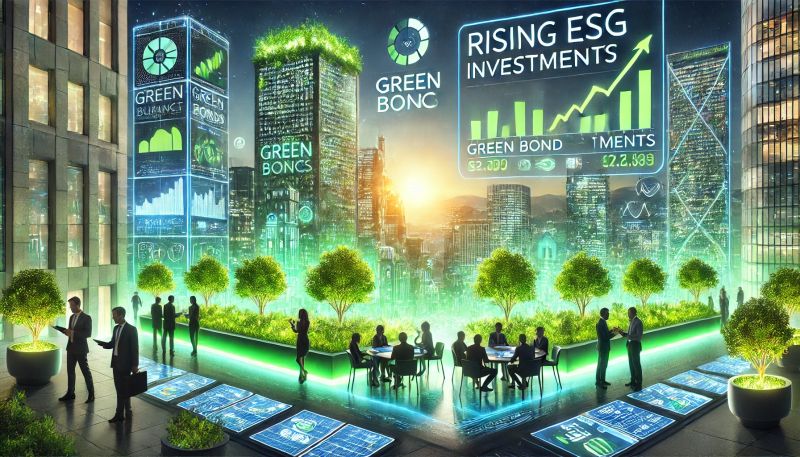
KnowledgeSeries: GreenFinance – The $80 Trillion Opportunity Reshaping Global Capital Markets
🌍 Sustainability = Economics.
💰 GreenFinance is now mainstream, with ESG assets surpassing $50T in 2023, projected to hit $80T by 2030.
🚀 CapitalShiftAlert: Banks, VCs, and InstitutionalInvestors are prioritizing low-carbon businesses. Those who ignore GreenFinance risk obsolescence.
📊 WhyGreenFinance is Taking Over?
✔️ ESGOutperforms: Since 2015, ESG-aligned companies have outperformed markets by 30% (HarvardBusinessReview).
✔️ InvestorShift: ESGFunds saw #$650B inflows in 2023, while traditional funds saw outflows (Morningstar).
✔️ RegulationsTighten: EU & SEC climate disclosure rules mandate carbon reporting, forcing companies to prove sustainability.
✔️ GreenBondsSurge: #$1.5T issued in 2023, funding renewables, transport, and smartcities.
✔️ RiskAndProfitability: Banks raise borrowing costs for polluters, offering low rates to green firms.
🏦 Who’sLeading the GreenFinanceMovement?
✔️ Banks & AssetManagers: BlackRock, GoldmanSachs, JPMorgan—trillions in climate portfolios.
✔️ VentureCapital & PrivateEquity: ClimateTech funding up 210% in 3 years—battery storage, carbon capture.
✔️ SovereignGreenFunds: Norway, Singapore, UAE shifting billions from oil to renewables.
✔️ CorporateGiants: Apple, Microsoft, Tesla issue multi-billion-dollar GreenBonds.
✔️ CarbonMarketsExploding: VoluntaryCarbonMarket set to grow 15X by 2030.
💡 HowBusinessesCanLeverage GreenFinance?
✔️ IssueGreenBonds → Secure low-cost funding for sustainability projects.
✔️ AlignWithESGCriteria → Attract institutional investors & capital.
✔️ TradeCarbonCredits → Monetize emission reductions.
✔️ LeverageImpactInvesting → Tap into VCs, sovereign funds & ESG-focused investors.
✔️ AdoptSmartFinanceTools → Use AI & blockchain for transparent sustainability tracking.
🔍 ComingUpNext: “The Rise of ClimateUnicorns – Where VCs Are Betting in 2025
💬 IsYourBusinessReady for the ClimateEconomy? Let’s discuss!
Originally published on LinkedIn on 2025-03-09 17:24:23: https://www.linkedin.com/feed/update/urn%3Ali%3AgroupPost%3A9500072-7304552646428823552
NamasteIndia high population and being Tropical matters!
India:
Per Capita Energy Consumption (2021-22): 24,453 megajoules.
Per Capita Electricity Consumption (March 2023): 1,331 kWh.
1. Qatar: Leads with 817 GJ per person, mainly due to abundant natural gas.
2. Iceland: Relies on geothermal energy, consuming 603 GJ per person.
3. Singapore: Consumes 577 GJ per person, driven by economic activities.
4. UAE United Arab Emirates : Uses 539 GJ per person for infrastructure and development.
5. Trinidad & Tobago: Consumes 384 GJ per person.
6. Kuwait: Energy usage stands at 366 GJ per person.
7. Norway: Benefits from oil and hydropower, with 364 GJ per person.
8. Canada: Consumes 360 GJ per person.
9. Oman: Energy consumption is 333 GJ per person.
10. Saudi Arabia: Uses 314 GJ per person.
11. US United States: Reflects its large population and industrial base (277 GJ per person).
12. Turkmenistan: Consumes 246 GJ per person.
13. South Korea: Major player in Asia Pacific (240 GJ per person).
14. Australia: Energy consumption is 228 GJ per person.
15. Russian Federation: Consumes 217 GJ per person.
Charted: The Countries Using the Most Energy per Capita https://lnkd.in/d8xPJzhZ
Originally published on LinkedIn on 2024-08-03 11:55:13: https://www.linkedin.com/feed/update/urn%3Ali%3Ashare%3A7225469254517571584

