GreenBondsJustGotSmarter | Introducing the New Gold Standard in Sustainable Finance
Labels don’t build trust. Transparency does.” AnjuSharma,
BreakingNewGround in SustainableFinance
ISS ESG, the sustainability-focused arm of ISS STOXX, just launched something that could change how we look at bonds — introducing the SustainabilityBondRating!
Why should the ESG world take note?
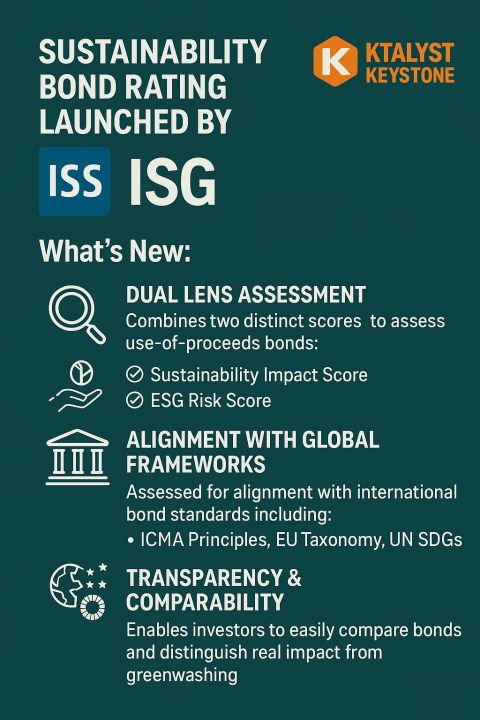
What’sNew:
🔍 DualImpact: Combines Sustainability Impact Score (aligned to SDGs, EU Taxonomy, ICMA) + ESG Risk Score for a fuller picture.
🌍 AllEyesOnGreen: Covers not just corporates but also sovereign issuers of Green, Social, Sustainability & Sustainability-linked bonds (GSSS).
⚖️ GreenOrGreenwashed? A tool that separates true impact from clever spin — vital when $5 trillion+ in GSSS bonds have already flooded the market.
📈 InvestorToolKit: Tailored for the 68% of institutional investors who integrate ESG into their portfolios.
⚙️ GlobalAlignment: Built on globally accepted frameworks — ICMA Principles, EU Taxonomy, and UN SDGs — making it easier to benchmark and trust.
Why it matters:
Because the bond between sustainability and capital markets needs more accountability.
Greenwashing isn’t just noise — it’s a $1.5 trillion challenge.
This new rating is not just a label — it’s a litmustest for integrity in sustainable investing.
👏 Kudos to the ISS ESG team for bringing transparency, clarity, and impact integrity to the GSSS bond universe!
Originally published on LinkedIn on 2025-04-05 13:37:52: https://www.linkedin.com/feed/update/urn%3Ali%3Ashare%3A7314280113766854656
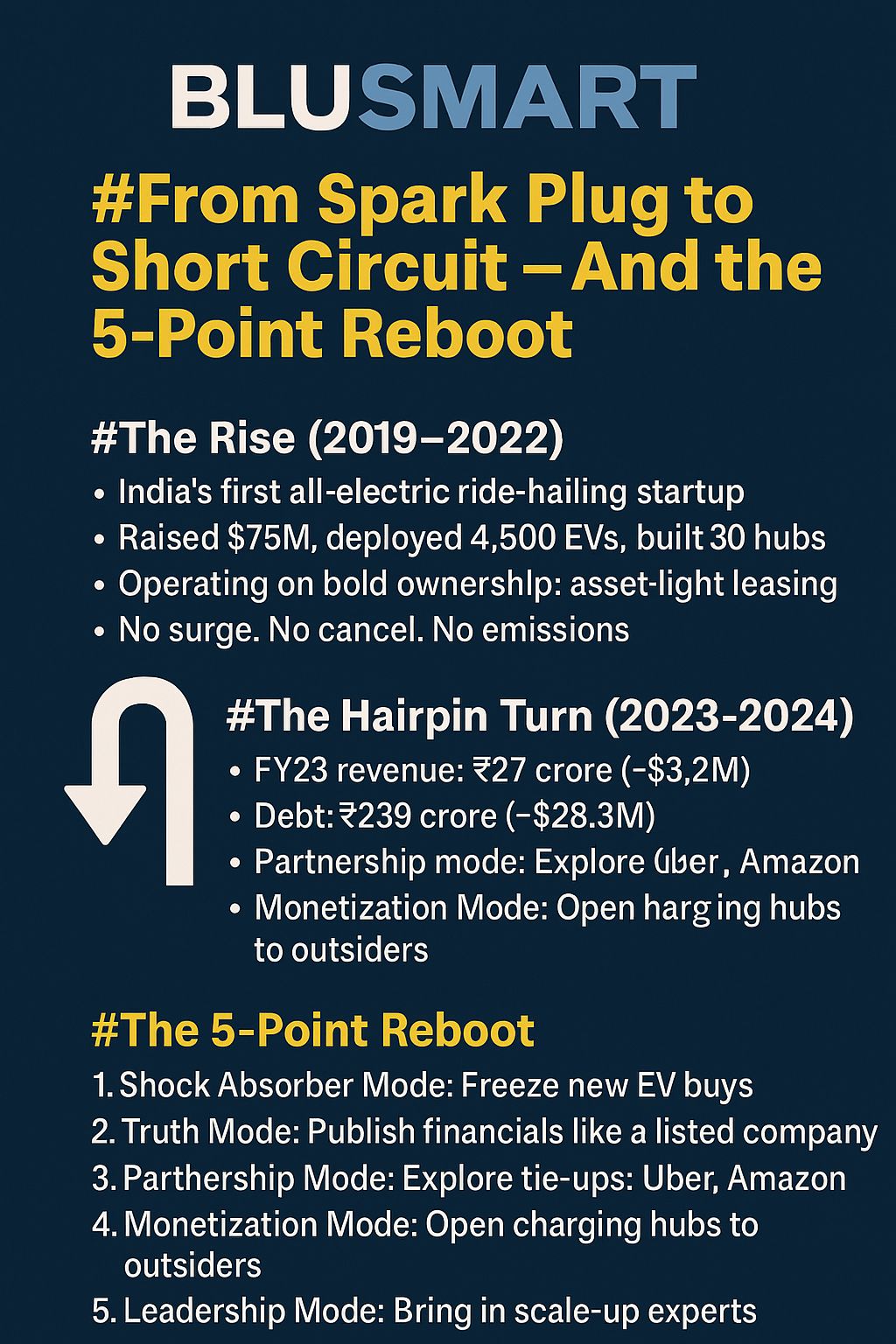
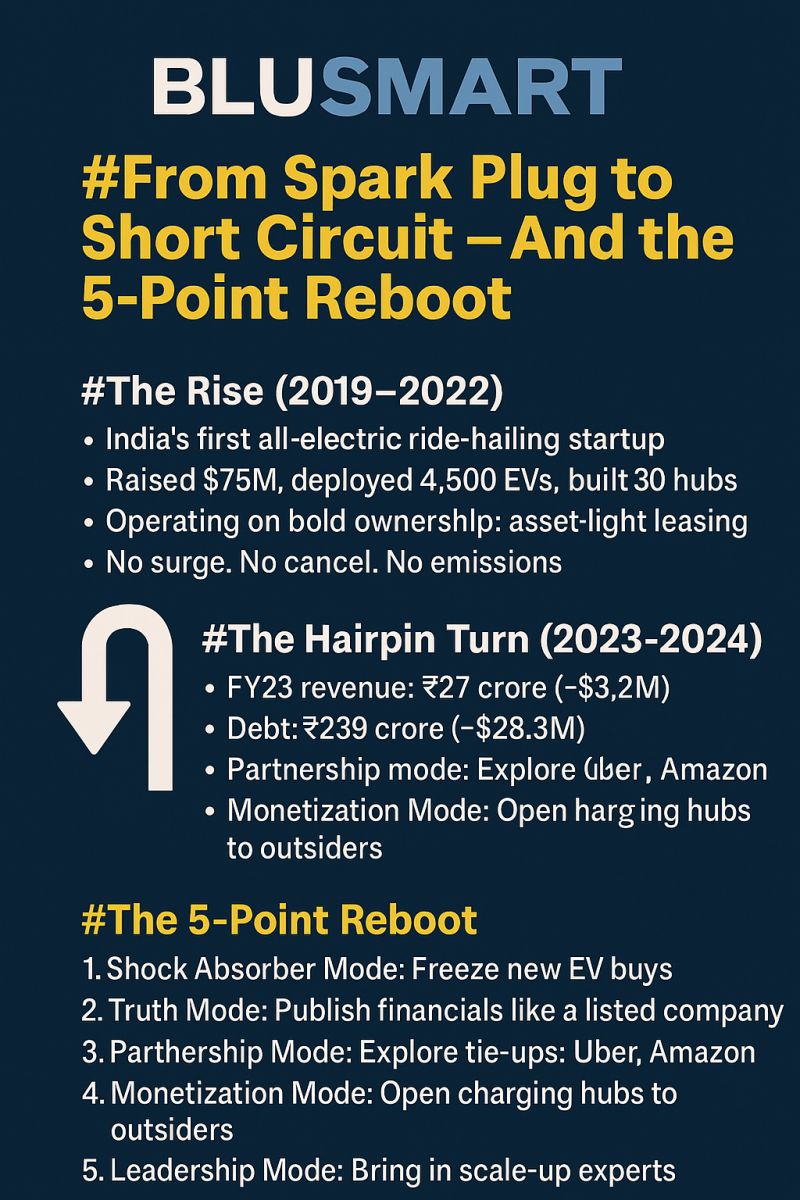
BluSmart: From Spark Plug to Short Circuit – A 5-Point Reboot
Rise, Ride & Reckoning
⚡ 2019–2021 | Launch
India’s first all-electric ride-hailing service. Raised #$75M. Deployed 4,500+ EVs. Built 30+ charging hubs. Bold move: ownership over leasing. Tagline: No surge. No cancel. No emissions.
🌿 2021–2022 | Momentum
Strong ESG branding, high urban trust, and premium experience.
⛔ 2023–2024 | Slump
Revenue: #₹27 crore (~USD 3.2M)
Liabilities: #₹239 crore (~USD 28.3M)
Failed EV asset sale (3,000 units)
Credit rating downgrade
Leadership exits
The 5-Point Comeback Compass
1. 🔧 Debt Restructure
Pause expansion, renegotiate terms, stabilize burn.
Ktalyst: Debt isn’t doom—bad structure is.
2. 🔍 Transparency
Publish quarterly financials and dashboards. Regain investor trust. Ktalyst: Honest numbers outpace hopeful noise.
3. 🤝 Strategic Partners
Explore tie-ups with Uber, Amazon, infra players. Enable co-branded EV ops.
Ktalyst: Survival is a shared drive.
4. 💰 Monetize Infra
Lease fleet, open charging hubs, sell FaaS and analytics.
Ktalyst: Idle assets = silent leaks. Make them earn.
5. 🧠 Leadership Reset
Bring turnaround talent. Form an ESG-savvy board.
Ktalyst: Founders start the fire. Fixers steer the flame.
12_Month Recovery Plan
0–2 Months: Restructure, pause new spends
3–5 Months: Lease EVs, monetize hubs
6–8 Months: Relaunch brand, share impact data
9–11 Months: Raise #$25–30M, secure JV
12 Months: Relaunch BluSmart 2.0 with 60% utilization
Case in Point: Netflix 2011
Lost 800K users after pricing split. Stock fell 77%.
Rebounded via honesty, streaming focus & brand reset.
Ktalyst Parallel: Design, not denial, drives turnarounds.
Final Word:
BluSmart isn’t broken. It’s paused. And ready to be Recharged.


Originally published on LinkedIn on 2025-04-01 19:33:06: https://www.linkedin.com/feed/update/urn%3Ali%3AgroupPost%3A82093-7312919961037934592
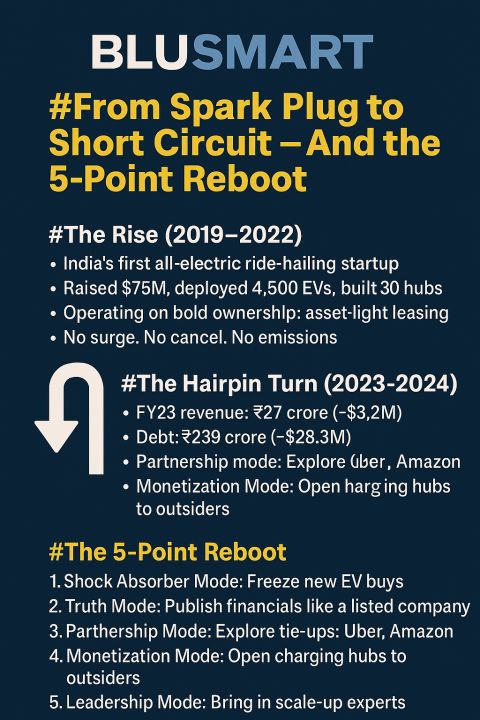
BluSmart: From SparkPlug to ShortCircuit – A 5_PointReboot
Rise, Ride & Reckoning
⚡ 2019–2021 | Launch
India’s first all-electric ride-hailing service. Raised #$75M. Deployed 4,500+ EVs. Built 30+ charging hubs. Bold move: ownership over leasing. Tagline: No surge. No cancel. No emissions.
🌿 2021–2022 | Momentum
Strong ESG branding, high urban trust, and premium experience.
⛔ 2023–2024 | Slump
Revenue: #₹27 crore (~USD 3.2M)
Liabilities: #₹239 crore (~USD 28.3M)
Failed EV asset sale (3,000 units)
Credit rating downgrade
Leadership exits
The 5_Point Comeback Compass
1. 🔧 Debt Restructure
Pause expansion, renegotiate terms, stabilize burn.
Ktalyst: Debt isn’t doom—bad structure is.
2. 🔍 Transparency
Publish quarterly financials and dashboards. Regain investor trust. Ktalyst: Honest numbers outpace hopeful noise.
3. 🤝 Strategic Partners
Explore tie-ups with Uber, Amazon, infra players. Enable co-branded EV ops.
Ktalyst: Survival is a shared drive.
4. 💰 Monetize Infra
Lease fleet, open charging hubs, sell FaaS and analytics.
Ktalyst: Idle assets = silent leaks. Make them earn.
5. 🧠 Leadership Reset
Bring turnaround talent. Form an ESG-savvy board.
Ktalyst: Founders start the fire. Fixers steer the flame.
12_Month Recovery Plan
0_2Months: Restructure, pause new spends
3_5Months: Lease EVs, monetize hubs
6_8Months: Relaunch brand, share impact data
9_11Months: Raise #$25–30M, secure JV
12Months: Relaunch BluSmart 2.0 with 60% utilization.
Case in Point: Netflix 2011
Lost 800K users after pricing split. Stock fell 77%.
Rebounded via honesty, streaming focus & brand reset.
Ktalyst Parallel: Design, not denial, drives turnarounds.
Final Word:
BluSmart isn’t broken. It’s paused. And ready to be Recharged.
Originally published on LinkedIn on 2025-04-01 19:29:05: https://www.linkedin.com/feed/update/urn%3Ali%3AgroupPost%3A4023031-7312918948415442944
Algorithmic Governance: The Future of Corporate Decision-Making?
With AI and big data shaping business strategy, the rise of AlgorithmicGovernance is disrupting traditional corporate governance models. Can machines ensure better compliance, transparency, and accountability than humans? Or does this pose new risks of bias, ethical dilemmas, and loss of human oversight?
🔍 Why It Matters
📉 75% of financial institutions use AI for risk assessment and compliance (PwC).
⚖️ AI-driven audits reduce fraud detection time by 40%, yet algorithmic bias remains a concern (Deloitte).
📊 50% of board-level decisions are now influenced by AI-driven analytics (McKinsey).
🔑 Key Themes in Algorithmic Governance
🤖 AI-Powered Boardrooms
🔹 Can AI-driven insights improve decision-making, risk management, and compliance?
🔹 Will human boards become obsolete, or will AI act as an adviser rather than a decision-maker?
⚖️ Regulatory & Ethical Challenges
🔹 Who is accountable for AI-driven decisions? If an algorithm makes a flawed governance call, who takes the blame?
🔹 How do we ensure AI decisions align with corporate ethics and fiduciary responsibilities?
🔍 Transparency vs. Black Box AI
🔹 AI governance models process vast amounts of data—but how do we ensure explainability?
🔹 78% of executives don’t fully understand how AI arrives at decisions (MIT Sloan).
📊 Algorithmic Bias & Board Diversity
🔹 AI models trained on biased data can reinforce discrimination in hiring, lending, and promotions.
🔹 Can AI governance frameworks enhance diversity, or will they encode existing biases?
⚡ FinalThought
As companies embrace AlgorithmicGovernance, they must balance efficiency with ethics, transparency, and accountability. Will AI revolutionize corporate governance or create new risks that we can’t control?
💬 What’s your take? Should AI have a seat at the boardroom table? ⬇️

Originally published on LinkedIn on 2025-03-09 04:34:20: https://www.linkedin.com/feed/update/urn%3Ali%3AgroupPost%3A95089-7304358856879448064
KnowledgeSeries: The Future of CarbonCredits – A USD250B Market by 2050
The carboncredit market is no longer a side conversation—it’s becoming a mainstream financial instrument. With projections hitting #$250B by 2050, businesses and investors must pay attention.
Why? Because companies that integrate NetZero strategies today will gain a competitive edge, while those that don’t will face higher costs, regulatory risks, and shrinking investor confidence.
🌎 The Carbon Credit Boom: Why It’s a Business Imperative
✔️ The voluntary carbon market is set to grow 15X by 2030, reaching #$10B–$40B. (McKinsey)
✔️ Investments in carbon credits hit #$1.7B in 2023, up 50% YoY. (BloombergNEF)
✔️ 6,000+ global companies have set Science-Based Targets (SBTi), driving demand for verified carbon offsets.
✔️ Indonesia, Brazil, and Kenya are integrating carbon markets into their economies, generating revenue from forests, renewable energy, and carbon capture projects.
✔️ Article 6 of the ParisAgreement is enabling international carbon credit trading, boosting market credibility.
🚀 What does this mean for businesses?
✔️ A carbon credit strategy is no longer optional—it’s a business necessity.
✔️ Companies without a decarbonization plan will face higher compliance costs.
✔️ Investors are prioritizing NetZero leaders, making carbon credits a key ESG performance driver.
📊 Who’s Leading the Carbon Credit Race?
✔️ Big Tech & Carbon Capture:
Meta, Microsoft, and Google are securing multi-million-dollar deals in Direct Air Capture (DAC) to future-proof their carbon strategies.
✔️ Financial Institutions Going Green:
BlackRock, JP Morgan, and Goldman Sachs are launching climate-focused funds, treating carbon credits as an emerging asset class.
✔️ Corporate Adoption Soaring:
40%+ of Fortune500 companies are embedding carbon offsets into their business models.
✔️ Government-Led Action:
The EU, Singapore, and Japan are developing regulated carbon exchanges to ensure transparency & standardization.
🌱 What to Expect in 2025 & Beyond?
✔️ Stricter Regulations → Carbon credit verification will be tighter, reducing low-quality offsets & greenwashing risks.
✔️ Rising Prices → As demand outstrips supply, carbon credit prices could triple by 2030, making early adoption a smart financial move.
✔️ Emerging Markets in Play → Africa, Southeast Asia, and Latin America will dominate nature-based carbon solutions (reforestation, soil carbon, etc.).
✔️ Carbon as a Tradable Asset → Institutional investors are pushing for liquid carbon credit markets, making carbon a financialized commodity.
🔍 ComingUpNext: “The Business Case for Carbon Credits – Risks, Rewards & Strategy
Originally published on LinkedIn on 2025-03-08 07:02:05: https://www.linkedin.com/feed/update/urn%3Ali%3AgroupPost%3A82951-7304033651044839424
📚 KnowledgeSeries: Corporate Governance – The Backbone of Sustainable Business 🏛📊
In a world where #$5T+ market value losses are linked to governance failures, Corporate Governance isn’t just a boardroom discussion—it’s a business imperative. Strong governance drives transparency, accountability, and investor confidence.
📊 The Pillars of Corporate Governance
🟢 Accountability → 88% of investors prioritize governance in decision-making. (Source)
🟢 Transparency → 80% of corporate fraud cases stem from weak governance.
🟢 Independence → 47% of global board seats are now occupied by independent directors.
🟢 Ethical Leadership → Companies with strong ethics policies outperform peers by 14% in shareholder returns. (Source)
📅 Latest Corporate Governance Trends (2024-2025)
🟢 ESG Integration: 67% of global firms now link executive compensation to ESG performance.
🟢 Board Diversity: The EU mandates 40% women on boards for large companies by 2026.
🟢 AI & Governance: 52% of corporate risk officers see AI governance as a top priority. (Source)
🔍 High-Profile Governance Shifts
🟢 7-Eleven Japan → Appoints first-ever foreign CEO, marking a boardroom culture shift.
🟢 Julius Baer → Reshuffles leadership amid financial stability concerns.
🟢 BP’s Policy Reversal → Investors call out governance gaps as BP shifts focus back to fossil fuels. (Source)
🔥 The Takeaway: Governance = Growth + Stability
📌 Weak governance costs companies billions—investors are watching.
📌 Diversity & ESG-linked pay are shaping leadership decisions.
📌 AI & corporate ethics are the next frontiers in governance risk.
📢 What governance reforms should companies focus on next? Let’s discuss! 👇

Originally published on LinkedIn on 2025-03-04 08:46:57: https://www.linkedin.com/feed/update/urn%3Ali%3Ashare%3A7302610490927542274
TheSustainabilityReckoning: Data, Dollars & DueDiligence
📊💡 Sustainability is no longer a choice—it’s a business imperative backed by hard data. In 2025, companies face a stark reality: greenwashing lawsuits, evolving regulations, and shifting investor priorities are reshaping the LicenseToOperate. The cost of inaction? Fines, lostmarketaccess, and reputationaldamage.
Here’s what the numbers reveal:
3_Billion_USD_Lawsuit: Apple’s “CarbonNeutral” Claims Under Fire
Apple faces a classactionlawsuit challenging its carbonneutralityclaims, highlighting the #$20Billion+ global fines for greenwashing in 2024 alone. The lesson? Transparency and tangibleaction matter more than marketing.
🔹 EUSlashesSustainabilityReporting by 80%—But Not for BigPlayers
The EU’s CorporateSustainabilityReportingDirective (CSRD) has been relaxed, reducing compliance for smaller firms. However, largecorporations must still navigate stringentESGrequirements, ensuring verifiablesustainability efforts.
🔹 #$2Trillion in ClimateInvestments Defies ESGBacklash
Despite politicalheadwinds, globalclimateinvestments hit #$2trillion in 2024, with renewables and infrastructure leading. Resilientcompanies are attracting capital, proving that climatepositivebusinessmodels aren’t just ethical—they’re profitable.
🔹 WellsFargoDropsNetZeroTargets—A Sign of ESGRealignment?
One of the largestUSbanks has walked back its financedemissionsgoals, citing technological and policygaps. This shift signals a movefromoverambitious targets to pragmaticESGstrategies that align with businessrealities.
🔹 BCorpBoom: 2,400+ Certified Companies in the UK Alone
With consumerdemand for ethicalbusinesspractices soaring, over 2,400UKcompanies, including DanoneUK and GoodEnergy, have achieved BCorpstatus, proving that sustainability isn’t just compliance—it’s a competitiveadvantage.
🔹 #$1BillionCircularEconomyFund Eyes WasteToWealthGrowth
With globalwastecosts projected to exceed #$400billion by 2035, PlanetArk and BostonGlobal are launching a #$1billionfund to support circulareconomyinnovations. The future belongs to businesses that turn wasteintovalue.
📉🔍 TheVerdict?
✅ Sustainability isn’t a cost—it’s an investment in resilience.
✅ Regulatoryshifts are redefining corporateaccountability.
✅ Greenwashinglawsuits are a wake-up call—datadriventransparency is key.
IsYourBusinessFutureProofed for this SustainabilityReckoning? Let’s discuss how compliance, strategy, and innovation can secure your LicenseToOperate in this evolving landscape. Drop your thoughts below! 👇

Originally published on LinkedIn on 2025-03-01 07:39:37: https://www.linkedin.com/feed/update/urn%3Ali%3AgroupPost%3A2474261-7301506382598430720
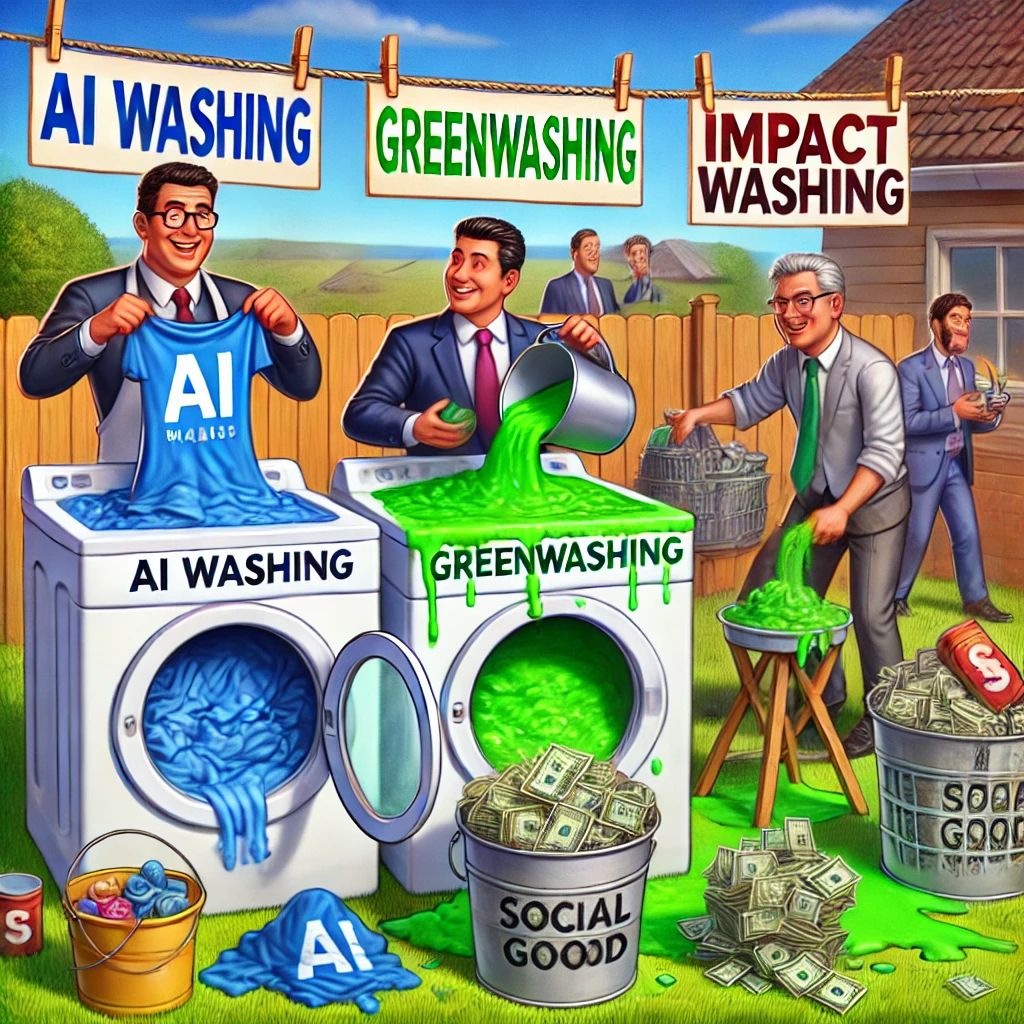
🚨 “The Corporate Hattrick of Deception: AI Washing, Greenwashing & Impact Washing!” 🤖💚🌍💸
If corporate Greenwashing was a sport, they’d be playing in the finals every year!
Just when AI Washing and Greenwashing weren’t enough, a third player has emerged—Impact Washing. Companies are not just misleading on AI and Sustainability, but also inflating their ‘SocialImpact’ to attract Investors and dodge scrutiny.
In 2025, these deceptive practices have led to Billions in InvestorLawsuits, RegulatoryCrackdowns, and GreenFinanceMisallocations across US, EU, China, India, and Asia.
📊 The Hattrick of Corporate Washing & Global Case Studies
🛑 1. AI Washing: The ArtificialIntelligence Illusion
🚨 75% of firms claiming AI leadership lack real AI adoption. (MIT Sloan, 2025)
🚨 InvestorLawsuits for AI deception doubled in 2024. (Stanford Law, 2025)
📌 Case Studies:
🔹 US: Tesla’s “Full Self-Driving” Fraud 🚗 – #$2.3B lawsuit for misleading AI claims. (SEC, 2025)
🔹 China: Fake AI CarbonTracking 📊 – #$1.1B in GreenBonds issued for fabricated AI-based EmissionsMonitoring. (Nikkei Asia, 2025)
🌱 2. Greenwashing: The FakeSustainability Playbook
🚨 #$1.3 Trillion in ‘Sustainable’ investments exposed as misleading. (EU GreenFinance Report, 2025)
🚨 60% of ‘CarbonNeutral’ pledges lack ScientificValidation. (UNEP, 2025)
📌 Case Studies:
🔹 EU: Volkswagen’s EV Greenwashing 🚗 – #€500M fine for false CarbonSavings claims. (European Commission, 2025)
🔹 India: Adani Group’s “CarbonNeutral” Ports 🚢 – #₹8,200 crore ($1B) GreenBond probe. (SEBI, 2025)
🔹 Asia: FastFashion’s “EcoFriendly” Lie 👗 – #$780M in Penalties for misleading “100% Sustainable” fabric claims. (Reuters, 2025)
💸 3. Impact Washing: The ESG & SocialResponsibility Mirage
🚨 Only 17% of companies reporting ‘SocialImpact’ actually measure it. (WEF, 2025)
🚨 #$400B in ESG funds reclassified due to FalseClaims. (Morningstar, 2025)
📌 Case Studies:
🔹 US: Meta’s “EthicalAI” Ad Controversy 📱 – #$500M lawsuit over manipulative AI-driven ads. (Bloomberg, 2025)
🔹 India: Tata Group’s “InclusiveHiring” Scandal 🏭 – #₹2,100 crore ($250M) Penalty for inflating Diversity stats. (Economic Times, 2025)
🔹 China: ESG Failures in Tech SupplyChains 🏭 – #$3B InvestorPullout due to ForcedLabor revelations. (SCMP, 2025)
🏆 KeyTakeaway
🤖 AI Washing could be a powerful force for Innovation—if used Ethically.
🌍 Greenwashing should be eliminated with strict Regulations.
💸 Impact Washing would be the next BillionDollar Scandal if unchecked.
📌 Reality Check: Investors and Consumers must demand Transparency—not just PRSpin!
💬 Which of these Corporate Washings have you spotted? Drop your thoughts below! 👇
Originally published on LinkedIn on 2025-02-18 11:39:42: https://www.linkedin.com/feed/update/urn%3Ali%3AgroupPost%3A4385073-7297580537215434754
🏛️ The Power & Pitfalls of IndependentDirectors in Corporate Governance
🔹 Independent directors are the guardians of corporate governance, ensuring transparency, accountability, and ethical decision-making. Yet, history shows that their effectiveness is often tested in times of crisis. Here are some lessons from the boardroom:
✅ Success Stories: When Independent Directors Stepped Up
🛞 Tata Nano Project – When land acquisition and operational hurdles threatened Tata’s “People’s Car,” independent directors played a crucial role in navigating the crisis.
🏢 Infosys Leadership Shuffle (2013) – The return of Narayana Murthy, accompanied by his son, sparked concerns over governance norms, pushing independent directors to uphold fairness and transparency.
🚗 Maruti Suzuki Gujarat Plant (2014) – A move that could have impacted minority shareholders was scrutinized by independent directors, reinforcing the need for stakeholderprotection.
🚨 Corporate Failures: When Oversight Fell Short
📉 Satyam Scandal (2009) – A corporate fraud that exposed how ineffective oversight can erode trust and devastate businesses.
⚖️ Nagarjuna Finance Scandal (2009) – Legal trouble for an independent director led to mass resignations across corporate India, raising concerns about their liability.
💰 Byju’s Financial Crisis (2024) – Governance failures at India’s edtech giant underscored why independent directors must challenge financial mismanagement proactively.
These cases reveal a clear message: IndependentDirectors are not just ornamental figures—they are critical to business ethics and sustainability. However, their ability to function effectively hinges on:
🔹 Real independence from promoters and management
🔹 Robust regulations that protect their autonomy
🔹 A corporate culture that values their role in decision-making
💬 What do you think? Are independent directors truly empowered in today’s corporate landscape? Let’s discuss!
Read more at:
Originally published on LinkedIn on 2025-02-18 05:06:55: https://www.linkedin.com/feed/update/urn%3Ali%3AugcPost%3A7297481688115249152
AuditScandal: A Timeline_of_Lies, Exposure & Reckoning
📉 What drives financial fraud?
🚨 Greed. Pressure. Complacency. A broken system.
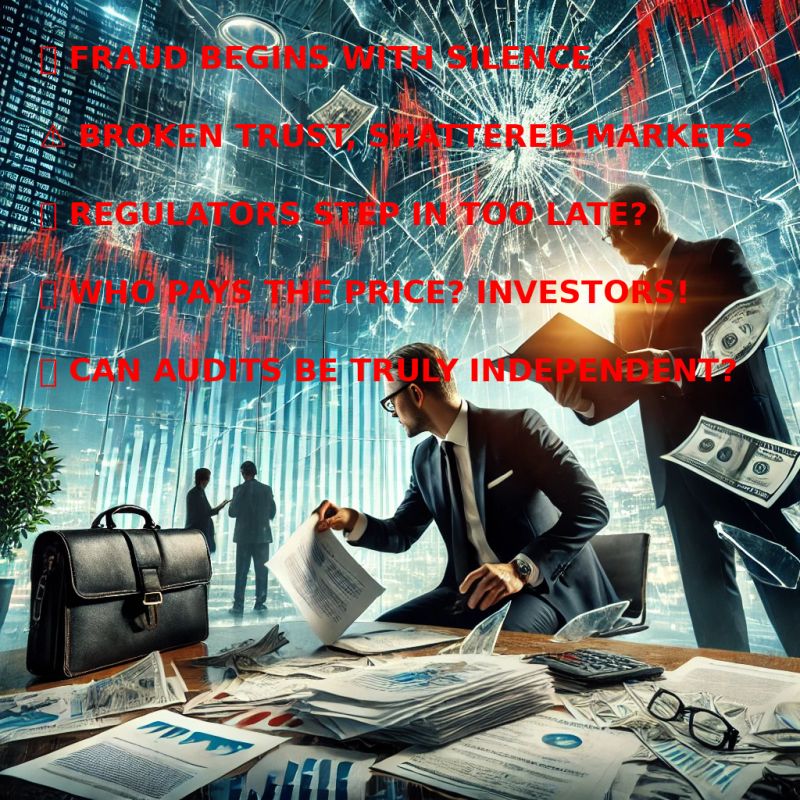
🔴 When numbers don’t match reality, companies have two choices—fix the problem or hide it.
🔴 When auditors see red_flags, they can raise them or turn a blind_eye.
🔴 When regulators step in, it’s often too_late—the damage is done.
⚖️ Ethics isn’t about policies—it’s about choices.
📉 When businesses trade integrity for short_term gains, they lose more than money. They lose trust.
💰 In Brightcom & CMIL’s case, deception_wasnot_an_accident—it was a choice. And they got caught.
📅 YR2014_2020: The Financial Mirage
🟢 Brightcom Group reports unstoppable growth.
🟢 Profits soar, investors celebrate, and markets trust the story.
🟢 But was it real success—or well-crafted deception?
📅 YR2020_2021: Whispers of Doubt
🔴 SEBI receives multiple complaints.
🔴 Allegations surface:
✅ Profits overstated
✅ Asset manipulation
✅ Non_compliance with accounting norms
📅 YR2021: The First_Strike
🔎 SEBI orders a forensic audit.
🚨 Findings? Brightcom’s numbers don’t add up.
🚨 The illusion starts to crack.
📅 YR2023: The Case Breaks Open
⚠️ SEBI issues a Show_Cause Notice.
⚠️ The findings?
✅ Fabricated profits
✅ Investors misled
✅ Promoters cashing in on inflated shares
📉 Trust? Shattered.
📅 YR2021_2023: The CMIL_Parallel
🔴 Meanwhile, CMIL is also under scrutiny.
📉 Revenue crashes from ₹637 Cr (FY19) to ₹201 Cr (FY21).
📉 Profits turn to ₹194 Cr loss—but auditors stay silent.
📅 2023: NFRA Steps In
🔎 Findings?
❌ No proper audit procedures.
❌ No checks on liabilities.
❌ No questions asked.
📅 YR2024: The Reckoning
💥 Regulators strike hard.
🔴 Brightcom Group Auditors:
✔️ Debarred & fined ₹80 lakh
🔴 CMIL Auditors:
✔️ Debarred & fined ₹60 lakh
🚨 The_Lesson? Prevention is Cheaper Than Punishment.
✅ Boards & IndependentDirectors must challenge audits.
✅ Surprise forensic audits need to become the norm.
✅ Investors deserve real transparency—not smoke & mirrors.
TheBigQuestion: Are We Learning?
🔹 Should auditors face criminal charges for fraud?
🔹 Are regulators too slow in catching corporate misconduct?
🔹 Would AI-driven audits prevent such failures?
🔹 Why aren’t whistleblowers speaking up sooner?
🔹 Is financial transparency still just a checkbox?
🚨 If we don’t fix this now, the next financial scandal is just waiting to happen.
💬 Your thoughts? Is prevention possible—or are we just waiting for the next collapse? 👇

Originally published on LinkedIn on 2025-02-12 07:00:05: https://www.linkedin.com/feed/update/urn%3Ali%3AgroupPost%3A2153908-7295335841441193985

