ProfitSustainability, Re_Engineered: TheGermanWay!
Dr. Anju Sharma KtalystInsights™ | MrsSustainability
Margins didn’t collapse in Germany.
They lost protection.
When scale stopped guaranteeing profits, Germany Inc. didn’t chase growth narratives
it changed the structure.
(For context: the DAX represents Germany’s 40 largest listed companies the country’s corporate backbone.)
In YR2026, How DAX giants are re-engineering profits
Siemens
✓ ~25% of Healthineers spun off to shareholders (late-2025)
✓ Siemens retains ~50%, targeting ~37% longer term
✓ Industrial software & automation now deliver >70% of group EBIT
BASF
✓ Agricultural Solutions carved into an independent SE
✓ New board from 1 May 2026
✓ €9.8 bn revenue (2024) ≈ 15% of BASF sales
✓ Ag pure-play peers trade at 2–3× higher EBITDA multiples
Thyssenkrupp
✓ TKMS IPO (Nov-2025) unlocked defence-led valuation
✓ Defence order books in Germany up >30% YoY
✓ Holding-company structure improves capital transparency
Mercedes-Benz Group
✓ High-end luxury models generate ~2× margins vs mass market
✓ Daimler Truck separation removed cyclical capital drag
Volkswagen
✓ €20+ bn committed to PowerCo (batteries)
✓ Cariad restructuring cut software losses ~40% YoY
✓ Structural separation protects core ROCE
Evonik
✓ Specialty chemicals now >80% of EBITDA
✓ Legacy materials exits conclude H1 2026
✓ Specialty peers trade at +300–500 bps margin premium
Allianz
✓ Solvency II ratio consistently >200%
✓ Fee-based earnings now ~⅓ of operating profit
Deutsche Telekom
✓ Towers & fibre valued at 10–15× EBITDA
✓ Infra carve-outs lower balance-sheet intensity
BMW
✓ “Neue Klasse” targets ~30% cost reduction per EV
✓ EV platforms insulated from ICE margin volatility
Bayer
✓ Crop Science contributes ~45% of group revenue
✓ Rising investor pressure to separate Pharma & Ag
✓ Conglomerate discount widened post-Monsanto
📊 The YR2026 reality check
✓ 24.8% of German companies expect business deterioration
(ifo Institute, Q1-2026)
✓ Germany corporate profits ~€215 bn (2026E)
→ profit pools are more concentrated
✓ DAX +~15% YoY, despite muted earnings growth
→ structure, not volume, is driving valuation
✓ ~33% of firms plan workforce reductions
✓ Hiring is strongest in spin-offs: defence, green tech, digital infra
✓ Conglomerates trade at a 15–30% valuation discount
vs comparable pure-play peers
What Germany figured out
In 2026: Size ≠ Strength
✓ Separability = resilience
✓ Pure plays command higher multiples
✓ Focused boards allocate capital faster
✓ Geography decides margins — structure decides valuation
Profit sustainability is the outcome of strategy_sustainability & capitaldiscipline.
Dr. Anju Sharma
Source / shared link: https://www.economist.com/business/2026/01/08/germanys-industrial-conglomerates-are-breaking-up-to-stay-alive?utm_campaign=shared_article
Originally published on LinkedIn on 2026-01-10 09:44:29: https://www.linkedin.com/feed/update/urn%3Ali%3Ashare%3A7415689986395762688
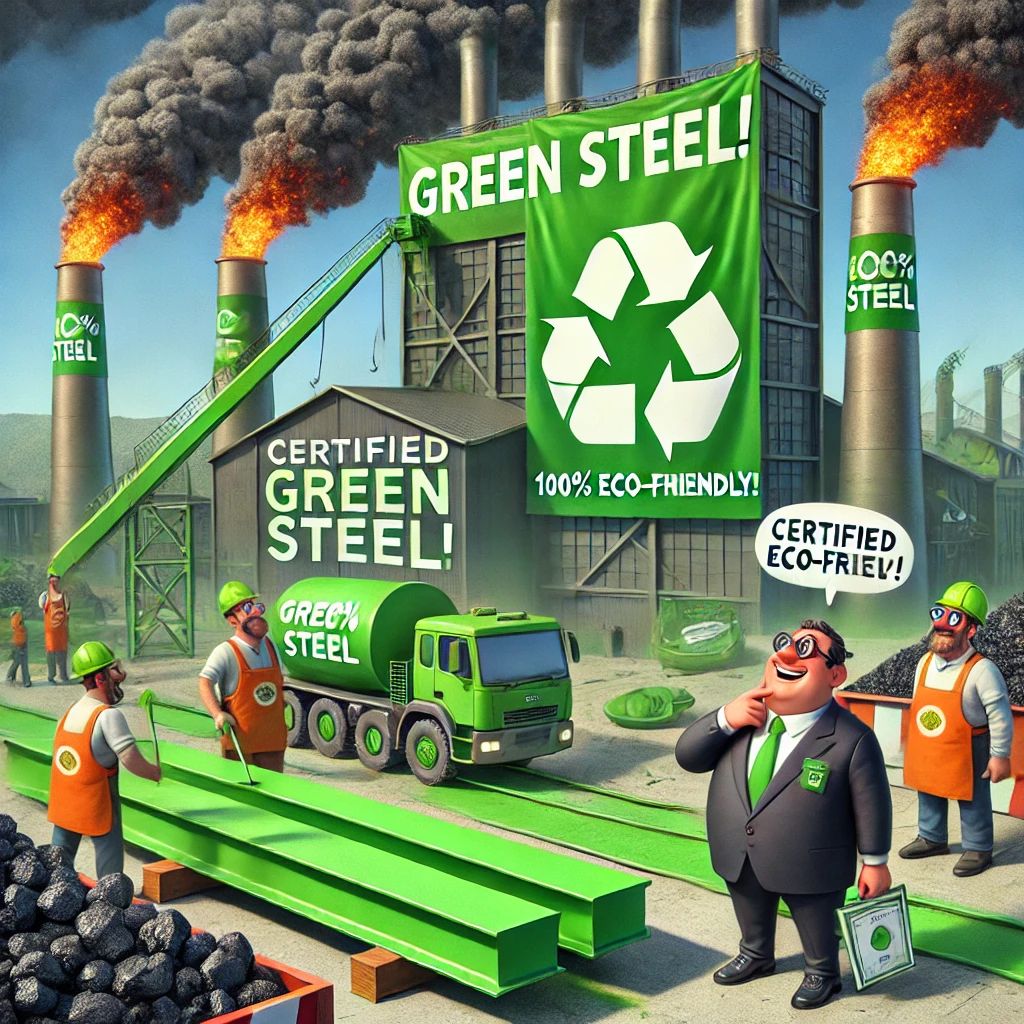
🚨 “The Great Green Steel Confusion: Real Sustainability or Just a Carbon Mirage?” 🌍🔥🔩
The steel industry contributes 8% of global CO₂ emissions, yet companies rush to brand their products as “green steel” while still running on coal. With 2030 and 2050 net-zero targets, is this real progress or just a well-marketed illusion?
📊 Green Steel: Who’s Leading & Who’s Greenwashing?
🔹 United States 🇺🇸 – U.S. Steel & Nucor claim sustainability, yet 74% of production relies on coal, delaying carbon neutrality until 2055. (IEA, 2025)
🔹 European Union 🇪🇺 – Net-zero by 2050, but only 10% of steel plants are transitioning to hydrogen, with heavy reliance on carbon offsets. (World Steel Association, 2025)
🔹 China 🇨🇳 – Produces 55% of global steel, pledged net-zero by 2060, yet 92% of operations still run on coal. (OECD, 2025)
🔹 India 🇮🇳 – Tata & JSW Steel target 2045 net-zero, but 80% of India’s steel output remains carbon-intensive, with <3% green investment. (IEA, 2025)
📌 RealityCheck: Most “green steel” claims lack real emission cuts.
📉 The Hard Truth About Green Steel
🚨 70% of global steel production still relies on coal, emitting 2.2 tons of CO₂ per ton of steel. (IEA, 2025)
🚨 Carbon offsets cover just 5% of emissions; most reductions exist only on paper. (Carbon Market Watch, 2025)
🚨 Hydrogen-based steel is <1% of production, requiring $500B+ investment to scale. (World Steel Association, 2025)
🚨 Fossil-free steel won’t be widely available before 2070, delaying net-zero goals. (OECD, 2025)
📌 RealityCheck: Green steel is still mostly a marketing play.
🏆 Who’s Actually Delivering?
✅ H2 Green Steel (Sweden 🇸🇪) – 100% hydrogen-powered plant launching 2026. (WEF, 2025)
✅ Thyssenkrupp (Germany 🇩🇪) – €2B hydrogen investment, aiming for 3.5M ton CO₂ cuts/year by 2040. (IEA, 2025)
✅ SSAB (Nordics 🇸🇪🇫🇮🇳🇴) – 100% fossil-free steel in pilot phase, hitting markets by 2026. (World Steel Association, 2025)
📌 RealityCheck: Few are pushing real decarbonization—most are just branding.
🏆 KeyTakeaway
The steel industry could be the backbone of a clean revolution, should be scaling hydrogen steel, but would be one of the biggest greenwashing culprits if action doesn’t match promises.
👉 Is ‘green steel’ real progress or just a carbon mirage? Drop your thoughts below! 👇
Originally published on LinkedIn on 2025-02-11 13:56:37: https://www.linkedin.com/feed/update/urn%3Ali%3AgroupPost%3A82951-7295078278359322625
The Decarbonization Dilemma: How CBAM Gaps Are Stalling Industry’s Green Revolution
As industries strive for sustainability, regulatory uncertainty, particularly around the EU’s Carbon Border Adjustment Mechanism (CBAM), is hindering green investments, decarbonization, and global competitiveness.
1. ArcelorMittal’s €1.7 Billion Investment Delay
ArcelorMittal has paused its €1.7 billion plan to replace Dunkirk’s blast furnaces with hydrogen-powered facilities. CBAM uncertainties, slow green hydrogen development, and limited customer demand for low-carbon steel are the primary reasons.
2. Thyssenkrupp’s €3 Billion Reassessment
Germany’s Thyssenkrupp is reconsidering its €3 billion green steel initiative due to unclear CBAM policies and the challenge of balancing emissions reductions with competitiveness.
3. UK Cement Industry’s Struggles
The UK cement sector, battling cheap, high-carbon imports that make up 40% of the market, lacks CBAM-equivalent protections. This discourages investments in decarbonization and carbon capture technologies.
4. The Global Green Subsidy Race
Conflicting subsidy strategies in the EU, US, and China create uncertainty, stalling global green investments. Misaligned policies heighten reliance on Chinese renewable technologies, threatening decarbonization efforts.
5. Asian Industry’s CBAM Challenges
Compliance Costs: Carbon accounting and verification impose high costs, especially on SMEs.
ExportCompetitiveness: Energy-intensive sectors like India’s steel industry (27% EU export share) face reduced demand due to CBAM fees.
SupplyChains: Adjusting to lower-carbon suppliers increases costs.
TradeTensions: Nations like India criticize CBAM as a trade barrier hindering net-zero transitions.
CarbonPricing Pressure: CBAM pushes Asian countries toward domestic carbon taxes, requiring significant adjustments.
6. Shared Challenges Across Industries
Policy Uncertainty: Industries are delaying investments while awaiting clarity on CBAM’s impact.
Competitive Disparities: EU companies compete against lower-cost imports with fewer regulations.
Market Gaps: Limited green energy infrastructure and low consumer demand slow decarbonization efforts.
The Way Forward
A globally aligned and robust CBAM is vital for restoring corporate confidence and fostering sustainable investments. Governments must collaborate to balance trade fairness with climate goals, ensuring that the green revolution accelerates instead of faltering.
Originally published on LinkedIn on 2024-12-09 17:47:41: https://www.linkedin.com/feed/update/urn%3Ali%3AgroupPost%3A131340-7271943602677633025

