CoalVsSolar | Coal’s Quiet CashSurge Outshines Solar’s Spotlight
Solar wins headlines. Coal wins hedge funds.
Energy transition isn’t linear—it’s layered with hedges, geopolitics, and capacity math.
2023 Global Investment Snapshot:
Coal: #$200B invested, #+20% vs. 2019 (IEA)
Solar: #$380B invested (BloombergNEF)
Lifetime ROI Showdown:
Coal: ~40 years, 50–70% capacity factor
Solar: ~20–25 years, 15–25% capacity factor
Market Mapping – Who’s Buying Coal & Why:
China: 106 GW new coal approved, driven by industrial demand and energy self-sufficiency (CREA)
India: 80+ coal projects revived, citing peak-hour reliability (Global Energy Monitor)
Africa: Coal finance up 45%, often backed by foreign utilities for mining + grid stability (IEEFA)
EU: 17+ plants restarted or extended, post-Ukraine war crisis, showing energy realism (EU Commission)
US: #$35B+ still active in coal, via private equity and grid fallback plans (IEEFA, Sierra Club)
KtalystKeystone Insights –
5Markers of MarketReality:
1. ESG mandates aren’t muting fossil flows—they’re redirecting them.
2. Base-load capacity is still funded when renewables falter under intermittency.
3. Policy ambition ≠ Capital flow alignment. Markets hedge for stability, not sustainability.
4. Emerging economies see coal as insurance, not indulgence.
5. The ROI on resilience is outweighing optics—for now.
KtalystKeystone Insight:
Green is the goal—but grey still guards the grid.
Until storage, grids, and critical minerals scale up, coal isn’t being replaced—it’s being re-priced.
Originally published on LinkedIn on 2025-05-10 12:21:09: https://www.linkedin.com/feed/update/urn%3Ali%3AgroupPost%3A82951-7326944383285571585
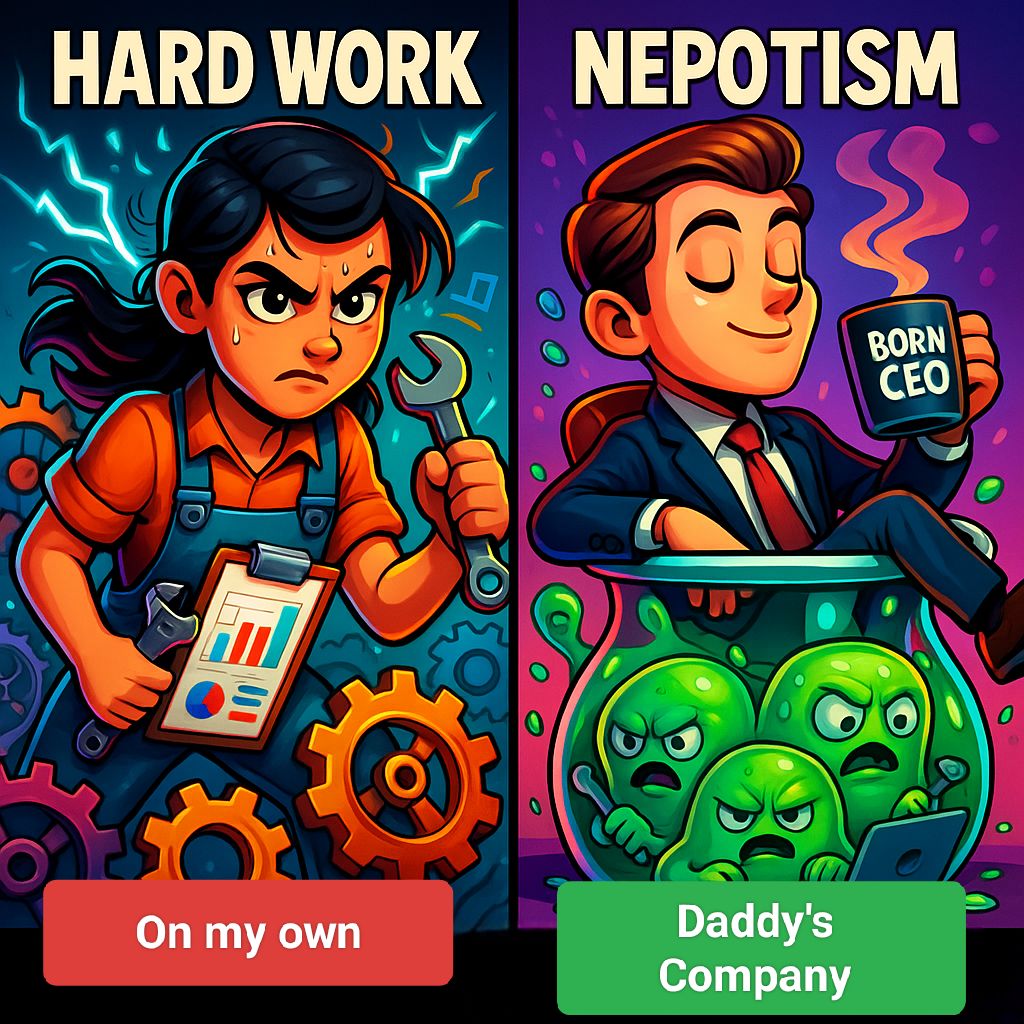
BlueBlood & BlueCollar: When Lineage Meets Line Work
Some inherit empires. Others build them.
One flaunts family crests. The other wears oil-stained sleeves.
But in today’s boardrooms, only one question matters:
CanYouDeliver?
In my world, I’ve seen enough to know—
Pedigree looks great on paper, but Performance builds P&L.
CaseFiles from the Factory Floor
The Heir Who Sweated It Out
👔 Inherited a textile mill—and a disengaged workforce.
🧤 Tried top-down memos. Nothing moved.
⏱️ Clocked in for a 12-hour floor shift.
⚙️ Today? Worker-led SOPs. 30% jump in productivity.
LegacyRedefined
The Engineer With a ₹10,000 Fix
🏭 MNC plant. Profits leaking like bad plumbing.
🛠️ Technician pulls out a scribbled valve tweak.
💡 Cost? ₹10,000 (USD 120).
💸 Savings? ₹1.5 crore (USD 180,000).
✈️ Reward? A ticket to train teams in Germany.
BootsBeforeBots
The Driver Who Rewrote a ₹50 Cr Pitch
📊 Ivy-clad consultants pitch a rural blitz.
🚗 Driver casually mentions: “That market sleeps by 6.
🔍 Cross-check reveals—he was right.
🧠 Campaign reworked. ₹50 crore saved.
WisdomHasNoDressCode
The new leadership badge?
It’s not gold-plated.
It’s Mud-Tested, Fire-Forged, and UnapologeticallyEarned.
RespectTheReal | LineageVsLabor | GroundedGreatness | KtalystKeystone

Originally published on LinkedIn on 2025-04-16 19:20:30: https://www.linkedin.com/feed/update/urn%3Ali%3AgroupPost%3A4023031-7318352609445085184
TRUMPET vs PUFFY: When_Gold_Me_Cold_in_the_Global_Game_of_Thrones Rajnish Jayaswal this is what a discussion with you shapes into 😉
One_built_towers, the other_toppled_borders. Both built empires—with memes and mayhem.
AlphaAmbitions | EgoEconomics | ColdCharmVsHotTakes
In this double-combo geopolitical grudge match, we’ve got:
###⚡ Meet the MachoMavericks ⚡
🧱 Donald “The Trumpet” Trump
Real estate mogul turned reality TV prez
Played NATO like Monopoly
Loves walls, hates WHO (and sometimes spellcheck)
Brings fire, flair & fake news accusations in 280 characters or less
🐻 Vladimir “The Puffy” Putin
KGB’s cold brew, stirred with a shot of authoritarian espresso
Hacked elections like side hustles
Wears geopolitics like camo—tight, tactical, terrifying
Shirtless, speechless, and sanctions-proof
###🥊 Clash_of_the_Titans (and Tweets)
📢 The Trumpet:
Weapon of choice: Twitter, tariffs, and “You’re fired” diplomacy
Calls climate change a hoax but trade wars a strategy
Loved by base, banned by platforms
☠️ The_Puffy:
Weapon of choice: Gas pipelines, cyber ninjas, and long table awkwardness
Dreams in USSR, wakes up in BRICS
Loved by chaos, feared by borders
By_the_Bling & The_Bear: The Tale in Numbers
💰 Net_Worth (claimed)
Trumpet: “$10 billion” (according to Trumpet)
Puffy: Unknown, but Forbes says… let’s not poke that bear
💣 Global_Impact_Quotient
Trumpet: NATO exits, China tariffs, Kim-Kart diplomacy
Puffy: Crimea check-in, Syria sidebar, Ukraine invasion (ongoing…)
🗣️ Most Used Words in Office:
Trumpet: “Tremendous,” “Fake,” “China
Puffy: “Sovereignty,” “Security,” “Not your business.
LeadershipLessons
One_governs_like a CEO gone rogue.
One_governs_like a spy who never left the shadows.
One_tweets_storms, the other_triggers_them.
They may be miles apart—but both made the world hold its breath, stock up on popcorn, and Google ‘what happens in WW3.
#Final Mic Drop:
When Trump played chess, he moved the board. When Putin played chess, he played both sides.
So—who do you think won the loudest legacy?
Drop your thoughts below, but keep it diplomatic. Or don’t. That’s what they’d want.


Originally published on LinkedIn on 2025-03-27 15:32:24: https://www.linkedin.com/feed/update/urn%3Ali%3Ashare%3A7311047447483457536
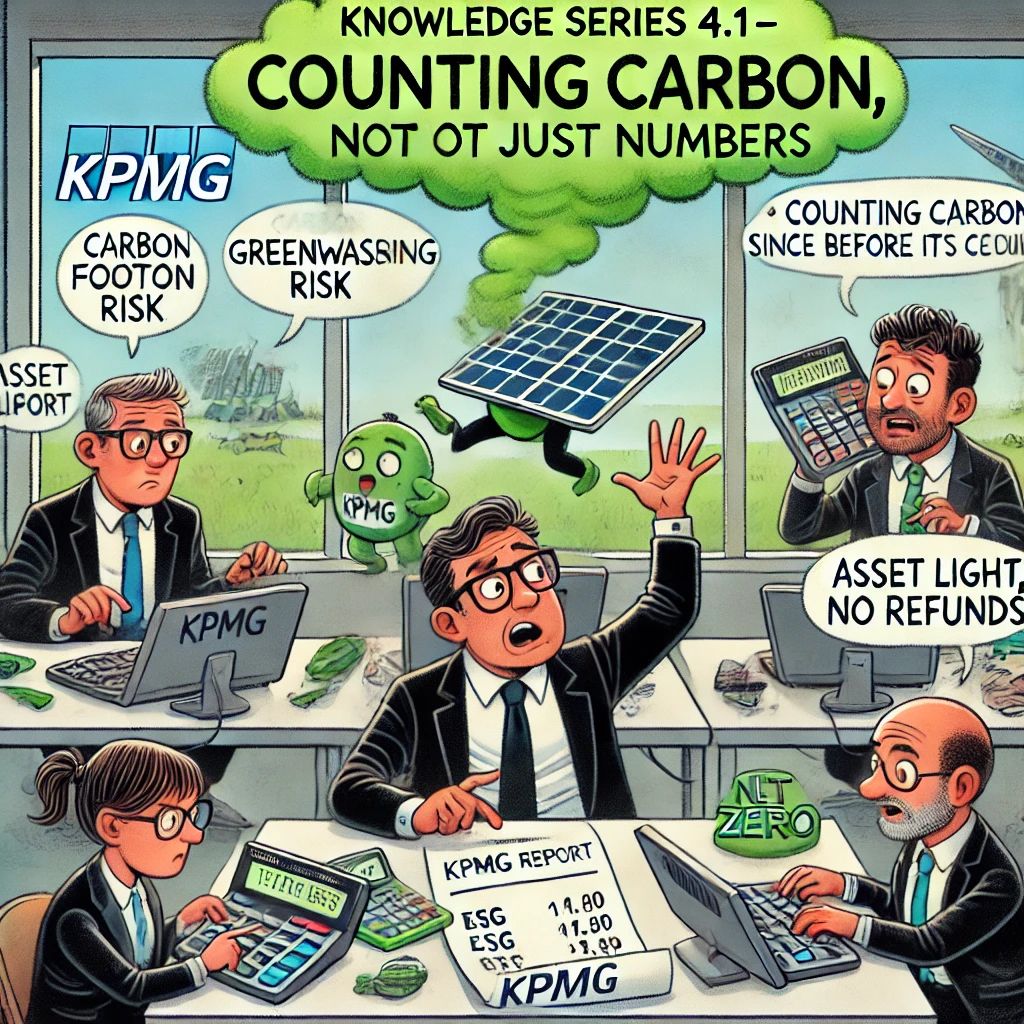
KnowledgeSeries 4.3: KPMG_Counting_Carbon, Not Just Numbers 🌍♻️
🚀 KPMG’s ESG Commitment
KPMG is embedding Environmental, Social, and Governance (ESG) principles into its core strategies, guiding clients toward sustainable and responsible business practices.
🌱 KPMG’s Sustainability Vision
> “This is a once in a generation chance to accelerate change, and make things right. Are you with us?
KPMG’s ESG Perspective
Key Focus Areas:
✅ ESG Strategy & Transformation – Assisting businesses in integrating ESG into their core strategies.
✅ ESG Reporting & Assurance – Enhancing transparency and compliance with evolving regulations.
✅ Decarbonization & Climate Risk – Addressing environmental risks and opportunities.
✅ Sustainable Finance & Tax – Guiding firms on sustainable investment strategies.
📊 KPMG’s Sustainability Leadership in Numbers
Global ESG Investment
US$1.5 billion committed over three years to focus on the ESG change agenda.
Regional ESG Hubs
Establishment of three Regional ESG Hubs in Europe, Asia Pacific, and the Americas to support clients on their ESG journey.
ESG Training & Development
Launch of the KPMG ESG Academy to deliver learning to businesses on a wide range of ESG topics and disciplines.
📑 KPMG’s Key Sustainability Reports & Initiatives
📌 KPMG Survey of Sustainability Reporting 2024 – Highlights that companies worldwide are preparing for the advent of mandatory reporting on sustainability.
📌 KPMG at COP29 – Focuses on accelerating the transformation towards sustainability.
📌 The Challenge of Greenwashing – Provides an international regulatory overview to help companies navigate the complex landscape of sustainability claims.
🔧 KPMG’s Approach to ESG Integration
1️⃣ Strategy Development – Crafting ESG-aligned business strategies.
2️⃣ Risk Management – Identifying and mitigating ESG-related risks.
3️⃣ Reporting Enhancement – Improving ESG data quality and transparency.
4️⃣ Stakeholder Engagement – Building trust through proactive communication.
🔭 The Road Ahead: KPMG’s Future Sustainability Initiatives
Advancing ESG Data Analytics – Utilizing advanced analytics to enhance ESG reporting accuracy.
Promoting Sustainable Finance – Advising clients on responsible investment and green financing options.
Enhancing Climate Disclosures – Aligning with global frameworks like TCFD and TNFD for comprehensive reporting.
Fostering Collaborative Initiatives – Engaging in public-private partnerships to drive systemic sustainability solutions.
🌱 KPMG is not just advising on sustainability—it is embedding it into its organizational DNA.
📢 Next in KnowledgeSeries 4.1 – A deep dive into KPMG’s Sustainable Transformation Strategies! 🔍♻️
💬 How do you perceive KPMG’s role in advancing global sustainability? Share your thoughts below! ⬇️
Sustainability ESG NetZero KPMG CorporateResponsibility ClimateAction TheBigFour KnowledgeSeries4.1


Originally published on LinkedIn on 2025-03-23 16:30:04: https://www.linkedin.com/feed/update/urn%3Ali%3AgroupPost%3A131340-7309612410296852480
🌍 As ESG (Environmental, Social, and Governance) policies evolve, global powerhouses—India, China, the EU, and the US—are reshaping their sustainability strategies. From relaxed reporting norms to renewable energy accelerations, here’s a data-driven snapshot of the latest regulatory shifts impacting corporate ₹sustainability.
The European Pivot: Climate Goals vs. Competitiveness
🔹 €40B+ saved: The EU proposes easing sustainability reporting for companies with fewer than 1,000 employees.
🔹 Softened ESG Rules: Climate disclosure mandates are reduced to maintain business competitiveness.
🔹 UK’s DE&I Backlash: Critics argue ESG-driven hiring fosters groupthink, while Labour MPs push for defense sector investments to be labeled “ethical.
📌 Sources: Reuters | WSJ
The US Cracks Down on ESG Disclosures
🔹 Mandatory Climate Risk Disclosures: The SEC is pushing for standardized ESG reporting.
🔹 Greater Transparency: Public companies must disclose climate risks and governance practices.
📌 Source: SEC
India’s Green Leap: Regulations Driving Change
🔹 BRSR Mandate: Top 1,000 listed companies must disclose ESG performance.
🔹 Green Steel Formula: Steel with <2.2T CO₂ per ton now has a new classification system.
🔹 Renewable Energy Push: From June 2026, clean energy projects must use domestically made solar PV modules.
📌 Sources: SEBI | Reuters
China’s ESG Strategy: Balancing Carbon, Coal, and Clean Energy
🔹 Methane Crackdown: Coal mines with ≥8% methane content must now capture emissions.
🔹 Steel Sector Standards: A new emissions reporting framework is under review.
🔹 2030 Green Target Achieved in 2024: China hit its 1,200 GW wind+solar goal 6 years early.
📌 Sources: Reuters | FT
TheBigPicture: What This Means for Businesses
💡 Global ESG policies are diverging: While the EU is loosening its reporting norms, the US and China are tightening disclosure requirements. India is using ESG regulations to boost domestic green innovation.
📊 Key Takeaways for Businesses:
✔ EU → Less reporting, more flexibility
✔ US → Greater compliance scrutiny
✔ India → Stronger ESG supply chain localization
✔ China → Increased carbon accountability
👉 Which ESG shift affects your industry the most? Let’s discuss! 💬

Originally published on LinkedIn on 2025-03-12 06:04:28: https://www.linkedin.com/feed/update/urn%3Ali%3AgroupPost%3A82951-7305468704958373888
KnowledgeSeries: The_Twin_Transition – Digital_Growth vs. Sustainability in 2025
🌍 Can Digital Innovation Truly Be Sustainable?
The global sustainability technology market is expected to surpass $3 trillion by 2030. Digital transformation is driving efficiency, optimizing supply chains, and reducing carbon footprints. But there’s a paradox—AI, IoT, and Big Data, while helping businesses meet netzero goals, are also straining global resources.
Data centers alone account for 1% of global electricity use and could triple their water consumption by 2030.
Training a single AI model emits 5x the carbon footprint of a car over its lifetime.
By 2026, 50% of tech companies will be legally required to disclose their energy and water consumption.
So, is the TwinTransition a solution or a sustainability challenge?
📊 Twin Transition: The Numbers Speak
📈 The Green Potential
✔ AI-powered smart grids could cut global carbon emissions by 15%.
✔ The CircularEconomy movement is driving 75% of electronics manufacturers to adopt recyclable and sustainable components.
✔ AI-based predictive analytics is helping businesses reduce supply chain waste by 40%.
📉 The Sustainability Dilemma
⚠ Data center energy demand is expected to reach 8% of global electricity consumption by 2030.
⚠ High-performance computing for AI is consuming 50% more power annually than it did in 2020.
⚠ Regulatory pressure is mounting—governments are pushing for mandatory reporting on AI’s carbon footprint.
🚀 AI: The Catalyst or the Crisis?
✅ GreenAI Solutions
AI is improving energy efficiency in manufacturing, reducing waste and emissions.
Smart logistics powered by AI could reduce transportation-related emissions by 20%.
AI-driven energy forecasting is helping businesses optimize renewable energy use.
❌ The Dark Side of AI
Training a single AI model requires as much energy as 100,000 Google searches.
The semiconductor industry, essential for AI, is responsible for over 200 million tons of CO₂ annually.
AI-driven water consumption in data centers is becoming a major concern for drought-prone regions.
🌱 Real-World Twin Transition in Action
🏙 SmartCities & Digital Sustainability
30% urban emissions reduction through AI-powered traffic and energy grid management.
AI-driven monitoring of water leaks is saving billions of liters annually.
Blockchain-enabled carbon credits are ensuring transparent and trackable sustainability commitments.
🌍 EuropeanGreenDeal & NextGenEU
Over €500 billion invested in integrating AI with sustainability initiatives.
Stricter regulations on digital carbon footprints for businesses by 2026.
🔄 CircularEconomy in Tech
Major firms are committing to 100% recyclable components by 2030.
50% of e-waste is now being repurposed for new devices.

Originally published on LinkedIn on 2025-03-10 16:56:28: https://www.linkedin.com/feed/update/urn%3Ali%3AgroupPost%3A82093-7304908008222855169
KnowledgeSeries The_Circular_Economy4Illusion: Why It’s Not Working ♻️
The CircularEconomy is often seen as a sustainability silver bullet, but the data tells a different story. While “reduce, reuse, recycle” sounds promising, the reality is riddled with inefficiencies, high costs, and greenwashing.
🖼️ Recycling is Failing
🔹 91% of plastic waste has never been recycled (UNEP).
🔹 Only 8.6% of global materials are reused annually (Circularity Gap Report 2023).
🖼️ It’s Expensive & Inefficient
🔹 A fully circular transition requires $4.5 trillion (World Economic Forum).
🔹 Reverse logistics costs 5x more than traditional waste disposal (McKinsey).
🖼️ Fast Fashion & E-Waste Contradictions
🔹 92M tons of textile waste is generated yearly (Ellen MacArthur Foundation).
🔹 Only 20% of smartphones are properly recycled, despite valuable metals (UNEP).
🖼️ Greenwashing is Rampant
🔹 60% of sustainability claims are misleading (Changing Markets Foundation).
🔹 Many brands label products “recyclable” but offer no actual recycling infrastructure.
🖼️ The Root Problem: Overproduction
🔹 The world extracts 100B tons of raw materials annually—yet only 8.6% is cycled back (Circularity Gap Report 2023).
🔹 Recycling can’t keep up with rising consumption—we need reduction, not just circularity.
⚡ FinalThought
The CircularEconomy isn’t a solution unless businesses redesign production, reduce overconsumption, and move beyond greenwashing.
💬 What’s your take—Is circularity a real fix, or just a sustainability myth? ⬇️
Originally published on LinkedIn on 2025-03-08 18:31:06: https://www.linkedin.com/feed/update/urn%3Ali%3AgroupPost%3A82951-7304207047842054145
KnowledgeSeries: The Future of CarbonCredits – A USD250B Market by 2050
The carboncredit market is no longer a side conversation—it’s becoming a mainstream financial instrument. With projections hitting #$250B by 2050, businesses and investors must pay attention.
Why? Because companies that integrate NetZero strategies today will gain a competitive edge, while those that don’t will face higher costs, regulatory risks, and shrinking investor confidence.
🌎 The Carbon Credit Boom: Why It’s a Business Imperative
✔️ The voluntary carbon market is set to grow 15X by 2030, reaching #$10B–$40B. (McKinsey)
✔️ Investments in carbon credits hit #$1.7B in 2023, up 50% YoY. (BloombergNEF)
✔️ 6,000+ global companies have set Science-Based Targets (SBTi), driving demand for verified carbon offsets.
✔️ Indonesia, Brazil, and Kenya are integrating carbon markets into their economies, generating revenue from forests, renewable energy, and carbon capture projects.
✔️ Article 6 of the ParisAgreement is enabling international carbon credit trading, boosting market credibility.
🚀 What does this mean for businesses?
✔️ A carbon credit strategy is no longer optional—it’s a business necessity.
✔️ Companies without a decarbonization plan will face higher compliance costs.
✔️ Investors are prioritizing NetZero leaders, making carbon credits a key ESG performance driver.
📊 Who’s Leading the Carbon Credit Race?
✔️ Big Tech & Carbon Capture:
Meta, Microsoft, and Google are securing multi-million-dollar deals in Direct Air Capture (DAC) to future-proof their carbon strategies.
✔️ Financial Institutions Going Green:
BlackRock, JP Morgan, and Goldman Sachs are launching climate-focused funds, treating carbon credits as an emerging asset class.
✔️ Corporate Adoption Soaring:
40%+ of Fortune500 companies are embedding carbon offsets into their business models.
✔️ Government-Led Action:
The EU, Singapore, and Japan are developing regulated carbon exchanges to ensure transparency & standardization.
🌱 What to Expect in 2025 & Beyond?
✔️ Stricter Regulations → Carbon credit verification will be tighter, reducing low-quality offsets & greenwashing risks.
✔️ Rising Prices → As demand outstrips supply, carbon credit prices could triple by 2030, making early adoption a smart financial move.
✔️ Emerging Markets in Play → Africa, Southeast Asia, and Latin America will dominate nature-based carbon solutions (reforestation, soil carbon, etc.).
✔️ Carbon as a Tradable Asset → Institutional investors are pushing for liquid carbon credit markets, making carbon a financialized commodity.
🔍 ComingUpNext: “The Business Case for Carbon Credits – Risks, Rewards & Strategy
Originally published on LinkedIn on 2025-03-08 07:02:05: https://www.linkedin.com/feed/update/urn%3Ali%3AgroupPost%3A82951-7304033651044839424
KnowledgeSeries – Decoding Carbon Credits: Which Ones Truly Make an Impact?
Carbon credits are essential tools in the fight against climate change, but not all credits are created equal. Here’s a quick guide to understanding their types and impact.
🌍 Compliance Carbon Credits
✅ Regulated Offsets – Mandatory under government-led carbon markets.
✅ Examples: EU ETS, California Cap-and-Trade, China ETS.
✅ Who Uses Them? Heavy industries, power plants, airlines, and corporations with emission limits.
💡 Voluntary Carbon Credits
✅ Market-Driven Offsets – Purchased by businesses and individuals to meet sustainability goals.
✅ Examples: Renewable Energy Credits (RECs), Forestry & Land Use, Methane Capture.
✅ Who Uses Them? Airlines, event organizers, eco-conscious brands.
🌱 Nature-Based Carbon Credits
✅ Carbon Sequestration – Uses ecosystems to absorb CO₂.
✅ Examples: Reforestation, Blue Carbon (Mangroves & Seagrass), Soil Carbon Farming.
✅ Why It Matters? Restores biodiversity, improves water cycles, and benefits local communities.
🔬 Technology-Based Carbon Credits
✅ Innovative Carbon Removal – Uses advanced tech to pull carbon from the air.
✅ Examples: Direct Air Capture (DAC), Carbon Capture & Storage (CCS), Waste-to-Energy.
✅ Challenges: High cost, scalability, and energy consumption.
⚡ Avoidance & Reduction Credits
✅ Preventing Emissions at the Source – Focuses on eliminating carbon before it’s released.
✅ Examples: Wind & Solar Energy, Energy Efficiency, Clean Cooking Stoves.
✅ Why It’s Crucial? Immediate impact with proven effectiveness.
🤝 Social Carbon Credits
✅ Climate + Community Benefits – Supports sustainability while improving lives.
✅ Examples: Sustainable Farming, Water Purification, Community Reforestation.
✅ Beyond Carbon? Jobs, education, and health improvements.
🔥 Biochar Carbon Credits
✅ Long-Term Carbon Storage – Converts biomass into stable carbon that remains in the soil.
✅ Benefits: Boosts soil health, prevents methane release, locks carbon for centuries.
✅ The Future? High permanence with agricultural benefits.
Which Carbon Credit Makes the Most Impact?
✅ Compliance Credits – Necessary but market-dependent.
✅ Voluntary Credits – Flexible, but risk of greenwashing.
✅ Nature-Based – Cost-effective and high-impact.
✅ Tech-Based – Promising, but expensive.
✅ Avoidance & Social Credits – Immediate reductions with co-benefits.
✅ Biochar – One of the most durable carbon storage solutions.
💬 Which one do you think has the highest potential for a net-zero future? Comment below!
Sustainability CarbonMarkets NetZero ClimateAction
Originally published on LinkedIn on 2025-03-06 08:05:21: https://www.linkedin.com/feed/update/urn%3Ali%3AgroupPost%3A100646-7303324797692747776
📚 KnowledgeSeries: Corporate Governance – The Backbone of Sustainable Business 🏛📊
In a world where #$5T+ market value losses are linked to governance failures, Corporate Governance isn’t just a boardroom discussion—it’s a business imperative. Strong governance drives transparency, accountability, and investor confidence.
📊 The Pillars of Corporate Governance
🟢 Accountability → 88% of investors prioritize governance in decision-making. (Source)
🟢 Transparency → 80% of corporate fraud cases stem from weak governance.
🟢 Independence → 47% of global board seats are now occupied by independent directors.
🟢 Ethical Leadership → Companies with strong ethics policies outperform peers by 14% in shareholder returns. (Source)
📅 Latest Corporate Governance Trends (2024-2025)
🟢 ESG Integration: 67% of global firms now link executive compensation to ESG performance.
🟢 Board Diversity: The EU mandates 40% women on boards for large companies by 2026.
🟢 AI & Governance: 52% of corporate risk officers see AI governance as a top priority. (Source)
🔍 High-Profile Governance Shifts
🟢 7-Eleven Japan → Appoints first-ever foreign CEO, marking a boardroom culture shift.
🟢 Julius Baer → Reshuffles leadership amid financial stability concerns.
🟢 BP’s Policy Reversal → Investors call out governance gaps as BP shifts focus back to fossil fuels. (Source)
🔥 The Takeaway: Governance = Growth + Stability
📌 Weak governance costs companies billions—investors are watching.
📌 Diversity & ESG-linked pay are shaping leadership decisions.
📌 AI & corporate ethics are the next frontiers in governance risk.
📢 What governance reforms should companies focus on next? Let’s discuss! 👇

Originally published on LinkedIn on 2025-03-04 08:46:57: https://www.linkedin.com/feed/update/urn%3Ali%3Ashare%3A7302610490927542274

