🌍 NamasteIndia Series: Bioplastic Asia vs West in the GreenPackagingRace ♻️
KtalystInsights BioPlasticAsia NamasteIndia CircularEconomy GreenMyths SustainableMaterials PolicyToPlastic
🔬 Japan 🇯🇵
Marine-degradable PHA (Polyhydroxyalkanoates), seaweed-based plastics
¥6.3B biomass R&D (2023)
Clean design meets ocean-safe mindset
🌱 India 🇮🇳
PLA (Polylactic Acid), starch blends, bagasse-based films
Single-use plastic ban (2022)
Only ~5% of cities with compost infra ⚠️
High startup energy, but systems lag
🔁 SouthKorea 🇰🇷
Cellulose acetate and biodegradable blends
EPR (Extended Producer Responsibility) enforcement
Target: 20% landfill reduction by 2030
🏙️ China 🇨🇳
PBAT (Polybutylene Adipate Terephthalate), cassava-starch blends
Plastic bans in 80+ cities
Scaling fast, but traceability gaps remain
🌊 Indonesia 🇮🇩
Seaweed to sachets & foams (e.g., Evoware)
Addressing 650K tons/year marine waste
Local solutions, global promise
🧪 Thailand 🇹🇭
Leading exporter of PLA (Polylactic Acid)
Target: 30% bio-based plastic production by 2030
Composting infrastructure growing with state support
🧬 USA 🇺🇸
PHA, PBAT, PLA (NatureWorks, Danimer Scientific)
$400M+ bioplastic investment (2022–24)
Regulation varies across states
♻️ EU (Germany, France, Italy) 🇪🇺
EN13432-certified PLA, bio-PET (Bio-based Polyethylene Terephthalate)
Plastic taxes, harmonized EPR policies
High consumer awareness + policy pressure
🎯 Decode the Label (with full forms):
✅ Biodegradable
Includes: PLA (Polylactic Acid), PHA (Polyhydroxyalkanoates), PBAT (Polybutylene Adipate Terephthalate)
Decomposes with microbes—but only under industrial composting conditions
♻️ EcoFriendly
Includes: Bio-PET (Bio-based Polyethylene Terephthalate), Cellulose acetate, long-life recyclable polymers
Designed for reuse, recycling, or low emissions—not necessarily biodegradable
🚫 PromotedPlastic
Often marketed with vague terms like “earth-safe” or “bio-enhanced
May be fossil-based with no proven lifecycle benefit
💡 India has the biomass, brains, and business base to lead this revolution.
👇 Who’s leading the real bioplastic breakthrough in your view—Japan’s deep-tech, Europe’s policy power, or India’s startup spirit? Drop a tag. Let’s unbox the buzz and build true circularity.
Originally published on LinkedIn on 2025-06-21 04:26:24: https://www.linkedin.com/feed/update/urn%3Ali%3AgroupPost%3A82951-7342045200246042624
Sunburn or SunBoom?
U.S. Slaps 3,521% Tariffs on Solar Imports — The SolarSector Feels the Heat (and Opportunity)
When the sun shines too bright on unfair play, tariffs bring the shade.” — KtalystInsight
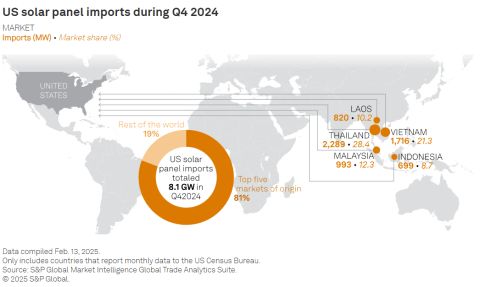
The UnitedStates has swung a solar sledgehammer — imposing tariffs as high as 3,521% on solar panel imports from Cambodia, Vietnam, Thailand, and Malaysia.
This stems from a Department of Commerce finding that Chinese companies were rerouting solar products through Southeast Asia to dodge existing duties.
Winners Emerging:
FirstSolar, Qcells, and other U.S. manufacturers celebrating a MadeInAmerica solar boom.
SolarBank CEO Dr. Richard Lu shared a sharp pivot — expanding domestic community solar and energy storage solutions, especially to feed the AI-driven data center boom.
SolarBank’s new 2.9 MW Gainesville, New York project is already under development.
Losers Worried:
Renewable project developers predict a 20–30% rise in project costs.
Supply chains could see 6–12 months delays, impacting Biden’s climate goals.
Global Echoes: Solar Under Trade Siege
EuropeanUnion’s CBAM (Carbon Border Adjustment Mechanism):
Though solar isn’t covered yet, solar supply chains are preparing for impact.
CBAM rollout from 2026 may push solar module prices up by ~10% if embedded carbon costs get added.
Manufacturers are already shifting wafer and polysilicon production to cleaner-energy countries like Canada and Brazil to avoid CBAM penalties.
India’s Solar Firewall:
Imposed 40% Basic Customs Duty on solar modules from April 2022 to promote Atmanirbhar Bharat.
Indian players like Adani Solar and Tata Power Solar are scaling local module capacity aggressively.
Canada’s Quiet Defense:
Continuing antidumping duties on Chinese modules, aiming to build a resilient domestic clean energy base.
Money Moves: Follow the Smart Investors
Brookfield Renewable Partners and BlackRock are pivoting funds into localized solar manufacturing and battery storage ecosystems.
NextEra Energy eyes major gains by scaling U.S.-based clean energy supply chains.
Ktalyst Perspective:
This tariff wave, plus the CBAM ripple effect, isn’t protectionism — it’s market redesign by climate necessity.
The winners will be solar companies that decarbonize supply chains, invest in local resilience, and pivot toward clean manufacturing clusters in NorthAmerica and India.

Originally published on LinkedIn on 2025-04-26 18:06:28: https://www.linkedin.com/feed/update/urn%3Ali%3AgroupPost%3A2153908-7321957853764677632
NamasteIndia goes vigilant once more!
The imposition of anti-dumping duties on Epichlorohydrin imports from China, SouthKorea, and Thailand is set to impact several Indian industries and companies that rely on this chemical.
Industries_Affected:
1. Adhesives Industry: Epichlorohydrin is a key component in producing adhesives. Companies manufacturing adhesives may face increased raw material costs, potentially affecting their pricing and profitability.
2. Epoxy Resins Production: Epichlorohydrin is essential for producing epoxy resins, which are used in coatings, composites, and electronics. Manufacturers in this sector might experience cost escalations.
3. Textiles and Paper Industries: Epichlorohydrin is used in producing wet-strength resins for paper and textile applications. Companies in these sectors could see increased expenses.
Major Indian Companies Potentially Affected:
1. Pidilite Industries: A leading manufacturer of adhesives and sealants, Pidilite relies on Epichlorohydrin for some of its products.
2. Atul Ltd: Engaged in producing epoxy resins, Atul Ltd uses Epichlorohydrin as a primary raw material.
3. Huntsman International (India) Pvt Ltd: A significant player in the epoxy resins market, Huntsman may face increased production costs due to the duty.
4. Resinova Chemie Ltd: A manufacturer of adhesives and resins, Resinova’s operations could be impacted by the increased cost of Epichlorohydrin.
5. Kemrock Industries and Exports Ltd: Involved in composites manufacturing, Kemrock uses epoxy resins derived from Epichlorohydrin.
Potential Implications:
Increased Production Costs: Companies may face higher expenses due to the duty, leading to increased product prices.
Supply Chain Adjustments: Firms might seek alternative suppliers or consider local production to mitigate costs.
Market Competitiveness: Higher prices could affect the competitiveness of Indian products in domestic and international markets.
While the duty aims to protect domestic Epichlorohydrin producers, it may have a cascading effect on downstream industries, leading to potential price adjustments and strategic shifts within these sectors.
Major Exporters that could be Affected:
1. Jiangsu Yangnong Chemical Group (China)
2. Hanwha Solutions Corporation (South Korea)
3. Shandong Haili Chemical Industry Co., Ltd. (China)
4. AGC Chemicals (Thailand)
5. Olin Corporation (USA, via Asian subsidiaries)
Originally published on LinkedIn on 2024-11-13 06:01:03: https://www.linkedin.com/feed/update/urn%3Ali%3Ashare%3A7262343687093821440
Global Leaders in Ethanol Blending in Fuel: India’s Role and Achievements
NamasteIndia ranks among the top ethanol producers globally, alongside the US and Brazil. Tops Countries
1. US: The largest producer and consumer of ethanol, Production: 876K barrels Consumption 838K barrels per day.
2. Brazil: Produces 403K barrels per day and consumes 359K barrels per day.
3. China: Produces and consumes 43K barrels per day.
4. Canada: Produces 33K barrels per day; consumes 41K barrels per day.
5. France: Produces 17K barrels per day & consumes 13 thousand barrels per day.
6. Germany: Produces 13K barrels per day and consumes 27K barrels per day.
7. Colombia: 8.5K barrels/day (produces), 6.1K barrels/day (consumes).
8. Thailand: 8.1K barrels/day (produces), 9.1K barrels/day (consumes).
9. Guatemala: 8K barrels/day (produces).
10. Spain: 7.9K barrels/day (produces), 8K barrels/day (consumes).
11. Belgium: 6.8K barrels/day (produces), 1.8K barrels/day (consumes).
12. India: 5.3K barrels/day (produces & consumes).
13. Australia: 5.3K barrels/day (produces), 5.1K barrels/day (consumes).
14. UK: Produces 4.3 thousand barrels per day and consumes 17 thousand barrels per day.
India’s Ethanol Blending in Gasoline Industry
Key_Facts_&_Figures
Ethanol Blending Target: India aims to achieve 20% ethanol blending in gasoline by 2025, a goal accelerated from the original target of 2030.
Current Blending Level: As of May 2024, India has achieved a 15% ethanol blending rate.
Economic Impact: A successful ethanol blending program can save India approximately $4 billion (₹30K crore) annually by reducing oil imports.
Production Volume: India plans to produce around 10 billion liters (1,000 crore liters) of ethanol to meet the 20% blending target.
Role of Key Stakeholders
Government:
Policy Framework: The government has implemented policies like the National Policy on Biofuels.
Pricing and Incentives: The government administers ethanol prices and provides incentives to encourage production and blending.
Oil Marketing Companies (OMCs):
Procurement: OMCs issue annual tenders to procure ethanol from producers.
Blending and Distribution: OMCs blend ethanol with gasoline at designated depots and distribute the blended fuel to retail stations.
Sugar Industry:
Production: The sugar industry is a major producer of ethanol, utilizing by-products like molasses. Leading companies include Bajaj Hindusthan Sugar Ltd., Balrampur Chini Mills Ltd., Shree Renuka Sugars Ltd., and Dhampur Sugar Mills Ltd., contributing significantly to the total ethanol production.
Environmental impact: supports bioenergy production and waste utilization but also faces challenges like high water usage and pollution.
Originally published on LinkedIn on 2024-09-25 05:31:06: https://www.linkedin.com/feed/update/urn%3Ali%3AgroupPost%3A60128-7244579146016641026
US Department of Commerce has imposed new tariff duties of up to whooping 165.04%on crystalline silicon photovoltaic (PV) solar imports from China and Taiwan.
This decision was made after finding that panels were being sold too cheaply in the U.S. market.
Additionally, it’s worth noting that AD/CVD tariffs for U.S.-imported solar components from Vietnam, Malaysia, Thailand, and Cambodia have been paused since 2022. If they resume, tariffs ranging from 50% to 250% of the cost of shipped goods would apply to components from China found to have been dumped in these Southeast Asian nations for import to the United States.
https://lnkd.in/d6f9nFqi.
https://lnkd.in/dYPGFyzN
Originally published on LinkedIn on 2024-07-26 19:37:12: https://www.linkedin.com/feed/update/urn%3Ali%3Ashare%3A7222686416395227138

