KnowledgeKtalyst:
AgriWaste = Business:
Sustainability doesn’t grow in labs alone—it sprouts from the fields, from what we left behind.
KtalystKeystone
SweetResidue, StrongFuture: The Sustainability of Sugarcane
India generates over 120 million tons of sugarcane bagasse annually.
Bioethanol market in India projected to hit USD 10 billion by 2028, largely driven by bagasse-based 2G ethanol
Furfural demand in Asia-Pacific growing at CAGR 5.8%, fueled by green solvents
MCC (microcrystalline cellulose) global market expected to reach USD 1.6 billion by 2030
PLA bioplastics: India’s packaging sector pushing demand at >13% CAGR
Kernel to Kilowatt: The Potential of CornWaste
India produces 30–35 million tons of corn stover annually—mostly underutilized.
Cellulosic ethanol from corn projected to cross USD 4.5 billion globally by 2030
Corn-based PLA holds 40%+ of global bioplastics market, growing at CAGR 12%
Corn cob-derived furfural used in pharma & resins is growing fast in EU & China
Biogas from corn waste contributes to India’s SATAT target of 15 MMT gas/year
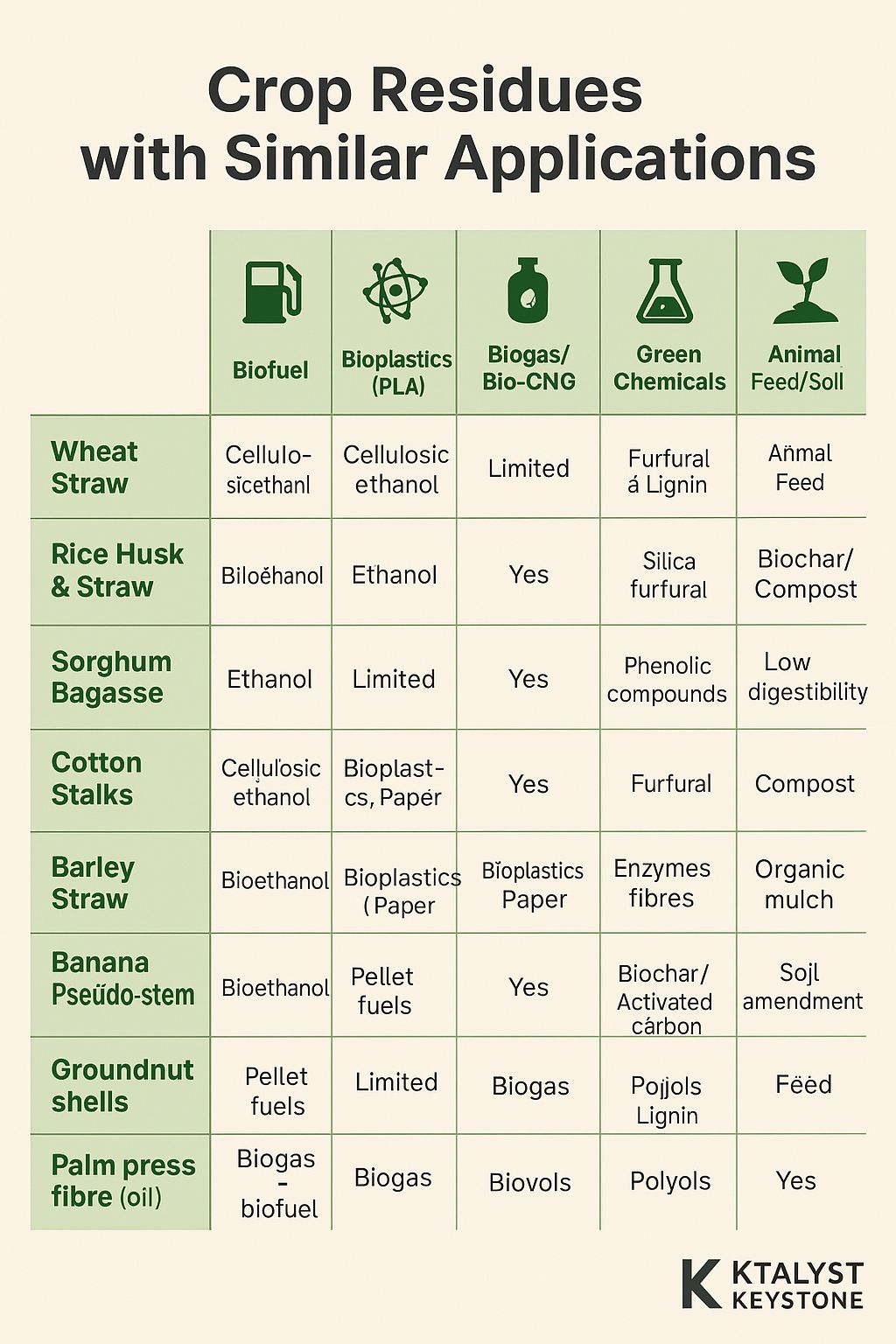
Crop Residues:
Hidden Bio_Assets
Together, India generates over 500 million tons of crop residues annually.
Wheat & rice straw alone contribute ~60% of India’s agricultural residue
Bio_CNG plants using rice straw receive capital subsidies up to 35% under GOBARdhan
Banana stem fibre exports expected to double by 2026 due to paper & fabric demand
Groundnut shells & cotton stalks tapped for biochar and activated carbon—growing global market worth USD 6.5 billion
Palm press fibre reuse supports sustainable palm certification programs in Southeast Asia
Ktalyst Viewpoint
In my opinion, India sits on a biomass treasure chest. The future lies in converting kilotons of agri-waste into megawatts of revenue—through smart policy, public-private pilots, and next-gen processing tech.
This is not just circular. It’s strategically spiral—turning residue into resilience.
Originally published on LinkedIn on 2025-04-11 18:06:08: https://www.linkedin.com/feed/update/urn%3Ali%3AgroupPost%3A2153908-7316521955061383169
NamasteGreenIndia’s Ethanol Revolution: Achieving 20% Blending with a Sustainable Edge
India is on the brink of achieving a 20% ethanol blending target, a transformative step towards energy independence, environmental sustainability, and agricultural empowerment. Here’s how this revolution is shaping up:
📈 The Progress So Far
🟢 2014: Ethanol blending in petrol was just 1.53%.
🟢 2024: Achieved 15%, with 4.62 million metric tonnes (MMT) of ethanol produced.
🟢 2025 Target: Projected to produce 10.2 MMT annually to meet blending and industrial needs.
🌍 Economic & Environmental Wins
💰 USD 4 Billion Saved: Annual savings on crude oil imports.
🌎 10 MMT CO₂ Reduced: Emissions cut significantly with 20% ethanol blending.
👷 500,000 Jobs Created: Boosting rural employment through distilleries and supply chains.
🚢 USD 300 Million Export Potential: Surplus ethanol positioned for international markets.
🚗 Automotive Industry’s Ethanol Push
🔧 Flex-Fuel Vehicles: Tata Motors, Mahindra, Maruti Suzuki, and Hyundai to launch 100% bio-ethanol vehicles within six months.
🛢️ Fossil Fuel Demand Cut: Flex-fuel vehicles to reduce reliance on fossil fuels by 5.5 MMT annually.
🏭 Toyota’s Commitment: Investing ₹20,000 crore (USD 2.4 billion) in ethanol-compatible vehicle production.
🌾 Agricultural Boost
🌱 8-9 MMT of Sugar: Diverted annually for ethanol production, stabilizing prices and supporting farmers.
🌾 1.5 MMT of Surplus Grains: Utilized for ethanol, ensuring sustainable revenue for agriculture.
⚡ Challenges & Opportunities
📊 Feedstock Demand: India needs an additional 2 MMT of sugarcane and 1.5 MMT of surplus grains for sustainable production.
🏗️ Infrastructure Gaps: Only 30% of fuel pumps are ready for E20 blending.
🌍 Global Leadership: Scaling production and refining distribution could position India as a leader in ethanol exports.
💡 Why This Matters
India’s ethanol revolution is more than a blending target—it’s about energy self-reliance, cutting carbon footprints, and empowering rural economies. This initiative showcases India as a global benchmark for sustainable energy transitions.
💬 Let’s discuss how India’sEthanolJourney is driving SustainableEnergy, AutomotiveInnovation, and RuralEmpowerment! 🚀
Originally published on LinkedIn on 2025-01-16 09:51:29: https://www.linkedin.com/feed/update/urn%3Ali%3AgroupPost%3A12538632-7285594503120347137

