ESG Watch: Trump’s SEC Tightens the Noose on Sustainable Investing
📉 The ESG Backslide – What’s at Stake?
The U.S. sustainability landscape just took a sharp turn. The SEC under the Trump administration has introduced new rules that make it harder for ESG investors to hold companies accountable for climate and social impacts. The implications? A potential slowdown in sustainable finance and a rollback on climate progress.
🚨 Key Policy Shifts That Could Derail ESG Investing
🔻 Stricter Shareholder Proposals – Investors now need higher ownership thresholds to file resolutions on sustainability concerns. Fewer proposals mean companies are under less pressure to disclose ESG risks.
🔻 Weaker Disclosure Requirements – Corporations no longer need to publicly report climate-related financial risks, making it harder for investors to assess long-term sustainability performance.
🔻 Financial Institutions Backtracking – Fear of legal pushback has led major Wall Street players to scale back their net-zero commitments, signaling a retreat from climate-conscious investing.
📊 ESG in Decline? The Data Speaks
📌 $8.4 trillion – Total ESG-related assets in the U.S. (2023), expected to drop by 20% under new regulations.
📌 55% – Shareholder support for ESG resolutions in 2022. The new SEC rules make such resolutions significantly harder to file.
📌 3 out of 5 – Top U.S. banks that quietly exited climate finance alliances post-regulatory changes.
📌 40% of Fortune 500 companies – Now re-evaluating their sustainability targets due to regulatory uncertainty.
🌎 The Global Fallout – U.S. vs. The World
The U.S. is moving in the opposite direction of global markets:
✅ EU & UK: Tightening ESG regulations, forcing companies to disclose sustainability metrics.
❌ U.S.: Loosening rules, allowing companies to operate with less transparency on climate risks.
🌏 Emerging Markets: Seeing a boom in ESG investing, as capital shifts to regions with clearer regulatory frameworks.
🚀 The Future of ESG Investing – What’s Next?
💡 Adapt or Exit? Investors may shift focus to voluntary ESG frameworks or pivot to international markets with stronger sustainability policies.
⚠️ Lawsuits Incoming? Some shareholder groups are preparing legal challenges, arguing the SEC’s rollback puts both investors and the planet at risk.
🔄 Corporate Greenwashing? Without strict reporting, companies might fake sustainability commitments without real action.
🛡️ ESG Isn’t Dead Yet. Climate risks aren’t going away. Investors will find new ways to drive sustainable finance, even in a tougher regulatory environment.
🔗 Read More: Reuters Report
Originally published on LinkedIn on 2025-03-18 09:19:16: https://www.linkedin.com/feed/update/urn%3Ali%3AgroupPost%3A100646-7307692054954835969
KnowledgeSeries: The Future of CarbonCredits – A USD250B Market by 2050
The carboncredit market is no longer a side conversation—it’s becoming a mainstream financial instrument. With projections hitting #$250B by 2050, businesses and investors must pay attention.
Why? Because companies that integrate NetZero strategies today will gain a competitive edge, while those that don’t will face higher costs, regulatory risks, and shrinking investor confidence.
🌎 The Carbon Credit Boom: Why It’s a Business Imperative
✔️ The voluntary carbon market is set to grow 15X by 2030, reaching #$10B–$40B. (McKinsey)
✔️ Investments in carbon credits hit #$1.7B in 2023, up 50% YoY. (BloombergNEF)
✔️ 6,000+ global companies have set Science-Based Targets (SBTi), driving demand for verified carbon offsets.
✔️ Indonesia, Brazil, and Kenya are integrating carbon markets into their economies, generating revenue from forests, renewable energy, and carbon capture projects.
✔️ Article 6 of the ParisAgreement is enabling international carbon credit trading, boosting market credibility.
🚀 What does this mean for businesses?
✔️ A carbon credit strategy is no longer optional—it’s a business necessity.
✔️ Companies without a decarbonization plan will face higher compliance costs.
✔️ Investors are prioritizing NetZero leaders, making carbon credits a key ESG performance driver.
📊 Who’s Leading the Carbon Credit Race?
✔️ Big Tech & Carbon Capture:
Meta, Microsoft, and Google are securing multi-million-dollar deals in Direct Air Capture (DAC) to future-proof their carbon strategies.
✔️ Financial Institutions Going Green:
BlackRock, JP Morgan, and Goldman Sachs are launching climate-focused funds, treating carbon credits as an emerging asset class.
✔️ Corporate Adoption Soaring:
40%+ of Fortune500 companies are embedding carbon offsets into their business models.
✔️ Government-Led Action:
The EU, Singapore, and Japan are developing regulated carbon exchanges to ensure transparency & standardization.
🌱 What to Expect in 2025 & Beyond?
✔️ Stricter Regulations → Carbon credit verification will be tighter, reducing low-quality offsets & greenwashing risks.
✔️ Rising Prices → As demand outstrips supply, carbon credit prices could triple by 2030, making early adoption a smart financial move.
✔️ Emerging Markets in Play → Africa, Southeast Asia, and Latin America will dominate nature-based carbon solutions (reforestation, soil carbon, etc.).
✔️ Carbon as a Tradable Asset → Institutional investors are pushing for liquid carbon credit markets, making carbon a financialized commodity.
🔍 ComingUpNext: “The Business Case for Carbon Credits – Risks, Rewards & Strategy
Originally published on LinkedIn on 2025-03-08 07:02:05: https://www.linkedin.com/feed/update/urn%3Ali%3AgroupPost%3A82951-7304033651044839424
🚨 India’s EVRegulations 2025: What’s New & What It Means for the Industry? ⚡🚗
With EV sales in India growing 49% YoY, new regulatory shifts are shaping the future of the sector. The latest policies focus on local manufacturing, safety standards, & market expansion while setting new rules for charging infrastructure & import incentives. Here’s what’s changing:
📊 Key EV Policy Updates & Their Impact
🔹 Investment Caps on Charging Infrastructure
📌 The Indian Government now limits EV manufacturers to count only 5% of their total investment in charging networks toward the #$500M minimum investment required for lower import tariffs.
📌 Why It Matters? This ensures priority to local EV production, reducing reliance on imports. (Source)
🔹 Tesla’s Entry & Market Implications
📌 Tesla is setting up showrooms in Mumbai & New Delhi and exploring local production. However, high import duties (up to 100%) could push Tesla’s pricing into the luxury segment, making affordability a challenge.
📌 EV Market Reality: The average car price in India is #$10,000-$15,000, while a Tesla Model 3 would cost over #$50,000 without local assembly. (Source)
🔹 Stricter Safety & Battery Standards
📌 BIS (Bureau of Indian Standards) introduces new EV safety rules, requiring all EVs to meet upgraded performance & fire safety benchmarks.
📌 Battery Regulation: EV battery makers must obtain AIS 156 certification from ARAI (Automotive Research Association of India) to ensure safety compliance.
📌 Why It Matters? India aims to reduce EV fire risks, ensuring consumer safety and boosting market confidence. (Source)
🔹 Union Budget 2024-25: EV Industry Boost
📌 Customs duty exemptions on 25 critical minerals used in EV battery production will lower manufacturing costs.
📌 PLI (Production-Linked Incentive) expansion aims to reduce import dependency & boost domestic production.
📌 FAME III (Faster Adoption & Manufacturing of Electric Vehicles) is expected to focus on charging infrastructure expansion. (Source)
⚡ The Takeaway: What’s Next for India’s EV Industry?
🚀 EV penetration in India is at 2% but projected to hit 30% by 2030.
🚀 Government policies favor local EV manufacturing over imports.
🚀 Safety & compliance measures will shape consumer trust & adoption.
📢 Will these new regulations accelerate India’s EV transition or slow global players like Tesla? Let’s discuss! 👇
Source / shared link: https://m.economictimes.com/industry/renewables/govt-set-to-notify-new-ev-policy-with-new-investment-rules-as-tesla-prepares-for-india-entry/articleshow/118415610.cms
Originally published on LinkedIn on 2025-02-27 06:19:45: https://www.linkedin.com/feed/update/urn%3Ali%3AgroupPost%3A82093-7300761508139974656
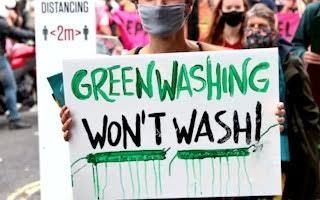
🚨 BigBrands, BIGGERFines: The Recycling Greenwashing Scandal Exposed! ♻💰
We’ve been told recycling is the answer to plastic waste. But what if the system itself is built on fraud and deception? BigBrands are now facing BIGFINES for misleading consumers about recyclability. Here’s how the deception unfolded over the years:
📅 TIMELINE OF GREENWASHING IN RECYCLING
🔹 YR1990s – The Recycling Illusion Begins
📌 Plastic industry documents reveal that producers knew recycling wouldn’t work on a large scale—but they marketed it as the solution to keep plastic production high. (Source)
🔹 YR2000s – Growth of the ‘Recyclable’ Label
📌 Brands like CocaCola, Nestlé, and Unilever start aggressively using recyclable labels, despite knowing that most plastic isn’t actually recycled due to contamination and lack of facilities. (Source)
🔹 YR2018 – China Bans Plastic Waste Imports
📌 China’s NationalSword policy ends global reliance on cheap recycling, exposing the broken system. The US and EU struggle to process their own plastic waste.
🔹 YR2022 – Keurig Faces Greenwashing Lawsuit
📌 KeurigDrPepper pays #$3M in Canada and $1.5M in the US for falsely claiming its K-Cups were recyclable, despite most recycling centers rejecting them. (Source)
🔹 YR2023 – EU Cracks Down on Greenwashing
📌 The EU introduces legislation requiring brands to prove their sustainability claims or face heavy fines.
🔹 YR2024 – ExxonMobil Sued for Recycling Lies
📌 California sues ExxonMobil, accusing them of knowingly misleading the public about plastic recycling.
🔹 YR2025 & Beyond – The Future of Greenwashing Accountability?
📌 Global brands will face stricter regulations and fines in the billions for misleading sustainability claims. Will it be enough to stop greenwashing?
🚨 THE REALITY CHECK: Only 5% of Plastic is Actually Recycled
📌 Despite all the marketing, 95% of plastic waste still ends up in landfills, oceans, or incinerators. We’re not recycling our way out of this crisis. (Source)
💡 The Takeaway: It’s time for big brands to face bigger consequences for deceptive sustainability claims. Recycling is NOT the solution—reducing plastic production is.
📢 What’s Next? Should governments ban false recycling claims? Should companies pay for end-to-end plastic responsibility? Let’s talk below! 👇
Originally published on LinkedIn on 2025-02-26 16:11:56: https://www.linkedin.com/feed/update/urn%3Ali%3AgroupPost%3A82951-7300548149285117954
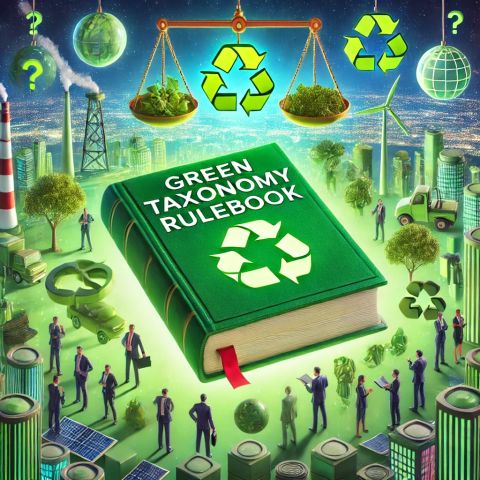
🌍 Green_Taxonomy: The Billion_Dollar_Climate_Rulebook” 📖💰♻️
Governments & investors are pumping trillions into ‘green projects’, but how do we know what’s actually sustainable and what’s greenwashing? That’s where Green Taxonomy comes in—a global rulebook defining what’s truly green.
Let’s break it down data-first.
📖 1. What is Green_Taxonomy?
✅ A classification system that defines which economic activities are truly ‘green.
✅ Prevents greenwashing by ensuring companies & funds don’t falsely claim sustainability.
✅ Guides investors & governments toward legitimate climate-friendly projects.
🚨 Why It Matters? Over $1.5 trillion in ESG investments may be at risk due to misleading green claims. (Bloomberg, 2024)
🏆 Key Impact: Governments use Green Taxonomy to shape climate policies, carbon markets, and financial incentives.
🌎 2. Global Green Taxonomies: Who’s Leading?
✅ 🇪🇺 EU Taxonomy: Strictest framework, defining what counts as green. (Source: EU Commission, 2024)
✅ 🇨🇳 China’s Green Bonds Catalog: Focuses on renewable energy & pollution control. (PBOC, 2024)
✅ 🇮🇳 India’s Green Taxonomy: Aligned with Sustainable Finance Guidelines. (RBI, 2024)
✅ 🇺🇸 US SEC ESG Rules: Weaker than EU’s, but cracking down on greenwashing. (SEC, 2024)
🚨 The Problem? Each country defines ‘green’ differently, creating market confusion for investors.
🏆 What’s Needed? A globally harmonized green taxonomy to ensure credibility & consistency.
💰 3. How Green Taxonomy Affects Business & Investments
✅ Corporations Must Report Sustainability Metrics or risk losing ESG funding.
✅ Green Bonds & Climate Finance—Only certified green projects qualify for funding.
✅ High-Carbon Industries (Oil, Gas, Cement) face stricter compliance & reporting rules.
🚨 Reality Check: #$4.2 trillion in green bonds were issued in 2023—but without strong taxonomy rules, many may not be truly ‘green.’ (Climate Bonds Initiative, 2024)
🏆 Who Wins? Companies investing in real sustainability, not just optics.
⚖️ 4. The Green Taxonomy Controversies
🔴 Is Nuclear Energy Green? 🇪🇺 The EU says YES. Critics say radioactive waste isn’t sustainable.
🔴 Is Natural Gas Green? 🇪🇺 Labeled it ‘transitional green’, sparking backlash from climate groups.
🔴 Are Carbon Offsets Valid? Many taxonomies exclude carbon credits due to verification concerns.
🚨 The Challenge? Balancing economic growth & real sustainability without greenwashing.
🏆 KeyTakeaway
The Green Taxonomy is reshaping global finance & sustainability rules. Countries that set clear standards will attract more green investments, while loopholes & weak regulations risk fueling greenwashing.
👉 Will Green Taxonomy stop greenwashing or just create more loopholes?
GreenFinance Sustainability ESG CarbonMarkets NetZero ClimateAction

Originally published on LinkedIn on 2025-01-31 08:57:08: https://www.linkedin.com/feed/update/urn%3Ali%3AgroupPost%3A100646-7291016643428704256
NamasteIndia…..“Howdy, Modi!” “Namaste Trump
Sisterhood Between Countries and Bromance Between Leaders: How India_US Relations Will Develop with Trump Returning to the White House?
With DonaldTrump now elected as the 47th President of the UnitedStates, he has expressed admiration for India and Prime Minister Narendra Modi, calling them both “magnificent.” This personal rapport between the leaders, combined with the strategic alignment of the two countries, lays the groundwork for a promising yet complex relationship. Here’s a look at how this “sisterhood” between the nations and “bromance” between the leaders might shape the future of India-US relations.
Strengthening Defense and Security Ties
Trump’s previous tenure saw him focus on defense partnerships with India, including arms sales and joint military exercises.
As a Major Defense Partner, India’s role in the Indo-Pacific is likely to grow, with Trump aiming to deepen these ties as a counterbalance to regional threats.
Trade Relations: Balancing Act
Trade was contentious under Trump, with tariffs on Indian goods and the revocation of India’s preferential trade status.
Both nations may aim to negotiate a balanced trade agreement that addresses these past disputes while fostering economic growth.
Immigration Policies and Skilled Workforce
Trump’s administration previously implemented stricter immigration policies, impacting Indian professionals in the tech sector.
While prioritizing American jobs will likely continue, there may also be an effort to balance this with India’s significance in the global tech landscape.
Strategic Cooperation in the Indo-Pacific
The Trump administration emphasized India’s role in the Indo-Pacific, including through collaborations like the Quadrilateral Security Dialogue (Quad).
As China’s influence grows, Trump is expected to promote India as a crucial ally, advocating for a free and open Indo-Pacific region.
Personal_Diplomacy and Public Engagement
The “bromance” between Trump and Modi was highlighted in events like “Howdy, Modi!” in Houston and “Namaste Trump” in Ahmedabad, which showcased their strong rapport.
This personal connection is expected to continue, with high-profile events likely reinforcing the symbolic and substantive strength of the India-US partnership.
In summary, Trump’s return to the White House signals both opportunities and challenges for India-US relations. While defense and strategic cooperation are set to deepen, issues like trade and immigration may require nuanced negotiations. With the “sisterhood” between the countries and the “bromance” between Trump and Modi, this critical partnership is well-positioned to evolve and adapt in a shifting global landscape.
Source / shared link: https://www.hindustantimes.com/india-news/pm-modi-dials-up-trump-says-looking-forward-to-work-together-again-101730912539575-amp.html
Originally published on LinkedIn on 2024-11-08 02:44:28: https://www.linkedin.com/feed/update/urn%3Ali%3Ashare%3A7260482279607558144

