KnowledgeSeries – Decoding Carbon Credits: Which Ones Truly Make an Impact?
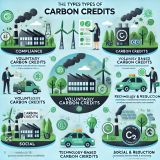
Carbon credits are essential tools in the fight against climate change, but not all credits are created equal. Here’s a quick guide to understanding their types and impact.
🌍 Compliance Carbon Credits
✅ Regulated Offsets – Mandatory under government-led carbon markets.
✅ Examples: EU ETS, California Cap-and-Trade, China ETS.
✅ Who Uses Them? Heavy industries, power plants, airlines, and corporations with emission limits.
💡 Voluntary Carbon Credits
✅ Market-Driven Offsets – Purchased by businesses and individuals to meet sustainability goals.
✅ Examples: Renewable Energy Credits (RECs), Forestry & Land Use, Methane Capture.
✅ Who Uses Them? Airlines, event organizers, eco-conscious brands.
🌱 Nature-Based Carbon Credits
✅ Carbon Sequestration – Uses ecosystems to absorb CO₂.
✅ Examples: Reforestation, Blue Carbon (Mangroves & Seagrass), Soil Carbon Farming.
✅ Why It Matters? Restores biodiversity, improves water cycles, and benefits local communities.
🔬 Technology-Based Carbon Credits
✅ Innovative Carbon Removal – Uses advanced tech to pull carbon from the air.
✅ Examples: Direct Air Capture (DAC), Carbon Capture & Storage (CCS), Waste-to-Energy.
✅ Challenges: High cost, scalability, and energy consumption.
⚡ Avoidance & Reduction Credits
✅ Preventing Emissions at the Source – Focuses on eliminating carbon before it’s released.
✅ Examples: Wind & Solar Energy, Energy Efficiency, Clean Cooking Stoves.
✅ Why It’s Crucial? Immediate impact with proven effectiveness.
🤝 Social Carbon Credits
✅ Climate + Community Benefits – Supports sustainability while improving lives.
✅ Examples: Sustainable Farming, Water Purification, Community Reforestation.
✅ Beyond Carbon? Jobs, education, and health improvements.
🔥 Biochar Carbon Credits
✅ Long-Term Carbon Storage – Converts biomass into stable carbon that remains in the soil.
✅ Benefits: Boosts soil health, prevents methane release, locks carbon for centuries.
✅ The Future? High permanence with agricultural benefits.
Which Carbon Credit Makes the Most Impact?
✅ Compliance Credits – Necessary but market-dependent.
✅ Voluntary Credits – Flexible, but risk of greenwashing.
✅ Nature-Based – Cost-effective and high-impact.
✅ Tech-Based – Promising, but expensive.
✅ Avoidance & Social Credits – Immediate reductions with co-benefits.
✅ Biochar – One of the most durable carbon storage solutions.
💬 Which one do you think has the highest potential for a net-zero future? Comment below!
Sustainability CarbonMarkets NetZero ClimateAction
Originally published on LinkedIn on 2025-03-06 08:05:21: https://www.linkedin.com/feed/update/urn%3Ali%3AgroupPost%3A100646-7303324797692747776
🚨 Moody’s Shakes_Up_Credit_Ratings: The Green_Penalty & Reward_Effect!♻
With #$1.6T+ in ESG-linked financing, Moody’s is redefining creditworthiness, rewarding sustainability leaders & penalizing ESG laggards. 📉🚀 Companies failing on climate, social, & governance metrics are seeing their ratings cut—raising borrowing costs & investor risks.
📊 Companies Hit by Moody’s ESG_Based_Credit_Rating Adjustments
🟥 Nissan Motors – Downgraded 🚨
📌 Moody’s cut Nissan to junk due to weak sustainability integration & financial instability. (Source)
🟥 PG&E – Downgraded 🚨
📌 #$30B in wildfire liabilities led Moody’s to downgrade PG&E, linking climate risk to creditworthiness.
🟩 Royal Philips – Upgraded 🚀
📌 Green loan secured with ESG-linked interest rates, rewarding sustainability progress.
🟥 Thames Water – Downgraded 🚨
📌 Environmental violations & debt risks slashed its credit rating, as S&P flagged financial instability.
🟩 Casino Guichard-Perrachon – Upgraded 🚀
📌 Secured sustainability-linked loans, reducing interest rates based on ESG performance.
🟥 Enbridge – Downgraded 🚨
📌 Despite green loans, Moody’s questioned its carbon-heavy projects, impacting its rating.
🟩 Unibail-Rodamco-Westfield – Upgraded 🚀
📌 Green finance unlocked better credit conditions via ESG-tied loans.
🟥 Avangrid Gas Subsidiaries – Downgraded 🚨
📌 Regulatory ESG concerns lowered its credit ratings, citing fossil fuel dependency.
🟩 Drax Group – Under Review 🔍
📌 Sustainability-linked loans triggered scrutiny over carbon intensity goals.
🟥 Southern Water – Downgraded 🚨
📌 Environmental fines & governance risks led Moody’s to cut its credit rating.
🔥 The Takeaway: Moody’s Is Now Pricing in Sustainability Risks
🟢 17% of Moody’s rated firms see ESG risks impact their credit scores.
🟢 Companies with poor sustainability scores pay up to 15% higher borrowing costs.
🟢 Sustainability-linked finance = Lower interest rates & stronger credit ratings.
📢 Is this the wake-up call for businesses ignoring ESG? Let’s discuss below! 👇

Originally published on LinkedIn on 2025-02-27 12:45:56: https://www.linkedin.com/feed/update/urn%3Ali%3AgroupPost%3A82951-7300858693879799809
🚨 Moody’s & Sustainability: ESG is Now a Credit Rating Factor! 📊💚
With #$40T in ESG assets under management, Moody’s is reshaping how financial markets assess creditworthiness. No longer just about profits & losses, a company’s sustainability risks now directly impact credit ratings, borrowing costs, & investment potential.
🔍 How Moody’s Integrates Sustainability into Credit Ratings
🟢 ESG factors impact the credit ratings of 18% of companies & governments rated by Moody’s. (Source)
📊 Issuer Profile Scores (IPS): Measures 15 ESG subfactors (climate risk, governance strength, social responsibility).
📊 Credit Impact Scores (CIS): Rates how ESG performance affects a company’s credit rating & risk profile.
📊 Second Party Opinions (SPOs): Validates Green Bonds & Sustainability-Linked Loans, ensuring funds are climate-aligned.
🔹 Moody’s now assesses over 3,000 entities based on ESG factors.
💰 ESG & Financial Impact: Why Credit Ratings Depend on Sustainability
🏦 Banks & Investors Are Watching
📌 Companies with poor ESG ratings face higher borrowing costs, as investors demand sustainability-linked loans & bonds.
📉 Carbon-Intensive Companies Are High-Risk
📌 Firms with high Scope 3 emissions face 15-20% valuation risks due to carbon pricing & regulatory changes. (Source)
🚀 Sustainability-Linked Bonds & Loans Are Surging
📌 #$1.6T in sustainability-linked bonds & loans have been issued, with Moody’s validating green claims to prevent greenwashing. (Source)
🌍 Moody’s ESG Leadership: Recognitions & Market Influence
🏆 FTSE4Good Index Inclusion (6 Years Running) → Recognizing top ESG performers.
🏆 EcoVadis Bronze Medal → Top 35% of global companies for sustainability.
🏆 CDP Supplier Engagement Leader → Among the top 4% of companies driving supply chain decarbonization. (Source)
🔥 The Takeaway: Sustainability is No Longer Optional
🟢 18% of Moody’s rated companies now have ESG-driven credit adjustments.
🟢 Investors demand transparent sustainability metrics before lending.
🟢 Greenwashing is no longer profitable—credit ratings now hold companies accountable.
📢 Should ESG be an even bigger factor in credit ratings? Let’s discuss below! 👇

Originally published on LinkedIn on 2025-02-27 04:39:26: https://www.linkedin.com/feed/update/urn%3Ali%3AgroupPost%3A82951-7300736262829711360
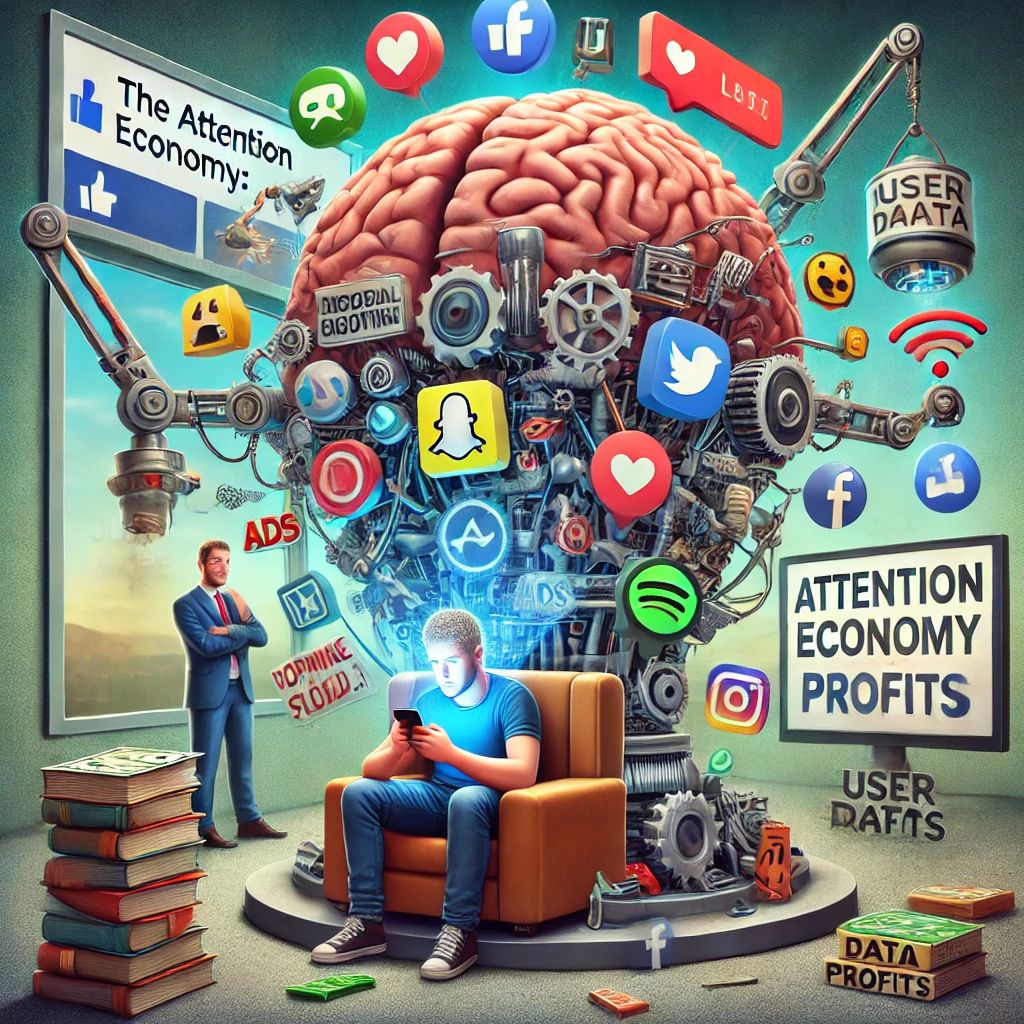
🚀 “The Attention Economy: Are We Paying or Being Played?” 🧠📱💰
In a world where notifications never stop and algorithms know us better than we do, attention has become the most valuable commodity. But are we truly in control, or just products in the digital marketplace?
📊 The Business of Attention
✅ The average person spends 7 hours a day on screens. (Statista, 2024)
✅ Digital ad spending hit $700B globally in 2023. (eMarketer, 2024)
✅ Social media engagement is worth $1.5T to tech giants. (Forbes, 2024)
❌ But attention spans have dropped from 12 seconds (2000) to 8 seconds (2024). (Microsoft Study)
🚨 Reality Check: Are we consuming content, or is content consuming us?
🔴 How the Attention Economy Manipulates Us
🧠 Dopamine Loops: Infinite scrolling & notifications keep us addicted.
📱 Algorithm Traps: AI-driven feeds push extreme content to maximize engagement.
💰 Monetized Distraction: Platforms profit from every second of our attention.
🚨 Reality Check: If it’s free, you’re the product.
🔎 Who’s Winning in the Attention Economy?
🔹 🇺🇸 TikTok & Instagram: Hooking Gen Z with ultra-short content.
🔹 🇺🇸 YouTube & Netflix: Using AI to predict and control viewing habits.
🔹 🇨🇳 Tencent & Bytedance: Monetizing micro-engagement with gamification.
🔹 🇮🇳 Jio & ShareChat: Expanding India’s digital consumption at record speed.
🚨 Reality Check: Are we really choosing what we watch, or is it choosing us?
🏆 KeyTakeaway
The Attention Economy could be a tool for learning and connection, should be designed for well-being, but would be a dystopian trap if we let tech control our focus.
👉 Are you in charge of your attention, or is someone else profiting from it?
AttentionEconomy DigitalAddiction BigTech AI SocialMedia
Originally published on LinkedIn on 2025-02-04 12:25:19: https://www.linkedin.com/feed/update/urn%3Ali%3AgroupPost%3A9270968-7292518584398893056
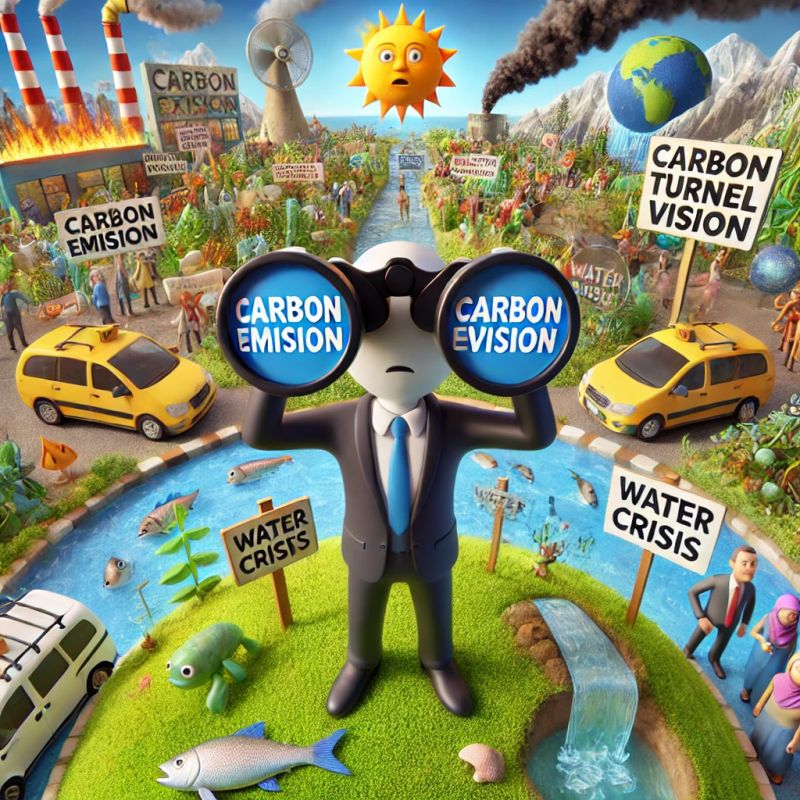
CarbonTunnelVision Gigantic_Mistake: Are We Missing the Big Picture? 🌍🌱
What is Carbon Tunnel Vision?
Focusing solely on carbon emissions while ignoring other sustainability factors like biodiversity, water, pollution, and equity.
KeyStats:
🟢 Afforestation_Gone_Wrong
Fact: Non-native tree plantations in Chile increased carbon storage but reduced local biodiversity by 60%. (Source: UNEP, 2023)
🔵 Water_Trade-Offs in Agriculture
Fact: Low-carbon crops like almonds require 1.1 gallons of water per almond, worsening droughts in water-scarce regions. (Source: WWF, 2023)
🟣 Biodiversity_Loss
Fact: Solar farms in India save 1.2M tons of CO₂ annually, but displace endangered wildlife habitats. (Source: WRI, 2023)
🟠 Pollution Ignored
Fact: Factories cutting carbon emissions often increase water and soil pollution by 30-40%. (Source: IPCC, 2023)
🔴 Social Impact Overlooked
Fact: Renewable energy projects displaced 42 million people globally between 2000 and 2022. (Source: Oxfam, 2023)
Takeaway
Carbon_Tunnel_Vision limits true sustainability. To create a balanced future, we must go BeyondCarbon and adopt HolisticStrategies that protect ecosystems, water, and communities. 🌱
👉 Are your sustainability goals stuck in the tunnel? Time to zoom out!
Sustainability ClimateAction ESG Leadership
Originally published on LinkedIn on 2025-01-25 06:05:01: https://www.linkedin.com/feed/update/urn%3Ali%3AgroupPost%3A3880479-7288799002844667904
NamasteDevelopingIndia
🇮🇳Viksit Bharat 2047 in bullet form:
Vision: Transform India into a fully developed nation by 2047.
Centenary Celebration: Coincides with India’s 100th Independence Day.
Focus Areas:
Economic Growth: Foster inclusive economic participation.
Environmental Sustainability: Prioritize green practices.
Social Progress: Enhance quality of life for all citizens.
Good Governance: Ensure effective administration.
Ambitious Goals: Propelling India toward prosperity and global influence.
Originally published on LinkedIn on 2024-07-27 13:23:26: https://www.linkedin.com/feed/update/urn%3Ali%3AgroupPost%3A131340-7222954740865712129
NamasteDevelopingIndia
🇮🇳Viksit Bharat 2047 in bullet form:
Vision: Transform India into a fully developed nation by 2047.
Centenary Celebration: Coincides with India’s 100th Independence Day.
Focus Areas:
Economic Growth: Foster inclusive economic participation.
Environmental Sustainability: Prioritize green practices.
Social Progress: Enhance quality of life for all citizens.
Good Governance: Ensure effective administration.
Ambitious Goals: Propelling India toward prosperity and global influence.
Originally published on LinkedIn on 2024-07-27 13:23:18: https://www.linkedin.com/feed/update/urn%3Ali%3Ashare%3A7222954709970468864
NamasteSustainableIndia!
Corporate Sustainability: Beyond ESG Trends
ESG Era and Its Impact
The ESG (Environmental, Social, and Governance) era has been influential in shaping corporate practices.
ESG metrics have guided investment decisions, risk assessments, and stakeholder engagement.
The Current Landscape
Recent news may suggest we’re exiting the ESG era, but that’s not entirely accurate.
Why?
Sustainability Imperative: Businesses recognize that sustainability isn’t a passing trend; it’s a strategic imperative.
Long-Term Vision: Companies committed to long-term success continue to prioritize sustainability efforts.
Addressing Vulnerabilities
Proactive Measures: Organizations must proactively address vulnerabilities related to sustainability.
Hard Work Continues: Even as the initial ESG fervor fades, the hard work on corporate sustainability remains essential.
Areas to Focus On:
Climate Action: Mitigating climate risks and transitioning to a low-carbon economy.
Social Equity: Ensuring fair labor practices, diversity, and community engagement.
Governance: Transparent and ethical governance practices.
Adaptability and Innovation
Wide Spectrum: Adaptability serves a wide range of enterprises, from net-zero frontrunners to those just starting their sustainability journey.
Embrace Change: Organizations must evolve, experiment, and innovate to thrive sustainably.
Remember, sustainability isn’t a trend—it’s a compass guiding businesses toward a resilient and responsible future.
Source / shared link: https://www.forbes.com/sites/maryfoley/2024/07/16/hard-work-on-corporate-sustainability-begins-just-as-luster-of-esg-seems-to-be-fading/
Originally published on LinkedIn on 2024-07-20 17:10:17: https://www.linkedin.com/feed/update/urn%3Ali%3AgroupPost%3A2474261-7220475113169690624
NamasteSustainableIndia!
Corporate Sustainability: Beyond ESG Trends
ESG Era and Its Impact
The ESG (Environmental, Social, and Governance) era has been influential in shaping corporate practices.
ESG metrics have guided investment decisions, risk assessments, and stakeholder engagement.
The Current Landscape
Recent news may suggest we’re exiting the ESG era, but that’s not entirely accurate.
Why?
Sustainability Imperative: Businesses recognize that sustainability isn’t a passing trend; it’s a strategic imperative.
Long-Term Vision: Companies committed to long-term success continue to prioritize sustainability efforts.
Addressing Vulnerabilities
Proactive Measures: Organizations must proactively address vulnerabilities related to sustainability.
Hard Work Continues: Even as the initial ESG fervor fades, the hard work on corporate sustainability remains essential.
Areas to Focus On:
Climate Action: Mitigating climate risks and transitioning to a low-carbon economy.
Social Equity: Ensuring fair labor practices, diversity, and community engagement.
Governance: Transparent and ethical governance practices.
Adaptability and Innovation
Wide Spectrum: Adaptability serves a wide range of enterprises, from net-zero frontrunners to those just starting their sustainability journey.
Embrace Change: Organizations must evolve, experiment, and innovate to thrive sustainably.
Remember, sustainability isn’t a trend—it’s a compass guiding businesses toward a resilient and responsible future.
Source / shared link: https://www.forbes.com/sites/maryfoley/2024/07/16/hard-work-on-corporate-sustainability-begins-just-as-luster-of-esg-seems-to-be-fading/
Originally published on LinkedIn on 2024-07-20 17:10:10: https://www.linkedin.com/feed/update/urn%3Ali%3Ashare%3A7220475084249956352

