🚗TheHondaNissanStandoff: When Collaboration_Hits_Roadblocks
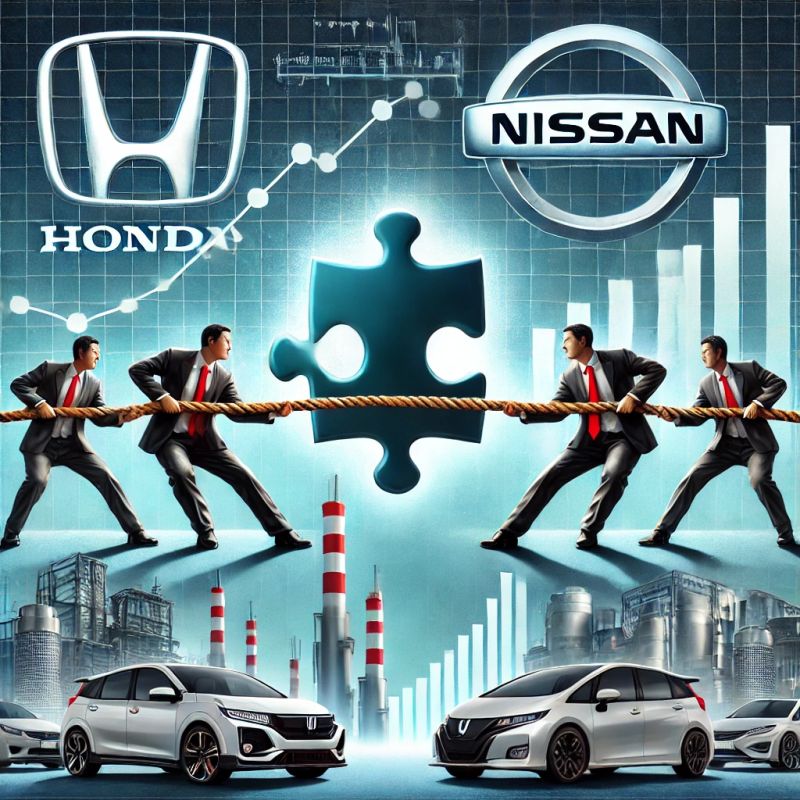
In the world of corporate mergers, numbers often tell one story, but leadership dynamics tell another. The #$60 billion Honda-Nissan merger, which could have created the world’s third_largest automaker, has officially collapsed—not due to financial infeasibility, but strategic misalignment.
📊 Breaking Down the Numbers
📌 9.5 million vehicles – Combined production of Honda and Nissan in 2023, making them a formidable force against global leaders Toyota and Volkswagen.
📌 20% market share loss in China – Nissan and Honda collectively struggled as Chinese EV makers gained dominance, pushing them toward collaboration.
📌 #$17 billion R&D spending – Honda and Nissan together invested heavily in electric and autonomous vehicle tech, but fragmentation in strategy led to inefficiencies.
📌 41% drop in Nissan’s market cap over 5 years – Pressure to restructure and regain investor confidence was a key driver for the discussions.
🚨 Why Did the Merger Fail?
⚠️ Power Play: Honda proposed making Nissan a subsidiary, triggering resistance from Nissan’s leadership, which feared a loss of autonomy.
⚠️ Culture Clash: Despite both being Japanese automakers, they operate under different leadership styles and decision-making frameworks.
⚠️ Strategic Divergence: Nissan leans toward alliances (e.g., Renault-Mitsubishi), while Honda prefers independent innovation and control.
📉 Lessons for Corporate Collaborations
✅ Size ≠ Success – Scale alone isn’t enough; without aligned governance, even a well-funded partnership can fail.
✅ Autonomy vs. Synergy – Balancing integration while respecting independent strengths is the key to sustainable partnerships.
✅ Adaptability Wins – Now, Nissan is eyeing a potential partnership with Foxconn for EVs, proving that agility matters more than size in today’s fast-moving auto industry.
💡 Advice for Business Leaders:
Collaboration is not about dominance, but about alignment. The best partnerships are those where both parties feel valued, respected, and empowered to contribute.
💬 What’s your take? Have you seen partnerships fail due to leadership clashes rather than financial issues? Drop your thoughts below!
Originally published on LinkedIn on 2025-02-13 08:01:13: https://www.linkedin.com/feed/update/urn%3Ali%3AgroupPost%3A82093-7295713613879640064
NamastwAmbitiousIndia MukeshAmbani Unveils Ambitious Plans For New Energy Business With 5 Gigafactories Complex in Jamnagar:
Project Overview:
Location: Jamnagar, Gujarat, India
Complex Size: Over 5,000 acres
5_Gigafactories:
Types of Facilities:
Solar PV Panels
Advanced Energy Storage Batteries
Electrolysers
Fuel Cells
Power Electronics
Solar PV Panels:
Initial Production Q4_2024; 10 gigawatts (GW)
**Target Annual Capacity by_2030: 100 GW
Advanced Energy Storage Batteries**:
Annual Capacity: 30 gigawatt-hours (₹GWh)
Production Start: by_Q3_2025
Total Investment**: Approximately: $10 billion USD
Strategic Goals:
Net Carbon Zero Target: By_2035
Renewable Energy Sector Presence: Establish a significant footprint
Additional Details:
The complex will also focus on developing technologies for green hydrogen production and other renewable energy solutions.
These developments are part of Reliance’s broader strategy to transition towards sustainable energy and reduce carbon emissions.
https://lnkd.in/d6U7Bnmu
Originally published on LinkedIn on 2024-08-31 06:32:12: https://www.linkedin.com/feed/update/urn%3Ali%3Ashare%3A7235534825695117313

