NetZeroFatigue: When GoingGreen Feels Like RunningOnEmpty 🌍
#🟢 Ambiguity Fatigue: “Lost in a maze of green fog!
72% of companies lack clear definitions for Net Zero goals. (Source: CDP, 2023)
Only 39% have science-based targets for Net Zero. (Source: SBTi, 2023)
Impact: Stakeholders are left confused, eroding trust and delaying action.
#🟠 Greenwashing Fatigue: “All talk, no trees!
63% of consumers distrust corporate Net Zero claims. (Source: Edelman Trust Barometer, 2024)
Greenwashing accusations grew 55% in 2023, with $40M+ in fines. (Source: UNEP, 2023)
Impact: Public skepticism grows, putting genuine efforts under scrutiny.
#🔵 Financial Fatigue: “Going green costs more green!
Achieving Net Zero needs #$4 trillion/year in clean energy investment by 2030. (Source: IEA, 2022)
Developing nations face a #$1.3 trillion/year funding gap. (Source: WorldBank, 2023)
Impact: Resource inequity slows global progress.
#🟡 Offset Dependence Fatigue: “Band-aids don’t fix bullet holes!
92% of carbon offset projects fail to deliver promised benefits. (Source: Guardian, 2023)
The global offset market hit #$2 billion in 2023, despite ineffectiveness. (Source: ICAP, 2023)
Impact: Over-reliance on offsets delays meaningful emission cuts.
#🟣 Technological Fatigue: “Waiting for tech miracles that don’t compute!
Carbon capture removes only 0.1% of global emissions today. (Source: IPCC, 2023)
By 2030, tech solutions may account for just 10-20% of required reductions. (Source: IEA, 2023)
Impact: Over-reliance on unproven tech wastes precious time.
#🔴 Public Engagement Fatigue: “Climate posters don’t pay the bills!
51% of citizens feel disconnected from national climate strategies. (Source: Pew Research, 2023)
Only 29% trust their government’s Net Zero plans. (Source: WEF, 2024)
Impact: Reduced public pressure stalls policy implementation.
#🟤 Equity Fatigue: “When the rich pollute, the poor pay!
The richest 10% emit over 50% of global emissions, while the poorest 50% contribute just 12%. (Source: Oxfam, 2022)
Developed nations pledged $100B/year in climate finance but delivered only #$83B in 2022. (Source: UNFCCC, 2023)
Impact: Inequity breeds global mistrust, slowing cooperation.
KeyTakeaway 🌍
NetZeroFatigue is real, driven by ambiguity, inequity, and overpromises. To truly go green, we need clearGoals, verifiedAction, and a whole lot of trust.
👉 Let’s make Sustainability about less spin and more action!
NetZero ClimateLeadership SustainabilityHumor ESG
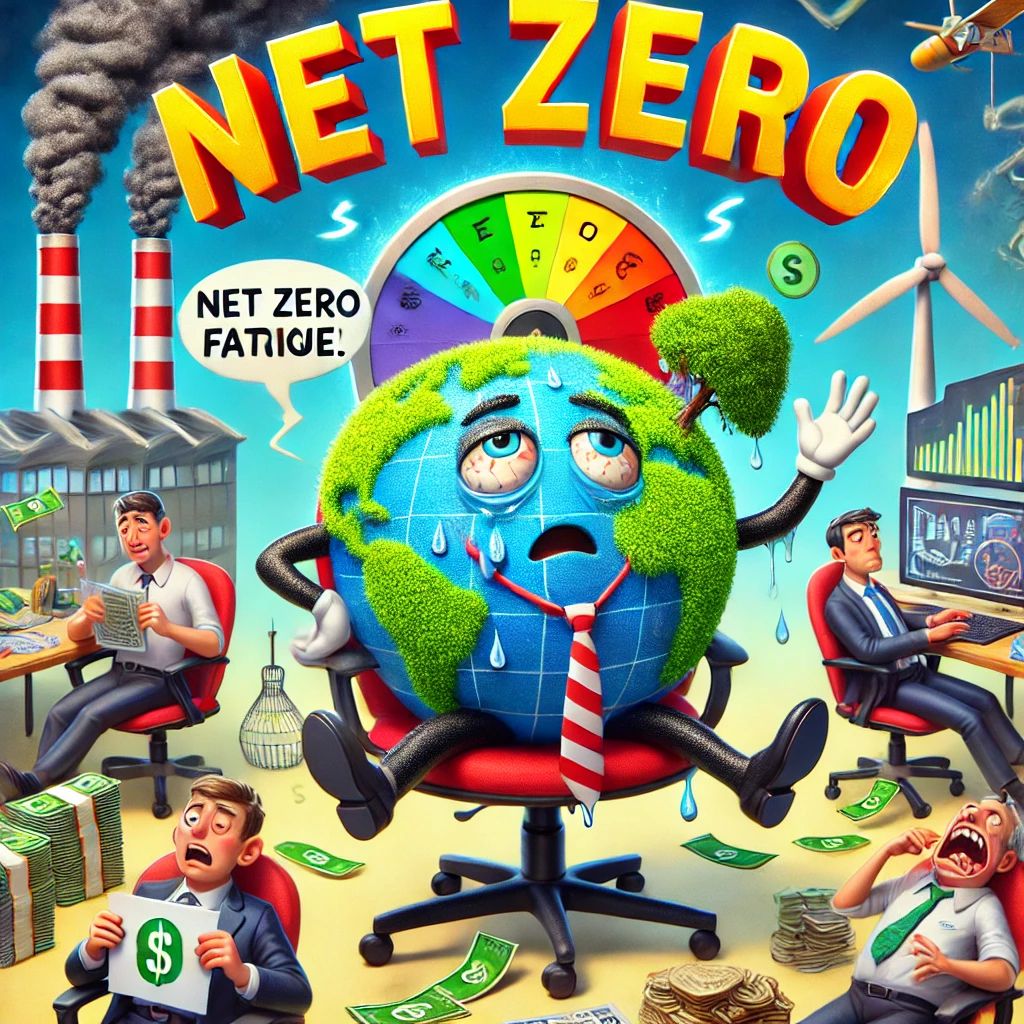

Originally published on LinkedIn on 2025-01-24 14:13:50: https://www.linkedin.com/feed/update/urn%3Ali%3Ashare%3A7288559629452677121
SBTi Appears to Backtrack on Use of Carbon Credits in Corporate Net Zero Targets
1. NearTerm targets: Companies must prioritize rapid, deep cuts in direct and indirect value-chain emissions. Setting near-term science-based targets to halve emissions by 2030 is crucial for limiting global temperature rise to 1.5°C.
2. LongTerm targets**: Companies should establish long-term science-based targets consistent with net-zero emissions. These targets align with limiting global warming to 1.5°C.
3. BVCM (Business Value Chain Management): Companies need to reduce emissions across their supply chains by at least 4.2% annually to meet the 1.5°C target.
4. Neutralization of residual emissions: The standard addresses how companies can offset any remaining emissions after implementing reduction measures.
Regarding carbon credits, the SBTi has been cautious about their use. However, a recent reevaluation may allow certificates for Scope 3 emissions abatement and accelerate value chain decarbonization.
Originally published on LinkedIn on 2024-08-01 05:18:34: https://www.linkedin.com/feed/update/urn%3Ali%3AgroupPost%3A2635374-7224644658784555010
SBTi Appears to Backtrack on Use of Carbon Credits in Corporate Net Zero Targets
1. NearTerm targets: Companies must prioritize rapid, deep cuts in direct and indirect value-chain emissions. Setting near-term science-based targets to halve emissions by 2030 is crucial for limiting global temperature rise to 1.5°C.
2. LongTerm targets**: Companies should establish long-term science-based targets consistent with net-zero emissions. These targets align with limiting global warming to 1.5°C.
3. BVCM (Business Value Chain Management): Companies need to reduce emissions across their supply chains by at least 4.2% annually to meet the 1.5°C target.
4. Neutralization of residual emissions: The standard addresses how companies can offset any remaining emissions after implementing reduction measures.
Regarding carbon credits, the SBTi has been cautious about their use. However, a recent reevaluation may allow certificates for Scope 3 emissions abatement and accelerate value chain decarbonization.
https://lnkd.in/d_ab5aS6
Originally published on LinkedIn on 2024-08-01 05:18:27: https://www.linkedin.com/feed/update/urn%3Ali%3Ashare%3A7224644629558661120

