🚨 Moody’s & Sustainability: ESG is Now a Credit Rating Factor! 📊💚
With #$40T in ESG assets under management, Moody’s is reshaping how financial markets assess creditworthiness. No longer just about profits & losses, a company’s sustainability risks now directly impact credit ratings, borrowing costs, & investment potential.
🔍 How Moody’s Integrates Sustainability into Credit Ratings
🟢 ESG factors impact the credit ratings of 18% of companies & governments rated by Moody’s. (Source)
📊 Issuer Profile Scores (IPS): Measures 15 ESG subfactors (climate risk, governance strength, social responsibility).
📊 Credit Impact Scores (CIS): Rates how ESG performance affects a company’s credit rating & risk profile.
📊 Second Party Opinions (SPOs): Validates Green Bonds & Sustainability-Linked Loans, ensuring funds are climate-aligned.
🔹 Moody’s now assesses over 3,000 entities based on ESG factors.
💰 ESG & Financial Impact: Why Credit Ratings Depend on Sustainability
🏦 Banks & Investors Are Watching
📌 Companies with poor ESG ratings face higher borrowing costs, as investors demand sustainability-linked loans & bonds.
📉 Carbon-Intensive Companies Are High-Risk
📌 Firms with high Scope 3 emissions face 15-20% valuation risks due to carbon pricing & regulatory changes. (Source)
🚀 Sustainability-Linked Bonds & Loans Are Surging
📌 #$1.6T in sustainability-linked bonds & loans have been issued, with Moody’s validating green claims to prevent greenwashing. (Source)
🌍 Moody’s ESG Leadership: Recognitions & Market Influence
🏆 FTSE4Good Index Inclusion (6 Years Running) → Recognizing top ESG performers.
🏆 EcoVadis Bronze Medal → Top 35% of global companies for sustainability.
🏆 CDP Supplier Engagement Leader → Among the top 4% of companies driving supply chain decarbonization. (Source)
🔥 The Takeaway: Sustainability is No Longer Optional
🟢 18% of Moody’s rated companies now have ESG-driven credit adjustments.
🟢 Investors demand transparent sustainability metrics before lending.
🟢 Greenwashing is no longer profitable—credit ratings now hold companies accountable.
📢 Should ESG be an even bigger factor in credit ratings? Let’s discuss below! 👇

Originally published on LinkedIn on 2025-02-27 04:39:26: https://www.linkedin.com/feed/update/urn%3Ali%3AgroupPost%3A82951-7300736262829711360
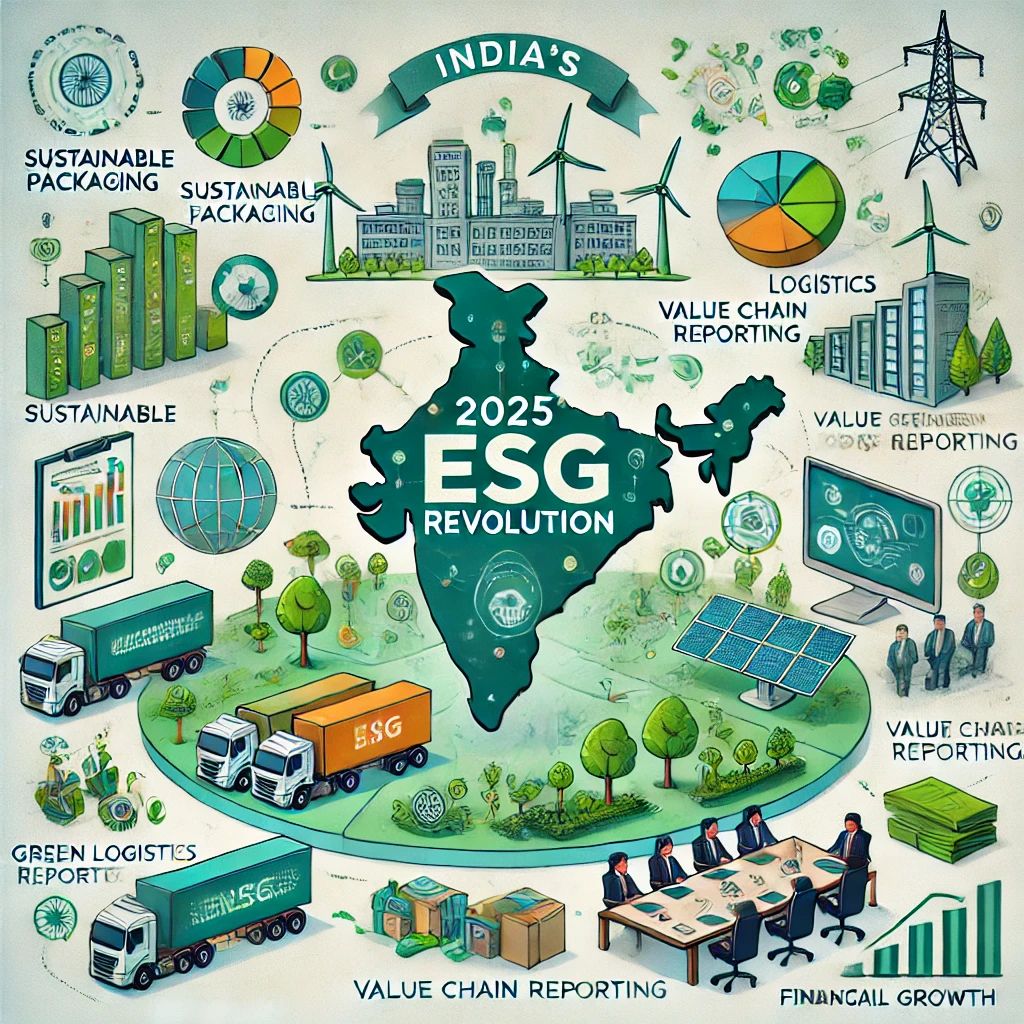
🌟 NamasteGreenIndia YR2025: India’s ESG Era Expands – Incorporating Packaging, Logistics, and More 🚀
The year YR2025 marks a transformative step in India’s corporate sustainability, with Environmental, Social, and Governance (ESG) regulations now including packaging, logistics, and operational efficiency. These changes align with global sustainability goals and drive innovation across industries.
📌 What’s New in 2025?
🌐 Value Chain Reporting:
Top 250 companies must disclose ESG metrics under SEBI’s “comply or explain” framework.
By 2026, expands to 500 companies, with mandatory assurance.
📜 BRSR Core Metrics:
Focus on 9 ESG KPIs like carbon emissions, water usage, and workforce diversity.
80% of top 500 companies are aligning operations with these standards.
📦 Sustainable Packaging:
New regulations target 50% reduction in single-use plastics by 2030.
Companies aim for 100% reusable packaging, with $3 billion invested in R&D.
🚚 Green Logistics:
Incentives for electric and hydrogen-powered fleets aim to cut emissions by 30% by 2030.
✅ Independent Verification:
ESG disclosures, including packaging and logistics, must undergo third-party assurance.
By 2025, 65% of listed entities will have verified ESG data.
📊 ESG Growth Impact
📦 Packaging Overhaul:
40% of FMCG and e-commerce companies have adopted eco-friendly packaging solutions.
🚛 Logistics Transformation:
Emissions reduced by 20% (2023–2025); green logistics market to hit $12 billion by 2030.
📈 Corporate Participation:
ESG disclosures grew 40%, with 70% of Nifty 50 companies including logistics and packaging metrics.
🌟 Why YR2025 is a Game_Changer
1️⃣ Global Leadership:
India leads in integrating packaging and logistics into ESG frameworks, aligning with global practices.
2️⃣ Investor Appeal:
Companies adopting eco-friendly practices attract funds managing $50 trillion+ in ESG assets.
3️⃣ Business Resilience:
Over 60% of companies report improved efficiency and reduced costs through ESG initiatives.
4️⃣ 🚨 Non_Compliance Risks:
Fines, loss of market share, and reputational damage await companies ignoring these standards.
📌 The Road Ahead
India’s 2025 ESG initiatives integrate packaging, logistics, and operational efficiency into corporate goals. These steps set Indian businesses on a path to lead the global sustainability revolution.
💬 How is your organization adapting to this challenge? Let’s discuss below! 👇

Originally published on LinkedIn on 2025-01-11 10:02:10: https://www.linkedin.com/feed/update/urn%3Ali%3AgroupPost%3A3880479-7283785251959529472
NamasteGreenIndia:
Waiting for ESG Data in India: A $70 Billion Question
The long wait for ESG (Environmental, Social, and Governance) data in India isn’t just about patience—it’s about progress. With over 70% of Indian suppliers in global value chains yet to adopt digitized reporting, the delay has real-world implications, affecting decisions worth billions of dollars in sustainable investments.
India’s ESG Clock: Time to Move from Waiting to Winning!
Key Challenges with an Indian Twist
1. Fragmented Supply Chains
Over 80% of suppliers in industries like textiles and leather operate in unorganized clusters, making data collection chaotic.
2. Regulatory Complexity
Suppliers juggle three to five different ESG frameworks, such as SEBI’s BRSR and global standards like GRI. Compliance often feels like clearing a bureaucratic maze.
3. Digitization Gaps
Only 25% of MSMEs have adopted digital record-keeping systems, leading to delays and inaccuracies in ESG reporting.
4. Cost Constraints
With razor-thin margins, 60% of MSMEs cite financial challenges as the main reason for delayed ESG compliance.
5. Cultural Awareness
Surveys show that 40% of small suppliers lack awareness of ESG’s impact, resulting in delays in aligning with sustainability goals.
Real Impact
The textile sector in India risks losing $1.5 billion in exports annually due to delayed compliance with European buyers’ ESG requirements.
Delayed data from the chemical industry in Gujarat has led to stalled global partnerships, estimated to impact $500 million in deals.
Workflow for ESG Data Reporting
1. Supplier Operations: Ensure sustainability practices at ground level.
2. Data Collection: Implement digital systems for accurate tracking.
3. Standardization: Align with BRSR and global standards.
4. Validation: Ensure accuracy through third-party audits.
5. Submission: Deliver timely data to buyers.
6. Analysis: Buyers evaluate performance metrics.
7. Insights: Use the data for strategic sustainability actions.
Originally published on LinkedIn on 2024-12-03 07:19:14: https://www.linkedin.com/feed/update/urn%3Ali%3AgroupPost%3A131340-7269611122905763840
NamasteIndia Debt
IMF Warns Global Debt to Exceed $100 Trillion by 2024, Urging Stricter Fiscal Policies
Debt_Surge: Global public debt is expected to surpass $100 trillion by YR2024 due to increased government spending since COVID-19.
IMF’s Warning: The IMF highlights that high debt levels, particularly in the U.S. and China, require stricter fiscal policies to avoid long-term instability.
Fiscal Risks: Without disciplined debt management, countries face limited fiscal flexibility, higher interest costs, and reduced capacity to handle future economic challenges.
Analysis
1. Debt_to_GDP Ratios (2024):
India: 81.6%, China: 90.1%, U.S.: 121%, EU: 82.7%
Global_Impact: Rising global debt levels could increase borrowing costs and strain fiscal resilience, with the IMF stressing that economies with high debt, like the U.S. and China, need more disciplined policies.
Risk_Assessment by Region:
India
Risks: High debt, inflation, and oil dependency.
Outlook: India’s young population and focus on tech and infrastructure drive growth but require fiscal caution to avoid excess debt.
Global Impact: India’s stable growth supports global supply chains and regional economic stability.
China
Risks: Rising local debt, slowing growth, trade tensions.
Outlook: China’s shift to consumer-led growth could reshape global trade but needs balanced debt control.
Global Impact: China’s domestic focus could diversify trade; however, IMF warns that unchecked debt poses broader risks.
UnitedStates
Risks: High national debt, potential rate hikes, inflation.
Outlook: Balancing debt with the dollar’s global role is critical for stability.
Global Impact: U.S. fiscal stability is essential for global markets; disciplined spending is needed to mitigate financial ripple effects.
European Union
Risks: Varied debt across member states, energy dependencies.
Outlook: EU growth depends on fiscal cohesion, green investments, and reducing economic disparities.
Global Impact: Europe’s green initiatives can lead global sustainability efforts, though internal debt disparities may challenge stability.
3. Additional Insights:
Trends: COVID-19 spending has driven U.S. and EU debt, while China and India focus on infrastructure and development.
Investor Impact: Rising debt and interest rates impact bond yields, currency stability, and sector investments.
Geopolitical Dynamics: Trade tensions and alliances affect fiscal priorities, especially in tech and defense.
Conclusion
Not an easy path toward a bright YR2030 lies ahead, as high debt levels and complex fiscal challenges call for coordinated global strategies. With debt expected to exceed $100 trillion, the IMF’s call for disciplined fiscal policies is crucial to support economic resilience, sustainable trade, and global stability.
Originally published on LinkedIn on 2024-11-09 14:51:57: https://www.linkedin.com/feed/update/urn%3Ali%3Ashare%3A7261027742547148800

