Davos_Is_No_Longer_a_Summit.
It’s a Stress Test.**
Dr. Anju Sharma | KtalystInsights™ | Davos2026 (19–23 January 2026)
Every January, the world arrives in the Alps seeking answers.
In reality, Davos is a load test to see what bends, what holds, and what quietly recalibrates.
As Davos 2026 unfolds, one thing is becoming clear:
this is less about consensus and more about friction mapping.
🔍 Davos as a DiagnosticScan
A full-body MRI of the global economy.
✔ ~3,000 leaders | 130+ countries
✔ ~400 policymakers | ~64–65 Heads of State
✔ ~850 CEOs & Chairs
✔ 200+ sessions
✔ Narrative shift detected: Dialogue (theme) vs. Geoeconomic Confrontation (reality)
🌈Davos as a BalanceSheet
Strip the snow. It’s pure accounting.
✔ Swiss security deployment cap: ₹320 cr), locked till 2027
✔ Actual 2025 spend: ~CHF 24.6M
✔ World Economic Forum revenue (FY 2024–25): ~CHF 469M
❌ Profit motive (designed to preserve trust, not generate surplus)
🚀 Davos as a DealFilter
Presence doesn’t create value. Preparedness does.
NamasteIndia
✔ Uttar Pradesh delegation outcomes (confirmed Jan 20)
✔ ₹9,750 cr MoUs signed
✔ Clean energy | AI infrastructure | Defence
✔ Sub-national execution outpaced multilateral alignment
⚠️ Davos as a Risk RePricing Desk
The quietest shift is the most strategic.
✔ Geoeconomic Confrontation ranked 1 global risk (Global Risks Report 2026)
❌ Armed conflict as the top risk
✔ Tariffs, carbon borders, trade & tech controls as new conflict tools
🔳Davos as a Whiteboard (Not a Courtroom)
Ideas drawn. Commitments deferred.
❌ Binding global treaties
❌ Unified AI governance framework
❌ Executable global climate mechanism
🧭 KtalystInsights™ | Emerging Mid-Summit Take
✔ Attendance: record high
❌ Alignment: structurally low
✔ Hedging behaviour: everywhere
Davos2026 is actively confirming an era of Fragmented Togetherness.
Davos is no longer about fixing the world in four days.
✔ It is about calibrating strategy before volatility hardens into policy.
✔ Those here for optics are collecting photographs
✔ Those here for signal are recalibrating capital, supply chains, and risk
Attendance is not alignment.
Presence is not commitment.
In Davos, only prepared capital converts conversation into outcomes.”— Dr. Anju Sharma
KtalystInsights™ | MrsSustainability DataComa
Davos2026 GlobalRisks2026 GeoeconomicConfrontation LeadershipSignals
Originally published on LinkedIn on 2026-01-20 01:56:38: https://www.linkedin.com/feed/update/urn%3Ali%3Ashare%3A7419196123795345408
Banks_Blooming_with_Green_Fee(But Not Everywhere)
Dr. Anju Sharma | KtalystInsights™ | KtalystKlues™
Bloomberg confirms a structural shift in 2025, GreenFees overtook Fossil-linked fees $3.7B vs $2.9B.
What Matters
TotalTees fell vs YR2024, as US_banks_stepped_back from climate alliances post-Trump’s return?
KtalystKlues:
1) EU Banks Power the Fee Engine
🟢 Largest green fee pool globally
🟢 Sovereign + corporate issuance at scale
🟢 Regulation = predictable deal flow
🔴 Minimal reliance on “voluntary ESG
Who captures fees?
BNP Paribas | Crédit Agricole | Deutsche Bank |
Why they win:
✔ Early ESG structuring
✔ In-house carbon & covenant expertise
KtalystKlues™: Europe scaled green fees. They didn’t lose them.
2) US Scale Wins, Regionals Miss Out
🟢 Structuring-heavy SLBs & transition bonds
🟢 Deep investor pools = premium pricing
🟢 Global underwriting reach
🔴 Deal flow volatility post climate exits
Fee winners:
JPMorgan Chase | Bank of America | Morgan Stanley
What holds regionals back:
✗ Vanilla lending
✗ Thin ESG structuring skills
KtalystKlues™: In the US, capability beats proximity.
3) China Volume Over Pricing Power
🟢 Policy-mandated issuance
🟢 State balance sheets guarantee scale
🟢 Multi-currency green bonds
🔴 Limited fee innovation
Dominators:
ICBC | Bank of China | CITIC Securities
KtalystKlues™: China earns green fees by volume certainty, not differentiation.
4) Japan — Predictable, Not Explosive
🟢 Samurai green bonds
🟢 Infra-linked transition finance
🟢 Conservative risk culture
Anchors:
Mizuho | MUFG
₹KtalystKlues™: Japan runs green finance like pensions—slow, steady, reliable.
5) NamasteIndia — Local Risk, Global Fee Capture
🟢 Fastest-growing green capex market
🟢 Sovereign green bonds crossed $5.7B (2024)
🔴 Domestic underwriting depth still thin
🔴 Fees migrate offshore
Who earns the fees:
HSBC | Citi | JPMorgan
Who carries the risk:
SBI | ICICI Bank | Axis Bank
India’s Green Fee Unlock 🔓
🟢 Deeper SEBI green taxonomy
🟢 PSU balance-sheet reform
🟢 Stronger domestic investor base
🟢 Rupee green-bond liquidity
KtalystKlues™: India builds green assets but exports green fees. Policy × capability = India’s green-fee moment.
What’s DecliningFastGlobally
🔴 Fossil project-finance underwriting
🔴 Plain-vanilla corporate bonds
🔴 Banks without ESG structuring depth
KtalystKlues™: Green didn’t just grow. It replaced old fee pools.
The RealDifferentiator (NoGreenwashing)
🟢 Carbon accounting embedded in deals
🟢 Sustainability-linked covenants
🟢 Cross-currency green structuring
🔴 Legacy DCM skillsets
KtalystKlues™: Green finance rewards risk pricing skill, not slogans.
Green banking fees aren’t rising everywhere. They’re migrating to skill clusters. –Dr. Anju Sharma
Originally published on LinkedIn on 2026-01-04 14:57:08: https://www.linkedin.com/feed/update/urn%3Ali%3Ashare%3A7413594337663688704
The_Hydrogen_Dilemma:
The Molecule Is Ready. The Pipelines Aren’t.
DrAnjuSharma | MrsSustainability | KtalystInsights
Hydrogen didn’t fail chemistry.
It failed pipes with performance anxiety.
The world has ~5,000 km of H₂ pipelines today.
EU now wants 53,000 km by 2040 ($87–$155 bn).
China launched a 400 km, 100,000 t/yr line ($2.8 bn).
India is chasing 5 MMT green H₂ with $95–$110 bn investments.
Technology: The Fine Print Nobody Reads
✓ H₂ has 3× lower energy density → more compression, more $
✓ 5–20% blending = only ~7% CO₂ reduction
✓ Embrittlement slashes steel toughness 30–50%
✓ 80-bar methane line → 45–55 bar H₂ line
✓ H₂ leaks 3–5× faster than methane
✓ Transport cost: $0.12–$0.23/kg per 1000 km
✓ Best case: >200,000 t/yr, <3,000 km
Companies making the tech happen:
BakerHughes – H₂-ready compressors, turbines, composite pipes
DNV – global H₂ pipeline safety codes & standards
RINA – certifying hydrogen-compatible steel pipes
MANN HUMMEL / MAN Industries – hydrogen-ready steel line pipes
Rosen Group – H₂ pipe inspection & integrity tools
Emerson – H₂ pressure, flow, leak sensors
Siemens Energy – compressors, grid control, monitoring
Honeywell UOP – hydrogen purification & grid technologies
Solutions: EngineeringPureInstinct
✓ Repurposing pipelines = 65–75% cheaper
✓ Digital twins predict crack growth months early
✓ Thermoplastic composite pipes → zero embrittlement, fast installation
✓ De-blending tech delivers 99–99.5% pure H₂
✓ First 80–120 km open-access H₂ grids operational in EU ports
Innovators
Linde – global leader in H₂ pipelines, 99% purity de-blending
AirLiquide – 450+ mile H₂ network in US/EU
Air Products – world’s largest H₂ pipeline operator (700 miles US Gulf Coast)
Fluxys – building Belgium’s open-access H₂ backbone
OGE (Open Grid Europe) – Germany’s 9,700 km H₂ network build-out
Gasunie – Netherlands’ 1,200 km H₂ backbone (85% repurposed)
Snam – Italy’s 2,700 km H₂-ready pipeline conversion
Global hydrogen pipeline market:
$4.8 bn (2025) → $25 bn (2032), CAGR 27%.
Everyone Wants H₂ BUT NoOne Wants to Own an Empty $5B Tube
EU
✓ 53,000 km by 2040
✓ $87–$155 bn capex
✓ Germany: 9,700 km, ROE 6.69%
USA
✓ $8 bn Hydrogen Hubs
✓ 700-mile Gulf Coast network
✓ No federal tariff model → investor ulcers
India
✓ 5 MMT/yr goal
✓ $95–$110 bn investment
✓ PNGRB hydrogen pipeline standards coming
✓ GAIL, IOCL building first H₂ corridors
IEAAlert
✓ 2030 clean H₂ forecast cut by 25% (49 → 37 MMT)
The Real H₂ Risk?
Not the Molecule. The Metal.
Hydrogen can decarbonise steel, chemicals, shipping & power.
But only if pipelines stop behaving like 1970s metallurgy in 2040 ambition decks.
We don’t need more hydrogen colours. We need hydrogen-rated steel, hydrogen-confident regulators,
and hydrogen-bankable business models.
Energy transitions don’t fail at ambition.
They fail at infrastructure.” Dr. Anju Sharma
HydrogenEconomy EnergyTransition InfraInvesting GreenH2
Originally published on LinkedIn on 2025-12-02 11:14:13: https://www.linkedin.com/feed/update/urn%3Ali%3AgroupPost%3A39683-7401579439421014017
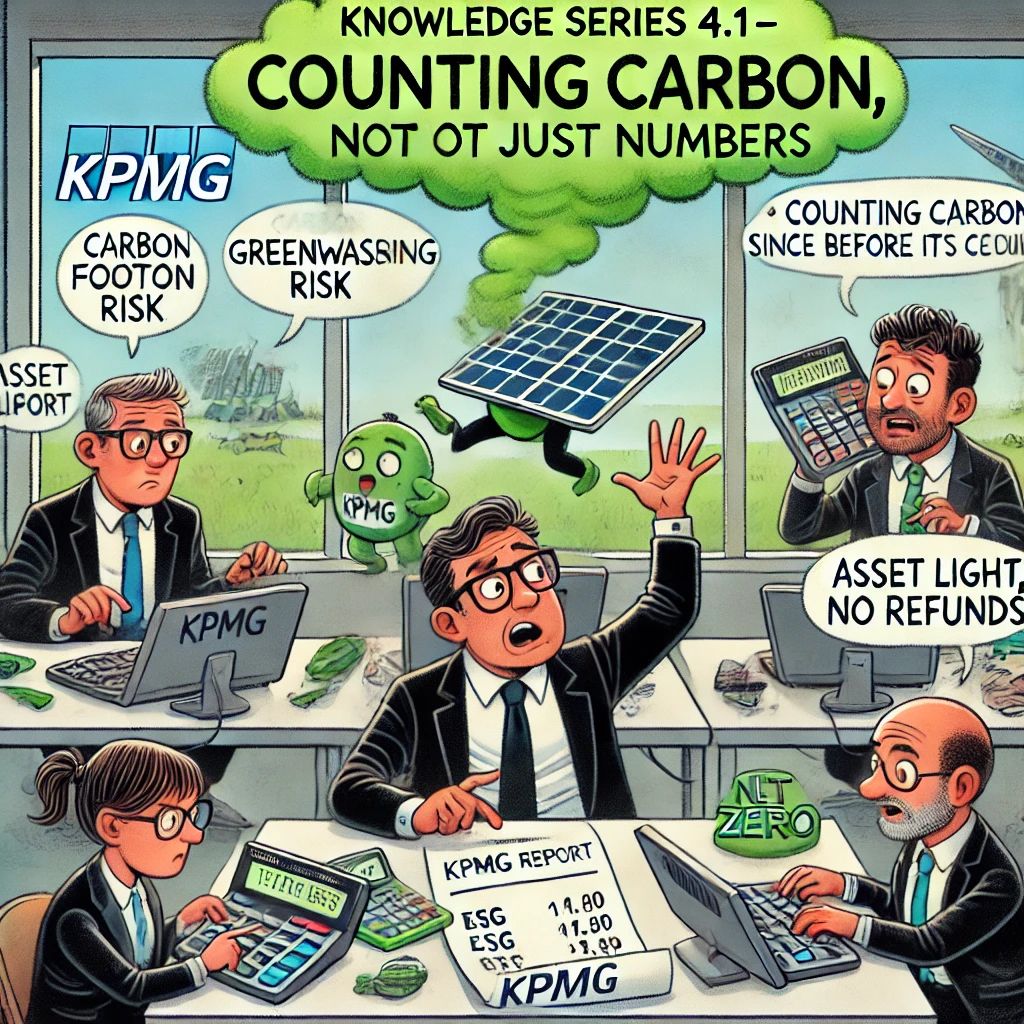
KnowledgeSeries 4.3: KPMG_Counting_Carbon, Not Just Numbers 🌍♻️
🚀 KPMG’s ESG Commitment
KPMG is embedding Environmental, Social, and Governance (ESG) principles into its core strategies, guiding clients toward sustainable and responsible business practices.
🌱 KPMG’s Sustainability Vision
> “This is a once in a generation chance to accelerate change, and make things right. Are you with us?
KPMG’s ESG Perspective
Key Focus Areas:
✅ ESG Strategy & Transformation – Assisting businesses in integrating ESG into their core strategies.
✅ ESG Reporting & Assurance – Enhancing transparency and compliance with evolving regulations.
✅ Decarbonization & Climate Risk – Addressing environmental risks and opportunities.
✅ Sustainable Finance & Tax – Guiding firms on sustainable investment strategies.
📊 KPMG’s Sustainability Leadership in Numbers
Global ESG Investment
US$1.5 billion committed over three years to focus on the ESG change agenda.
Regional ESG Hubs
Establishment of three Regional ESG Hubs in Europe, Asia Pacific, and the Americas to support clients on their ESG journey.
ESG Training & Development
Launch of the KPMG ESG Academy to deliver learning to businesses on a wide range of ESG topics and disciplines.
📑 KPMG’s Key Sustainability Reports & Initiatives
📌 KPMG Survey of Sustainability Reporting 2024 – Highlights that companies worldwide are preparing for the advent of mandatory reporting on sustainability.
📌 KPMG at COP29 – Focuses on accelerating the transformation towards sustainability.
📌 The Challenge of Greenwashing – Provides an international regulatory overview to help companies navigate the complex landscape of sustainability claims.
🔧 KPMG’s Approach to ESG Integration
1️⃣ Strategy Development – Crafting ESG-aligned business strategies.
2️⃣ Risk Management – Identifying and mitigating ESG-related risks.
3️⃣ Reporting Enhancement – Improving ESG data quality and transparency.
4️⃣ Stakeholder Engagement – Building trust through proactive communication.
🔭 The Road Ahead: KPMG’s Future Sustainability Initiatives
Advancing ESG Data Analytics – Utilizing advanced analytics to enhance ESG reporting accuracy.
Promoting Sustainable Finance – Advising clients on responsible investment and green financing options.
Enhancing Climate Disclosures – Aligning with global frameworks like TCFD and TNFD for comprehensive reporting.
Fostering Collaborative Initiatives – Engaging in public-private partnerships to drive systemic sustainability solutions.
🌱 KPMG is not just advising on sustainability—it is embedding it into its organizational DNA.
📢 Next in KnowledgeSeries 4.1 – A deep dive into KPMG’s Sustainable Transformation Strategies! 🔍♻️
💬 How do you perceive KPMG’s role in advancing global sustainability? Share your thoughts below! ⬇️
Sustainability ESG NetZero KPMG CorporateResponsibility ClimateAction TheBigFour KnowledgeSeries4.1


Originally published on LinkedIn on 2025-03-23 16:30:04: https://www.linkedin.com/feed/update/urn%3Ali%3AgroupPost%3A131340-7309612410296852480
🚨 Moody’s & Sustainability: ESG is Now a Credit Rating Factor! 📊💚
With #$40T in ESG assets under management, Moody’s is reshaping how financial markets assess creditworthiness. No longer just about profits & losses, a company’s sustainability risks now directly impact credit ratings, borrowing costs, & investment potential.
🔍 How Moody’s Integrates Sustainability into Credit Ratings
🟢 ESG factors impact the credit ratings of 18% of companies & governments rated by Moody’s. (Source)
📊 Issuer Profile Scores (IPS): Measures 15 ESG subfactors (climate risk, governance strength, social responsibility).
📊 Credit Impact Scores (CIS): Rates how ESG performance affects a company’s credit rating & risk profile.
📊 Second Party Opinions (SPOs): Validates Green Bonds & Sustainability-Linked Loans, ensuring funds are climate-aligned.
🔹 Moody’s now assesses over 3,000 entities based on ESG factors.
💰 ESG & Financial Impact: Why Credit Ratings Depend on Sustainability
🏦 Banks & Investors Are Watching
📌 Companies with poor ESG ratings face higher borrowing costs, as investors demand sustainability-linked loans & bonds.
📉 Carbon-Intensive Companies Are High-Risk
📌 Firms with high Scope 3 emissions face 15-20% valuation risks due to carbon pricing & regulatory changes. (Source)
🚀 Sustainability-Linked Bonds & Loans Are Surging
📌 #$1.6T in sustainability-linked bonds & loans have been issued, with Moody’s validating green claims to prevent greenwashing. (Source)
🌍 Moody’s ESG Leadership: Recognitions & Market Influence
🏆 FTSE4Good Index Inclusion (6 Years Running) → Recognizing top ESG performers.
🏆 EcoVadis Bronze Medal → Top 35% of global companies for sustainability.
🏆 CDP Supplier Engagement Leader → Among the top 4% of companies driving supply chain decarbonization. (Source)
🔥 The Takeaway: Sustainability is No Longer Optional
🟢 18% of Moody’s rated companies now have ESG-driven credit adjustments.
🟢 Investors demand transparent sustainability metrics before lending.
🟢 Greenwashing is no longer profitable—credit ratings now hold companies accountable.
📢 Should ESG be an even bigger factor in credit ratings? Let’s discuss below! 👇

Originally published on LinkedIn on 2025-02-27 04:39:26: https://www.linkedin.com/feed/update/urn%3Ali%3AgroupPost%3A82951-7300736262829711360
Climate_Change_Disrupting_Global Supply Chains: A Call for Immediate Action
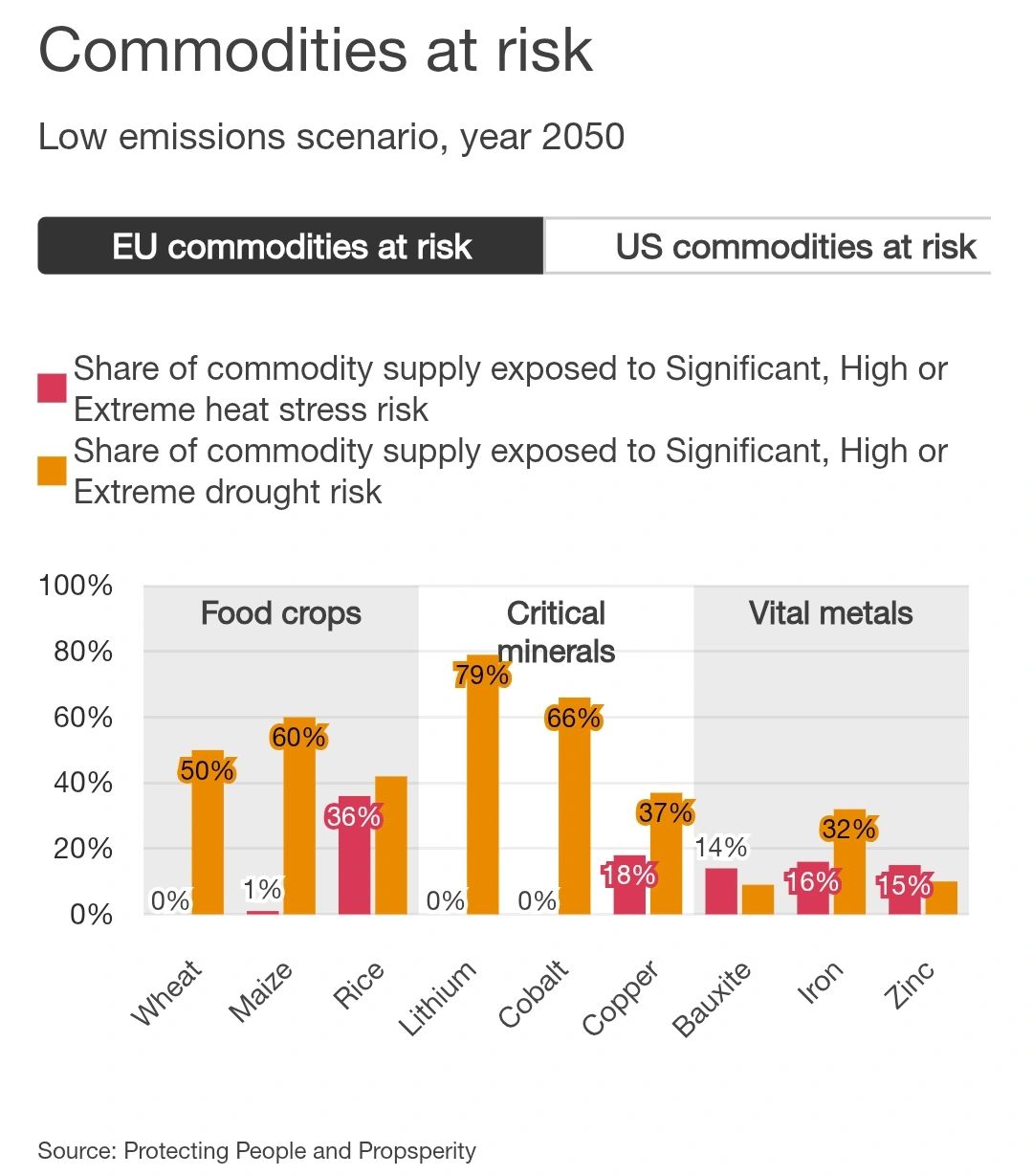
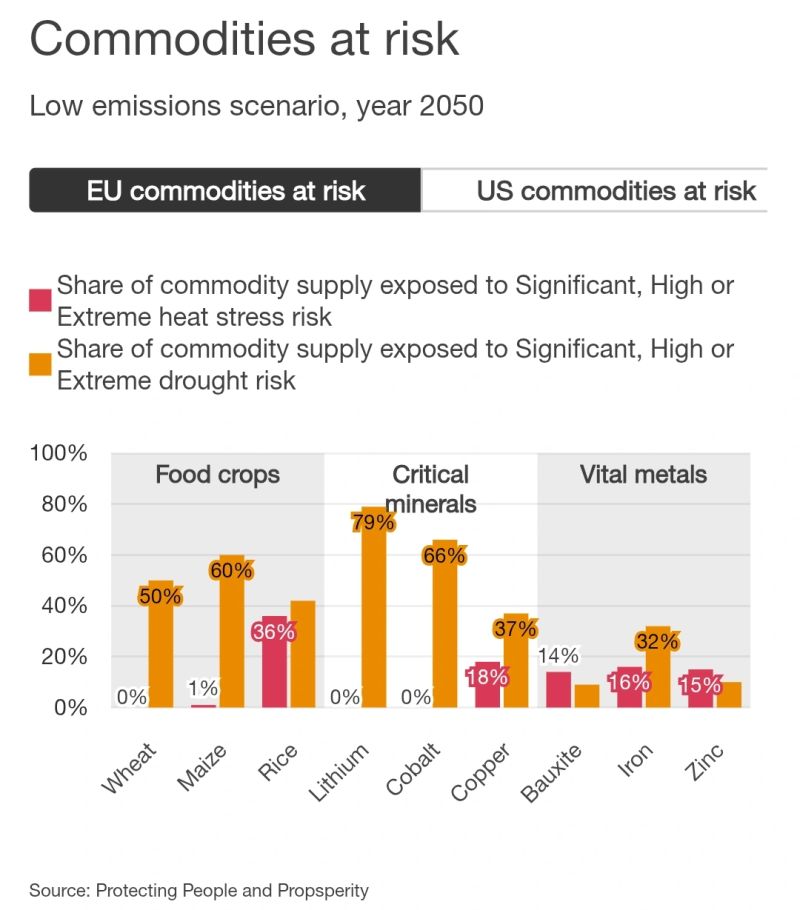
As the world grapples with escalating climate challenges, the ability to secure essential commodities is under threat. PwC’s insights reveal how heat_stress and drought could profoundly impact industries and communities, emphasizing the need for proactive measures.
Critical_Minerals at Risk: Heat stress and drought threaten the supply of cobalt, copper, and lithium—key to electronics, green energy, and transportation sectors.
Food Security Challenges: Maize, rice, and wheat, which provide 42% of human calories, are vulnerable to production instability, jeopardizing global food supplies.
Vital Metals Under Pressure: Iron, zinc, and bauxite (used in aluminum production) face disruption due to mining challenges caused by extreme weather.
Industries in Peril: Transportation, construction, and manufacturing sectors heavily reliant on these commodities risk operational breakdowns.
Impact on Producers and Communities: Farmers and miners are already experiencing hardships from extreme heat and water scarcity, reducing productivity and health safety.
Supply Chain Resilience is Critical: PwC highlights the urgency for businesses to assess climate-related vulnerabilities and mitigate risks to prevent supply chain disruptions.
Call for Proactive Action: The cascading effects of climate change demand swift preventive strategies to safeguard commodities and ensure industrial continuity.
PwC’s report serves as a stark reminder of the growing vulnerabilities within global supply chains. Businesses must act now to incorporate sustainable practices, enhance resilience, and mitigate climate-related risks.
For a detailed analysis, explore PwC’s full report here.https://https://lnkd.in/d_9bwcRn
Originally published on LinkedIn on 2024-12-25 03:55:16: https://www.linkedin.com/feed/update/urn%3Ali%3AgroupPost%3A3880479-7277532326702534656
🌍 Resilience in a Changing Climate: A Business Imperative 🌡️
The World Economic Forum’s 2024 report, Business on the Edge: Building Industry Resilience to Climate Hazards, reveals a stark reality: climate risks are no longer distant threats—they’re here, impacting profits, assets, and livelihoods. 💡
Here are the key insights:
📉 The Cost of Inaction
By 2035, climate hazards could drive $560-$610 billion in annual fixed asset losses, rising to $1.1 trillion by 2055.
Extreme heat accounts for 72%-73% of these losses, disrupting industries across the globe.
💼 Sectors at Risk
Telecommunications faces the steepest losses, up to $563 million per company annually by 2035.
Utilities and travel sectors could see earnings drops of over 20% in the next decade.
🌊 Tipping Points Are Near
Critical Earth systems like the Greenland Ice Sheet and coral reefs are nearing irreversible collapse, with profound global consequences.
Coral bleaching at 1.5°C warming could endanger the food security of 500 million people.
🚨 Why Act Now?
Climate-driven earnings losses could hit 7.3% annually by 2035, rivaling the impact of a global recession.
Investments in climate resilience deliver a $2-$19 return for every $1 spent, protecting profits and building long-term value.
📈 A Path Forward
Integrate climate risk into decision-making—data-driven strategies are critical.
Foster cross-sector collaboration with governments, local communities, and experts to develop scalable, cost-effective solutions.
Combine climate adaptation with net-zero strategies to future-proof businesses.
The message is clear: resilience is profitability. Forward-thinking businesses that act boldly today will not only weather the storm but emerge stronger.
📢 What are you doing to integrate resilience into your business strategy? Let’s start a conversation!
ClimateResilience Sustainability BusinessStrategy Leadership
3 Climate Trends – Issue 15
https://lnkd.in/dZTVUkYf
Originally published on LinkedIn on 2024-12-12 20:12:32: https://www.linkedin.com/feed/update/urn%3Ali%3AugcPost%3A7273067221881364481
NamasteGreenIndia Godavari Biorefineries: Pioneering Grain_Based Ethanol for Sustainable Growth
1. Diversification of Feedstock: Godavari Biorefineries is expanding beyond sugarcane to use grains like maize for ethanol production, ensuring a multi-feedstock facility for greater flexibility.
2. Risk Mitigation: The shift aims to reduce dependency on monsoon-reliant sugarcane and maintain production stability throughout the year.
3. Support for Ethanol Blending Targets: The initiative contributes to India’s ambitious ethanol blending goals, enhancing the country’s energy security.
4. Year_Round Production: Grain-based ethanol ensures optimal utilization of distillery capacity during sugarcane off-seasons.
5. Enhanced Production Capacity: The new facility is projected to produce 200,000 liters of ethanol per day, significantly boosting overall output.
6. Government_Approvals_Secured: Necessary clearances have been obtained, and infrastructure development is underway to support the grain-based ethanol plant.
7. Sustainability Commitment: This move reinforces Godavari Biorefineries’ dedication to innovation and sustainable practices in the biofuel sector.
8. Alignment with NationalGoals: The strategy aligns with India’s broader push to diversify ethanol production sources and reduce dependence on traditional feedstocks.
Originally published on LinkedIn on 2024-11-29 05:13:10: https://www.linkedin.com/feed/update/urn%3Ali%3Ashare%3A7268129845828616192

