KnowledgeKtalyst:
AgriWaste = Business:
Sustainability doesn’t grow in labs alone—it sprouts from the fields, from what we left behind.
KtalystKeystone
SweetResidue, StrongFuture: The Sustainability of Sugarcane
India generates over 120 million tons of sugarcane bagasse annually.
Bioethanol market in India projected to hit USD 10 billion by 2028, largely driven by bagasse-based 2G ethanol
Furfural demand in Asia-Pacific growing at CAGR 5.8%, fueled by green solvents
MCC (microcrystalline cellulose) global market expected to reach USD 1.6 billion by 2030
PLA bioplastics: India’s packaging sector pushing demand at >13% CAGR
Kernel to Kilowatt: The Potential of CornWaste
India produces 30–35 million tons of corn stover annually—mostly underutilized.
Cellulosic ethanol from corn projected to cross USD 4.5 billion globally by 2030
Corn-based PLA holds 40%+ of global bioplastics market, growing at CAGR 12%
Corn cob-derived furfural used in pharma & resins is growing fast in EU & China
Biogas from corn waste contributes to India’s SATAT target of 15 MMT gas/year
Crop Residues:
Hidden Bio_Assets
Together, India generates over 500 million tons of crop residues annually.
Wheat & rice straw alone contribute ~60% of India’s agricultural residue
Bio_CNG plants using rice straw receive capital subsidies up to 35% under GOBARdhan
Banana stem fibre exports expected to double by 2026 due to paper & fabric demand
Groundnut shells & cotton stalks tapped for biochar and activated carbon—growing global market worth USD 6.5 billion
Palm press fibre reuse supports sustainable palm certification programs in Southeast Asia
Ktalyst Viewpoint
In my opinion, India sits on a biomass treasure chest. The future lies in converting kilotons of agri-waste into megawatts of revenue—through smart policy, public-private pilots, and next-gen processing tech.
This is not just circular. It’s strategically spiral—turning residue into resilience.
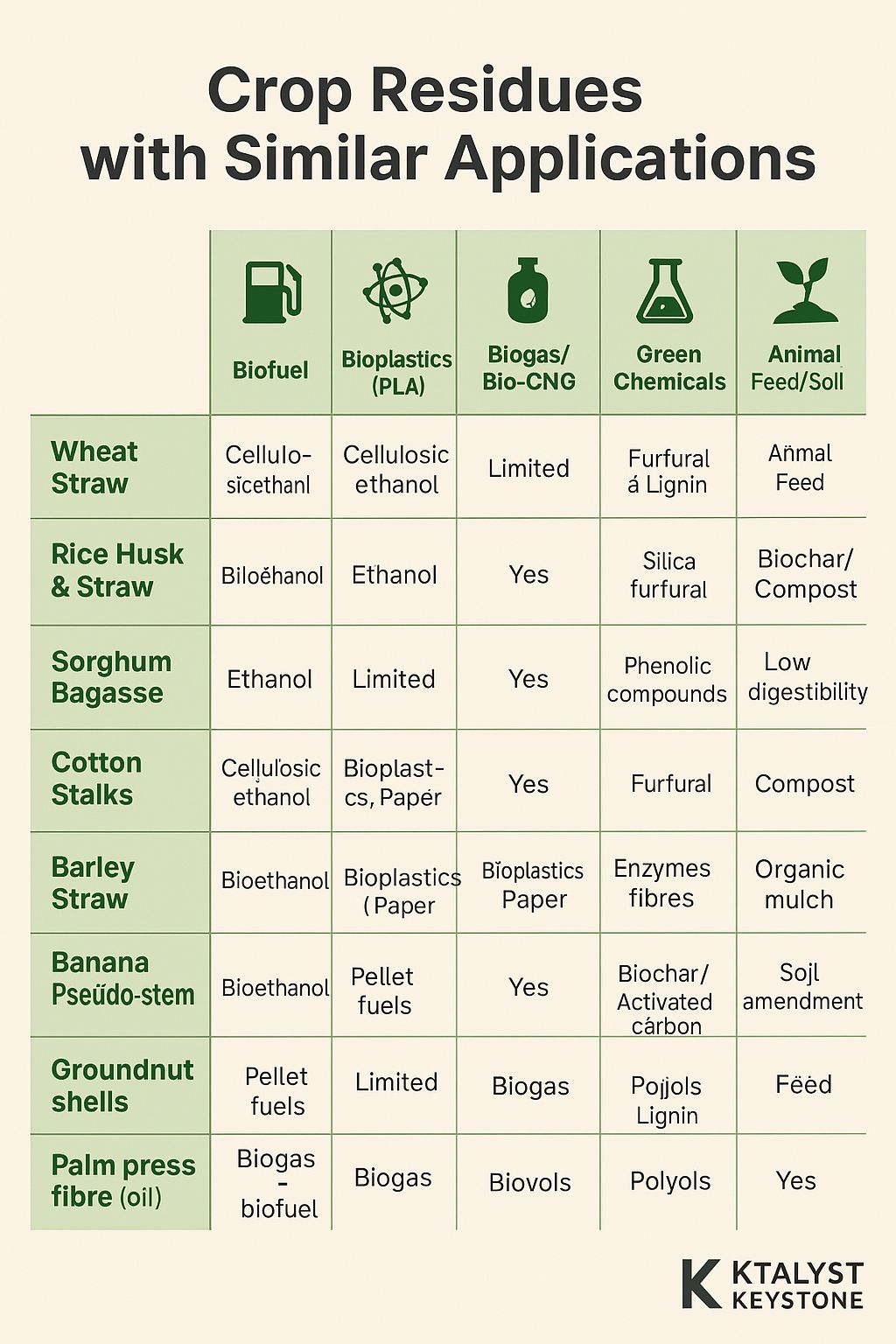
Originally published on LinkedIn on 2025-04-11 18:06:08: https://www.linkedin.com/feed/update/urn%3Ali%3AgroupPost%3A2153908-7316521955061383169
NamasteIndia Bio-Bitumen Initiative: Step-by-Step savings of $1.2 billion USD by adding 35 % of Bio bitumin from Rice straw (legnin route)
1. Collection of Rice Straw:
After the rice harvest, rice straw is collected using stationary threshers or self-propelled combine harvesters. The straw is then transported to processing facilities.
2. Production of BioBitumen:
Praj Industries and Indian Oil Corporation (IOCL) are leading the way in producing bio-bitumen from biomass, such as paddy straw.
3. Government Promotion:
The Indian government, under Union Road Transport Minister Nitin Gadkari, is actively promoting the use of bio-bitumen to reduce carbon emissions and support the circular economy.
4. Mixing BioBitumen with Petrochemical Bitumen:
Companies like Aggregate Industries and Heidelberg Materials are conducting trials and developing methods to mix up to 35% bio-bitumen with traditional petrochemical bitumen.
5. Economic Benefits:
This initiative aims to save India around ₹10,000 crore annually, which is approximately $1.2 billion USD.
6. Environmental Impact:
By converting agricultural waste into bio-bitumen, this initiative helps reduce air pollution caused by stubble burning and promotes sustainable road construction.
This comprehensive approach not only supports sustainability but also offers significant economic and environmental benefits.
Source / shared link: https://m.economictimes.com/industry/transportation/airlines-/-aviation/indian-aviation-will-use-20-pc-biofuels-made-from-stubble-over-the-next-five-years-nitin-gadkari/articleshow/112345141.cms
Originally published on LinkedIn on 2024-08-08 19:31:29: https://www.linkedin.com/feed/update/urn%3Ali%3AgroupPost%3A2474261-7227396019523657728

