🪔 ParavhHeyToParivarHey | WaveOfAppreciation
When Compassion Becomes Capital, and Gratitude Becomes Growth
This Diwali, some lamps light our homes.
But a few — light our hearts, our values, our vision.
At their Super Family Day, Mukesh and Nita Ambani lit such a lamp — not with oil, but with intent.
Mukesh Ambani didn’t speak of markets or margins, but of meaning.
He shared three megatrends shaping India’s next decade — and perhaps, its soul:
AI & DeepTech – teaching machines what humanity forgot: inclusion.
GreenEnergy & CleanTech – where progress finally learns to breathe.
Genomics & LifeSciences – decoding health as the oldest inheritance of love.
And weaving through them all was a golden thread — Family.
Because every innovation begins at the dinner table,
every empire endures through empathy,
and every legacy lives in the stories we tell our children.
Paravh hey to Parivar hey.
When compassion exists, everything aligns, dreams, destinies, and Diwalis.
As Nita Ambani reminded us ,softly, gracefully ,families that stay kind, stay strong.
In a world that races for valuation, they chose to pause for value.
✨ This Diwali, I’m thankful to be part of such a lovely family — one that celebrates empathy as its brightest light.
🌼 From Homes to Humanity — The WaveOfAppreciation Begins
Some waves begin with the wind.
This one begins with a thank you. 💛
In boardrooms, classrooms, and breakrooms — we often chase deadlines faster than daylight.
But sometimes, the most powerful transformation isn’t a new strategy —
it’s a simple acknowledgment whispered at the right time.
> “You mattered.
You made a difference.
You showed up when no one noticed.
That’s how cultures are built.
That’s how purpose becomes personal.
Today, I invite you to join the WaveOfAppreciation —
a ripple of recognition, a movement of meaning.
Tag one person who made your journey lighter, kinder, or wiser this year.
Let gratitude go viral. 🌊
Because appreciation, like sustainability, works best when it circulates. ♻️
💬 “Waves don’t ask who started them. They just keep carrying kindness forward.
KtalystInsights | MrsSustainability | NamasteIndia | ParavHeyToParivarHey | WaveOfAppreciation | EmpathyEconomy | FamilyCapital | Reliance | AI CleanEnergy Genomics | KindnessIsTheNewCurrency | LeadershipWithHeart | SustainabilityOfSpirit | ThankfulToBePartOfThisFamily | HappyDiwali | FestivalOfLights
Originally published on LinkedIn on 2025-10-17 21:14:58: https://www.linkedin.com/feed/update/urn%3Ali%3AugcPost%3A7385060781505265664
🧪 NamasteIndia Fueling__the_Future: Ethanol & Methanol Step Out of the Shadow
KtalystInsights | MrsSustainability
💬 “Tomorrow’s fuels won’t just power engines—they’ll empower ecosystems.
Dr. Anju Sharma
🔹 ETHANOL EVOLUTION
📊 12.5% average ethanol blending in India (Apr 2025)
🎯 E20 target = 6M tonnes gasoline saved/year
💸 ₹41,500 Cr ($5B) import bill saved
🚗 Flex-Fuel Vehicles: Maruti, Toyota, TVS, Mahindra
🧪 Tech: Shell Hummingbird®, Axens Atol®, Clariant Sunliquid®
🏭 Players: Praj, BPCL, Reliance, Godavari Bio
🔸 METHANOL MOMENTUM
📈 6x growth in global marine methanol demand by 2030
🚢 25 methanol ships ordered by Maersk (~$3.5B)
🔧 India: NTPC, IWAI pilots | China: Geely methanol cars
⚙️ Tech: Exxon MTG, Chevron Dual-Fuel Lubes
🏗️ OEMs: Wärtsilä, MAN Energy, L&T
🔬 Catalysts: Topsoe, Johnson Matthey, UOP Honeywell
⚙️ WHO’S FUELING THE FUELS?
🧪 Tech Giants:
Shell | ExxonMobil | Chevron | Clariant | Topsoe | BASF | Technip | LanzaTech | Praj | UOP
📈 Policy Push:
🇮🇳 NamasteIndia Bioenergy Mission, SATAT, GOBARdhan
🇪🇺 ReFuelEU
🇺🇸 US IRA + SAF Incentives (up to $1.75/gal)
🌍 Capital Backers:
Breakthrough Energy | IFC | World Bank | ADB | NIIF
📈 INTEGRATION = IMPACT
✔ Drop-in compatibility
✔ Modular refinery retrofits
✔ 98% carbon yield via advanced catalysts
✔ Blended finance enables scalability
✔ AI/ML for blending & tracking
🌐 Not fossil vs green.
It’s circular + catalytic + climate-smart.
🔗 www.ktalyst.in | 📧 anju.sharma@ktalyst.in
Source / shared link: https://share.google/BlwDq80OXfZXJ6ZSq
Originally published on LinkedIn on 2025-07-28 02:04:47: https://www.linkedin.com/feed/update/urn%3Ali%3Ashare%3A7355417911139647489
🌍 NamasteIndia’s Emerging 2025TrendsGreenTechOutlook 🇮🇳
From coastal corridors to global climate leadership, India is positioning itself as a hub for green hydrogen, ammonia, and clean energy exports.
📌 Key Trend: GreenHydrogen is not just a domestic ambition—it’s India’s new global growth story.
🔹 Top India-HQ Players Leading the Shift:
1. AMGreen – Launches the Kakinada green ammonia project (0.5–1 MTPA), with plans to supply 20% of Europe’s green ammonia by YR2030.
2. Reliance – GigaScale hydrogen from Jamnagar.
3. AdaniGreen – Scaling from 13.48 GW to 45 GW of renewables by 2030, driving integrated hydrogen-ammonia systems.
4. BPCL & LarsenToubro – Building electrolyzers, mobility hubs, and infrastructure from Kochi to Mundra.
5. NTPCGreen – Powering public-sector scale, with targets of 100,000 tonnes/year of green hydrogen.
6. Startups – Log 9 Materials and Green Trek are pioneering graphene fuel cells and sustainable steel.
📈 Emerging 2025Trends:
✅ Export-first ammonia & hydrogen corridors to Europe, Japan, and Singapore
✅ Indigenous electrolyzer manufacturing reducing costs by 30%
✅ Sector-wide decarbonization across fertilizers, aviation, and shipping
✅ Startup and public-private collaboration shaping India’s green edge
🔎 What’s Driving It:
📊 India’s green hydrogen market projected at $8B by YR2030!
🏛️ NationalGreenHydrogen Mission ($2.4B) + PLI schemes + global MOUs
🌞 Lowest solar costs globally (~$0.03/kWh), making green fuels viable
💬 India’s GenZ workforce, global investors, and policy leaders are aligning with one goal: Sustainable growth, exported at scale.
📢 What should India prioritize next—electrolyzer R&D, green steel, or global alliances?
Originally published on LinkedIn on 2025-05-28 11:39:24: https://www.linkedin.com/feed/update/urn%3Ali%3Ashare%3A7333456858675867648
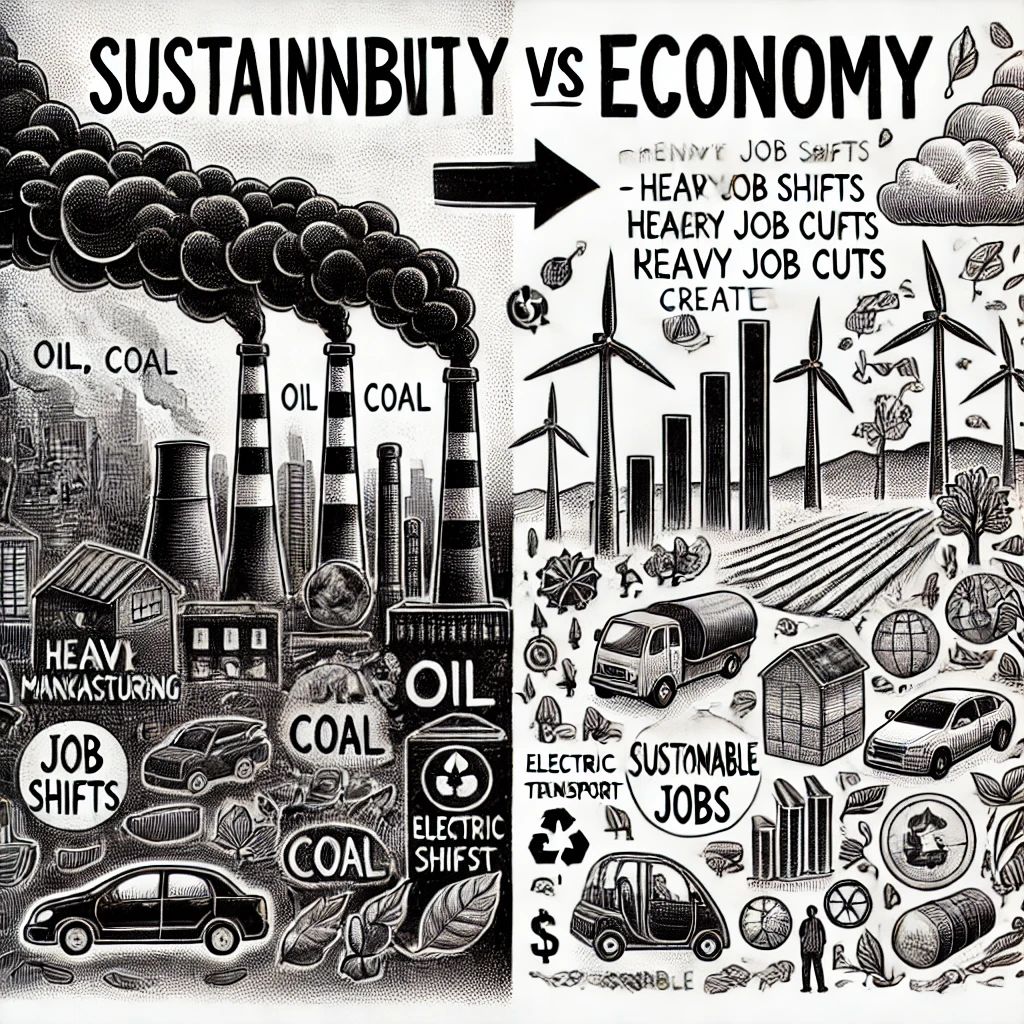
🚨 “TheGreenParadox: If the Top100 Polluters Go Green, Do Economies Go Red?” 🌍💸🔥
71% of global emissions come from just Just100 companies—but what happens if they actually go green?
📊 TheHardNumbers: Who’s Driving Emissions?
🔹 100Companies = 71% of Global Emissions (CDP Carbon Majors Report, 2025)
🔹 TotalMarketValue = $15.4 Trillion (Forbes, 2025)
🔹 Sectors Dominating Emissions:
✔️ Oil & Gas (ExxonMobil, Shell, Aramco, BP, Reliance) – 52% of global industrial CO₂.
✔️ Coal Giants (ChinaEnergy, Peabody, Glencore) – 14% of all emissions, powering entire nations.
✔️ Steel & Cement (ArcelorMittal, Holcim, TataSteel, JSW) – 8% of emissions, critical to infrastructure.
✔️ Shipping & Aviation (Maersk, Boeing, Delta, Emirates) – 5% of emissions, enabling global trade.
🚨 RealityCheck: Transitioning these industries overnight would shake economies to the core.
💰 TheEconomicCrashPotential
🔻 JobLosses in FossilFuel Sectors – 34M jobs globally depend on oil, coal, and heavy industries. (ILO, 2025)
🔻 GDPImpact on EmergingMarkets – India, China, and Indonesia rely on fossilfuels for 20-35% of GDP. (World Bank, 2025)
🔻 SupplyChain Disruptions – 42% of global logistics, steel, and chemicals are tied to high-emission industries. (McKinsey, 2025)
🔻 EnergyTransition Costs – Full decarbonization needs #$275T investment by 2050—but who’s paying? (IEA, 2025)
📌 TheDilemma: Accelerating sustainability risks a financialcrisis, while delaying it fuels climate disaster.
🔄 IsThereAMiddlePath?
🏆 IndustriesFindingBalance:
✅ SaudiAramco’s CarbonCapture Push – #$50B invested, but still expanding fossilfuel extraction.
✅ Tesla & BYD’s EVRevolution – EVs now 18% of global carsales, but lithiummining is a sustainability disaster.
✅ GreenSteel Investments (Hybrit, H2GreenSteel) – Promising tech, but adoption is too slow.
🚨 TheProblem: Green initiatives often don’t move fast enough—or they create new environmental costs.
🏆 KeyTakeaway: The TradeOff No One Wants to Talk About
📌 GoingGreen could be an economic revolution if planned strategically.
📌 ItShouldBe a shift that protects jobs, not eliminates them overnight.
📌 ItWouldBe an economicdisaster if industries collapse before sustainable alternatives scale.
👉 CanTheWorldAffordToDecarbonize without crashing economies? Drop your insights below! 👇
Originally published on LinkedIn on 2025-02-20 03:57:07: https://www.linkedin.com/feed/update/urn%3Ali%3AgroupPost%3A82951-7298188896939479040
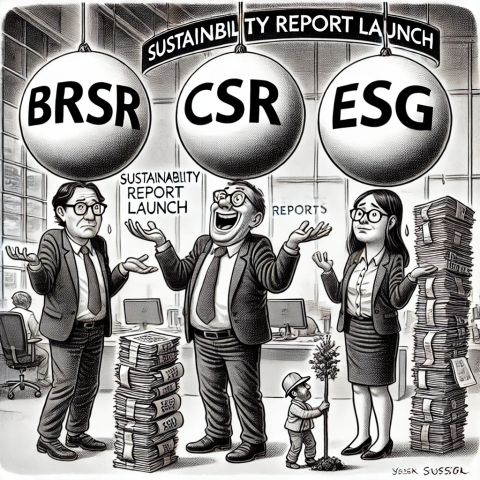
🚨 BRSR, CSR & ESG: Invading the Thin Line Between Sustainability & Showbiz! 🎭💰♻️
📌 RealityCheck:
CSR = Spending money.
BRSR = Reporting about spending money.
ESG = Rating the reports on spending money. None ensure real impact!
If a company plants a tree but spends twice as much marketing it—did it really go green?
In India’s corporate boardrooms, BRSR (Business Responsibility and Sustainability Reporting), CSR (Corporate Social Responsibility), and ESG (Environmental, Social, and Governance) are now mandatory checkboxes—but are they driving real impact or just polished PR campaigns?
🧐 BRSR vs. CSR vs. ESG: What’s Actually Happening?
🔹 CSR (Spend to Pretend?)
✔️ Companies must spend 2% of net profits on “good causes.” (Companies Act, 2013)
✔️ #₹14,300 Cr ($1.7B) spent in 2024—but 47% went to company-affiliated NGOs. (MCA, 2025)
✔️ Only 27% of CSR funds linked to sustainability. (SEBI, 2025)
🔹 BRSR (Report to Impress?)
✔️ Mandatory ESG disclosures for the top 1,000 listed firms. (SEBI, 2022)
✔️ 62% of reports claim “sustainability progress”—but no third-party verification. (ESG India, 2025)
✔️ 88% of firms skip reporting Scope 3 emissions (indirect pollution). (SEBI, 2025)
🔹 ESG (Ratings to Manipulate?)
✔️ Over $35T in global assets claim ‘ESG compliance’—but 70% lack real sustainability actions. (Morningstar, 2025)
✔️ India ranked 120th in ESG adoption—lagging behind Vietnam & Indonesia. (WEF, 2025)
✔️ 52% of ESG funds globally are now under scrutiny for ‘greenwashing’ claims. (EU Green Finance Report, 2025)
💰 Follow the Money: Greenwashing in Disguise?
🚨 If CSR was a school project, most companies would fail for copying answers.
🚨 If BRSR was a medical check-up, it would be self-diagnosed with no lab tests.
🚨 If ESG was a cricket match, most firms would just focus on looking good in the highlights.
🔎 Who’s Actually Doing Something?
🏆 The Real Deal:
✅ Tata Group: Large-scale renewable projects & real net-zero efforts.
✅ ITC: Circular economy & carbon-positive initiatives beyond paper.
✅ Hindustan Unilever: Science-based net-zero targets & sustainable sourcing.
🚨 The Greenwashers:
❌ Reliance: Talking renewables but expanding fossil fuel projects.
❌ Adani: Carbon-neutral claims exposed as accounting tricks.
❌ Vedanta: Reports “social impact,” but fined ₹120 Cr for pollution violations in 2024.

Originally published on LinkedIn on 2025-02-19 14:07:18: https://www.linkedin.com/feed/update/urn%3Ali%3Ashare%3A7297980065252843524
💰📈 CSR in India: ₹29,000 Crore ($3.5B) Spent—But Is It Really Making an Impact?
🚀 ₹29,000 Crore ($3.5 Billion). That’s how much Indian companies invested in Corporate Social Responsibility (CSR) in FY 2022-23—a 13% jump from last year. (Business Standard, 2024)
📊 Yet, only 2.5% of CSR funds have reached India’s most backward districts in 9 years. (Sattva Consulting, 2024)
🏆 56% of companies are now exceeding their 2% CSR mandate, signaling a shift from compliance to impact. (CSR Outlook Report, 2024)
📌 Reality Check: CSR budgets are growing—but is the impact reaching where it matters most?
📊 Where Did India’s CSR Money Go?
✅ Top 3 CSR Priorities in 2024:
🔹 Education – ₹8,670 Crore ($1.04B) – 29.9% of total CSR funds. (Sattva, 2024)
🔹 Healthcare – ₹6,325 Crore ($760M) – 21.8% of total CSR funds. (CSR Box, 2024)
🔹 Rural Development – ₹2,543 Crore ($305M) – 8.77% of total CSR funds. (MCA Data, 2024)
🚨 Underfunded Sectors:
❌ Climate & Sustainability – Just 5% of total CSR spending. (India ESG Report, 2024)
❌ Backward Districts – Only 2.5% of CSR funds in 9 years. (Sattva, 2024)
❌ Skill Development – Lagging despite workforce challenges. (Economic Times, 2024)
📌 Reality Check: More money doesn’t always mean better impact—are CSR funds going where they’re needed?
💼 Companies Leading the CSR Game in India
🏆 Reliance Industries – ₹1,271 Crore ($152M) spent on healthcare & rural development. (CSR India Tracker, 2024)
🏆 Tata Group – ₹1,066 Crore ($127M) spent on education & skill-building. (Business Standard, 2024)
🏆 Infosys – ₹377 Crore ($45M) invested in climate action & digital literacy. (Infosys ESG Report, 2024)
🚨 The Flip Side: Companies Falling Short
❌ Several mid-sized firms yet to meet 2% CSR mandate. (MCA Report, 2024)
❌ Growing focus on ‘brand-building CSR’ vs. grassroots impact. (India CSR Network, 2024)
📌 Reality Check: CSR isn’t just a compliance checkbox—it’s about meaningful change.
🏆 KeyTakeaway
💡 CSR could be India’s game-changer for inclusive growth, should be strategically focused on high-impact areas, but would be wasted if it remains a PR exercise.
👉 Are Indian companies truly driving change, or just chasing compliance? Let’s discuss. 💬

Originally published on LinkedIn on 2025-02-07 19:01:12: https://www.linkedin.com/feed/update/urn%3Ali%3AgroupPost%3A121193-7293705375868977153
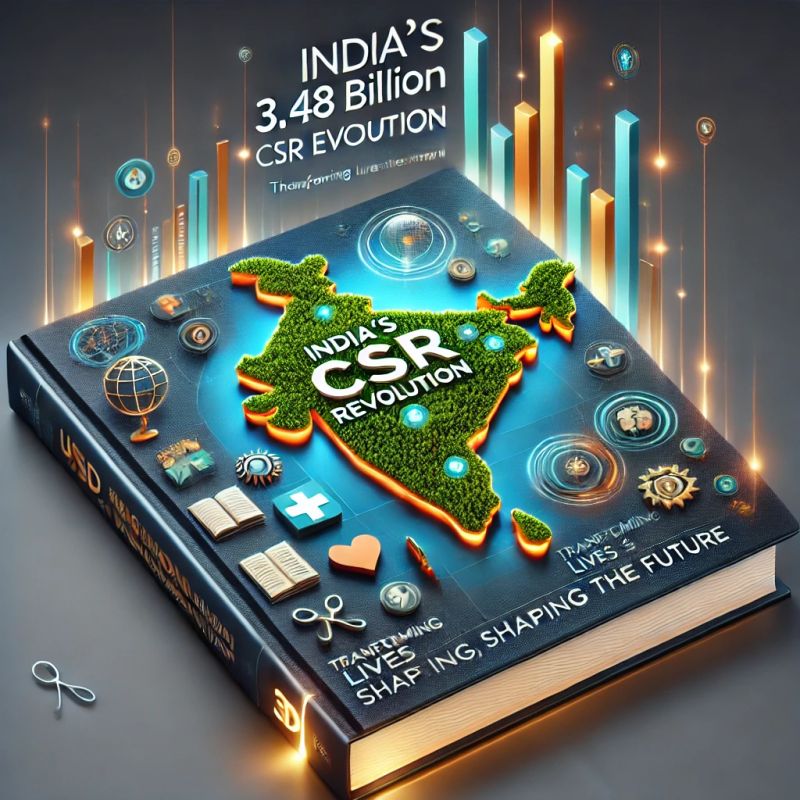
🚀 NamasteCSR_India’s $3.48 Billion CSR Revolution: Transforming Lives, Shaping the Future 🚀
Total CSR Spending: ₹29,000 crore (~$3.48 billion USD)
Corporate India is leading a powerful movement in social_responsibility_investing billions into initiatives that empower communities, address inequalities, and build a sustainable future.
📊 Industry-Wise CSR Spending
Where the $3.48 billion made a difference:
🎓 Education, Differently Abled, and Livelihood:
💰 ₹13,209 crore (~$1.58 billion USD) | 44% of Total CSR
Empowering individuals through skill-building and education.
🩺 Healthcare and Sanitation:
💰 ₹8,739 crore (~$1.05 billion USD) | 29%
Improving health access and sanitation for underserved communities.
🌾 Rural Development:
💰 ₹2,005 crore (~$240 million USD) | 7%
Building sustainable livelihoods and infrastructure in rural areas.
🌿 Environment and Conservation:
💰 ₹2,921 crore (~$350 million USD) | 10%
Driving green initiatives and conserving biodiversity.
👩🎓 Gender Equality and Women Empowerment:
💰 ₹893 crore (~$107 million USD) | 3%
Breaking barriers and empowering women across sectors.
🏅 Encouraging Sports:
💰 ₹526 crore (~$63 million USD) | 2%
Fostering sporting talent and creating opportunities.
🏛️ Heritage and Culture:
💰 ₹441 crore (~$53 million USD) | 1%
Preserving India’s rich cultural legacy.
🤝 PM Relief and Other Funds:
💰 ₹815 crore (~$98 million USD) | 3%
Supporting disaster relief and community aid initiatives.
🏆 Top 10 Contributors Driving the Revolution
These companies collectively spent ₹5,070 crore (~$608 million USD):
1. ⭐ Reliance Industries Limited: ₹1,592 crore (~$190M)
2. 💼 HDFC Bank Limited: ₹945 crore (~$113M)
3. 💻 Tata Consultancy Services: ₹900 crore (~$108M)
4. 🏭 Tata Steel Limited: ₹827 crore (~$99M)
5. 🛢️ ONGC Limited: ₹635 crore (~$76M)
6. ⛽ Indian Oil Corporation: ₹580 crore (~$70M)
7. 💡 Infosys Limited: ₹458 crore (~$55M)
8. 🌱 ITC Limited: ₹404 crore (~$48M)
9. 🔌 Power Grid Corporation: ₹331 crore (~$40M)
10. 💻 HCL Technologies: ₹261 crore (~$31M)
🌟 Why This Matters
This is more than compliance—it’s transformational. India’s CSR ecosystem is creating lasting change, targeting critical issues like education gaps, healthcare disparities, environmental challenges, and community empowerment.
By YR2047, as India marks 100Years of independence, these contributions will shape an inclusive, sustainable, and empowered future for generations to come.
💬 What are your thoughts on this revolution? Let’s connect and collaborate!
CSR India Impact Sustainability CorporateLeadership ChangeMakers
Originally published on LinkedIn on 2025-01-11 15:12:43: https://www.linkedin.com/feed/update/urn%3Ali%3AgroupPost%3A10020629-7283863402731479040
YR2024_India’s Bioenergy Capacity Hits New Milestone
India has reached a significant milestone in its clean energy efforts, with bioenergy playing a key role in the renewable energy mix. As of 13th November_2024, bioenergy contributes significantly to India’s renewable portfolio, supporting the country’s transition toward net-zero emissions by 2070.
With advancements in biogas, bioethanol, bio_CNG, and biomass power, India is accelerating its clean energy goals:
Bioenergy (~6%) now forms a critical part of the 46.3% renewable energy share in the total installed power capacity.
The sector supports decarbonization in transportation, industry, and aviation through initiatives like bioethanol blending and Sustainable Aviation Fuel (SAF).
India’s bioenergy growth reflects its focus on reducing fossil fuel dependency while strengthening its $20 billion bioeconomy, creating a sustainable and greener energy future.
India’s Bioenergy Partnerships in 2024
✅ TruAlt Bioenergy & Sumitomo Corporation
Focus: Biogas, Bioethanol, SAF
Target: Cutting fossil fuel dependency by 50%.
✅ ISMA, TERI & Praj Industries
Focus: SAF, Green Hydrogen
Target: 12 billion liters SAF annually by 2030.
✅ India_Brazil SAF Collaboration
Focus: SAF Supply Chain Optimization
✅ BPCL ($170M Investment)
Focus: SAF Production
Target: 5% SAF blending by 2030.
✅ IOC & LanzaJet
Focus: Waste-to-Ethanol SAF
Output: 80,000 metric tons annually.
✅ GPS Renewables & SAF One
Focus: Aviation Emission Reduction (8% GHG emissions).
✅ Adani Total Gas & Greenko Group
Focus: Biogas, Green Hydrogen
Impact: 10% reduction in industrial emissions by 2035.
✅ Reliance & Air Products
Focus: Bioethanol, SAF
Strengthening the $20 billion bioeconomy.
✅ Tata Power & Shell India
Focus: Bio-CNG, Biogas
Target: 5M metric tons annually by 2030.
✅ NTPC & Honeywell International
Focus: Green Methanol, SAF
Emissions Reduction: 20% by 2035.
✅ Vedanta & EcoEnergy Europe
Focus: Waste-to-Bioethanol
Target: 20% ethanol blending by 2025.
✅ L&T & Siemens Energy
Focus: Biohydrogen
Target: 1M metric tons annually by 2030.
Why This Matters
India’s bioenergy partnerships are driving innovation, emissions reduction, and economic growth.
📊 Key Stats:
50% fossil fuel dependency reduction by 2030.
12B liters SAF production annually by 2030.
20% ethanol blending by 2025.
5M metric tons of biogas production annually.
1M metric tons of biohydrogen by 2030.
India is laying the foundation for a sustainable and net-zero tomorrow, proving that collaboration is key to progress.
Source / shared link: https://pib.gov.in/PressReleaseIframePage.aspx?PRID=2073038
Originally published on LinkedIn on 2024-12-17 15:02:29: https://www.linkedin.com/feed/update/urn%3Ali%3AgroupPost%3A3880479-7274801133875822593
Namaste🌞India
Sun Shines Bright on India’s Chemical Industry with Solar Energy
India’s solar energy revolution isn’t just about generating clean energy; it’s also creating a golden opportunity for the chemical industry, which supplies critical materials like polysilicon, silver paste, and encapsulation films. With record-breaking investments, cutting-edge technology partnerships, and government incentives, the chemical sector is positioned to power India’s renewable energy journey.
🏢 Key Industry Players
Tata Chemicals: Focused on high-performance coatings and encapsulation films.
Waaree Energies: Pioneering durable, recyclable solar modules.
Adani Solar: Strengthening in-house chemical production for vertical integration.
Reliance Industries: Partnering with global firms to enter polysilicon manufacturing.
💰 Key Investments in YR2024
🔹 Adani Group: ₹7.5 trillion ($88.53 billion) in Rajasthan, including 100 GW solar projects.
🔹 Tata Power Solar: ₹43 billion invested in a 4.3 GW solar module facility in Tamil Nadu.
🔹 Hero Future Energies: $20 billion to expand renewable capacity to 30 GW by 2030.
🔹 FDI Surge: $3.76 billion in FY 2023-24, a 50% YoY growth in renewable energy.
🤝 Key Technology Partnerships
🔹 Waaree Energies & IIT Bombay: Researching cost-effective perovskite solar cells.
🔹 Reliance Industries & NexWafe (Germany): Developing low-cost polysilicon technologies.
🔹 Tata Chemicals & JohnsonMatthey (UK): Innovating sustainable encapsulation materials.
📍 Geographic & Global Challenges
🔸 Extreme Weather: Heatwaves demand heat-resistant coatings; cyclones call for weatherproof materials.
🔸 Regional Disparities: Solar adoption thrives in western/northern states but lags in the northeast.
🔸 Global Competition:
China dominates polysilicon production.
Southeast Asia offers cost-competitive solar materials.
🔸 Resource Scarcity: Shortages of silver and polysilicon create supply chain challenges.
🔸 Sustainability Demands: Global buyers require eco-friendly and low-carbon solar panels.
🚀 Opportunities for India’s Chemical Industry
🔹 Scale domestic manufacturing of critical materials.
🔹 Develop climate-resilient coatings tailored for diverse Indian geographies.
🔹 Leverage green technology partnerships for innovation.
🔹 Expand into underdeveloped regions with decentralized solar projects.
🌍 Conclusion
The Indian chemical industry has a pivotal role in powering the solar energy boom. By addressing global challenges, leveraging investments, and fostering innovation, it can solidify its position as a global leader in solar-related chemical manufacturing.

Originally published on LinkedIn on 2024-12-13 18:37:46: https://www.linkedin.com/feed/update/urn%3Ali%3AgroupPost%3A3880479-7273405759328038912
NamasteGreenIndia
Emissions_Impossible? Indian Corporates Lag in Carbon Goals
Date: December 3, 2024
Introduction
Despite growing global emphasis on sustainability, Indian corporates are falling short in reducing carbon emissions. According to ICRA ESG Ratings, key sectors contributing 55% to India’s emissions—power, energy, and cement—show minimal commitment to net-zero goals. Less than 10% of these companies have aligned with the Science Based Targets initiative (SBTi), highlighting the gap between intent and action.
Leaders and Laggards in Carbon Reduction
Top Performers
1. Wipro: Targeting net-zero by 2040, with a 55% emission reduction by 2030.
2. Indian_Railways: Aiming for net-zero by 2030 through 100% electrification of routes.
3. HDFC Bank: Carbon neutrality by 2031-32, focusing on energy efficiency.
4. Reliance Industries: Net-zero by 2035, supported by significant renewable energy investments.
5. TCS: Committed to net-zero by 2030, advancing sustainability in IT operations.
Underperformers
1. NTPC Limited: Still heavily reliant on coal, with limited renewable transition.
2. SAIL: Struggles with scaling green steel production.
3. UltraTech Cement: Slow to adopt alternative, low-carbon technologies.
4. Adani Power: Coal-heavy operations overshadow renewable projects.
5. ONGC: Vague net-zero targets with limited progress.
Key Insights and Industry Statistics
Less than 10% of high-emission companies are committed to SBTi net-zero targets.
India’s largest sectors lag due to financial constraints, technological barriers, and policy gaps.
Leading companies like Wipro and Indian Railways demonstrate actionable strategies, while many others rely on traditional energy sources, hindering progress.
Challenges and Recommendations
Barriers to Change
High costs and limited access to green technologies.
Weak enforcement of environmental policies.
Inconsistent public disclosure of targets and progress.
Solutions
1. Sector_Specific Policies: Tailored roadmaps for high-emission industries.
2. Incentives and Penalties: Reward green initiatives and enforce stricter compliance.
3. Transparency: Mandate public reporting on emission reduction progress.
Conclusion
ICRA ESG Ratings reveal a critical divide between commitments and action among Indian corporates. While leaders like Wipro and Indian Railways are setting benchmarks, the majority of high-emission sectors lag dangerously behind. Bridging this gap requires swift, collective action to align corporate strategies with global climate goals. With the clock ticking, the stakes have never been higher.
Originally published on LinkedIn on 2024-12-03 06:45:23: https://www.linkedin.com/feed/update/urn%3Ali%3Ashare%3A7269602604236611585

