KnowledgeSeries: The Future of CarbonCredits – A USD250B Market by 2050
The carboncredit market is no longer a side conversation—it’s becoming a mainstream financial instrument. With projections hitting #$250B by 2050, businesses and investors must pay attention.
Why? Because companies that integrate NetZero strategies today will gain a competitive edge, while those that don’t will face higher costs, regulatory risks, and shrinking investor confidence.
🌎 The Carbon Credit Boom: Why It’s a Business Imperative
✔️ The voluntary carbon market is set to grow 15X by 2030, reaching #$10B–$40B. (McKinsey)
✔️ Investments in carbon credits hit #$1.7B in 2023, up 50% YoY. (BloombergNEF)
✔️ 6,000+ global companies have set Science-Based Targets (SBTi), driving demand for verified carbon offsets.
✔️ Indonesia, Brazil, and Kenya are integrating carbon markets into their economies, generating revenue from forests, renewable energy, and carbon capture projects.
✔️ Article 6 of the ParisAgreement is enabling international carbon credit trading, boosting market credibility.
🚀 What does this mean for businesses?
✔️ A carbon credit strategy is no longer optional—it’s a business necessity.
✔️ Companies without a decarbonization plan will face higher compliance costs.
✔️ Investors are prioritizing NetZero leaders, making carbon credits a key ESG performance driver.
📊 Who’s Leading the Carbon Credit Race?
✔️ Big Tech & Carbon Capture:
Meta, Microsoft, and Google are securing multi-million-dollar deals in Direct Air Capture (DAC) to future-proof their carbon strategies.
✔️ Financial Institutions Going Green:
BlackRock, JP Morgan, and Goldman Sachs are launching climate-focused funds, treating carbon credits as an emerging asset class.
✔️ Corporate Adoption Soaring:
40%+ of Fortune500 companies are embedding carbon offsets into their business models.
✔️ Government-Led Action:
The EU, Singapore, and Japan are developing regulated carbon exchanges to ensure transparency & standardization.
🌱 What to Expect in 2025 & Beyond?
✔️ Stricter Regulations → Carbon credit verification will be tighter, reducing low-quality offsets & greenwashing risks.
✔️ Rising Prices → As demand outstrips supply, carbon credit prices could triple by 2030, making early adoption a smart financial move.
✔️ Emerging Markets in Play → Africa, Southeast Asia, and Latin America will dominate nature-based carbon solutions (reforestation, soil carbon, etc.).
✔️ Carbon as a Tradable Asset → Institutional investors are pushing for liquid carbon credit markets, making carbon a financialized commodity.
🔍 ComingUpNext: “The Business Case for Carbon Credits – Risks, Rewards & Strategy
Originally published on LinkedIn on 2025-03-08 07:02:05: https://www.linkedin.com/feed/update/urn%3Ali%3AgroupPost%3A82951-7304033651044839424
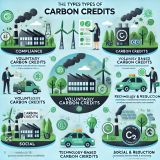
KnowledgeSeries – Decoding Carbon Credits: Which Ones Truly Make an Impact?
Carbon credits are essential tools in the fight against climate change, but not all credits are created equal. Here’s a quick guide to understanding their types and impact.
🌍 Compliance Carbon Credits
✅ Regulated Offsets – Mandatory under government-led carbon markets.
✅ Examples: EU ETS, California Cap-and-Trade, China ETS.
✅ Who Uses Them? Heavy industries, power plants, airlines, and corporations with emission limits.
💡 Voluntary Carbon Credits
✅ Market-Driven Offsets – Purchased by businesses and individuals to meet sustainability goals.
✅ Examples: Renewable Energy Credits (RECs), Forestry & Land Use, Methane Capture.
✅ Who Uses Them? Airlines, event organizers, eco-conscious brands.
🌱 Nature-Based Carbon Credits
✅ Carbon Sequestration – Uses ecosystems to absorb CO₂.
✅ Examples: Reforestation, Blue Carbon (Mangroves & Seagrass), Soil Carbon Farming.
✅ Why It Matters? Restores biodiversity, improves water cycles, and benefits local communities.
🔬 Technology-Based Carbon Credits
✅ Innovative Carbon Removal – Uses advanced tech to pull carbon from the air.
✅ Examples: Direct Air Capture (DAC), Carbon Capture & Storage (CCS), Waste-to-Energy.
✅ Challenges: High cost, scalability, and energy consumption.
⚡ Avoidance & Reduction Credits
✅ Preventing Emissions at the Source – Focuses on eliminating carbon before it’s released.
✅ Examples: Wind & Solar Energy, Energy Efficiency, Clean Cooking Stoves.
✅ Why It’s Crucial? Immediate impact with proven effectiveness.
🤝 Social Carbon Credits
✅ Climate + Community Benefits – Supports sustainability while improving lives.
✅ Examples: Sustainable Farming, Water Purification, Community Reforestation.
✅ Beyond Carbon? Jobs, education, and health improvements.
🔥 Biochar Carbon Credits
✅ Long-Term Carbon Storage – Converts biomass into stable carbon that remains in the soil.
✅ Benefits: Boosts soil health, prevents methane release, locks carbon for centuries.
✅ The Future? High permanence with agricultural benefits.
Which Carbon Credit Makes the Most Impact?
✅ Compliance Credits – Necessary but market-dependent.
✅ Voluntary Credits – Flexible, but risk of greenwashing.
✅ Nature-Based – Cost-effective and high-impact.
✅ Tech-Based – Promising, but expensive.
✅ Avoidance & Social Credits – Immediate reductions with co-benefits.
✅ Biochar – One of the most durable carbon storage solutions.
💬 Which one do you think has the highest potential for a net-zero future? Comment below!
Sustainability CarbonMarkets NetZero ClimateAction
Originally published on LinkedIn on 2025-03-06 08:05:21: https://www.linkedin.com/feed/update/urn%3Ali%3AgroupPost%3A100646-7303324797692747776
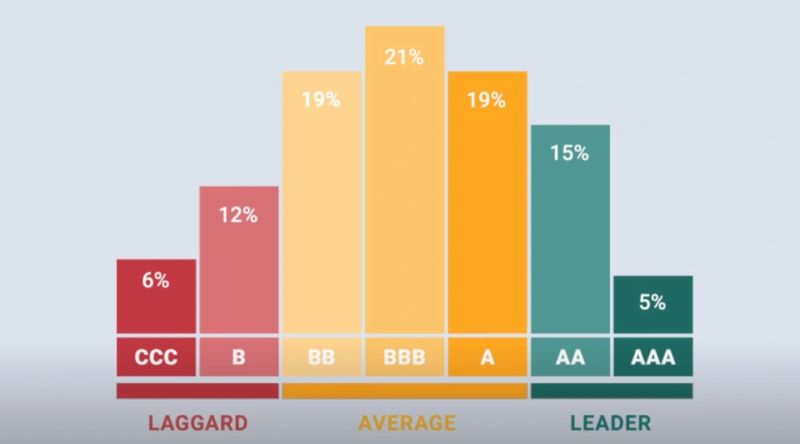
📚 KnowledgeSeries: Understanding MACI SustainabilityRatings
With ESG investing surpassing $40 trillion, sustainability metrics are no longer optional—they directly impact financial markets. But traditional ESG ratings often miss the biggest contributor to emissions: Scope 3 (supply chain & product lifecycle).
Enter MACI (Morningstar Absolute Carbon Impact)—a next-gen sustainability metric designed to measure real carbon impact, beyond corporate disclosures.
🔎 What is MACI?
📌 MACI (Morningstar Absolute Carbon Impact) is a carbon-focused rating that quantifies total emissions, unlike traditional ESG scores that rely on self-reported data.
✅ Scope 1 – Direct emissions from company operations
✅ Scope 2 – Indirect emissions from purchased energy
✅ Scope 3 – Supply chain & product lifecycle emissions (often 80-95% of total emissions)
📊 Only 5% of companies currently disclose full Scope 3 data, despite it making up 75% or more of their total carbon footprint. MACI ensures investors see the full picture.
🌍 Why is MACI a Game-Changer?
🟢 Exposes True Carbon Impact
📌 Over 90% of S&P 500 companies report ESG data, but less than 30% include Scope 3 emissions. MACI forces transparency by measuring actual environmental impact.
💰 Links Carbon Impact to Financial Risk
📌 Firms with high Scope 3 emissions face 10-15% valuation risks due to carbon pricing, regulation, and shifting consumer demand. Investors using MACI can identify & price these risks early.
📊 Goes Beyond Traditional ESG Ratings
📌 MSCI, Sustainalytics, & CDP rely on corporate sustainability claims—but MACI measures actual emissions data. This removes greenwashing from ESG scores.
🚀 Guides Net Zero Investments
📌 81% of global companies have Net Zero goals, but only 19% have credible transition plans. MACI identifies companies actually reducing emissions, ensuring investors back real sustainability leaders.
💡 How Financial Markets Depend on MACI
🏦 Sustainable Finance
📌 #$500 billion in Green Bonds & ESG Funds rely on sustainability scores. MACI ensures these funds actually reduce carbon impact.
📉 Investment Risk Assessment
📌 Climate risk is now considered a financial risk. Regulated markets (EU, US, UK, APAC) require stricter carbon disclosure. MACI helps investors assess exposure before risks impact stock prices.
📜 Regulatory Compliance
📌 The EU Taxonomy, SEC Climate Disclosures, & IFRS ESG Standards will require comprehensive Scope 3 reporting. MACI aligns with these frameworks, ensuring compliance-ready investments.
🔥 The Takeaway
As corporate greenwashing grows, investors need credible carbon metrics that go beyond PR campaigns. MACI is setting the new standard for data-driven sustainability investing.

Originally published on LinkedIn on 2025-02-27 01:47:03: https://www.linkedin.com/feed/update/urn%3Ali%3AgroupPost%3A9088131-7300692883345412096
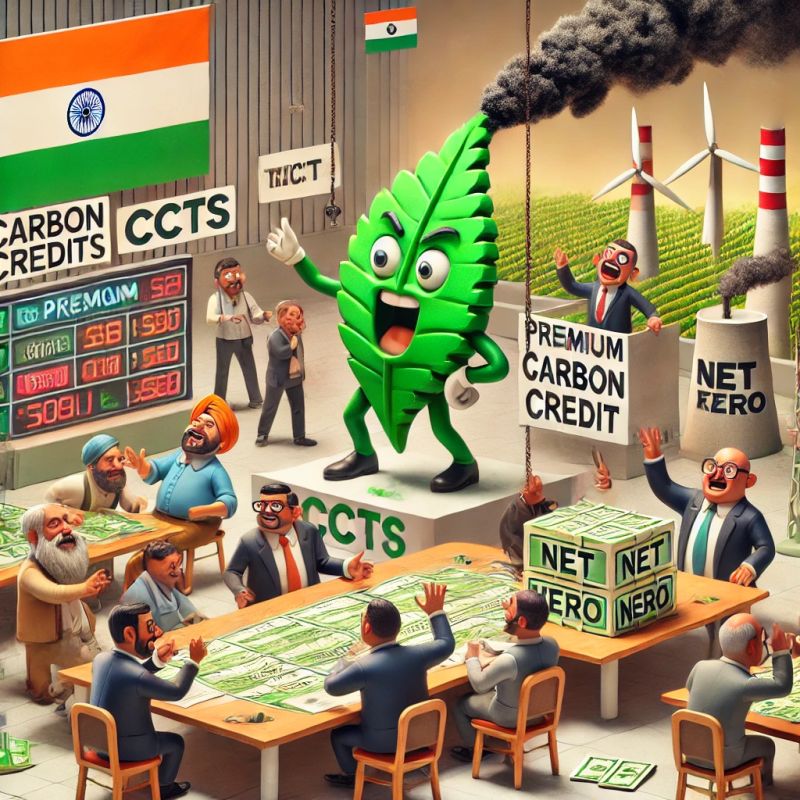
NamasteGreenIndia’s Carbon Market: A Game Changer or Just Another Framework?” 🇮🇳💨
India is making big moves in the carbon credit space with the Indian Carbon Market (ICM), but is it ready to deliver real impact? Here’s a data-driven breakdown of the Carbon_Credit_Trading_Scheme (CCTS) and what’s next.
🔍 What is the Indian Carbon Market (ICM)?
✅ Launched in June 2023 to enable carbon credit trading & cut emissions. (Source: Govt. of India, 2023)
✅ Aims to align with India’s Nationally Determined Contributions (NDCs) under the Paris Agreement.
✅ Regulated under the Carbon Credit Trading Scheme (CCTS), officially notified in June 2023 & amended in December 2023.
🏆 Why It Matters: India is one of the world’s top 3 carbon emitters, and this framework could reshape industries while driving carbon reductions.
📊 Current Status of CCTS
🛠 10 key sectors approved under the Offset Mechanism. (Source: Bureau of Energy Efficiency, 2024)
🚀 Phase 1 covers 6 sectors, with 12 methodologies developed for implementation. (BEE, Sept 2024)
🚨 Challenges:
Pricing clarity & credit validation remain uncertain.
Will industries truly cut emissions, or just buy offsets?
⚡ What’s Next for India’s Carbon Market?
📈 Expansion to more sectors, increasing carbon credit liquidity.
🌱 Stronger enforcement needed to prevent greenwashing.
🌍 Alignment with global carbon markets for international trading opportunities.
🏆 Final Verdict: High potential but execution will decide success.
KeyTakeaway
India’s Carbon Credit Trading Scheme (CCTS) could be a major climate tool, but real impact depends on strong enforcement & pricing mechanisms.
👉 Will India’s carbon market drive real change, or just be another framework?
IndiaCarbonMarket Sustainability ClimateAction NetZero CarbonCredits ESG
Originally published on LinkedIn on 2025-01-30 10:52:26: https://www.linkedin.com/feed/update/urn%3Ali%3Ashare%3A7290683269031907328
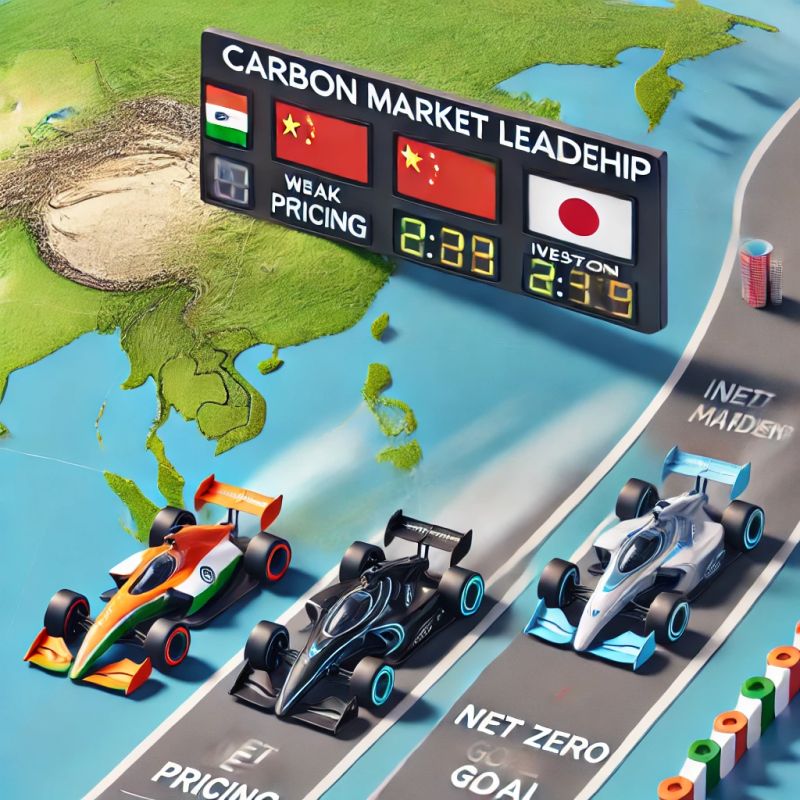
Asia’s Carbon_Market_Race: Who’s Leading and Who’s Lagging?” 🌏💨
Carbon markets are booming across Asia as nations compete to turn emissions into economic opportunities. But with different strategies at play, who’s actually making an impact, and who’s just carbon hustling? Let’s break it down data-first.
🇨🇳 China: The World’s Biggest Carbon Market
✅ Launched in 2021, covering 40% of national emissions.
✅ Expanding to heavy industries like cement & steel.
🚨 Challenge: Weak carbon pricing (~$8/ton) reduces impact. (Source: ICAP, 2024)
🏆 Verdict: Huge scale but weak incentives.
🇮🇳 India: The Emerging Carbon Giant
✅ Legislated in 2022, evolving into a regulated market.
✅ Integrating Renewable & Energy Savings Certificates by 2025.
🚨 Challenge: No firm carbon pricing yet. (Source: Ministry of Power, 2024)
🏆 Verdict: High potential, still in execution mode.
🇸🇬 Singapore: The Smart Carbon Hub
✅ Rising carbon tax from $5/ton (2022) to $50-80/ton by 2030.
✅ Pioneering biodiversity credits for ecosystem conservation.
🚨 Challenge: Small domestic market, reliant on external trading. (Source: Singapore Gov, 2024)
🏆 Verdict: Innovating beyond carbon into full environmental markets.
🇯🇵 Japan: The Tech-Driven Trader
✅ Carbon trading exchange launched in 2023 with investor backing.
✅ Banks investing heavily in climate advisory firms.
🚨 Challenge: Needs stricter corporate compliance. (Source: METI Japan, 2024)
🏆 Verdict: Strong financial backing but low enforcement
🇮🇩 Indonesia: The Controversial Play
✅ First global carbon credit transactions tied to energy projects.
✅ Huge potential from rainforests & nature-based solutions.
🚨 Challenge: Heavy reliance on fossil fuel-linked credits raises greenwashing concerns. (Source: Financial Times, 2024)
🏆 Verdict: Big opportunity, but investor skepticism is rising.
🇲🇾 Malaysia: The Carbon Market Architect
✅ Bursa Carbon Exchange (BCX) launched in 2022, first Shariah-compliant carbon trading platform.
✅ Voluntary Carbon Market (VCM) enabling corporate offsets.
✅ Carbon Tax by 2026 for high-emission industries.
🚨 Challenge: Needs stronger policy enforcement & carbon pricing clarity. (Source: PwC, 2024)
🏆 Verdict: Well-structured but awaiting execution impact.
📊 Who’s Winning the Carbon Market Race?
China = Biggest but Weak Pricing
India = High Potential, Early Stage
Singapore = Smartest Model, Small Scale
Japan = Investment-Driven, Needs Enforcement
Indonesia = High Risk, High Reward
Malaysia = Structuring Well, Needs Execution
🚀 The Future? Asia’s carbon markets must balance financial opportunities with real emission cuts—or risk becoming just another greenwashing tool.
👉 Which country’s approach will set the global standard?
CarbonMarkets AsiaLeadership NetZero Sustainability GreenInvesting ClimateAction

Originally published on LinkedIn on 2025-01-29 07:31:38: https://www.linkedin.com/feed/update/urn%3Ali%3AgroupPost%3A82951-7290270350309756931

