Profits in High_Noise_Economies
When Forecasting Lost Its Signal
Dr. Anju Sharma | KtalystInsights™ | MrsSustainability
Forecasting once worked because markets emitted signals.
Today, markets emit noise.
Forecasting didn’t fail.
Signal availability has!
1. Forecasts Were Built on Signals
✓ Demand trends were observable
✓ Pricing cues were stable
✓ Volume followed visibility
✓ Profit followed predictability
2. Markets Noise
✓ Policy narratives move faster than demand
✓ Algorithms amplify opinion, not intent
✓ Social velocity replaces consumer behaviour
✓ Data volume increased, signal quality dropped
3. Noise Broke the Forecast Repeatabilty
✓ Too many inputs, no hierarchy
✓ Reaction replaced analysis
✓ Time cycles collapsed
✓ Precision increased, accuracy declined
4. Access Destroyed Predictability
✓ Everyone sees the same data
✓ Platforms flattened advantage
✓ Visibility ≠ demand certainty
✓ Forecast variance widened
5. AI Multiplied Noise, Not Clarity
(DataComa)
✓ Faster models, louder outputs
✓ Conflicting projections coexist
✓ Narrative speed > market truth
✓ More forecasts, less foresight
6. Profit Now Follows Filtration
✓ Signal extraction beats prediction
✓ Fewer assumptions protect margins
✓ Decision discipline outperforms forecast depth
✓ Structural control absorbs volatility
7. The New Forecast Rules
✓ Forecasting = filtering, not predicting
✓ Silence is a strategic input
✓ Fewer metrics, stronger margins
✓ Clarity compounds profit
KtalystInsights™
As product cycles shrink & logistics accelerate, information overload turns demand into noise, ie reactive & faster customer dynamics. Dr. Anju Sharma
Originally published on LinkedIn on 2025-12-24 17:09:09: https://www.linkedin.com/feed/update/urn%3Ali%3Ashare%3A7409641293796175872
🚨 Moody’s & Sustainability: ESG is Now a Credit Rating Factor! 📊💚
With #$40T in ESG assets under management, Moody’s is reshaping how financial markets assess creditworthiness. No longer just about profits & losses, a company’s sustainability risks now directly impact credit ratings, borrowing costs, & investment potential.
🔍 How Moody’s Integrates Sustainability into Credit Ratings
🟢 ESG factors impact the credit ratings of 18% of companies & governments rated by Moody’s. (Source)
📊 Issuer Profile Scores (IPS): Measures 15 ESG subfactors (climate risk, governance strength, social responsibility).
📊 Credit Impact Scores (CIS): Rates how ESG performance affects a company’s credit rating & risk profile.
📊 Second Party Opinions (SPOs): Validates Green Bonds & Sustainability-Linked Loans, ensuring funds are climate-aligned.
🔹 Moody’s now assesses over 3,000 entities based on ESG factors.
💰 ESG & Financial Impact: Why Credit Ratings Depend on Sustainability
🏦 Banks & Investors Are Watching
📌 Companies with poor ESG ratings face higher borrowing costs, as investors demand sustainability-linked loans & bonds.
📉 Carbon-Intensive Companies Are High-Risk
📌 Firms with high Scope 3 emissions face 15-20% valuation risks due to carbon pricing & regulatory changes. (Source)
🚀 Sustainability-Linked Bonds & Loans Are Surging
📌 #$1.6T in sustainability-linked bonds & loans have been issued, with Moody’s validating green claims to prevent greenwashing. (Source)
🌍 Moody’s ESG Leadership: Recognitions & Market Influence
🏆 FTSE4Good Index Inclusion (6 Years Running) → Recognizing top ESG performers.
🏆 EcoVadis Bronze Medal → Top 35% of global companies for sustainability.
🏆 CDP Supplier Engagement Leader → Among the top 4% of companies driving supply chain decarbonization. (Source)
🔥 The Takeaway: Sustainability is No Longer Optional
🟢 18% of Moody’s rated companies now have ESG-driven credit adjustments.
🟢 Investors demand transparent sustainability metrics before lending.
🟢 Greenwashing is no longer profitable—credit ratings now hold companies accountable.
📢 Should ESG be an even bigger factor in credit ratings? Let’s discuss below! 👇

Originally published on LinkedIn on 2025-02-27 04:39:26: https://www.linkedin.com/feed/update/urn%3Ali%3AgroupPost%3A82951-7300736262829711360
💰 “Green Fines or Green Profits? Are Environmental Penalties Just Revenue Generators?” 🌍⚖️
Fining a corporation for destroying the planet without enforcing change is like giving a speeding ticket to a getaway car—profitable, but pointless.
Governments claim to enforce environmental protection, but are penalties truly about holding polluters accountable—or just another way to boost state revenues without real impact? Let’s look at the numbers.
📊 Who Pays the Most?
✅ 1. Big Oil & Fossil Fuel Giants 🛢️
✔️ BP, ExxonMobil, Shell – Fined $35B+ globally in the last decade. (Reuters, 2024)
✔️ India: Reliance & ONGC collectively paid ₹8,000 crore ($960M) in pollution fines. (CPCB, 2024)
🚨 Reality Check: Despite massive fines, fossil fuel subsidies still exceed $7 trillion globally. (IMF, 2024)
✅ 2. Mining & Deforestation 🌲🏗️
✔️ Brazil’s Amazon Deforestation Fines – Over $2.3B in penalties, yet deforestation rates hit record highs in 2024. (Greenpeace, 2024)
✔️ Vedanta & Adani Mining (India) – Paid ₹12,500 crore ($1.5B) in fines but continue large-scale mining. (MoEFCC, 2024)
🚨 Reality Check: Fines are often a fraction of profits. Most mining firms budget for environmental penalties instead of stopping damage.
✅ 3. Chemical & Industrial Waste 🏭
✔️ Dow Chemicals, BASF, Bayer – $8B+ in global penalties for toxic leaks. (EU Commission, 2024)
✔️ India’s Ganga Pollution Cases – Over ₹1,500 crore ($180M) in fines, but pollution still rising. (NGT, 2024)
🚨 Reality Check: Only 30% of fines are actually collected, and cleanup rarely happens. (UNEP, 2024)
⚠️ Who Gets Away?
❌ Agribusiness & Pesticides – Massive groundwater depletion, but minimal regulation.
❌ Fast Fashion & E-Waste – Textile & electronics giants rarely fined for pollution.
❌ Shipping Industry – 1,000+ oil spills yearly, but most fines are under $1M. (IMO, 2024)
📌 Reality Check: Governments focus on fining profitable industries while ignoring sectors with long-term damage.
🏆 KeyTakeaway: Are Green Fines Just A Cost of Doing Business?
✔️ Fines need to be reinvested in cleanup & prevention—not just govt revenue.
✔️ Penalties should scale with profits—polluters shouldn’t budget for damage.
✔️ Transparency matters—where do these billions in environmental fines actually go?
👉 Should penalties be about revenue or real accountability? Let’s discuss! 👇
Originally published on LinkedIn on 2025-02-17 13:35:21: https://www.linkedin.com/feed/update/urn%3Ali%3AgroupPost%3A4385073-7297247251947556864
Sustainability = ProfitMaximization
The most profitable companies of 2024 are proving one thing: Sustainability isn’t a cost—it’s an investment in future profits.
Here’s how the Top10 ProfitLeaders are turning green into gold:
1️⃣ SaudiAramco ($120.7B, Energy) – Started: 2021 | Net-Zero by 2050 | Invested $1.5B in clean tech. Focus: Carbon capture & hydrogen expansion.
2️⃣ Apple ($97B, Tech) – Started: 2007 | Net-Zero by 2030 (supply chain) | Issued $4.7B in green bonds. Focus: 100% recycled materials & carbon-neutral supply chain.
3️⃣ BerkshireHathaway ($96.2B, Financials) – Started: 2000s (via utilities) | No corporate net-zero target, but $30B+ invested in renewables. Focus: Largest wind energy investor in the US.
4️⃣ Google ($73.8B, Tech) – Started: 2007 | Net-Zero by 2030 (carbon-free energy) | Invested $3.5B in renewables. Focus: AI-powered energy efficiency & nuclear-backed data centers.
5️⃣ Microsoft ($72.4B, Tech) – Started: 2012 | Carbon Negative by 2030 | Launched $1B Climate Innovation Fund. Focus: Nuclear-powered data centers & carbon removal offsets.
6️⃣ ICBC ($51.4B, Financials) – Started: 2015 | Net-Zero by 2060 (China-aligned) | Largest green loan issuer globally. Focus: Financing renewables over coal expansion.
7️⃣ JPMorganChase ($49.6B, Financials) – Started: 2020 | Net-Zero by 2050 (portfolio-wide) | Committed $2.5T to sustainable projects. Focus: Phasing out fossil fuel lending.
8️⃣ ChinaConstructionBank ($47B, Financials) – Started: 2016 | Net-Zero by 2060 | Largest solar & wind financier in Asia. Focus: Cutting coal financing.
9️⃣ Meta ($39.1B, Tech) – Started: 2011 | Net-Zero by 2030 (value chain) | Invested $1B in sustainable data centers. Focus: 100% renewable operations since 2020.
🔟 AgriBankofChina ($38B, Financials) – Started: 2018 | Net-Zero by 2060 | Deployed $240B+ in green finance. Focus: Driving sustainable rural and agricultural tech investments.
Verdict: Sustainability = Profit
💰 Big Tech is using AI-driven energy savings to cut costs and scale.
💰 Finance giants are shifting capital into ESG and green bonds to hedge risk.
💰 Energy leaders are hedging fossil fuel decline with renewables.
These companies aren’t going green for charity—they’re doing it because sustainability is the most profitable strategy for the future.
Originally published on LinkedIn on 2025-02-14 17:14:01: https://www.linkedin.com/feed/update/urn%3Ali%3AgroupPost%3A2474261-7296215118588108801
AuditScandal: A Timeline_of_Lies, Exposure & Reckoning
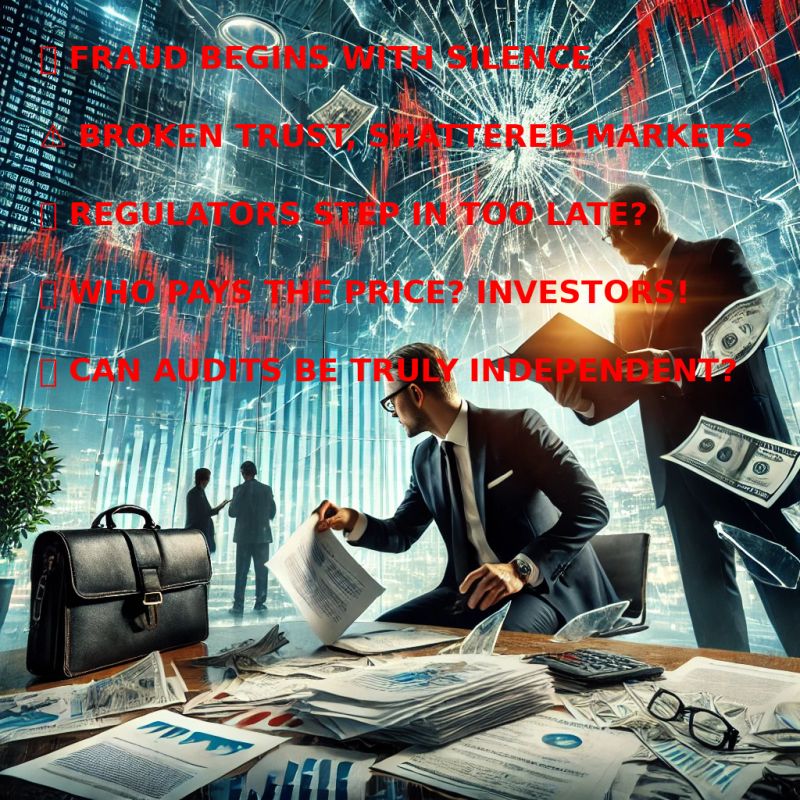
📉 What drives financial fraud?
🚨 Greed. Pressure. Complacency. A broken system.
🔴 When numbers don’t match reality, companies have two choices—fix the problem or hide it.
🔴 When auditors see red_flags, they can raise them or turn a blind_eye.
🔴 When regulators step in, it’s often too_late—the damage is done.
⚖️ Ethics isn’t about policies—it’s about choices.
📉 When businesses trade integrity for short_term gains, they lose more than money. They lose trust.
💰 In Brightcom & CMIL’s case, deception_wasnot_an_accident—it was a choice. And they got caught.
📅 YR2014_2020: The Financial Mirage
🟢 Brightcom Group reports unstoppable growth.
🟢 Profits soar, investors celebrate, and markets trust the story.
🟢 But was it real success—or well-crafted deception?
📅 YR2020_2021: Whispers of Doubt
🔴 SEBI receives multiple complaints.
🔴 Allegations surface:
✅ Profits overstated
✅ Asset manipulation
✅ Non_compliance with accounting norms
📅 YR2021: The First_Strike
🔎 SEBI orders a forensic audit.
🚨 Findings? Brightcom’s numbers don’t add up.
🚨 The illusion starts to crack.
📅 YR2023: The Case Breaks Open
⚠️ SEBI issues a Show_Cause Notice.
⚠️ The findings?
✅ Fabricated profits
✅ Investors misled
✅ Promoters cashing in on inflated shares
📉 Trust? Shattered.
📅 YR2021_2023: The CMIL_Parallel
🔴 Meanwhile, CMIL is also under scrutiny.
📉 Revenue crashes from ₹637 Cr (FY19) to ₹201 Cr (FY21).
📉 Profits turn to ₹194 Cr loss—but auditors stay silent.
📅 2023: NFRA Steps In
🔎 Findings?
❌ No proper audit procedures.
❌ No checks on liabilities.
❌ No questions asked.
📅 YR2024: The Reckoning
💥 Regulators strike hard.
🔴 Brightcom Group Auditors:
✔️ Debarred & fined ₹80 lakh
🔴 CMIL Auditors:
✔️ Debarred & fined ₹60 lakh
🚨 The_Lesson? Prevention is Cheaper Than Punishment.
✅ Boards & IndependentDirectors must challenge audits.
✅ Surprise forensic audits need to become the norm.
✅ Investors deserve real transparency—not smoke & mirrors.
TheBigQuestion: Are We Learning?
🔹 Should auditors face criminal charges for fraud?
🔹 Are regulators too slow in catching corporate misconduct?
🔹 Would AI-driven audits prevent such failures?
🔹 Why aren’t whistleblowers speaking up sooner?
🔹 Is financial transparency still just a checkbox?
🚨 If we don’t fix this now, the next financial scandal is just waiting to happen.
💬 Your thoughts? Is prevention possible—or are we just waiting for the next collapse? 👇

Originally published on LinkedIn on 2025-02-12 07:00:05: https://www.linkedin.com/feed/update/urn%3Ali%3AgroupPost%3A2153908-7295335841441193985
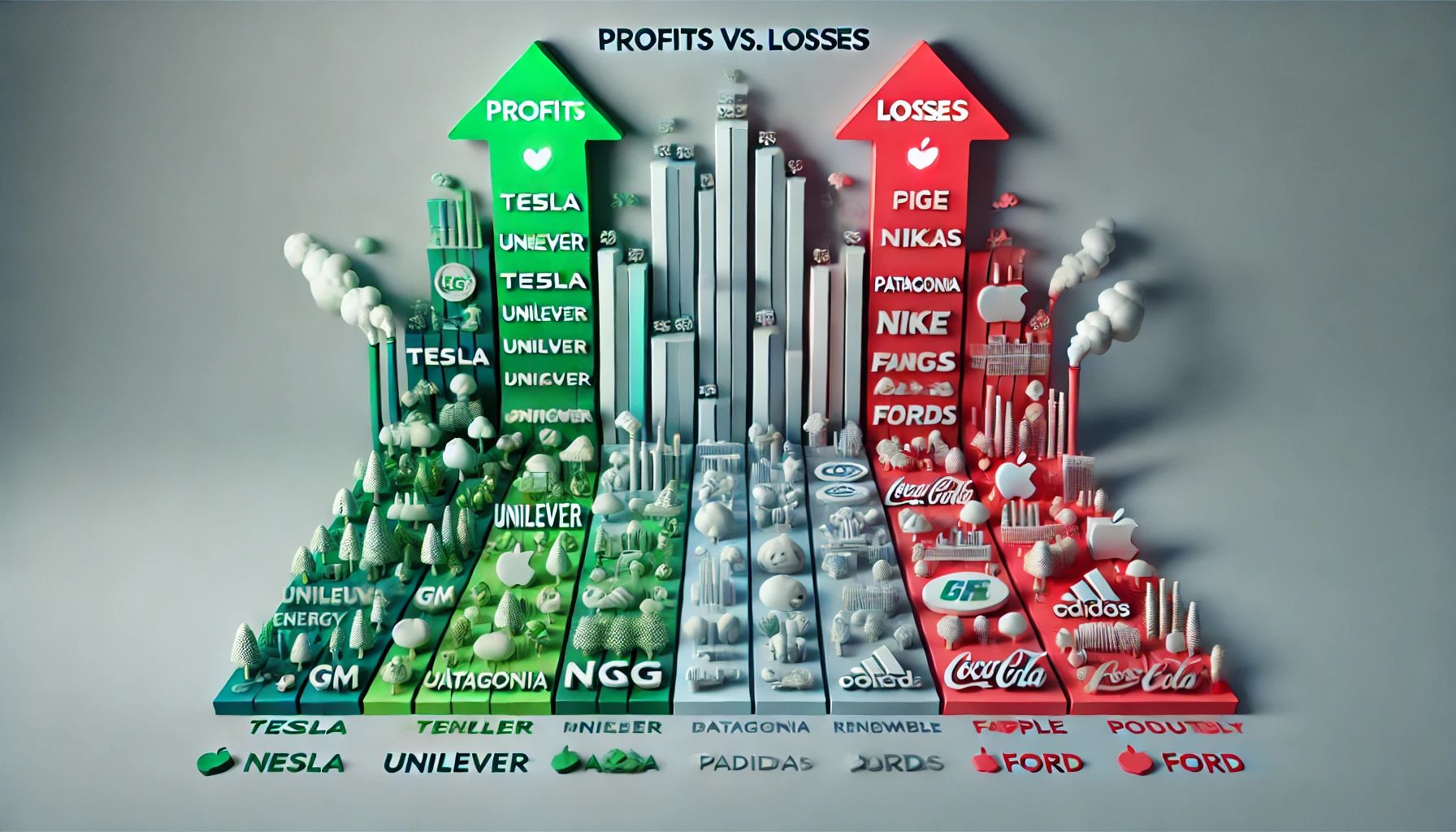
Sustainability Wars: Profits of the Bold, Losses of the Blind
Sustainability isn’t just a buzzword—it’s the defining strategy for profitability in modern business. These 10 examples showcase how companies that embraced sustainability secured financial success, while competitors who hesitated faced staggering losses and shrinking market share.
📊 1. Unilever vs. Procter & Gamble (P&G)
Unilever: Sustainable brands grew 69% faster, saving #€1 billion by 2020.
P&G: Lost #$8 billion in 2023, struggling to appeal to eco-conscious consumers in Europe.
📊 2. Tesla vs. General Motors (GM)
Tesla: EV dominance earned #$12.6 billion net income (2022) and an 800% valuation increase in 5 years.
GM: EVs accounted for just 2% of revenue (2022), causing a 25% market share drop in China.
📊 3. IKEA vs. Wayfair
IKEA: Renewable energy and circular practices saved #€2 billion and grew customer loyalty by 25%.
Wayfair: Suffered #$1.5 billion losses (2022) due to unsustainable operations.
📊 4. Patagonia vs. Columbia Sportswear
Patagonia: Eco-friendly initiatives helped achieve #$1 billion annual revenue and build brand trust.
Columbia: Lost 15% market share between 2020-2023 to Patagonia due to lack of sustainability focus.
📊 5. Walmart vs. Target
Walmart: Energy efficiency saved #$1 billion annually, cutting operational costs significantly.
Target: Reported a #$2 billion profit dip (2022) due to slower sustainability adoption.
📊 6. Nike vs. Adidas
Nike: Flyknit technology saved 60% material costs, generating #$3.5 billion in savings.
Adidas: Faced a #€500 million revenue loss (2023) from delayed sustainable innovations.
📊 7. Apple vs. Samsung
Apple: 100% renewable energy adoption fueled record #$394 billion revenue (2022) and 40% brand equity growth.
Samsung: Lost 15% EU market share, criticized for lagging in renewable energy initiatives.
📊 8. Microsoft vs. Oracle
Microsoft: Sustainability efforts drove 27% Azure growth (2023), securing eco-conscious enterprise clients.
Oracle: Missed #$1.2 billion in contracts, trailing in cloud services for sustainability-focused industries.
📊 9. PepsiCo vs. Coca-Cola
PepsiCo: Water-saving initiatives saved #$80 million annually, stabilizing global supply chains.
Coca-Cola: Lost #$2 billion (2022) due to water mismanagement protests and plant shutdowns in India.
📊 10. Toyota vs. Ford
Toyota: Sold 16 million hybrid vehicles, generating #$70 billion in cumulative profits.
Ford: Lost 10% market share (2020-2023) due to delayed EV and hybrid innovations.
The Bottom Line
Companies that lead with sustainability strategies not only maximize profits but also future-proof their business. Those that delay or ignore the shift face crippling losses in revenue, market share, and reputation.
SustainabilityWins GreenGrowth ProfitWithPurpose CorporateLeadership
Originally published on LinkedIn on 2025-01-24 05:11:11: https://www.linkedin.com/feed/update/urn%3Ali%3AgroupPost%3A82951-7288423065552609280
NamasteIndia for going to 20% ethanol blending in petrol by 2025, much ahead to 2030. The increase from E10, 10% to E13 13% to E15 15% next milestone E20 20%!
Target : The Modi government aims to achieve 20% ethanol blending in petrol by 2025-26, moving the target up from 2030.
Benefits:
Reduced Crude Oil Imports: Saves foreign exchange and enhances energy security.
Environmental Improvement: Reduces greenhouse gas emissions, contributing to a cleaner environment.
Increased Profits for SugarMills: Boosts profitability for sugar mills and benefits sugarcane farmers.
Ethanol Requirement: Around 10 billion liters of ethanol will be needed from the 50 billion liters of petrolsold.
High Ethanol blending in petrol has several effects on petrol engines
Phase Separation: Ethanol can absorb water, leading to phase separation, where water-ethanol mixture separates from petrol, potentially causing engine damage.
Engine Modifications: Achieving 20% ethanol blending may require modifications for many vehicles.
Increased Car Costs: These modifications could potentially lead to an increase in car costs and car
Compatibility: Modern vehicles are generally designed to handle ethanol blends up to E10 ; E13 (10% or 13% ethanol).
Higher Blends: Blends like E20 (20% ethanol) may necessitate changes to:
Fuel Systems
Engine Components
Preventive Maintenance: These changes are needed to prevent issues such as:
Corrosion
Material Degradation
(high Maintenance cost)
20% ethanol blending by 2025-26, says Amit Shah https://lnkd.in/dbTxkVzD
Originally published on LinkedIn on 2024-08-11 20:27:16: https://www.linkedin.com/feed/update/urn%3Ali%3Ashare%3A7228497220004700160

