NamasteIndia | Nirmala11 UnionBudget2026
Dr. Anju Sharma | MrsSustainability | KtalystInsights™
I’ve been reading so many interpretations of India’s Union Budget 2026–27 from markets, policymakers, analysts, and global investors.
One line I liked the most comes from InvestIndia:
Transforming aspiration into achievement and potential into performance.”(link attached)
But as usual, I have my own opinion.
Not a summary.
Not a cheerleading note.
A take on how we WeThePeople are rolling the dice.
Across Policy Politics, Planet Profit Politics
Across uncertainty, ambition, and global realignment.
So here’s KtalystKlues decode of how NamasteBharat NamasteIndia is placing its bets not just for itself, but for the world 👇
1️⃣ PublicCapex = Credibility (Policy • Profit)
✓ ₹12.2T (~USD 133B), +11.4% YoY (~3.4% of GDP)
✗ Private capex still rate-sensitive
Global fit: EU NextGenEU, US Infrastructure Act
2️⃣ Manufacturing = Ecosystems (Policy • Profit)
✓ Biopharma, rare earths, chemicals, containers, clusters
✗ Execution depth decides outcomes
Global fit: Germany/Japan cluster models
3️⃣ Semiconductors = Geopolitics in Silicon (ISM 2.0) (Policy • Politics • Profit)
✓ ₹40,000 cr (~USD 4.8B) electronics value chains
✓ Focus beyond fabs: materials, equipment, design
✗ Import dependence remains
PAX Silica lens: capability decides leverage
4️⃣ Infrastructure = Regional Absorption Test (Policy • Profit)
✓ Rail, waterways, city economic regions
✗ ROI depends on state & city execution
Global fit: OECD place-based growth
5️⃣ ClimateTech = Industrial Math (Planet • Policy • Profit)
✓ ₹20,000 cr CCUS (~USD 2.4B)
✗ Scale & verification remain open
Global fit: US DOE, EU Fit-for-55
6️⃣ FiscalDiscipline = Market Signal (Policy • Profit)
✓ Deficit glide path intact
✗ Borrowing keeps rates tight
Global fit: EU fiscal rules logic
7️⃣ MarketStability over Speculation (Policy • Politics • Profit)
✓ Derivatives taxes tightened
✗ Short-term sentiment impacted
Global fit: global macro-prudential trend
8️⃣ LabourIntensive Sectors Still Matter (People • Profit)
✓ Textiles, skilling pipelines
✗ Productivity must rise
Global fit: Vietnam/Bangladesh export models
9️⃣ Tourism & CareEconomy = Soft Power (People • Planet • Profit)
✓ Medical tourism, AYUSH, experience-led travel
✗ Coordination risk
Global fit: Thailand, Japan
🔟 Services & DigitalCertainty (Policy • Profit)
✓ IT/ITeS clarity, data-centre incentives till 2047
✗ Trust-based compliance must show results
Global fit: Ireland/Singapore
1️⃣1️⃣ ExecutionReality (Policy • Politics)
✓ Revenue sharing intact
✗ Delivery risk sits with states
Global fit: federal systems everywhere.
KtalystInsights™
This is a credibility-first Budget.
It chooses systems over slogans, resilience over speed, and execution over optics. The real verdict won’t come from headlines but from factory floors, logistics corridors, and state balance sheets.
Dr. Anju Sharma
DataComa
GreenLove
Originally published on LinkedIn on 2026-02-02 14:46:35: https://www.linkedin.com/feed/update/urn%3Ali%3Ashare%3A7424100932457480192
People, Planet & Profit
First_among_equals Policy
Dr. Anju Sharma | MrsSustainability
The LNG scramble is also one of the clearest stress-tests of modern energy diplomacy—where the US + EU + Middle East + Russia are all trying to balance the same two levers: Policy + Profit, while the rest of the world navigates the volatility they create.
1. PEOPLE ⚡️ (the “no blackouts” mandate) ✓ Europe’s gas storage fell to about 44% (late Jan 2026) vs a 10-year average ~58% — lowest winter level since 2022.
✓ If withdrawals stay harsh, storage could drop to ~30% or lower by March — meaning a brutal refill season ahead.
❌ When security tightens, it’s households + SMEs who feel the “price-weather” first.
KtalystKlue: Energy security isn’t a slogan — it’s a social contract. And social contracts get priced.
2. PROFIT 🧾 (who’s earning the “green dollars”?) ✓ In Jan 2026, the US supplied ~60% of EU LNG — around 5.36 million tonnes (Kpler-tracked) — one of the biggest monthly flows on record.
✓ In 2025, US LNG was ~58% of EU LNG (up ~4× vs 2021), sparking EU warnings about “dependency swap.
❌ Translation: Europe escaped one chokepoint… and walked into another priced as “flexibility.
KtalystKlue: Flexibility is not free. It’s an “option premium” — and someone always monetizes the option.
3. POLICY 🏛️ (the real pipeline is the rulebook) ✓ EU policy is still compressing Russian influence: Russia’s share in total EU gas imports fell to ~12% in Q2 2025 (from 18% a year earlier). (European Commission)
✓ EU is also explicitly moving to phase out Russian gas entirely by 2027, increasing the need for LNG + storage discipline.
❌ Markets can ignore speeches — but they don’t ignore laws, targets, and penalties.
KtalystKlue: Policy doesn’t “support” markets. Policy creates markets — and decides who gets paid.
4. PLANET / PLANT 🌿 (is it actually green?) ✓ Carbon is now a hard price signal: analysts forecast EU carbon allowances averaging ~€92.65/tonne in 2026. (Reuters)
✓ When renewables underperform, gas burn rises — the International Energy Agency has explicitly flagged higher gas burn during periods of lower renewable output in Europe.
❌ So LNG can be a transition stabilizer… but it can also become a profit machine if dependency gets locked in.
KtalystKlue: Decarbonization is the direction. “Greener invoices” are not the destination.
So who’s earning and who’s paying?
✓ Earners: liquefaction owners, shippers, terminal operators, traders (the “toll collectors” of flexibility)
❌ Payers: households + industry via volatility, plus governments via security subsidies
If you want a one-line truth for 2026:
Sustainability sets the constraints. Profit hunts the spreads. Policy picks the winners.
Question for comments:
Are we watching global decarbonization… or global monetization of insecurity? 👇
KtalystInsights™ KtalystKlues™ MrsSustainability LNG EnergySecurity Geopolitics GasMarkets PolicyRisk TransitionEconomics
Originally published on LinkedIn on 2026-01-31 08:29:17: https://www.linkedin.com/feed/update/urn%3Ali%3Ashare%3A7423281206324252672
Profits in High_Noise_Economies
When Forecasting Lost Its Signal
Dr. Anju Sharma | KtalystInsights™ | MrsSustainability
Forecasting once worked because markets emitted signals.
Today, markets emit noise.
Forecasting didn’t fail.
Signal availability has!
1. Forecasts Were Built on Signals
✓ Demand trends were observable
✓ Pricing cues were stable
✓ Volume followed visibility
✓ Profit followed predictability
2. Markets Noise
✓ Policy narratives move faster than demand
✓ Algorithms amplify opinion, not intent
✓ Social velocity replaces consumer behaviour
✓ Data volume increased, signal quality dropped
3. Noise Broke the Forecast Repeatabilty
✓ Too many inputs, no hierarchy
✓ Reaction replaced analysis
✓ Time cycles collapsed
✓ Precision increased, accuracy declined
4. Access Destroyed Predictability
✓ Everyone sees the same data
✓ Platforms flattened advantage
✓ Visibility ≠ demand certainty
✓ Forecast variance widened
5. AI Multiplied Noise, Not Clarity
(DataComa)
✓ Faster models, louder outputs
✓ Conflicting projections coexist
✓ Narrative speed > market truth
✓ More forecasts, less foresight
6. Profit Now Follows Filtration
✓ Signal extraction beats prediction
✓ Fewer assumptions protect margins
✓ Decision discipline outperforms forecast depth
✓ Structural control absorbs volatility
7. The New Forecast Rules
✓ Forecasting = filtering, not predicting
✓ Silence is a strategic input
✓ Fewer metrics, stronger margins
✓ Clarity compounds profit
KtalystInsights™
As product cycles shrink & logistics accelerate, information overload turns demand into noise, ie reactive & faster customer dynamics. Dr. Anju Sharma
Originally published on LinkedIn on 2025-12-24 17:09:09: https://www.linkedin.com/feed/update/urn%3Ali%3Ashare%3A7409641293796175872
ForeverChemicals” are finally GettingFired.
By Dr. Anju Sharma | MrsSustainability | KtalystInsights
The chemical industry isn’t just in a downcycle; it’s reallocating value from bulk tonnage new chemistries.
ReshapingChemicalTrends 2025–2035
1) Downcycle With a Data Trail
ChemicalTrends Downcycle
✓ Global chemical production growth is ~1.9% for 2025 and ~2% in 2026 – a structural downcycle, not a V-shaped recovery.
✓ Credit outlook is “deteriorating” on tariff uncertainty and weak demand, yet specialty margins remain structurally above commodities.
🔎 Insight: This cycle prices old portfolios down and new chemistries up.
2)AsiaTilt NamasteIndia
✓ Across Asia (China, Korea, Japan, ASEAN), growth clusters around higher-value chemistries for EVs, solar, electronics & advanced materials.
✓ India holds ~3.5% of global chemical value chains, with a roadmap to $1T output & ~12% GVC share by 2040.
✓ India’s production is set to grow ~6–11% annually in 2025–26 via PLI, PCPIR, FDI and strong domestic demand, with specialties driving profit, not just volume.
🔎 Insight: Asia is the growth region; India is the marginregion
3)BannedPFAS
✓ PFAS in textiles, packaging, cookware, foams & coatings face unprecedented regulatory squeeze.
✓ 3M exits all PFAS by end-2025, turning ~$1.3B in net PFAS sales to zero; BASF & others target full PFAS phase-out by ~2028.
🔎 Insight: Banned PFAS is no longer a compliance slide; it’s a multi-billion-dollar vacancy on the P&L.
4) NextGenSurfactants
✓ US/ EU’s PFAS phase-out & 40+ mapped alternatives hard-code a rising demand curve for PFAS-free chemistries. PFAS won’t be replaced by one magic molecule, but by a basket of fluorine-free hydrocarbon, silicone/ bio-based surfactants, repellents and barrier polymers tuned to each application.
🔎 Insight: PFAS-free surfactants, repellents, barrier coatings & processing aids are converging into a $10B+ replacement market by 2030, with regulation as built-in demand.
5) BioBased
✓ Bio-based chemicals are projected to reach ≈$208B by 2032, at ~9–10% CAGR from the mid-2020s.
✓ Many bio-routes deliver ~40–70% lower lifecycle GHG versus fossil baselines, with Europe holding >60% of the bio-based chemicals market.
🔎 Insight: Bio-based stops being a “green premium”, becomes the default route.
6) BatterySemiconductor & AISupplyChains pulls specialities
✓ Specialties make up roughly a quarter of global chemicals, with superior margins & critical roles in EVs, chips & AI data centres.
✓ Next-gen batteries (Li–S, Na-ion, silicon-rich anodes, organic electrodes), power electronics need high-spec salts, solvents, binders & coatings all specialty-heavy.
🔎 Insight: Every new gigafactory or AI data centre is effectively a specialty-chemicals contract, not just a power or hardware story.
When policy bans a molecule, average companies fight the rule.
Smart companies reinvent the value chain.” Dr. Anju Sharma
ChemicalTrends BioBasedChemicals PFASFree
Originally published on LinkedIn on 2025-11-28 10:43:15: https://www.linkedin.com/feed/update/urn%3Ali%3AgroupPost%3A82951-7400122096183398400
11MisleadingMerchants Missing Profit When False Eco-Claims Become Legal Liability
2025 is the year when greenwashing moved from PR spin to courtroom evidence. From pension funds in Sydney to fast fashion in Milan, regulators and courts have stripped away the gloss of vague eco-claims and replaced it with fines, injunctions, and lawsuits.
The_11MisleadingMerchants_2025
1. Shein (Italy, Aug) – €1M fine for vague “evoluSHEIN” sustainability claims.
Insight: Vagueness itself is now treated as deception.
2. Active Super / LGSS (Australia, Mar) – A$10.5M penalty for ESG fund misrepresentation.
Insight: ESG finance is being tested in court, not just in investor decks.
3. Clorox (Australia, May) – A$8.25M fine for false “ocean plastic” packaging claims.
Insight: Supply chains must back packaging claims — geography doesn’t lie.
4. Florida Crystals (USA, Mar) – Case pending over “regenerative” sugar with pre-harvest burning.
Insight: Regeneration rhetoric collapses when practices contradict climate justice.
5. Edgewell (Australia, Jul) – Court case over “reef-friendly” sunscreens with toxic chemicals.
Insight: Chemical disclosure, not branding, defines reef safety.
6. Supergoop (USA, mid-2025) – US$350K fine for “reef-safe” sunscreen advertising without proof.
Insight: Safety claims now require hard data, not aspirational language.
7. Microsoft (Global, 2025) – Criticised for carbon neutrality claim via waste burial (reputational damage, no fine).
Insight: Reputation is a harder currency than offsets.
8. Apple (Germany, Aug) – Court ban on “CO₂-neutral” Apple Watch claim.
Insight: Europe has turned “CO₂-neutral” into a banned phrase unless proven.
9. Procter & Gamble (USA, Jun) – Class actions over overstated “Protect-Grow-Restore” forest stewardship.
Insight: Stewardship claims need measurable, verifiable restoration metrics.
10. Lululemon (USA, Apr) – Case dismissed but investor trust shaken over “Be Planet” campaign.
Insight: Legal victory doesn’t erase reputational damage.
11. Scrumbles (UK/EU) – Voluntarily dropped B Corp certification, calling it a “marketing badge.
Insight: Certifications are fragile — one scandal can turn badges into burdens.
The BiggerPicture
1. Penalties are rising — from €1M (Shein) to A$10.5M (Active Super).
2. Litigation is spreading — 150+ greenwashing suits active in the U.S. in 2025.
3. More sectors are hit — fashion, finance, food, tech, FMCG, and personal care all face scrutiny.
4. Europe leads enforcement — German & Italian courts banning vague “CO₂-neutral” eco-labels.
5. Reputation is at stake — Microsoft & Lululemon lost trust even without major fines.
Green glossing gets you red report cards — and an even redder balance sheet.” — Dr. Anju Sharma
Originally published on LinkedIn on 2025-09-05 03:41:33: https://www.linkedin.com/feed/update/urn%3Ali%3AgroupPost%3A2153908-7369575390660440065
GeoShock: When_Politics_Hijack_Profit_Planet & Production
War rooms are the new boardrooms—because supply chains don’t salute borders.
KtalystKeystone
The world isn’t flat anymore—it’s fractured.
And business isn’t just about strategy—it’s about survival through shifting borders.
McKinsey Economic Outlook (Mar 2025) confirms it:
Geopolitics is now Boardroom Agenda 1.
Margins, maps, and mandates are colliding.
TheTripleShock
Industry | Profit | Planet
Industry Impact – ReroutingResilience
68% of global manufacturing execs rank geopolitics as a top 3 business risk
🔄 EVs & Batteries: 30–40% price swings due to unstable lithium/cobalt supply
⛔ Pharma: Indian exports to CIS & Africa fell 9% in Q1 2025 (port + policy delays)
🔐 Tech Platforms: 25%+ new integrations delayed by cross-border data laws
Geopolitics is no longer background noise—it’s the beat driving every business decision.
ChristineLagarde
Profit Impact – MarginsAtWar
📉 2.4% YoY EBIT drop in firms exposed to volatile regions
🚧 #$170B in CapEx shelved globally in 2024 due to policy unpredictability
💸 #$130B+ lost to EM currency swings (J.P. Morgan)
🧾 Carbon Taxes: 8–14% cost surge for Indian metals under EU CBAM
If you’re not worried, you’re not paying attention.
RayDalio
Sustainability Impact – NetZeroInNeutral
🌍 Only 12% of firms are 2030-net-zero aligned (UNEP)
⚠️ Green Protectionism: 50+ disputes on clean-tech subsidies
🛢️ Fossils up 5%, Renewables down 22% in conflict zones
❌ 47% of investors doubt ESG claims’ credibility (Bloomberg, 2025)
Control oil and you control nations; control food and you control the people.
HenryKissinger
ExploreFurther
Michael Froman on business & geopolitics
Daniel Yergin on energy & world order
CEO Guide: Tariff Moves 2025
Global Trade Geometry – The New Map
KtalystView | ProfitVsPlanet | GeoShock | GlobalRiskMatrix | SustainableStrategy | GreenProtectionism | NetZeroInNeutral

Originally published on LinkedIn on 2025-04-20 18:37:00: https://www.linkedin.com/feed/update/urn%3Ali%3AgroupPost%3A2474261-7319791211194515457
Sustainability as a CompetitiveAdvantage: Data-Backed Insights from Market Leaders
How Green Strategies Drive Profitability and Market Dominance
1️⃣ The Business Case: Numbers Don’t Lie
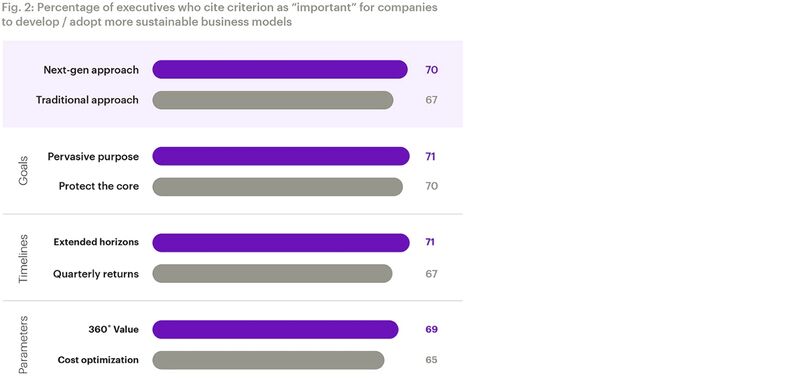
Sustainability is no longer just CSR—it’s a profit-driver. Companies leading in ESG (Environmental, Social, Governance) outperform competitors in key metrics:
67% of consumers prefer sustainable brands, and 50% are willing to pay a premium (Nielsen)
ESG-focused firms achieve 23% higher return on assets (Harvard Business School)
Sustainable investments reached #$30.7 trillion globally (Global Sustainable Investment Alliance, 2023)
Green supply chains reduce costs by 9% to 16% (McKinsey & Co.)
2️⃣ CaseStudy: Unilever – Sustainability Driving Growth
The Challenge:
Stagnant growth, rising operational costs, and increasing consumer skepticism.
TheStrategy:
✅ Launched Sustainable Living Plan – focusing on carbon neutrality, waste reduction, and ethical sourcing
✅ Introduced eco-friendly products – biodegradable detergents, refillable packaging
✅ Integrated sustainable supply chain – ethical sourcing, fair wages
TheOutcome:
Sustainable brands grew 69% faster than Unilever’s traditional portfolio
Cost savings of #€1.2 billion from energy efficiency & waste reduction
65% reduction in CO2 emissions while maintaining profit growth
3️⃣ The TeslaEffect: Sustainability as a Disruptor
TheChallenge:
EVs were costly, niche, and lacked mass adoption.
TheStrategy:
✅ Positioned EVs as luxury, creating aspirational demand
✅ Invested in battery innovation & circular economy for cost reduction
✅ Built renewable-powered gigafactories for operational efficiency
TheOutcome:
Stock value surged 5,500% in a decade (NASDAQ)
25% gross margin per vehicle, higher than traditional automakers (Toyota: 16%)
Industry-wide shift: Ford, GM, and Volkswagen investing heavily in EVs
4️⃣ IKEA: Circular Economy for Cost & Brand Loyalty
TheChallenge:
Fast furniture was unsustainable, affecting brand reputation.
TheStrategy:
✅ Shifted to circular design, using recyclable & repairable materials
✅ Built energy-positive stores, investing in solar & wind farms
✅ Launched buy-back programs, promoting a second-hand economy
TheOutcome:
50% carbon footprint reduction while increasing revenue
#$3 billion savings from renewable energy investments
World’s largest buyer of sustainable wood
5️⃣ Data-Proven Takeaways: Making Sustainability a Business Advantage
🔹 Sustainability is a growth driver – ESG-focused companies outperform peers by 20% in stock market returns (McKinsey)
🔹 Green innovation cuts costs – Sustainable practices lower operational costs by up to 16% (Deloitte)
🔹 Consumers reward sustainability – 77% of millennials consider environmental impact when purchasing (Forbes)
🔹 Investors prioritize ESG – 88% of global investors consider sustainability a key factor (Morningstar)
Originally published on LinkedIn on 2025-03-18 16:14:07: https://www.linkedin.com/feed/update/urn%3Ali%3AgroupPost%3A82093-7307796454041935875
Carbon Hustling: Loopholes or Lies in the Green Revolution?” 🌍💨
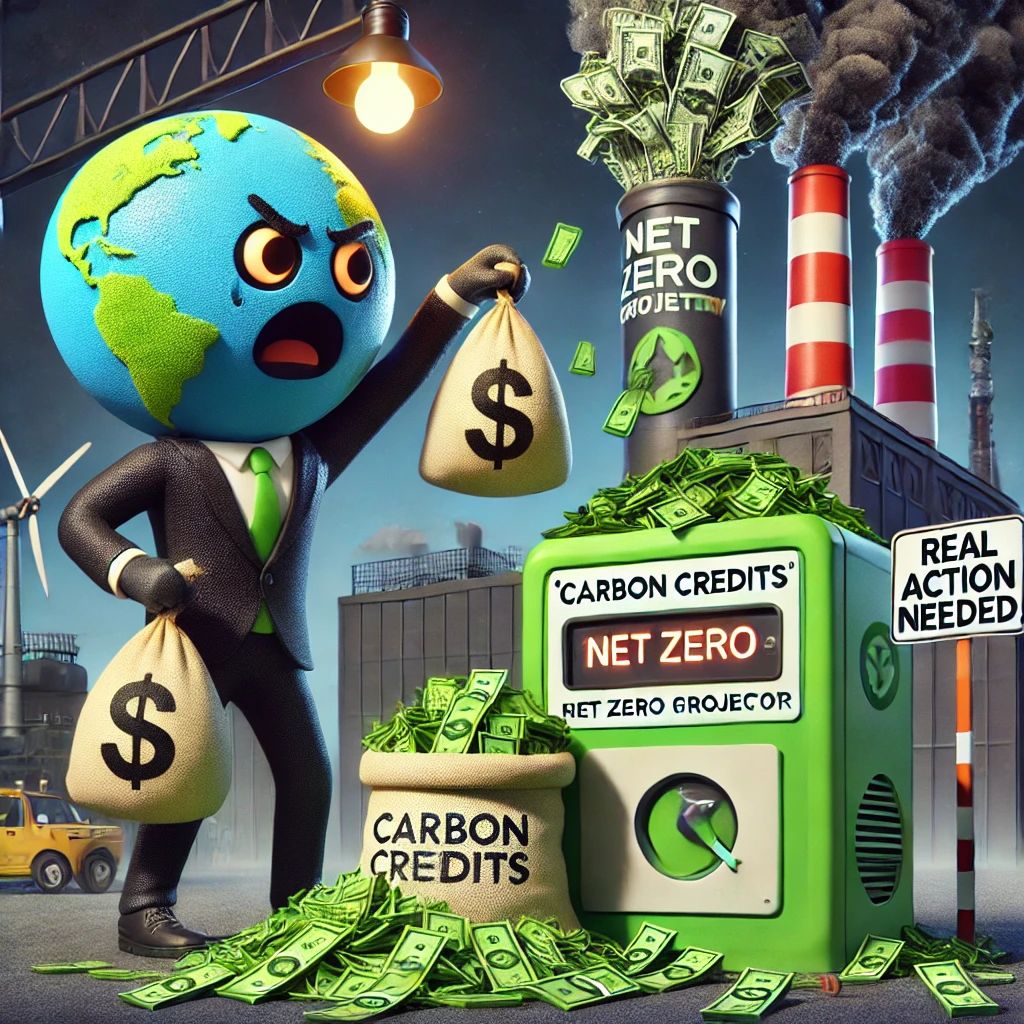
Carbon hustling—the deliberate exploitation of carbon reduction schemes—undermines global climate goals. Recent cases reveal systemic exploitation, not mistakes, in corporate carbon management.
🔍 4 Examples of Carbon Hustling
1️⃣ Shell’s Carbon Credit Controversy
Issue: Claimed neutrality using offsets tied to forests at minimal risk of deforestation.
Data: 80% of credits failed to reduce emissions. (Source: ProPublica, 2023)
Why It’s Hustling: Chose unverifiable offsets over real reductions.
2️⃣ Volkswagen’s Double Counting
Issue: Overstated Brazil emissions reductions by 35% with double-counted credits.
Data: Fined #€30 million for systemic misreporting. (Source: Reuters, 2024)
Why It’s Hustling: Exploited weak oversight in carbon markets.
3️⃣ Chevron’s Flawed Net Zero Claims
Issue: Used reforestation offsets; 60% failed verification standards.
Data: Stock dropped 5% after audits exposed discrepancies. (Source: Financial Times, 2023)
Why It’s Hustling: Relied on low-impact projects to mask emissions.
4️⃣ India’s Coal Offsetting Scheme
Issue: An Indian power company financed “green energy” while expanding coal.
Data: Emissions rose 40%, offset benefits negated. (Source: CSE, 2023)
Why It’s Hustling: Used minor green initiatives to greenwash high-pollution activities.
Why It’s Not a Mistake
1️⃣ Systemic Exploitation: Lack of audit standards costs #$2 billion annually in fraud. (Source: UNEP)
2️⃣ Profit over Integrity: Cheap offsets prioritized over genuine reductions.
3️⃣ Strategic Greenwashing: 83% of consumers now demand transparency. (Source: Edelman Trust Barometer, 2024)
KeyTakeaway
Carbon hustling is a systemic issue, delaying real progress. Stricter audits and credible carbon markets are essential to end the hustle.
👉 Are your carbon claims authentic or just optics?
CarbonHustling Greenwashing Sustainability ESGCompliance ClimateAction Transparency

Originally published on LinkedIn on 2025-01-28 03:06:32: https://www.linkedin.com/feed/update/urn%3Ali%3AgroupPost%3A2474261-7289841246922014720
Fill_my_Doctrate_Thesis_survey I hope you’re doing well! I need your support in filling out a short survey for my doctorate thesis. It’s about exploring how sustainability impacts business growth, profit maximization, and customer satisfaction.
The survey is quick and will take just 5-10 minutes of your time. Your input would mean the world to me and play a crucial role in my research.
Here’s the link: https://lnkd.in/drF-_GtG
Thank you so much in advance for your help—it truly means a lot!
Warm regards,
Anju Sharma
Please support by forwarding it to your WhatsApp Grps as I need 300 responses 🙏
Originally published on LinkedIn on 2024-12-23 16:38:16: https://www.linkedin.com/feed/update/urn%3Ali%3AgroupPost%3A2368335-7276999562379079680
NamasteGreenIndia: Why Corporate Giants Are Backtracking on Plastic Commitments
In recent years, major corporations have made bold pledges to address plastic pollution and embrace sustainable practices. However, many of these promises have been abandoned or scaled back, revealing the challenges of aligning environmental goals with profit maximization.
Coca_Cola has revised its environmental commitments, now aiming to use 35-40% recycled materials in its packaging by 2035, a reduction from the earlier target of 50% by 2030. The company also scaled back its pledge to collect and recycle one bottle or can for every one sold by 2030, now targeting 70-75% collection by 2035. These adjustments, attributed to business growth pressures, have drawn criticism for potentially increasing plastic waste.
Unilever: initially committed to halving its virgin plastic use by 2025 but recently revised this target to a one-third reduction by 2026. The company cited the need to balance sustainability with shareholder expectations, raising concerns about its ability to address plastic pollution effectively.
Amazon: In May 2023, Amazon discontinued its “Shipment Zero” initiative, which aimed to make 50% of shipments carbon neutral by 2030. The removal of this commitment from its website indicates a shift in the company’s environmental priorities, sparking criticism from sustainability advocates.
Hermès: The luxury brand Hermès altered its commitment to eliminating single-use plastic by 2030, now focusing on unnecessary virgin plastics instead. This softened goal reflects a less ambitious approach, highlighting the complexities of meeting sustainability targets in the luxury sector.
Colgate-Palmolive pledged to make 100% of its packaging recyclable by 2025. However, the company remains one of the top global plastic polluters, producing billions of non-recyclable sachets annually. This gap between commitment and action underscores the difficulties of transitioning to sustainable packaging on a large scale.
Broader Trends and Statistics
These corporate shifts are part of a larger trend. According to the Ellen_MacArthur Foundation’s Global Commitment report, signatories collectively use as much virgin plastic now as at the start of the initiative, with only 27% on track to meet their 2025 goals. Similarly, a report by As You Sow revealed that only 22 of 147 companies with recyclability goals are on target.
Balancing Sustainability with Profit Maximization
While corporations cite economic pressures and operational challenges for abandoning their sustainability promises, these decisions have serious environmental consequences. Companies must adopt robust, transparent strategies to reduce plastic pollution and meet their commitments without compromising long-term environmental health.
Originally published on LinkedIn on 2024-12-08 09:40:37: https://www.linkedin.com/feed/update/urn%3Ali%3AgroupPost%3A59930-7271458640639741952

