IndiaAtCOP26: Are We Walking the Talk — or Just Talking the Talk?
You cannot greenwash a deadline. Climate targets don’t wait, and neither should leadership.
Anju Sharma
In 2021, India made a powerful promise to the planet.
By 2025, the applause has faded. It’s time for accountability — not just ambition.
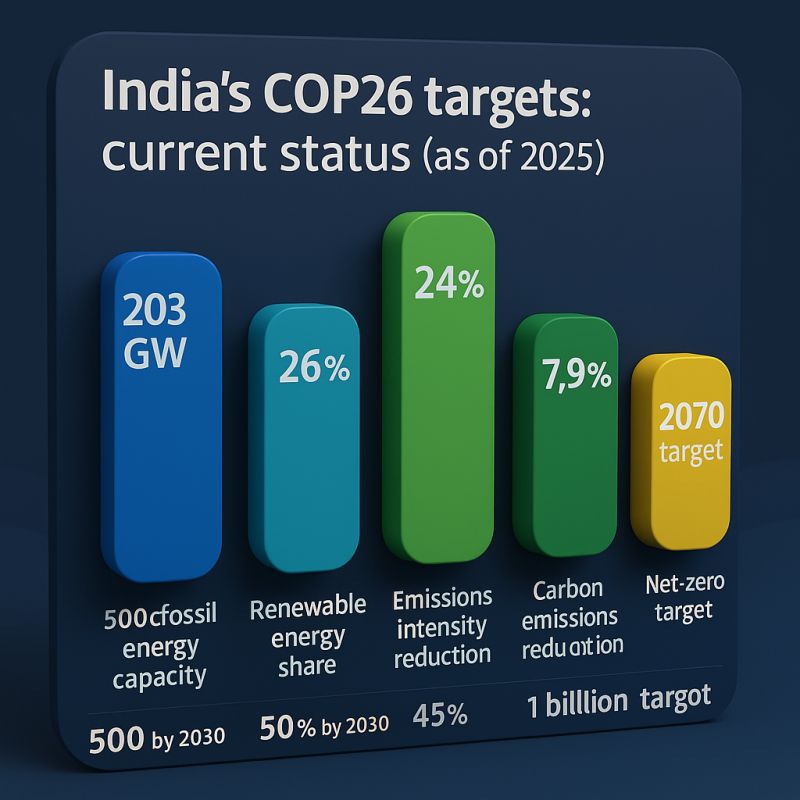
The 5Targets. The 5Year Reality Check:
🔋 500 GW Non-Fossil Energy by 2030
✅ 203.18 GW achieved (as of Oct 2024)
⚠️ Slowing pace. Grid and land hurdles choking large projects.
⚡ 50% Power from Renewables
✅ 26% YoY growth in clean energy (Jan 2025)
⚠️ Rooftop solar under 15% of target. State policies? All over the place.
📉 45% Emission Intensity Cut by 2030
✅ 33% achieved
⚠️ Driven by GDP growth — not aggressive emissions management.
🌫️ 1 Billion Tonnes CO₂ Reduction by 2030
✅ 7.9% drop in 2020
⚠️ But coal production surged 9% in 2024. Net gains? Neutralized.
🕰️ Net-Zero by 2070
✅ Roadmap submitted.
⚠️ No sectoral mandates. No accountability. No serious momentum.
Where’s the Leadership?
🚫 Ministries in silos
🚫 Power sector still fossil-heavy
🚫 EV infra crawling
🚫 Agriculture untouched
Are we really driving the transition — or just riding a global narrative?
And the Money?
💰 India has raised billions — Green Bonds, FDI, PLI schemes…
But…
❌ Utilization = uneven
❌ Outcome tracking = missing
❌ Impact per rupee = unclear
The climate rupee has wings — but no flight path.
The Fix — And Fast
✅ Appoint sector-wise climate champions with KPIs
✅ Launch public climate spend dashboards (Geo-tagged)
✅ Train bureaucrats in ESG, climate finance & tech
✅ Incentivize state-wise performance on climate goals
At_This_Pace, Where_Will_We_Land?
⏳ 3/5 targets may be missed
⏳ Investor confidence may fade
⏳ India’s brand as a climate leader may turn into a paper tiger
India doesn’t lack ambition.
It lacks the fire to deliver.
Time to shift gears.
From policy promises to powerful performance.
Originally published on LinkedIn on 2025-03-30 11:31:32: https://www.linkedin.com/feed/update/urn%3Ali%3AgroupPost%3A4385073-7312073993270784000
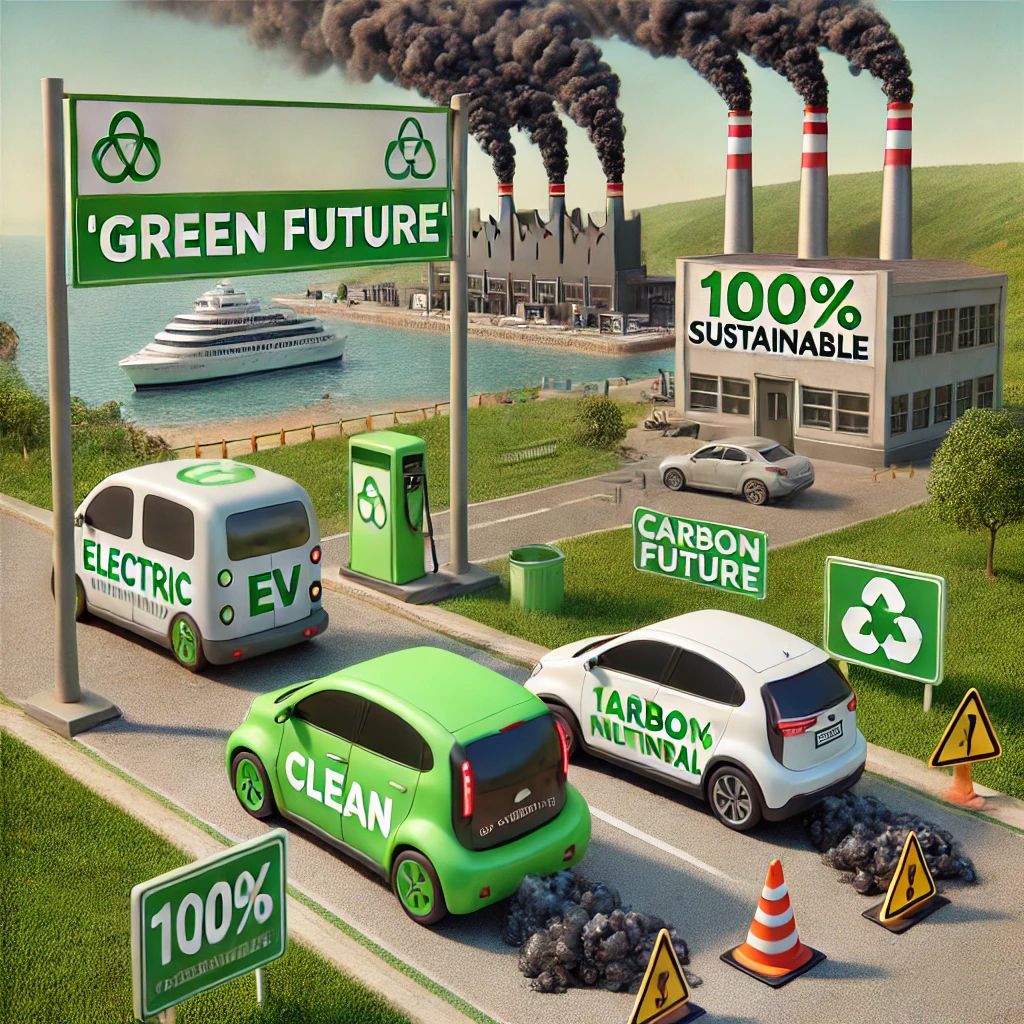
🚗⚡ YR2035’s Green_Auto_Mirage: Are EVs, Hydrogen Fuel Cells, and Synthetic Fuels Truly Sustainable or Just Greenwashing? 🌍💨
As we race toward 2035’s petrol-diesel ban, automakers push EVs, HFCVs, and SyntheticFuels as the future. But are these real solutions or clever marketing?
🔋 EVs: Cleaner or Just Elsewhere Emissions?
📌 Battery Production: An 80 kWh battery emits 2.4 – 16 metric tons of CO₂—equal to driving a gasoline car for 5-7 years. (MIT, 2024)
📌 Resource Impact: Each EV battery needs 63kg lithium, cobalt, & nickel, causing deforestation & water pollution. (GreenCars, 2024)
📌 Power Grid Dependence: An EV running on coal-based electricity emits more CO₂ per mile than hybrids. (EPA, 2024)
📌 Reality Check: EVs help only if powered by clean energy.
💧 Hydrogen: Clean Hype or Fossil Fuel Disguise?
📌 Production Problem: 96% of global hydrogen is made from natural gas & coal, emitting 830M metric tons of CO₂. (IEA, 2024)
📌 Efficiency Loss: HFCVs require 3x more renewable electricity than EVs. (US DOE, 2024)
📌 Reality Check: Unless made from renewables, hydrogen is just another fossil fuel.
⛽ Synthetic Fuels: Carbon-Neutral or Clever Greenwashing?
📌 Energy Guzzler: Producing 1L of synthetic fuel takes 6x more energy than refining petrol. (Fraunhofer, 2024)
📌 Still Polluting: Burns CO₂ and emits more NOx than conventional fuels. (MDPI, 2024)
📌 Reality Check: Synthetic fuels aren’t zero-emission—they just relocate pollution.
🚨 Greenwashing in the Auto Industry
🔻 BMW, Toyota, Honda exaggerated EV carbon savings by omitting battery emissions. (Greenpeace, 2024)
🔻 Porsche’s synthetic fuel plant claims zero emissions but runs on coal-powered electricity. (The Guardian, 2024)
🔻 India & U.S. promised 1M EV chargers by 2025, yet less than 20% installed. (BloombergNEF, 2024)
📌 Reality Check: Many automakers sell ‘green’ promises, but not real sustainability.
🏆 Key Takeaway: Hype or Hope?
🚘 EVs, HFCVs, & Synthetic Fuels could be clean if the supply chain is green.
♻️ They should be backed by strict sustainability policies.
⚠️ But they would be just another greenwashing scandal if industries don’t walk the talk.
👉 Are we truly heading toward sustainable mobility, or just another green illusion? 👇
Originally published on LinkedIn on 2025-02-18 11:22:14: https://www.linkedin.com/feed/update/urn%3Ali%3AgroupPost%3A82093-7297576141614190592
🏛️ The Power & Pitfalls of IndependentDirectors in Corporate Governance
🔹 Independent directors are the guardians of corporate governance, ensuring transparency, accountability, and ethical decision-making. Yet, history shows that their effectiveness is often tested in times of crisis. Here are some lessons from the boardroom:
✅ Success Stories: When Independent Directors Stepped Up
🛞 Tata Nano Project – When land acquisition and operational hurdles threatened Tata’s “People’s Car,” independent directors played a crucial role in navigating the crisis.
🏢 Infosys Leadership Shuffle (2013) – The return of Narayana Murthy, accompanied by his son, sparked concerns over governance norms, pushing independent directors to uphold fairness and transparency.
🚗 Maruti Suzuki Gujarat Plant (2014) – A move that could have impacted minority shareholders was scrutinized by independent directors, reinforcing the need for stakeholderprotection.
🚨 Corporate Failures: When Oversight Fell Short
📉 Satyam Scandal (2009) – A corporate fraud that exposed how ineffective oversight can erode trust and devastate businesses.
⚖️ Nagarjuna Finance Scandal (2009) – Legal trouble for an independent director led to mass resignations across corporate India, raising concerns about their liability.
💰 Byju’s Financial Crisis (2024) – Governance failures at India’s edtech giant underscored why independent directors must challenge financial mismanagement proactively.
These cases reveal a clear message: IndependentDirectors are not just ornamental figures—they are critical to business ethics and sustainability. However, their ability to function effectively hinges on:
🔹 Real independence from promoters and management
🔹 Robust regulations that protect their autonomy
🔹 A corporate culture that values their role in decision-making
💬 What do you think? Are independent directors truly empowered in today’s corporate landscape? Let’s discuss!
Read more at:

Originally published on LinkedIn on 2025-02-18 05:06:55: https://www.linkedin.com/feed/update/urn%3Ali%3AugcPost%3A7297481688115249152
🚗TheHondaNissanStandoff: When Collaboration_Hits_Roadblocks
In the world of corporate mergers, numbers often tell one story, but leadership dynamics tell another. The #$60 billion Honda-Nissan merger, which could have created the world’s third_largest automaker, has officially collapsed—not due to financial infeasibility, but strategic misalignment.
📊 Breaking Down the Numbers
📌 9.5 million vehicles – Combined production of Honda and Nissan in 2023, making them a formidable force against global leaders Toyota and Volkswagen.
📌 20% market share loss in China – Nissan and Honda collectively struggled as Chinese EV makers gained dominance, pushing them toward collaboration.
📌 #$17 billion R&D spending – Honda and Nissan together invested heavily in electric and autonomous vehicle tech, but fragmentation in strategy led to inefficiencies.
📌 41% drop in Nissan’s market cap over 5 years – Pressure to restructure and regain investor confidence was a key driver for the discussions.
🚨 Why Did the Merger Fail?
⚠️ Power Play: Honda proposed making Nissan a subsidiary, triggering resistance from Nissan’s leadership, which feared a loss of autonomy.
⚠️ Culture Clash: Despite both being Japanese automakers, they operate under different leadership styles and decision-making frameworks.
⚠️ Strategic Divergence: Nissan leans toward alliances (e.g., Renault-Mitsubishi), while Honda prefers independent innovation and control.
📉 Lessons for Corporate Collaborations
✅ Size ≠ Success – Scale alone isn’t enough; without aligned governance, even a well-funded partnership can fail.
✅ Autonomy vs. Synergy – Balancing integration while respecting independent strengths is the key to sustainable partnerships.
✅ Adaptability Wins – Now, Nissan is eyeing a potential partnership with Foxconn for EVs, proving that agility matters more than size in today’s fast-moving auto industry.
💡 Advice for Business Leaders:
Collaboration is not about dominance, but about alignment. The best partnerships are those where both parties feel valued, respected, and empowered to contribute.
💬 What’s your take? Have you seen partnerships fail due to leadership clashes rather than financial issues? Drop your thoughts below!

Originally published on LinkedIn on 2025-02-13 08:01:13: https://www.linkedin.com/feed/update/urn%3Ali%3AgroupPost%3A82093-7295713613879640064
🚀 NamasteCSR_India’s $3.48 Billion CSR Revolution: Transforming Lives, Shaping the Future 🚀
Total CSR Spending: ₹29,000 crore (~$3.48 billion USD)
Corporate India is leading a powerful movement in social_responsibility_investing billions into initiatives that empower communities, address inequalities, and build a sustainable future.
📊 Industry-Wise CSR Spending
Where the $3.48 billion made a difference:
🎓 Education, Differently Abled, and Livelihood:
💰 ₹13,209 crore (~$1.58 billion USD) | 44% of Total CSR
Empowering individuals through skill-building and education.
🩺 Healthcare and Sanitation:
💰 ₹8,739 crore (~$1.05 billion USD) | 29%
Improving health access and sanitation for underserved communities.
🌾 Rural Development:
💰 ₹2,005 crore (~$240 million USD) | 7%
Building sustainable livelihoods and infrastructure in rural areas.
🌿 Environment and Conservation:
💰 ₹2,921 crore (~$350 million USD) | 10%
Driving green initiatives and conserving biodiversity.
👩🎓 Gender Equality and Women Empowerment:
💰 ₹893 crore (~$107 million USD) | 3%
Breaking barriers and empowering women across sectors.
🏅 Encouraging Sports:
💰 ₹526 crore (~$63 million USD) | 2%
Fostering sporting talent and creating opportunities.
🏛️ Heritage and Culture:
💰 ₹441 crore (~$53 million USD) | 1%
Preserving India’s rich cultural legacy.
🤝 PM Relief and Other Funds:
💰 ₹815 crore (~$98 million USD) | 3%
Supporting disaster relief and community aid initiatives.
🏆 Top 10 Contributors Driving the Revolution
These companies collectively spent ₹5,070 crore (~$608 million USD):
1. ⭐ Reliance Industries Limited: ₹1,592 crore (~$190M)
2. 💼 HDFC Bank Limited: ₹945 crore (~$113M)
3. 💻 Tata Consultancy Services: ₹900 crore (~$108M)
4. 🏭 Tata Steel Limited: ₹827 crore (~$99M)
5. 🛢️ ONGC Limited: ₹635 crore (~$76M)
6. ⛽ Indian Oil Corporation: ₹580 crore (~$70M)
7. 💡 Infosys Limited: ₹458 crore (~$55M)
8. 🌱 ITC Limited: ₹404 crore (~$48M)
9. 🔌 Power Grid Corporation: ₹331 crore (~$40M)
10. 💻 HCL Technologies: ₹261 crore (~$31M)
🌟 Why This Matters
This is more than compliance—it’s transformational. India’s CSR ecosystem is creating lasting change, targeting critical issues like education gaps, healthcare disparities, environmental challenges, and community empowerment.
By YR2047, as India marks 100Years of independence, these contributions will shape an inclusive, sustainable, and empowered future for generations to come.
💬 What are your thoughts on this revolution? Let’s connect and collaborate!
CSR India Impact Sustainability CorporateLeadership ChangeMakers

Originally published on LinkedIn on 2025-01-11 15:12:43: https://www.linkedin.com/feed/update/urn%3Ali%3AgroupPost%3A10020629-7283863402731479040
Google’s $20 Billion Renewable Revolution: A Blueprint for Future Data Centers
Google’s visionary $20 billion partnership with Intersect Power and TPG Rise Climate is pioneering a sustainable future for data center operations by seamlessly integrating them with renewable energy sources. This transformative approach not only caters to the intense energy demands of AI technologies but also sets a new benchmark for environmental responsibility in the tech sector.
Strategic Highlights:
Direct Renewable Integration: Data centers will be strategically co-located with solar and wind farms, leveraging direct access to renewable energy to significantly reduce carbon emissions and enhance energy efficiency.
Robust Investment in Sustainability: An $800 million equity investment in Intersect Power underscores a deep commitment to expanding renewable energy capacity, integral to powering these next-gen data facilities.
Aggressive Timeline for Implementation: The project’s first operational phase is set for 2026, with full-scale completion targeted for 2027, demonstrating a rapid rollout plan that aligns with global sustainability targets.
Transformational Impact:
Reduction in Carbon Footprint: By harnessing solar and wind energy, these data centers are expected to reduce carbon emissions by up to 40% compared to conventional facilities.
Enhancement of Grid Stability: Generating their own power, these centers will decrease reliance on traditional power grids, preventing the typical surge in local energy prices and improving grid resilience.
Efficiency in Energy Usage: Co-located renewable resources will minimize energy loss that occurs during transmission, making these centers exemplars of energy efficiency.
Benchmarking Industry Excellence:
Facebook: Invests in bespoke renewable energy solutions, including a recent 350 MW solar power initiative aimed at exclusively powering its data operations.
Amazon: On track to achieve 100% renewable energy for its global operations by 2025, with 270 renewable energy projects currently operational or underway.
Microsoft: Pioneered a zero-carbon certification for its new data centers, backed by over 200 MW of new solar energy projects in states like Georgia and Nevada.
Apple: Dedicated 100% of its global operations to renewable energy since 2018, with ongoing investments in regional renewable projects tailored to data center needs.
Google’s proactive strategy not only emphasizes the critical role of sustainability in technological advancements but also illustrates a profound shift in corporate responsibility towards global climate goals. This ambitious project signals a pivotal movement within the tech industry, advocating for a sustainable and energy-independent future for data centers worldwide.
Source / shared link: https://www.edgemiddleeast.com/green-tech/the-green-shift-googles-20-billion-bet-on-renewable-energy-for-ai
Originally published on LinkedIn on 2024-12-16 22:52:50: https://www.linkedin.com/feed/update/urn%3Ali%3AgroupPost%3A3880479-7274557112268058624
NamasteGreenIndia🌟 India’s Clean Energy Edge
📊 Key Statistics
$200B investment needed to achieve India’s renewable energy target of 500 GW by YR2030.
Solar capacity projected to rise from 70 GW to 280 GW by 2030.
Green hydrogen market in India expected to reach $44B by 2030, driven by projects from RIL, Adani, and ReNew Power.
India’s EV market forecasted to grow to $47B by 2030, requiring 4M EV chargers nationwide.
🔋 RIL’s Bold Vision for Green Energy
💰 $6B+ Invested in Clean Energy
Already deployed over half of its $10B budget to build a renewable energy ecosystem.
☀️ Solar at Scale
The 20 GW solar Giga factory in Jamnagar will commence production in phases starting March 2024 and reach full capacity by 2026.
🔋 BatteryPowerhouse
Developing a battery Giga factory for advanced storage and recycling solutions by 2026, addressing India’s growing energy storage needs (projected to hit 27 GW by YR2030).
💧 Green Hydrogen Revolution
Establishing a fully automated electrolyzer Giga factory, powering India’s green hydrogen production targets of 5 MTPA by YR2030.
⚡ Fuel Cell Innovation
Pioneering fuel cell technology, transforming hydrogen into power for commercial and industrial use, aligning with India’s commitment to net-zero by YR2070.
🤝 Strategic Acquisitions
Acquired REC Solar ($771M) and a 40% stake in Sterling & Wilson Renewable Energy ($240M) to strengthen its renewable portfolio.
📈 Profitability Meets Sustainability
Chairman Mukesh Ambani envisions the New Energy business matching the profitability of RIL’s oil-to-chemicals segment (which generated $35B in revenue in 2023) within 5-7 years.
🌏 Other Key Players Driving India’s Renewable Energy Revolution
🔹 TataPower
Committed to investing $9 billion to expand renewable capacity to 20 GW by YR2027.
Recently launched a 4.3 GW solar cell and module manufacturing plant in TamilNadu.
Partnering with the Tamil Nadu government to develop 10 GW renewable energy projects, with an estimated investment of $8.4 billion.
Operating 1.1 GW rooftop solar capacity and expanding EV infrastructure to install 50,000 charging points by 2030.
🔹 AdaniGreenEnergy
Operating 8 GW of renewable capacity and targeting 45 GW by YR2030.
Announced a $50B investment in green hydrogen, solar manufacturing, and wind projects over the next decade.
🔹 ReNew Power
Managing 13 GW operational capacity, targeting 25 GW by 2025.
Partnered with L&T and Indian Oil for green hydrogen projects, contributing to India’s $44B hydrogen market by 2030.
🔹 NTPC Limited
Targeting 60 GW renewable capacity by 2032, with large solar and wind projects in Rajasthan and Gujarat.
🔹 JSW Energy
Transitioning its portfolio to renewables, aiming for 20 GW capacity by 2030, up from its current 4.8 GW.
Originally published on LinkedIn on 2024-12-12 07:06:10: https://www.linkedin.com/feed/update/urn%3Ali%3AgroupPost%3A2635374-7272869323998679040
NamasteIndia just ahead of the COP29 Global GHG Emissions by Sector and Key Countries (2023)
Sector Breakdown
1. Power (26%, 15 Gt)
China (27%), US (11%), India (7%): Coal dominates emissions.
Focus: Transition to renewables and improve grid efficiency.
2. Transport (15%, 9 Gt)
US, China, EU: High emissions from vehicles and freight.
Focus: Expand EV adoption and public transport.
3. Industry (11%, 6 Gt)
China, India, US: Cement, steel, and chemical production.
Focus: Decarbonize processes with clean technology.
4. Fuel Production (10%, 6 Gt)
Russia, Middle East, US: Fossil fuel extraction.
Focus: Reduce methane leaks and shift to alternatives.
5. Agriculture (11%, 6 Gt)
Brazil, India, US: Methane from livestock, rice cultivation, and fertilizer.
Focus: Promote regenerative farming and reduce food waste.
6. Land Use & Forestry (7%, 4 Gt)
Brazil, Indonesia, Africa: Deforestation and land conversion.
Focus: Reforestation and sustainable land management.
7. Buildings (6%, 3 Gt)
US, China, EU: Energy use for heating and construction.
Focus: Energy-efficient buildings and renewable energy.
8. Waste (4%, 2 Gt)
India, China, US: Methane from landfills and wastewater.
Focus: Modernize waste management and capture methane.
Top Emitters
China (~30%): Coal, cement, and steel dominate.
US (~14%): Transport and energy-intensive sectors.
India (~7%): Power and agriculture emissions.
EU (~8%): Heavy industries and aging systems.
Brazil & Indonesia: Deforestation hotspots.
Global Priorities:
Energy: Expand renewables and phase out coal.
Transport: Scale up EVs and public transit.
Industry: Invest in clean production technologies.
Forestry: Halt deforestation and restore ecosystems.
Impact: Tailored, sector-specific strategies can drive significant reductions in global GHG emissions.
Source / shared link: https://www.visualcapitalist.com/charted-global-ghg-emissions-by-sector/
Originally published on LinkedIn on 2024-11-19 03:28:20: https://www.linkedin.com/feed/update/urn%3Ali%3AgroupPost%3A59930-7264479581858861056
Great way of comparing Power with Empower 😁
Originally published on LinkedIn on 2024-10-14 08:29:14: https://www.linkedin.com/feed/update/urn%3Ali%3AugcPost%3A7251509344410759169
NamastwAmbitiousIndia MukeshAmbani Unveils Ambitious Plans For New Energy Business With 5 Gigafactories Complex in Jamnagar:
Project Overview:
Location: Jamnagar, Gujarat, India
Complex Size: Over 5,000 acres
5_Gigafactories:
Types of Facilities:
Solar PV Panels
Advanced Energy Storage Batteries
Electrolysers
Fuel Cells
Power Electronics
Solar PV Panels:
Initial Production Q4_2024; 10 gigawatts (GW)
**Target Annual Capacity by_2030: 100 GW
Advanced Energy Storage Batteries**:
Annual Capacity: 30 gigawatt-hours (₹GWh)
Production Start: by_Q3_2025
Total Investment**: Approximately: $10 billion USD
Strategic Goals:
Net Carbon Zero Target: By_2035
Renewable Energy Sector Presence: Establish a significant footprint
Additional Details:
The complex will also focus on developing technologies for green hydrogen production and other renewable energy solutions.
These developments are part of Reliance’s broader strategy to transition towards sustainable energy and reduce carbon emissions.
https://lnkd.in/d6U7Bnmu
Originally published on LinkedIn on 2024-08-31 06:32:12: https://www.linkedin.com/feed/update/urn%3Ali%3Ashare%3A7235534825695117313

