GreenFinance 2025: Progress, Imbalances & Policy_Impact
🌍 Key Milestones
YR2009: $100B pledged annually by developed nations to support climate action.
YR2015: Paris Agreement extends this target through 2025, with higher goals expected.
YR2024: World Bank hits a record $42.6B in climate finance (+10% YoY).
💶 Investment Progress
EIB: €170B funded (17% of €1T 2030 target).
Bank_of_America: $560B deployed (37% of $1.5T goal).
CEFC (Australia): $345M allocated (34.5% of $1B fund).
⚖️ Policy & Legal Shifts Driving Imbalance
Policy_Volatility: U.S. Federal Reserve exits NGFS in 2025, undermining momentum in the $130T global ESG market.
Global_Climate_Commitments: Delays in updating post-2025 targets create uncertainty, slowing private investments.
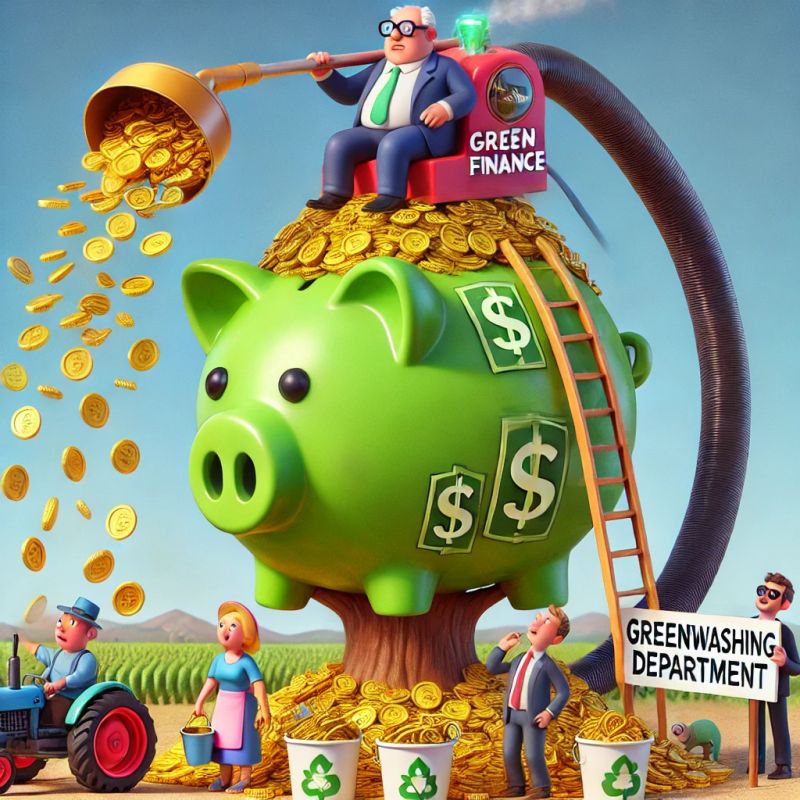
Legal_Accountability: Weak enforcement of climate disclosure regulations leads to greenwashing—80% of corporate claims lack robust impact validation.
📉 Regional Disparity
Developing nations receive 3-5% of global funds, despite being the hardest hit by climate change.
Africa, for example, needs $2.8T by 2030 but struggles with low capital inflow due to high perceived risks.
🚀 Path Forward
Blended Finance: Mobilize private capital by de-risking investments.
Stronger Governance: Mandate stricter accountability for green funds.
Equitable Policies: Prioritize fund flow to vulnerable regions with clear legal safeguards.
Sustainability ClimateFinance PolicyShift

Originally published on LinkedIn on 2025-01-26 06:02:25: https://www.linkedin.com/feed/update/urn%3Ali%3AgroupPost%3A2368335-7289160734050062336
What_Happened_in_Busan: A Turning Point for Global Plastic Pollution
🚨 The INC5 negotiations in Busan, South Korea, brought together over 190 countries to discuss the first-ever legally binding treaty on plastic pollution. Here’s what stood out:
🌍 Key Outcomes
Lifecycle Approach: Agreement to address plastic pollution across its 400 million tonnes/year lifecycle, from production to disposal.
Urgent Action: Only 9% of 7 billion tonnes of plastic waste ever produced has been recycled.
Focus on Upstream Solutions: Talks on banning single-use plastics and hazardous chemicals, which make up 50% of marine litter globally.
Equity in Action: Developing nations emphasized support, with 79% of plastic waste ending up in landfills or the environment—disproportionately impacting them.
Participation: A collaborative forum with NGOs, policymakers, and industries driving diverse solutions.
🚧 Challenges
Upstream vs. Downstream Divide: Conflicting priorities as only 20% of countries supported upstream prevention efforts.
Global North_South Divide: Developed nations export 10 million tonnes/year of plastic waste, burdening the developing world.
Funding Gaps: Insufficient pledges to meet the estimated $10 billion/year required for effective waste management.
Implementation Clarity: No unified plan for monitoring the 29 million tonnes of plastic entering oceans annually.
📊 Regional Snapshots
1️⃣ India:
Generates 9.3 million tonnes/year, the highest globally.
60% recycled, mostly informally. Single-use plastics still account for 43% of waste.
2️⃣ China:
Produces 2.8 million tonnes/year.
2017 import ban on plastic waste reshaped global waste management.
3️⃣ SouthKorea:
Claims 73% recycling, but true recycling is only 27%.
Rising plastic waste due to packaging demand.
4️⃣ UnitedStates:
4.5% recycling rate, far below the global average (15%).
Shifted stance to support plastic production reduction globally.
5️⃣ EuropeanUnion:
Aims for all packaging to be recyclable or reusable by 2030 under the European Plastics Strategy.
Leads in recycling rates, contributing significantly to global efforts
🌟 The Path Forward
The world must bridge divides and adopt a holistic lifecycle approach to achieve a plastic-free future. INC5 is the beginning, not the end.
Source / shared link: https://www.unep.org/inc-plastic-pollution/session-5
Originally published on LinkedIn on 2025-01-07 03:25:12: https://www.linkedin.com/feed/update/urn%3Ali%3AgroupPost%3A3880479-7282235800119881729
🌍 Resilience in a Changing Climate: A Business Imperative 🌡️
The World Economic Forum’s 2024 report, Business on the Edge: Building Industry Resilience to Climate Hazards, reveals a stark reality: climate risks are no longer distant threats—they’re here, impacting profits, assets, and livelihoods. 💡
Here are the key insights:
📉 The Cost of Inaction
By 2035, climate hazards could drive $560-$610 billion in annual fixed asset losses, rising to $1.1 trillion by 2055.
Extreme heat accounts for 72%-73% of these losses, disrupting industries across the globe.
💼 Sectors at Risk
Telecommunications faces the steepest losses, up to $563 million per company annually by 2035.
Utilities and travel sectors could see earnings drops of over 20% in the next decade.
🌊 Tipping Points Are Near
Critical Earth systems like the Greenland Ice Sheet and coral reefs are nearing irreversible collapse, with profound global consequences.
Coral bleaching at 1.5°C warming could endanger the food security of 500 million people.
🚨 Why Act Now?
Climate-driven earnings losses could hit 7.3% annually by 2035, rivaling the impact of a global recession.
Investments in climate resilience deliver a $2-$19 return for every $1 spent, protecting profits and building long-term value.
📈 A Path Forward
Integrate climate risk into decision-making—data-driven strategies are critical.
Foster cross-sector collaboration with governments, local communities, and experts to develop scalable, cost-effective solutions.
Combine climate adaptation with net-zero strategies to future-proof businesses.
The message is clear: resilience is profitability. Forward-thinking businesses that act boldly today will not only weather the storm but emerge stronger.
📢 What are you doing to integrate resilience into your business strategy? Let’s start a conversation!
ClimateResilience Sustainability BusinessStrategy Leadership
3 Climate Trends – Issue 15
https://lnkd.in/dZTVUkYf
Originally published on LinkedIn on 2024-12-12 20:12:32: https://www.linkedin.com/feed/update/urn%3Ali%3AugcPost%3A7273067221881364481

