💠 TurquoiseHydrogen: The Carbon-Solid Bet Reshaping Global Investments to 2030
(By Dr. Anju Sharma | MrsSustainability | KtalystInsights | HydrogenHorizons)
Green is clean. Blue is contested.
Turquoise is becoming the investor favourite because it creates value instead of storing emissions.
Methane pyrolysis (H₂ + solid carbon) delivers near-zero CO₂, uses 7–10× less electricity than electrolysis, and generates a sellable carbon product rather than a sequestration burden.
This isn’t a colour debate — it’s a business-model shift.
1️⃣ Global Investments & Activity (2024–2025)
EU
a) >€1.5B invested in methane-pyrolysis R&D.
b) BASF, Wintershall Dea & ENGIE running pilots.
c) CBAM pushing industry away from CCS-heavy blue hydrogen.
US
a) IRA-backed projects >USD 900M.
b) Focus on battery-grade & tire-grade carbon black.
c) U.S. carbon black market: USD 26B, ~5% CAGR.
MiddleEast
a) Saudi & UAE committing USD 300–500M to turquoise feasibility.
b) Strategy: export H₂ + export carbon + retain methane advantage.
Asia
a) Japan & Korea piloting H₂-DRI steel.
b) India lists methane pyrolysis as a “transition-neutral” G20 option.
2️⃣ Why Global Corporates Are Paying Attention
1. Ultra-Low Electricity Need
a) Electrolysis: 50–55 kWh/kg H₂
b) Turquoise: 5–7 kWh/kg H₂
c) → 7–10× lower energy burden.
2. Valuable Carbon Co-Products
a) Carbon black: USD 24–26B (2025)
b) Rising to USD 32–35B by 2030
c) Pyrolytic carbon: USD 400–1,800/ton
3. Strong Cost Positioning
a) Green: USD 3.5–6.0/kg
b) Blue: USD 1.5–2.5/kg
c) Turquoise: USD 1.0–2.0/kg (with carbon offset)
4. Attractive Investment Returns
a) IRR: 12–18%
b) Lower capex vs CCS-linked blue hydrogen
3️⃣ Business Implications: WhoWins & Why
1. Energy & Chemicals
a) Gas-rich nations gain low-carbon export leverage.
b) Chemicals get low-carbon H₂ + carbon feedstocks.
2. Automotive & Batteries
a) EV makers get conductive carbon for anodes.
b) Tire players secure stable low-emission carbon black.
3. Steel & Cement
a) H₂-DRI becomes viable without huge green electricity loads.
b) Lower reliance on intermittent renewables.
4. Policy & Trade
a) Potential CBAM-compliant low-carbon H₂ route.
b) Certification frameworks will shape competitiveness.
5. Climate Finance
a) Seen as a “dual-yield” decarbonisation asset.
b) Rising presence in 2026–2030 portfolios.
4️⃣ Outlook 2026–2035: Data Signals
1. Market Share
a) Turquoise H₂ could reach 10–15% of global supply by 2035.
2. Carbon Markets
a) 20–30% of carbon black demand may shift to pyrolysis-derived carbon.
3. Technology Trajectory
a) Blue H₂ slows where CCS is costly or unpopular.
b) Gas-rich nations push turquoise as the cleanest cost-efficient molecule.
5️⃣ Conclusion: The Logic Is Clear
1. Low-carbon hydrogen
2. High-value carbon by-product
3. Lower electricity demand
4. Lower regulatory risk
5. Better economics than green or blue
Turquoise hydrogen isn’t “the third colour.
It’s the first commercially balanced hydrogen pathway.
Originally published on LinkedIn on 2025-11-18 22:05:03: https://www.linkedin.com/feed/update/urn%3Ali%3Ashare%3A7396669795540131840
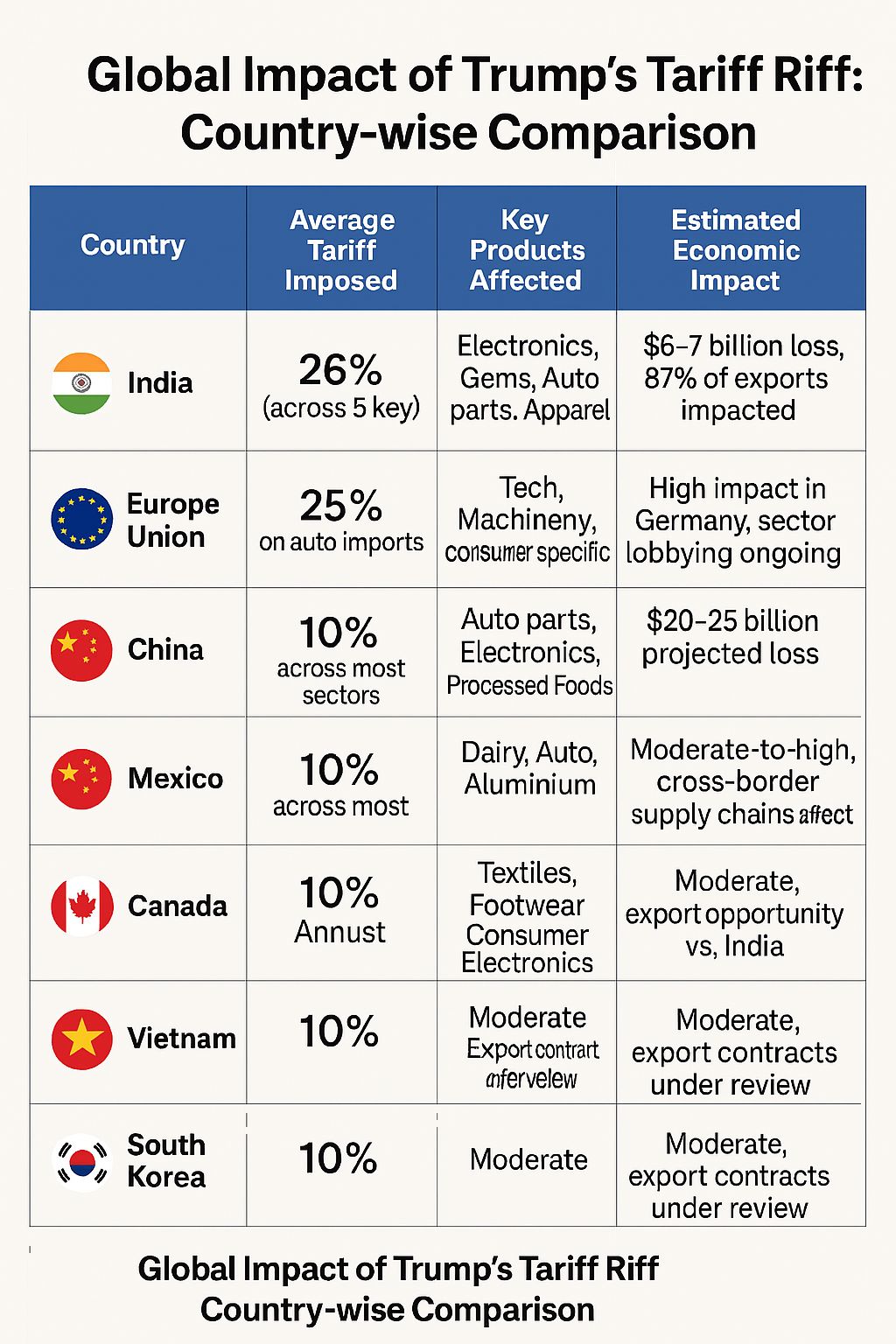
TARIFF SHOCKWAVES: INDIA AT THE CROSSROADS OF TRADE & STRATEGY
The 26% blow to Indian exports isn’t just a trade shock—it’s a wake-up call to diversify, digitize, and diplomatically reset our global strategy before the door to developed markets narrows further.
AnjuSharma, MD, KtalystKeystone
What Happened?
📌 10% universal tariff on all U.S. imports announced by President Trump
📌 India hit with 26% tariff on electronics, auto parts, gems, textiles & aluminium
📌 87% of India’s $66B U.S. exports impacted
📌 Estimated annual loss: $6–7 billion
Big 4 Speak Out
💬 PwC: “Tariff retaliation could balloon from $76B to $697B globally
💬 KPMG: “This isn’t trade policy—it’s political performance
💬 EY: “India must restructure global sourcing strategy immediately
💬 Deloitte: “Tariffs will inject stagflation into already strained supply chains
Financial Titans React
💸 Goldman Sachs:
Auto and textile exporters will bleed
Kroger, Valvoline may survive — India’s top B2B exporters will face margin heat
💹 Bloomberg Intelligence:
India risks losing emerging export edge to Vietnam & Mexico
📰 Wall Street Journal:
U.S. tariffs may trigger a regional pivot — India’s FTA urgency just jumped five notches
Market Pulse: Dalal Street Feels the Heat
📉 GIFT Nifty down 350+ pts
📉 Auto, IT, Jewellery, Aluminium stocks see heavy selling
📈 Shift towards domestic FMCG & retail as safe havens
What’s Next for India?
⚙️ Bilateral trade deal in pipeline by Fall 2025
🌍 Explore Middle East, Africa & ASEAN for export realignment
🛠️ Invest in supply chain localization + logistics infrastructure
📜 Fast-track FTA negotiations with EU, UK & Pacific allies
Final Takeaway
🚨 Tariffs aren’t just taxes—they’re tectonic shifts.
India must act with policy agility, strategic diversification, and bold diplomacy to stay ahead in a reshuffled global order.
Total Estimated Exposure
Indian Exports to U.S. Affected: ~$57–60 billion
Percentage of Total Indian Exports to U.S. Affected: ~87%
Estimated Annual Economic Loss: $6–7 billion
Trade Response & Outlook
Commerce Ministry View: “It’s a mixedbag, not a setback
Negotiation Status: Bilateral trade agreement targeted for Fall 2025
Market Impact:
GIFT Nifty: -350 pts (near 23,000)
Auto & IT stocks: Broad selling
Export-heavy stocks (like Titan, Motherson, Hindalco): Underperforming
Originally published on LinkedIn on 2025-04-03 04:42:34: https://www.linkedin.com/feed/update/urn%3Ali%3Ashare%3A7313420627510464512
Namaste GreenWorld? Can we call this GreenWashing?
The Alliance to End Plastic Waste (AEPW).
AEPW Funding Overview
Pledged: $1.5 billion over five years.
Spent: $400 million by 2020, plus $368.8 million from external investors.
Key Initiatives: $500 million Circular Plastic Fund; $36 million for Indonesia’s plastic goals.
Challenges: Only 4,000 tonnes recycled (2019-2021), criticized for focusing on recycling over reducing production.
Despite significant funding, progress falls short of targets, drawing criticism.
1. Establishment:
Formed in 2019 by global plastic producers including ExxonMobil, Dow, Shell, TotalEnergies, ChevronPhillips, BASF, Procter & Gamble, Mitsubishi Chemical, and others.
2. Members and Reach:
Includes over 90 companies and partners from North America, Europe, Asia, the Middle East, and Africa, representing countries like USA, Germany, Japan, India, Saudi Arabia, and Singapore.
3. Original Goal:
Divert 15 million tonnes of plastic waste from the environment by 2023 by improving waste collection, recycling systems, and fostering a circular economy.
4. Progress and Achievements:
Reduced 120,000 tonnes of unmanaged plastic waste.
Valorized 130,000 tonnes of plastic into reusable materials.
Initiated over 50 projects globally to address plastic pollution.
5. Challenges:
The initial goal was abandoned in YR2023, termed “too ambitious.
Recycled only 4,000 tonnes between YR2019 and YR2021, significantly below the target.
6. Criticism:
Critics claim efforts focus more on promoting recycling than addressing overproduction, the root cause of plastic pollution.
Environmental groups argue the Alliance has failed to match its ambitious claims with measurable impact.
7. Key Regions of Focus:
The AEPW targets 100 high-risk cities, particularly in regions like South and Southeast Asia, where plastic pollution is most severe.
8. Outlook:
The Alliance continues to emphasize collaboration and systemic change but faces skepticism over its ability to drive substantial results amidst growing environmental scrutiny.
Originally published on LinkedIn on 2024-11-20 16:55:27: https://www.linkedin.com/feed/update/urn%3Ali%3Ashare%3A7265045087405920256

