When Trust Becomes a Governance Question!
A vote can secure a chair. But can it secure credibility?
The unfolding Tata Sons boardroom controversy presents a fascinating paradox. An institution that built generations of credibility on trust now finds itself facing uncomfortable questions about transparency, independence and potential conflicts of interest.
The reported business relationships and voting decisions deserve objective scrutiny, not premature verdicts.
But one argument particularly catches my attention: “Disclosure was not legally required.
Perhaps.
Yet, since when did corporate governance become an exercise in discovering how little one is legally obliged to disclose, rather than how much stakeholders deserve to know?
Compliance is the minimum threshold. Credibility is the standard leadership chooses to uphold.
There is a fundamental distinction between the two.
For boards entrusted with safeguarding iconic institutions, independence cannot merely be a designation printed beside a director’s name. It must be demonstrated when loyalties overlap, interests intersect and decisions become uncomfortable.
And therein lies the corporate irony.
Companies spend billions building brands, millions managing reputations, and occasionally put both at risk over disclosures that would cost a fraction of either.
We measure financial risk, operational risk, market risk and even climate risk. Yet somehow, the risk of eroding institutional trust rarely gets the same rigorous stress test.
Tata’s greatest intangible asset has never been merely its brand. It is the trust behind that brand.
And trust is a peculiar asset.
It takes generations to build, moments to question, and cannot be restored simply by passing a boardroom resolution.
A majority vote can settle a decision. It cannot automatically settle the questions surrounding that decision.
Because ultimately, governance is not about proving that nothing illegal happened. It is about ensuring that nothing essential to trust was overlooked.
And unlike boardroom resolutions, credibility does not come with a proxy vote.
Dr. Anju Sharma
CorporateGovernance BoardIndependence BoardroomInsights KtalystInsights KtalystKlues™
Originally published on LinkedIn on 2026-10-08 08:49:00: https://www.linkedin.com/feed/update/urn%3Ali%3Ashare%3A7513883133524676608
TheChemical_Industry generated ~USD57billion in net profits and invested ~USD73billion in CAPEX in YR2024, yet TSR remains structurally weak. WHY?
Dr. Anju Sharma
KtalystInsights™ MrsSustainability
KtalystKlues
This is not a DemandParadox; it is a ValueCapture problem.
1) The industry is still profitable
✓ Global Top-50 chemical companies reported #~USD57billion net profit in 2024
✓ Average sector EBITDA margins ~12–15% for large integrated players
✓ A majority of listed chemical companies remained cash-positive despite margin pressure
KtalystInsights:
Profitability exists; this is not a demand-led downturn.
2) Capital investment has not stopped
✓ Global chemical CAPEX in 2024: ~USD73billion (Top-50 companies)
✓ R&D spend grew ~2–4% YoY in 2024 despite earnings pressure
KtalystInsights:
Industries facing structural demand decline do not sustain this level of investment.
3) Volumes are growing faster than pricing
✓ Global chemical market size grew from #~USD6.18trillion (2024) to #~USD6.32trillion (2025E)
✓ Packaging, electronics, mobility & construction chemicals showed #~1.5–3% volume growth
✓ Real pricing power across bulk and semi-specialty chains remained flat to negative
KtalystInsights:
Demand growth exists, but value per unit has diluted.
4) TSR is weak because capital intensity has risen
✓ Chemical sector 5-year TSR ~2–3% p.a. vs #~8–9% for MSCI World
✓ Average CAPEX-to-sales ratio increased ~150–250 bps vs pre-2015 levels
✓ Energy transition and ESG CAPEX raised fixed costs without near-term pricing upside
KtalystInsights:
Returns compress when each dollar of profit requires more capital.
5) Overcapacity is real—but uneven
✓ China accounted for #~40%+ of global new petrochemical capacity additions (2019–2024)
✓ Utilisation in multiple commodity chains remains #~70–80%, below mid-cycle norms
✓ Specialty chemicals show #~40–50% lower EBITDA volatility vs commodity chemicals
KtalystInsights:
McKinsey’s conclusion fits commodity and aging specialty chains, not the entire sector.
6) Segment data shows divergence, not uniform decline
✓ Regulation-linked chemicals often sustain ROIC in the high-teens to low-20% range
✓ Application-embedded specialties outperform sector TSR by ~300–500 bps
✓ Commodity chemicals trend at or near cost of capital
KtalystInsights:
The issue is business-model selectivity, not sector weakness.
7) What McKinsey measures vs what boards must decide
✓ McKinsey evaluates relative investor returns (TSR)
✓ Boards must manage absolute cash generation and capital efficiency
✓ Demographics support demand; strategy decides economic rent
KtalystInsights:
Chemicals are essential—but not all are equally rewarded.
> This is not a low-demand cycle.
It is a high-capital, low-pricing-power environment.
Dr. Anju Sharma
KtalystInsights™ MrsSustainability Chemicals Strategy ValueCapture TSR BoardroomLens DataComa
Originally published on LinkedIn on 2025-12-28 10:35:57: https://www.linkedin.com/feed/update/urn%3Ali%3Ashare%3A7410991894211543040
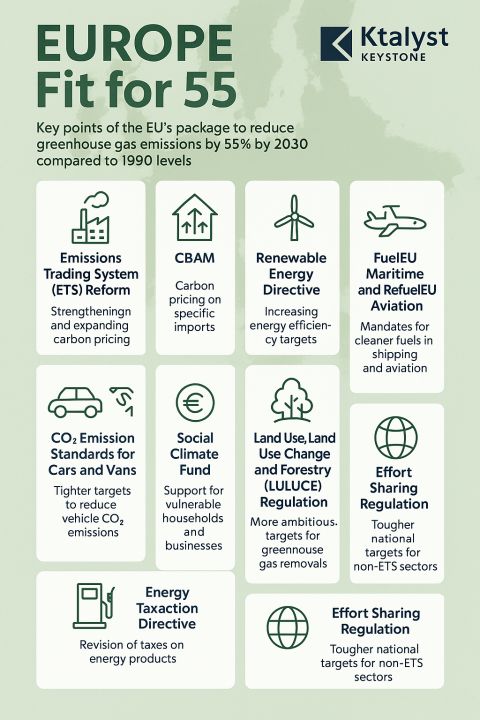
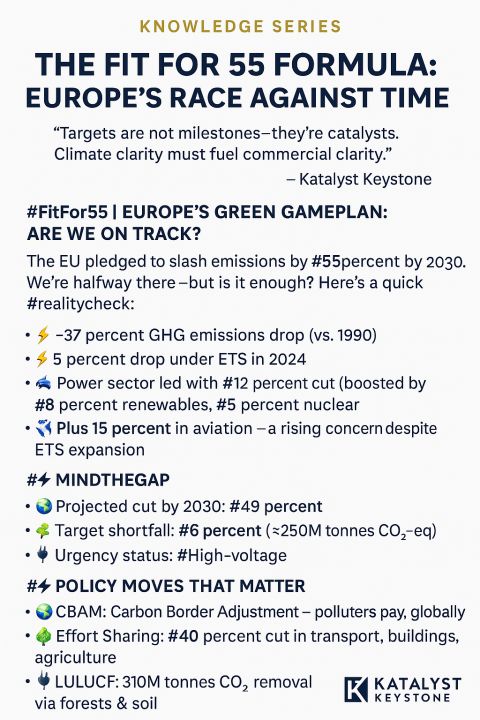
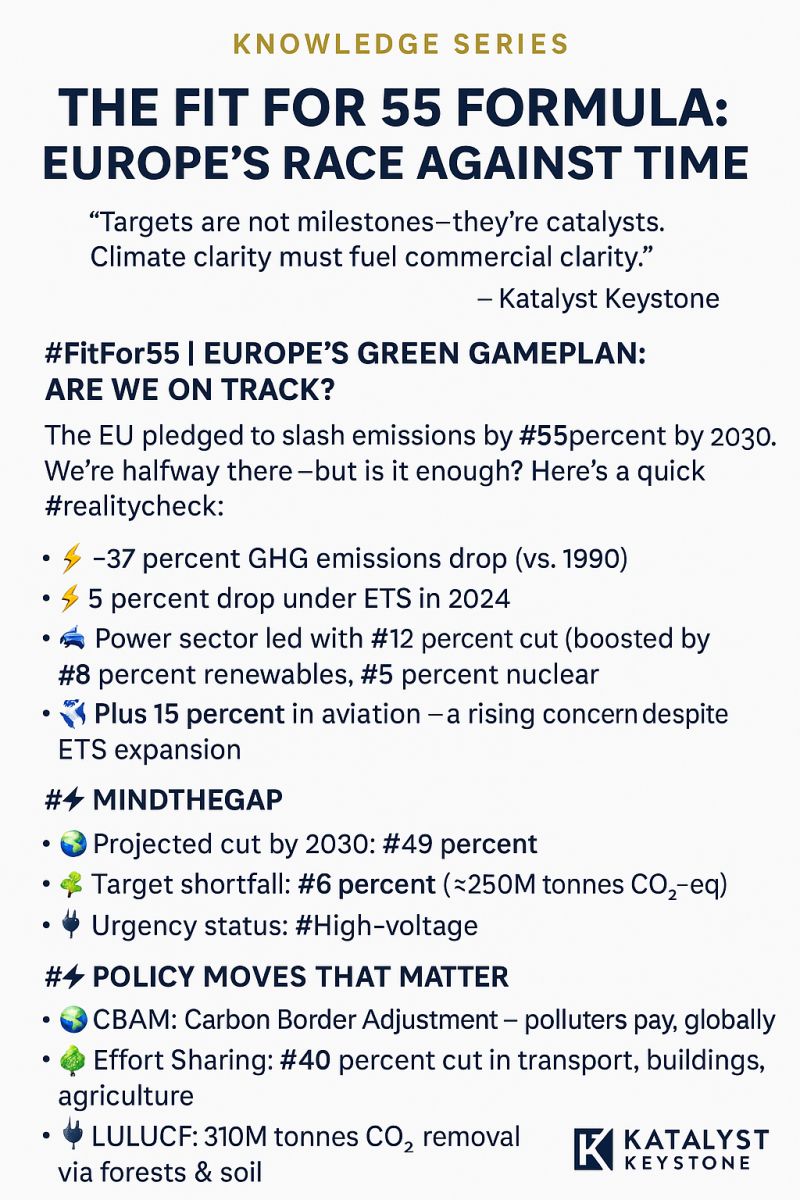
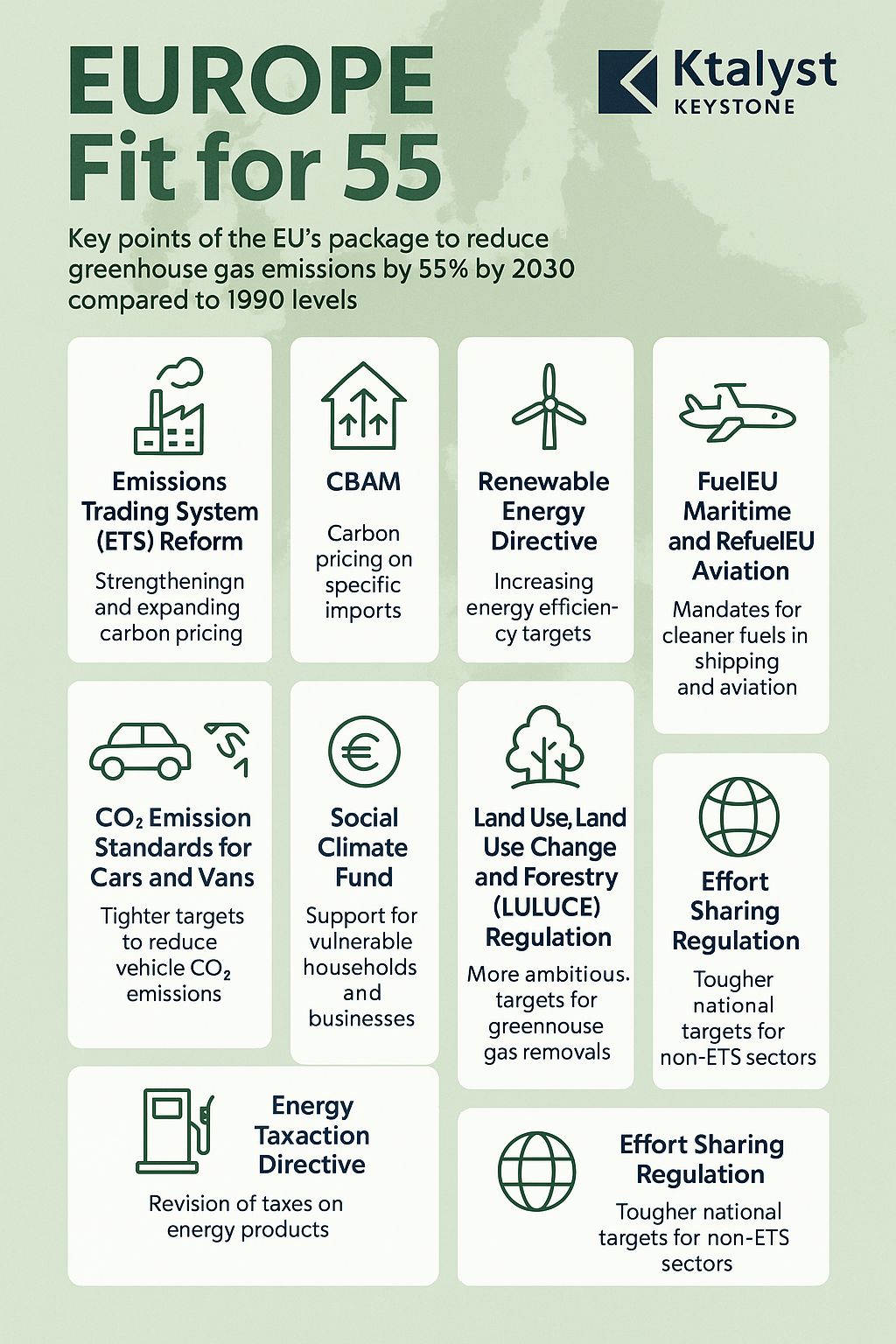
KatalystKnowledge | The FitFor55 Formula: Europe’s Race Against Time
Targets are not milestones—they’re catalysts. Climate clarity must fuel commercial clarity.
KtalystKeystone
FitFor55 | Europe’s Green Gameplan: Are We On Track?
The EU pledged to slash emissions by 55percent by 2030. We’re halfway there—but is it enough? Here’s a quick realitycheck:
#️Progress So Far
⚡ Minus 37 percent GHG emissions drop (vs. 1990)
♻️ 5 percent drop under ETS in 2024
⚡ Power sector led with 12 percent cut (boosted by 8 percent renewables, 5 percent nuclear)
✈️ Plus 15 percent in aviation—a rising concern despite ETS expansion
🏭 Industry? Flat. Cement down, fertilizers up
MindTheGap
Projected cut by 2030: 49 percent
Target shortfall: 6 percent (≈250M tonnes CO₂-eq)
Urgency status: High-voltage
Policy Moves That Matter
🌍 CBAM: Carbon Border Adjustment – polluters pay, globally
🛣️ Effort Sharing: 40 percent cut in transport, buildings, agriculture
🌳 LULUCF: 310M tonnes CO₂ removal via forests & soil
🔌 Renewables Goal: 42.5 percent by 2030 (plus 2.5 percent aspirational boost to 45 percent)
Takeaway
The EU is moving—but not fast enough.
To reach the finish line:
Scale green hydrogen & biofuels
Electrify transport
Cut industrial emissions deeper
LeadershipLens
Green goals aren’t just numbers.
They’re strategy. They’re urgency. They’re our business future.
KtalystKeystone Insight:
We help you align business with policy—because climate clarity = profit clarity.
Originally published on LinkedIn on 2025-04-09 05:45:15: https://www.linkedin.com/feed/update/urn%3Ali%3AugcPost%3A7315610730253238272
BoardroomMandate: Sustainability is No Longer Optional—It’s an IndustryImperative
#📌 The Industry Wake-Up Call: Sustainability as a Business Mandate
#📉 $4 Trillion at Risk – Non-compliant companies risk market value erosion, fines, and investor exits.
#📈 68% of Institutional Investors – ESG performance now directly influences capital allocation.
#🔎 Regulatory Overhaul – EU CSRD, SEC Climate Disclosures, India’s BRSR mandate sustainability reporting.
#🌍 Sustainability Metrics by Industry
#🌾 Agriculture
✅ AI-backed precision farming → 15% fuel savings | 30% lower pesticide & water use | 20% higher yield #
#👗 Fashion & Textiles
✅ India targets $350B industry by 2030 while cutting emissions by 50% #
✅ Biomass & renewable energy adoption reducing carbon footprint #
#📢 Advertising & Marketing
✅ 25% rise in consumer trust for brands with authentic sustainability efforts #
❌ Greenwashing crackdown – Firms face legal & reputational damage #
#🛍 Retail & Consumer Goods
✅ 65% of consumers prefer brands with strong sustainability credentials #
✅ Sustainable businesses see higher long-term revenue growth #
#🧪 Biotech & Materials Science
✅ Seaweed-based biomaterials emerging as a sustainable alternative to plastics #
#📊 ESG Data & Risk Analytics
✅ 70% of Fortune 500 firms use ESG risk monitoring tools to ensure compliance & risk mitigation #
#💼 Corporate Sustainability Rankings
✅ Top 10% sustainable companies outperform market peers by 7% TSR #
#📌 What Boards Need to Do—Now
✅ Embed ESG in Growth Plans – Not a side initiative, but a core strategy #
✅ Ensure Regulatory Compliance – Align with global ESG mandates #
✅ Set Industry-Specific KPIs – Track & measure sustainability performance #
✅ Invest in Low-Carbon Innovation – AI, renewables, & circular economy #
✅ Demand Transparent ESG Reporting – Investor & regulatory trust is at stake #
📢 Board Directors: Is your company’s ESG strategy future-ready? Let’s discuss. 👇 #


Originally published on LinkedIn on 2025-03-11 16:22:38: https://www.linkedin.com/feed/update/urn%3Ali%3AgroupPost%3A4385073-7305261883983355904
📢 KnowledgeSeries: “Sustainable Resolutions—Are You Making Real Impact?” 🌍📉
Not all green choices are equal. Are you focusing on what truly matters?
As we commit to SustainableResolutions for 2025, it’s crucial to distinguish between low-impact actions vs. game-changing decisions that can truly reduce our carbon footprint.
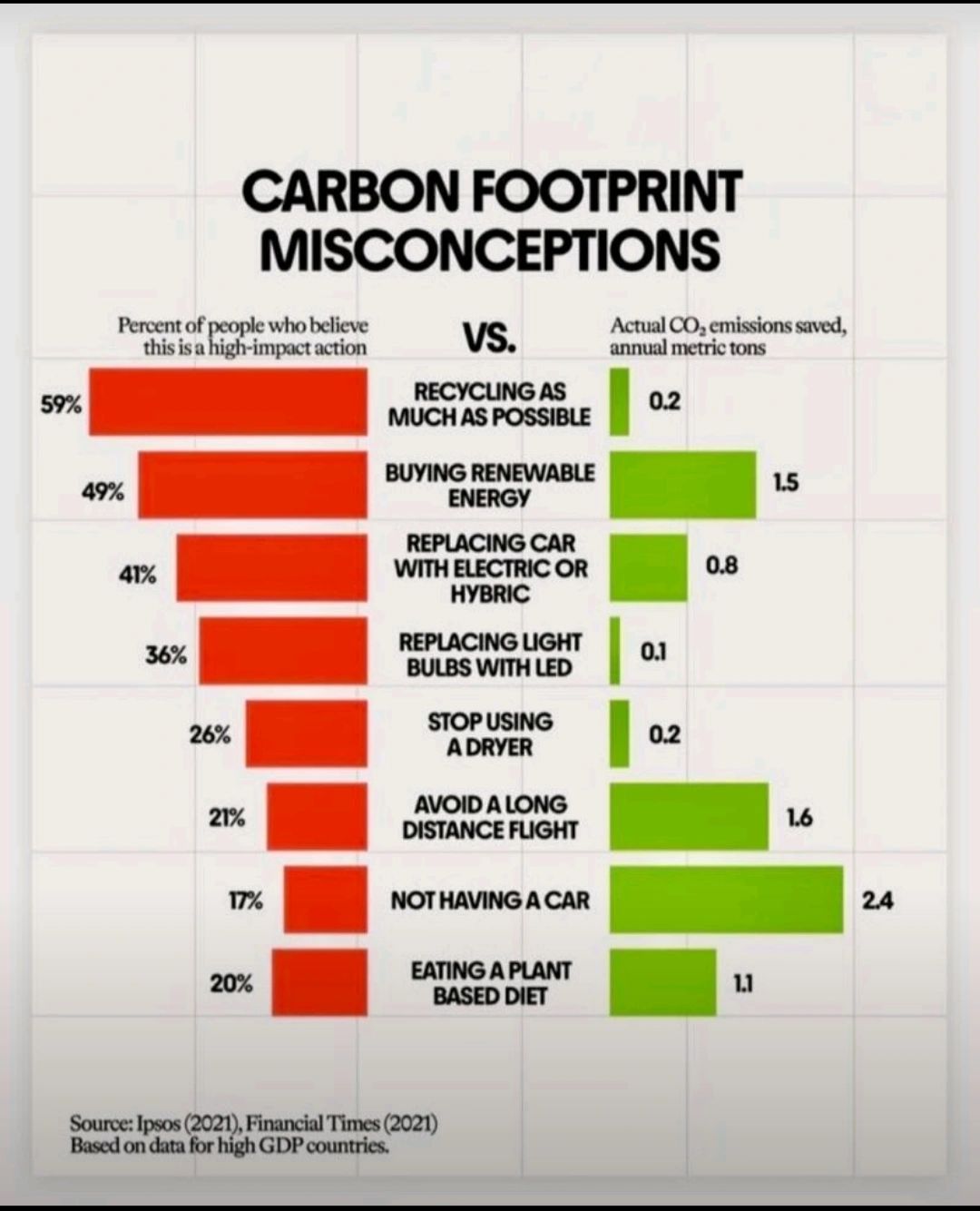
📊 CarbonMisconceptions vs. RealImpact: Where Should You Focus?
🔴 The Green Illusions We Fall For:
🚨 Recycling – 59% of people believe it’s a major climate solution, yet it only saves 0.2 metric tons of CO₂ annually per person. (Ipsos, 2021)
🚨 LED Bulbs – Swapping old bulbs for LED reduces emissions by just 0.1 metric tons annually. (Financial Times, 2021)
🚨 EV Swaps – Switching to an electric vehicle cuts 0.8 metric tons of CO₂, but only if powered by clean electricity. (IEA, 2024)
🚨 Avoiding Dryers – Only saves 0.2 metric tons per year—far less than other choices. (EPA, 2023)
🚨 Short-Term Offsets – Many carbon offset programs focus on short-term tree planting, which takes decades to absorb emissions but provides immediate corporate greenwashing benefits. (UNEP, 2024)
✅ Resolutions That Actually Move the Needle:
🌍 Not owning a car – The single biggest change, saving 2.4 metric tons annually in emissions. (IEA, 2024)
✈️ Skipping a long-haul flight – Avoiding just one international flight saves 1.6 metric tons of CO₂. (UNEP, 2023)
⚡ Switching to renewable energy – A household using renewables can cut emissions by 1.5 metric tons per year. (IPCC, 2024)
🥗 Adopting a plant-based diet – Reduces CO₂ impact by 1.1 metric tons annually. (Nature Food, 2024)
🏠 Energy-efficient homes – Retrofitting homes with insulation, heat pumps, and solar panels can cut energy-related emissions by 40%. (IEA, 2025)
🚀 Your 2025 Sustainable Resolutions: Choose Wisely!
🌱 Could be minor eco-friendly habits—important, but not enough alone.
🌎 Should be actions that target major carbon sources—transport, energy, and food choices.
🔥 Would be transformational if individuals + businesses prioritize high-impact change.
📌 RealityCheck: Corporate sustainability efforts alone won’t fix the crisis—real impact comes from systemic choices.
👉 What’s your sustainability resolution for 2025? Drop your thoughts below! 👇
Originally published on LinkedIn on 2025-02-20 16:00:26: https://www.linkedin.com/feed/update/urn%3Ali%3Ashare%3A7298370925727494144
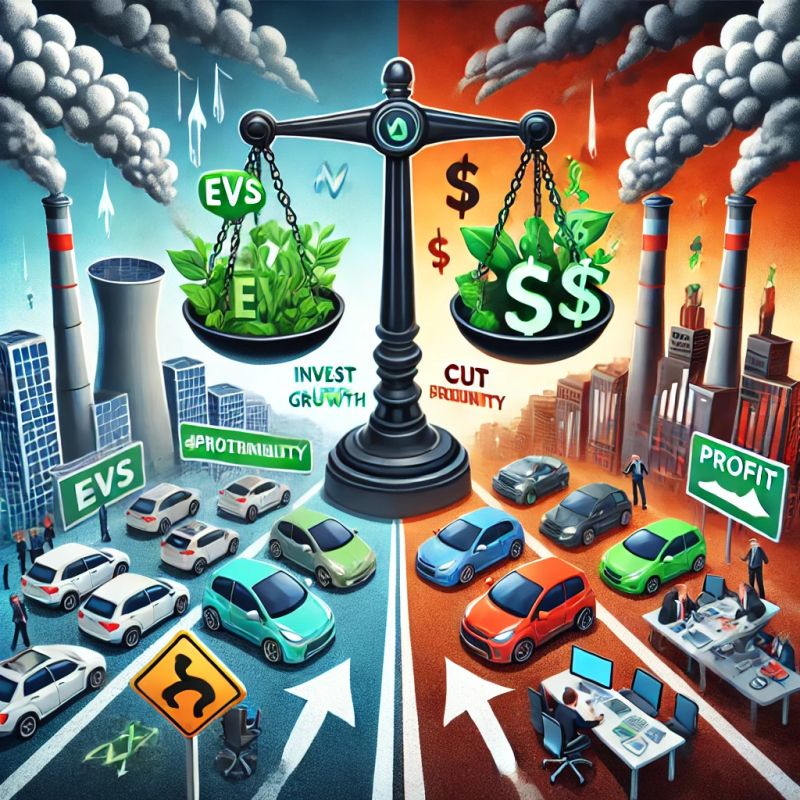
🌍⚡ “Sustainability = Profitability?: Auto Leaders vs. Laggards in Q3 FY25” 🚗💰
The IndianAutoIndustry is witnessing a sustainability shake-up.
✅ Companies prioritizing EVs, GreenManufacturing, and CircularEconomy are outpacing the market.
❌ Those slow to adopt sustainable practices are struggling with shrinking margins & investor skepticism.
📊 Here’s the data-driven Q3 FY25 leaderboard: Who’s accelerating, and who’s stalling?
🚀 TopPerformers: Profits Fueled by Sustainability
✔️ Mahindra & Mahindra (M&M): ₹3,181 Cr PAT (+20% YoY) | 16% volume growth | EV leadership & green factories paying off.
✔️ ActionConstructionEquipment (ACE): ₹873 Cr revenue (+16.6%) | Investing in low-emission tech & energy-efficient equipment.
✔️ NDR Auto Components: 79% stock surge | CircularEconomy approach driving green component sales.
✔️ SundaramClayton: 69% stock rise | LightweightMaterials reducing carbon footprint.
✔️ SJS Enterprises: 65% stock growth | Strengthening SustainableSupplyChains.
✔️ BharatForge: 12% revenue growth | Expanding into EV components & sustainable engineering.
✔️ BoschIndia: +10% revenue | Investing heavily in CleanMobility tech.
✔️ GreavesCotton: ₹423 Cr revenue (+18%) | Dominating the EV three-wheeler market.
✔️ TataElxsi: +15% growth | Digital innovations fueling the EV ecosystem.
✔️ JBM Auto: ₹1,287 Cr revenue (+22%) | Scaling urban MobilitySolutions for net-zero cities.
📌 RealityCheck: Sustainability isn’t just an ESG commitment—it’s a financial win.
⚠️ Underperformers: Cost Pressures & Slow Sustainability Adoption
🔻 TataMotors: ₹5,578 Cr net profit (-22.5%) | EV growth overshadowed by rising costs & margin drops.
🔻 MarutiSuzuki: ₹3,508 Cr PAT (+12%) | Facing price pressures amid rising sustainability investments.
🔻 BajajAuto: 4% revenue growth | Struggling to scale EV production profitably.
🔻 HeroMotoCorp: Flat EBITDA margins | Needs faster transition to green mobility.
🔻 TVSMotor: +14% EBITDA growth | High costs hurting profits despite EV expansion.
📌 RealityCheck: Not prioritizing sustainability is now a business risk, not just an ESG issue.
🏆 KeyTakeaway
💰 Sustainability isn’t a cost—it’s the key to long-term profitability.
🚀 Auto companies investing in green tech are seeing stronger earnings & investor confidence.
⚠️ Laggards must pivot or risk being left behind in a carbon-conscious economy.
👉 Which auto company do you think is leading the SustainabilityRace? Let’s discuss below! 👇
Originally published on LinkedIn on 2025-02-10 16:49:42: https://www.linkedin.com/feed/update/urn%3Ali%3AgroupPost%3A82093-7294759446935670784
Nope this is not a Temperature chart…. will sure raise the mind a few degrees 😁 12% Indians are salaried so they “definitely may not” be ‘Accounted’ all puns Intended.
Originally published on LinkedIn on 2024-10-17 18:15:29: https://www.linkedin.com/feed/update/urn%3Ali%3Ashare%3A7252744042394882048

Originally published on LinkedIn on 2024-08-28 14:46:15: https://www.linkedin.com/feed/update/urn%3Ali%3Ashare%3A7234571994841661440
NamasteIndia NTPC-NPCIL joint venture likely to invest Rs 50,400 cr in 2,800 MW Mahi-Banswara nuclear power plant:
1. Investment: NTPC and NPCIL plan to invest ₹50,400 crore.
2. Project: Joint development of the Mahi-Banswara nuclear power plant.
3. Tendering: Process to begin this financial year.
4. Chutka Project: NTPC not involved in the 1,400 MW Chutka Madhya Pradesh Atomic Power Project.
5. Green Energy: NTPC Green Energy Ltd (NGEL) aims to list its green arm in November for clean energy expansion.
Source / shared link: https://m.economictimes.com/industry/energy/power/ntpc-npcil-joint-venture-likely-to-invest-rs-50400-cr-in-2800-mw-nuclear-power-plant/articleshow/112232774.cms
Originally published on LinkedIn on 2024-08-03 12:22:55: https://www.linkedin.com/feed/update/urn%3Ali%3AgroupPost%3A131340-7225476225396277248
NamasteIndia NTPC-NPCIL joint venture likely to invest Rs 50,400 cr in 2,800 MW Mahi-Banswara nuclear power plant:
1. Investment: NTPC and NPCIL plan to invest ₹50,400 crore.
2. Project: Joint development of the Mahi-Banswara nuclear power plant.
3. Tendering: Process to begin this financial year.
4. Chutka Project: NTPC not involved in the 1,400 MW Chutka Madhya Pradesh Atomic Power Project.
5. Green Energy: NTPC Green Energy Ltd (NGEL) aims to list its green arm in November for clean energy expansion. https://lnkd.in/dqPvdjgV
Source / shared link: https://m.economictimes.com/industry/energy/power/ntpc-npcil-joint-venture-likely-to-invest-rs-50400-cr-in-2800-mw-nuclear-power-plant/articleshow/112232774.cms
Originally published on LinkedIn on 2024-08-03 12:22:46: https://www.linkedin.com/feed/update/urn%3Ali%3Ashare%3A7225476189010690048

