CATLUnleashed: The TripleShock to EV Norms
Heard_of_disruption? CATL just redefined it.
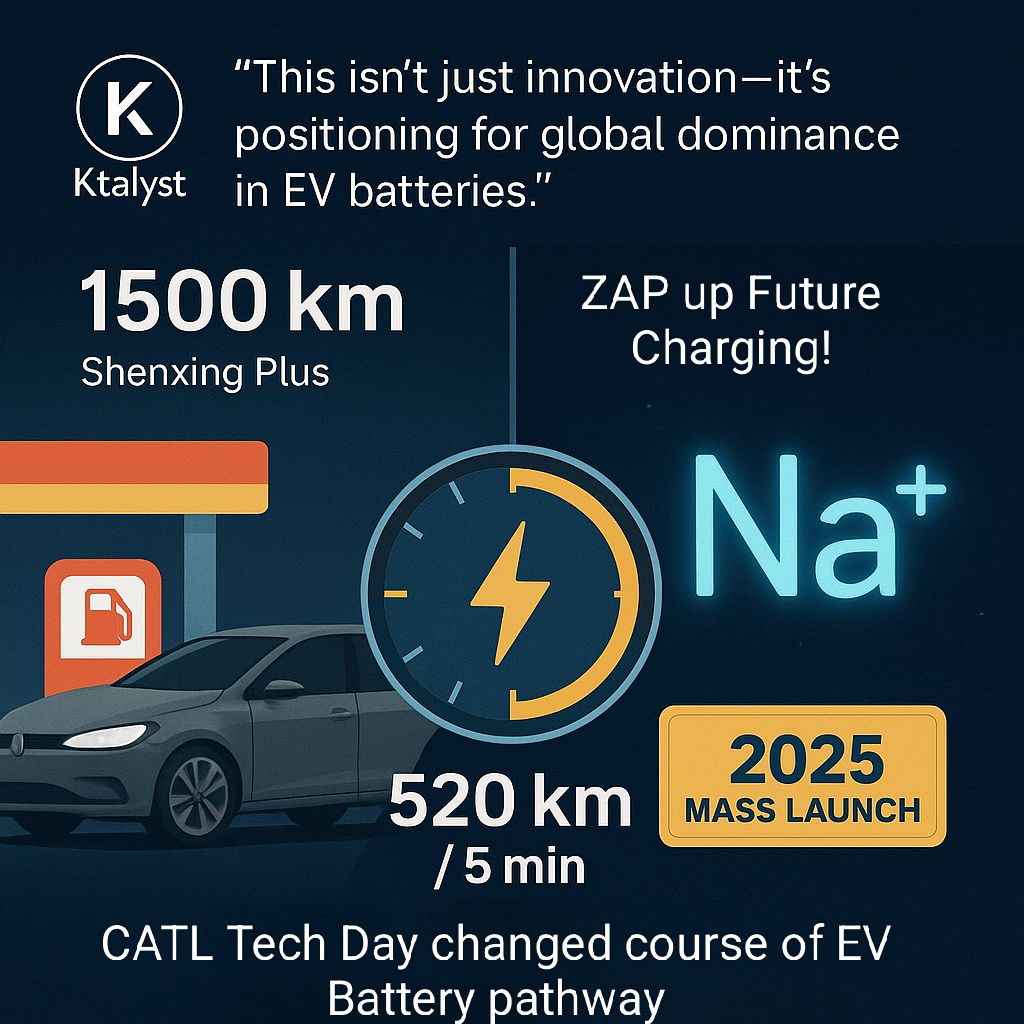
1500km on a singlecharge.
520km in 5minutes. Na-ion batteries, ready by 2025.
CATL called it TechDay. We call it a warning shot to legacy OEMs and lithium laggards.
KtalystTake:
This isn’t just innovation—it’s positioning for global dominance in EV batteries.
Here’s what CATL dropped:
ShenxingPLUS battery
Range: 1500 km (932 miles)
Chemistry: Enhanced LFP with next-gen efficiency
Impact: Puts ICE range anxiety to rest. Also a jab at solid-state R&D delays.
Ultra_fast Charging
Claim: 520 km charge in 5 minutes
Tech: CATL’s new fast-charging architecture
Gamechanger: EVs refueled like ICEs. Say goodbye to long breaks on road trips.
Sodium-ion Battery Mass Production (YR2025)
WhyItMatters: Sodium is cheap, abundant, and heat-tolerant.
UseCase: 2nd-gen sodium-ion batteries now viable for small EVs, 2Ws, and ESS.
KtalystScore: Cost-efficiency = high, energy density = improving fast.
WhatThisMeansForYou:
Legacy EV players must speed up or step aside.
Sodium-ion will kill low-cost lithium markets (2W, city EVs, grid storage).
Oil refiners and fuel infra giants better have a Plan B (or green hydrogen plan A).
Originally published on LinkedIn on 2025-04-24 03:08:14: https://www.linkedin.com/feed/update/urn%3Ali%3AgroupPost%3A82951-7321007030234689536
Li-ion to Na-ion: A Periodic Table Power Shift!
Lithium-ion Batteries: Current Dominance and Challenges: Lithium-ion (Li-ion) batteries have long been the preferred choice for electric vehicles (EVs) and renewable energy storage. However, the rapid expansion of these markets is leading to potential supply shortages of lithium within the next five to ten years.
Key Challenges:
1. Increased Demand: The demand for lithium has tripled since 2017 and is expected to grow tenfold by 2050.
2. Geographical Concentration: Lithium production is concentrated in a few countries, primarily Australia, Chile, and China.
3. Supply Chain Complexities: The supply chain involves multiple stages, any of which can face disruptions.
Sodium-ion Batteries: A Promising Alternative
Sodium-ion (Na-ion) batteries offer several advantages that make them a viable alternative to Li-ion batteries, particularly for India.
Advantages:
1. Cost-Effectiveness: Sodium is more abundant and cheaper than lithium.
2. Wide Availability: Sodium is not concentrated in a few countries, reducing supply chain risks.
3. Safety: Na-ion batteries are less prone to thermal runaway and fire hazards.
4. Environmental Impact: Sodium mining and processing have a lower environmental impact.
5. Longer Lifespan: These batteries tend to have a longer lifespan.
How Sodium-ion Batteries Can Benefit India
1. Energy Storage for Renewable Sources: Na-ion batteries can stabilize the grid and store energy from renewable sources like solar and wind.
2. Electric Vehicles (EVs): Their cost-effectiveness and safety can make EVs more affordable and safer, accelerating electric mobility adoption.
3. Telecom and Remote Areas: Ideal for telecom towers and remote or off-grid areas, providing stable and safe energy storage.
4. Reducing Import Dependence: Developing and adopting Na-ion battery technology can reduce India’s dependence on imported lithium, enhancing energy security.
Originally published on LinkedIn on 2024-09-29 18:28:44: https://www.linkedin.com/feed/update/urn%3Ali%3Ashare%3A7246224394694381568

