🌳KtalystInsights | Rooting CarbonCredits
❝ Carbon credits aren’t just traded—they’re rooted in Policy, People, & Proof. A plantation today is a portfolio tomorrow. ❞
Dr. Anju Sharma
📊 Global Carbon Credit Forestry: At a Glance
🌍 ~30% of the global Voluntary Carbon Market (VCM) is nature-based
💰 Credit Prices:
🇹🇭 Thailand T-VER: $45–55/ton (🌏 highest)
🇮🇳 NamasteIndia: ₹10,000 upfront + survival-linked credits
🇯🇵 Japan: 100 MtCO₂ JCM goal by 2030
🔁 Payouts based on tree survival + GPS = measurable trust
🌴 ASEAN: Trees are even used as loan collateral
☕ Japan’s credits now include tea fields. Seriously!
🧭 KtalystInsights Quick Scan
🌏 Country 💼 Payment Model 🧪 Verification 📌 Unique Feature
🇮🇳 NamasteGreenIndia’s Green Credit Programme (GCP) KtalystUttarPradesh is leading by example, offering ₹10,000 (~$120) upfront + 30-year annuity-linked credits. From plantation to prosperity—this is policy with purpose.
🇺🇸 USA Market-driven, no direct cash Verra, CAR, staged audits Urban aggregation, voluntary VCM
🇨🇳 ChinaSale to CDM/CCER buyers AI + satellite + local reporting 3,000 ha projects, cash-crop forestry
🇹🇭 ASEAN Annual baht/rai + credit sales Registry + audits by TGO Tree Bank, mangroves, rubber credits
🇰🇷 Korea Public + private co-funded CDM + biochar MRV Coffee waste → carbon offsets
🇯🇵 Japan J_Credit + JCM (ASEAN) Digital MRV + Article 6 alignment Tea, forest, and overseas projects
📥 DM KtalystKeystone for: • ✅
📊 Agro-credit models linked to survival tracking
📁 Voluntary Carbon Market (VCM) entry toolkit for MSMEs
Originally published on LinkedIn on 2025-07-21 08:38:54: https://www.linkedin.com/feed/update/urn%3Ali%3AgroupPost%3A2153908-7352980378069938176
🚨 India’s Emission Intensity Targets: A Game_Changer for Industries & Carbon#Markets?
India is set to release EmissionIntensityTargets for nine industrial sectors by the end of February 2025—marking a major milestone in its NetZero commitment. With industries given one year to comply, CarbonCreditTrading is expected to follow, reshaping how businesses approach Decarbonization and Sustainability.
📊 What’s Changing?
🔹 Industries Impacted: Steel, Cement, Petrochemicals, Fertilizers, Textiles, Pulp & Paper, Power, and more.
🔹 Compliance Window: Companies get one year to implement emission-cutting measures.
🔹 Carbon Markets Activation: After compliance, CapAndTrade kicks in—firms exceeding targets can sell credits, while high emitters must buy them.
🔹 India’s Net Zero Push: Aims to cut GHG emissions intensity by 45% by 2030 (vs. 2005 levels). (MoEFCC, 2025)
💡 What’s the Opportunity?
✔️ Green Investment Boom: Expect a surge in Renewables, CCUS (Carbon Capture), and EnergyEfficiency projects.
✔️ Competitive Advantage: Early adopters of clean tech & low-carbon solutions will benefit from carbon credits.
✔️ Global Alignment: Brings India closer to EU CBAM, US IRA, & China’s ETS—making exports competitive.
⚠️ The Challenges Ahead
🚨 Cost of Compliance: Industries must invest in LowCarbonTech, Electrification, and AlternativeFuels.
🚨 Regulatory Uncertainty: Clarity on CarbonPricing, OffsetRules, and international trading needed.
🚨 SMEs at Risk: Large firms may comply, but MSMEs could struggle due to financial constraints.
🏆 KeyTakeaway: Green Mandates & Market Forces Converging
📌 India could be a global leader in carbon markets & industrial sustainability.
📌 India should be providing clear policy incentives & transition funds.
📌 India would be missing out if compliance turns into just another Greenwashing exercise.
👉 Will India’s emission trading system be a breakthrough or just another regulatory hurdle? Let’s discuss! 👇
Originally published on LinkedIn on 2025-02-25 17:55:58: https://www.linkedin.com/feed/update/urn%3Ali%3Ashare%3A7300211941875052544
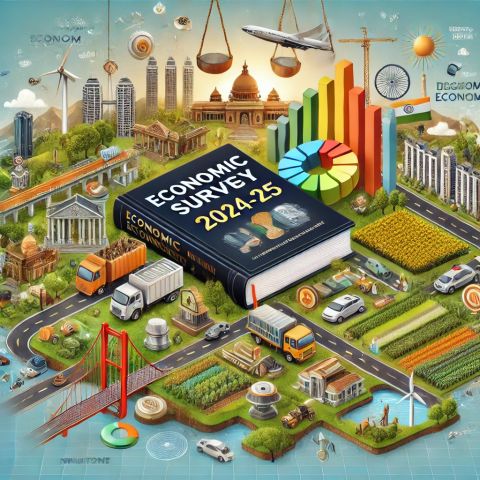
📊 India_Economic_Survey_2024-25: Growth, Resilience & Future Focus 🇮🇳📈
India’s economy is defying global uncertainties, powered by investment, reforms, and innovation. Here’s a concise breakdown of the key takeaways.
🌏 Economic Strength & Fiscal Health
✅ Growth remains strong, driven by domestic investment.
✅ Inflation moderate, but food prices remain volatile.
✅ Capital spending up, ensuring long-term stability.
🏆 Key Shift: India prioritizes investment over short-term spending.
💰 Banking & Financial Sector
✅ Low NPAs & strong credit growth signal a healthy banking sector.
✅ Global interest rate risks monitored to ensure market stability.
🏆 Key Shift: A robust financial system supports economic momentum.
🌐 Trade & External Sector
✅ FDI remains a focus, with business reforms easing entry.
✅ Export challenges persist, due to global trade tensions.
✅ Reducing import dependency on China to boost self-reliance.
🏆 Key Shift: Reshaping trade policies to adapt to global disruptions.
🏗️ Infrastructure & Industry
✅ Post-election boost to infrastructure—transport, digital, energy.
✅ MSMEs get policy push, enhancing industrial output.
🏆 Key Shift: Building for the future with targeted investments.
🌱 Climate & Sustainability
✅ Energy transition & green investments expanding.
✅ Air pollution & emissions remain critical issues.
🏆 Key Shift: Sustainability is now a policy priority, not an afterthought.
🚀 Employment, AI & Future of Work
✅ Upskilling & gig economy shaping future jobs.
✅ AI disruption expected, but workforce adaptation in progress.
🏆 Key Shift: Balancing tech advancement with job security.
📈 Vision 2047: India’s Long-Term Economic Strategy
✅ Deregulation & ease of doing business accelerating growth.
✅ Viksit Bharat 2047 aims to make India a developed economy.
🏆 Key Shift: From short-term fixes to long-term economic transformation.
🏆 KeyTakeaway
India’s Economic Survey 2024-25 highlights resilience, investment-driven growth, and policy innovation. The focus is on long-term stability, sustainability, and self-reliance.
👉 Is India ready for its next economic leap?
EconomicSurvey IndiaGrowth Infrastructure GreenEconomy DigitalIndia ViksitBharat2047
Originally published on LinkedIn on 2025-01-31 19:21:29: https://www.linkedin.com/feed/update/urn%3Ali%3Ashare%3A7291173766041059329

