MSCI moves the map. SEBI is redesigning the road. 📊🇮🇳
Come 1 September 2026, some Indian listed companies will become more relevant to global portfolios—not because their businesses changed overnight, but because MSCI changed their place on the global investment map.
MSCI does not buy shares. It determines which companies enter, exit or change weight in indices tracked by global ETFs, pension funds and passive investors.
This review adds Laurus Labs, Lenskart, Adani Energy Solutions and Groww to MSCI’s Global Standard universe, while removing Balkrishna Industries, SBI Cards and Astral. The changes take effect 1 September.
That can trigger significant compulsory buying and selling.
While MSCI changes the portfolio map, SEBI is changing price discovery.
India’s new Closing Auction Session CAS began on 3 August 2026, pooling orders to determine a common closing price.
Today’s MSCI rebalance is its first major global-flow stress test.
🏢 For listed companies
MSCI inclusion becomes another form of corporate currency, potentially bringing:
→ greater passive ownership
→ deeper liquidity
→ more global visibility
→ increased investor attention
→ greater focus on free float, governance and accessibility.
Deletions can trigger mechanical selling even when the business remains unchanged.
Market accessibility is becoming part of corporate strategy not merely investor relations.
👥 For shareholders
A share may move sharply near the close because index funds must transact, not because fundamentals changed.
Price movement ≠ always information.
Sometimes it is simply portfolio plumbing.
The CAS may improve price discovery, but large institutional orders could still create temporary distortions.
🔍 The bigger picture
MSCI is globalising ownership.
SEBI is strengthening the market infrastructure needed to absorb it.
For Indian companies, investability increasingly means:
Performance + Governance + Free Float + Liquidity + Accessibility + Index Relevance.
For shareholders:
Before reacting to a sudden price move, ask whether the company changed or merely its coordinates on the global investment map.
Originally published on LinkedIn on 2026-08-31 04:00:14: https://www.linkedin.com/feed/update/urn%3Ali%3Ashare%3A7500039724212924416
📚 KnowledgeSeries: Understanding MACI SustainabilityRatings
With ESG investing surpassing $40 trillion, sustainability metrics are no longer optional—they directly impact financial markets. But traditional ESG ratings often miss the biggest contributor to emissions: Scope 3 (supply chain & product lifecycle).
Enter MACI (Morningstar Absolute Carbon Impact)—a next-gen sustainability metric designed to measure real carbon impact, beyond corporate disclosures.
🔎 What is MACI?
📌 MACI (Morningstar Absolute Carbon Impact) is a carbon-focused rating that quantifies total emissions, unlike traditional ESG scores that rely on self-reported data.
✅ Scope 1 – Direct emissions from company operations
✅ Scope 2 – Indirect emissions from purchased energy
✅ Scope 3 – Supply chain & product lifecycle emissions (often 80-95% of total emissions)
📊 Only 5% of companies currently disclose full Scope 3 data, despite it making up 75% or more of their total carbon footprint. MACI ensures investors see the full picture.
🌍 Why is MACI a Game-Changer?
🟢 Exposes True Carbon Impact
📌 Over 90% of S&P 500 companies report ESG data, but less than 30% include Scope 3 emissions. MACI forces transparency by measuring actual environmental impact.
💰 Links Carbon Impact to Financial Risk
📌 Firms with high Scope 3 emissions face 10-15% valuation risks due to carbon pricing, regulation, and shifting consumer demand. Investors using MACI can identify & price these risks early.
📊 Goes Beyond Traditional ESG Ratings
📌 MSCI, Sustainalytics, & CDP rely on corporate sustainability claims—but MACI measures actual emissions data. This removes greenwashing from ESG scores.
🚀 Guides Net Zero Investments
📌 81% of global companies have Net Zero goals, but only 19% have credible transition plans. MACI identifies companies actually reducing emissions, ensuring investors back real sustainability leaders.
💡 How Financial Markets Depend on MACI
🏦 Sustainable Finance
📌 #$500 billion in Green Bonds & ESG Funds rely on sustainability scores. MACI ensures these funds actually reduce carbon impact.
📉 Investment Risk Assessment
📌 Climate risk is now considered a financial risk. Regulated markets (EU, US, UK, APAC) require stricter carbon disclosure. MACI helps investors assess exposure before risks impact stock prices.
📜 Regulatory Compliance
📌 The EU Taxonomy, SEC Climate Disclosures, & IFRS ESG Standards will require comprehensive Scope 3 reporting. MACI aligns with these frameworks, ensuring compliance-ready investments.
🔥 The Takeaway
As corporate greenwashing grows, investors need credible carbon metrics that go beyond PR campaigns. MACI is setting the new standard for data-driven sustainability investing.

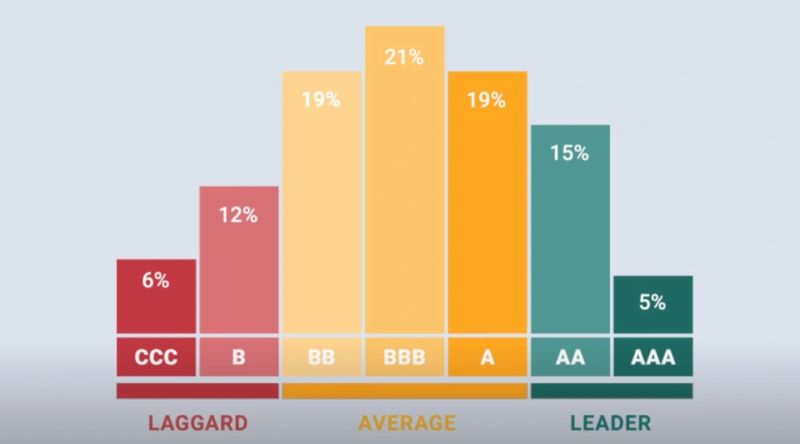
Originally published on LinkedIn on 2025-02-27 01:47:03: https://www.linkedin.com/feed/update/urn%3Ali%3AgroupPost%3A9088131-7300692883345412096

