ClimateRisk: FIFA Stops Feeling Like Only Fun ⚽🌍
Dr. Anju Sharma | MrsSustainability
Once, when we spoke about FIFA, we spoke about goals, flags, fans, colour, chants, jerseys & the beautiful madness of the world coming together.
Now Reuters is reporting a different layer to the World Cup conversation:
Heat.
Storms.
Humidity.
Fan safety.
Player stress.
City readiness.
Reuters’ Climate Focus noted that World Cup fan-festival events in Toronto were disrupted by severe weather, while its wider reporting has flagged heat, humidity & thunderstorms as serious operating risks for the 2026 tournament.
That is when climate risk stops being technical.
It becomes personal. 😔
The same Reuters climate brief also pointed to a wider stress map:
🌊 China preparing for extreme flood risks in desert regions.
🌾 Malaysia warning that El Niño may cut crop yields by 8%.
🦧 ₹Indonesian floods wiping out 7% of the rare Tapanuli orangutan population.
🧬 Antibiotic-resistance genes being detected across global oceans.
These are not isolated climate stories.
They are cost signals. 📌
KtalystKlues
Climate volatility does not arrive alone.
It arrives with an invoice. 🧾
✓Floods mean pumping cost.
✓Heat means cooling cost.
✓Water stress means treatment cost.
✓Crop loss means feedstock cost.
✓Infrastructure damage means repair cost.
✓Event disruption means insurance & contingency cost.
In a world already facing rising electricity demand, cooling loads, AI data centres, EV charging, industrial electrification & grid stress, that invoice only gets heavier. ⚡
Energy is no longer only a utility bill.
It is becoming the cost of staying operational.
Or as I would say:
Dear Climate,
you were invited to the ESG meeting.
Why are you sitting in the CFO’s chair?” 👀
That is the pun & the problem.
Weather has become whether.
Whether your plant runs.
Whether your supply chain holds.
Whether your margins survive.
Whether your board is prepared.
Whether even sport remains carefree.
KtalyatDiagnosticLens
For years, companies asked:
What are our emissions?
Now the sharper question is:
Which part of our business model becomes more expensive first because of climate stress?
Climate risk has moved from the sustainability column to the cost column.
And once risk enters cost, it enters valuation.
Climate resilience is no longer a green virtue.
It is margin protection. 📈
Source / shared link: https://www.reuters.com/sustainability/climate-focus-weather-dampens-world-cup-fan-festival-2026-06-12/?utm_source=chatgpt.com
Originally published on LinkedIn on 2026-06-13 05:54:26: https://www.linkedin.com/feed/update/urn%3Ali%3Ashare%3A7471439819676540928
🎰 KtalystInsights High Stakes GlobalMarkets in 2026?
GlobalMarkets2026 NamasteIndia MarketMoodWatch DesertHedge
🎲 Welcome to 2026’s WallStreet Casino—where liquidity is tight, inflation is moody, and every country working on their winning hand. Let’s peek at the top tables:
🇺🇸 US. – The Cowboy Gambler
Trump 2.0 is back and he’s rolling deregulation dice like it’s 2017.
🎯 Bets: Defense, oil, and industrial swagger.
📉 Fed’s still holding the chips; tech stocks sweating at the poker table.
Ktalyst Take: Wild west energy, but watch for policy potholes.
🇪🇺 EU – The Budgeted Banker
🗳️ Political hangovers, green fatigue, and a nervous ECB.
🎯 Bets: Luxury stocks, pharma, and infra.
Ktalyst Take: Rebalancing act with one foot on a banana peel.
🇨🇳 China – The Strategist with Strings
Pulling the puppet strings on AI, EVs, and stimulus dollars—just don’t ask about real estate.
🎈 Property sector’s balloon is leaking slowly.
🎯 Bets: Self-reliant tech and controlled chaos.
Ktalyst Take: Powerful hand, but it’s all in sleeves.
🌏 ASEAN – The Silent Sniper
Low noise, high precision. While others argue, ASEAN picks the prize.
📦 Vietnam, Malaysia, and Indonesia bagging China+1 chips.
🎯 Bets: Logistics, EV assembly, green bonds.
Ktalyst Take: The turtle in a room full of racing hares.
🇮🇳 NamasteIndia – The Yogic Bull Rider
Riding the reforms bull up a DPI-powered stock ramp—calm on top, compounding at the bottom.
🚆 Make in India, Gati Shakti, and BharatFintech brewing.
🎯 Bets: PLI, FMCG, Infra REITs, and Renewable India Inc.
📈 GDP at ~6+% and still sipping chai.
Ktalyst Take: NotGambling—just meditating on momentum.
🕌 MiddleEast – The Desert Hedge
Gulf nations rolling out oil-funded oasis economies—NEOMs, crypto sandboxes, and hydrogen highways.
🎯 Bets: Green energy, AI, sovereign VC, and Expo-led real estate.
💥 Dubai’s back in startup headlines, Riyadh’s building fast and bold.
Ktalyst Take: If oil is Plan A, tech is now Plan A.1.
🇨🇦 Canada – The Maple-Fed Market Whisperer
Calm voice, cold weather, hot commodities.
🎯 Bets: Rare earths, green energy, AI exports
🧊 Risk: Over-reliance on U.S. and a frosty housing market
Ktalyst Take: Polite but profitable—Canada’s playing the quiet compounding game.
🇦🇺 Australia – The Kangaroo with Clean Chips
Bounces between minerals and megawatts.
🎯 Bets: Critical minerals, hydrogen, rooftop solar
🔥 Risk: China trade tension, housing heat
Ktalyst Take: Outback cool with a green gold rush. Steady, not splashy.
💬 KtalystInsight:
Some bet. Some bluff. Some build quietly. 2025 to 2026 isn’t about who has chips—it’s about who plays the long game.” — KtalystKeystone
Originally published on LinkedIn on 2025-06-22 09:14:28: https://www.linkedin.com/feed/update/urn%3Ali%3Ashare%3A7342480082071863296
Sunburn or SunBoom?
U.S. Slaps 3,521% Tariffs on Solar Imports — The SolarSector Feels the Heat (and Opportunity)
When the sun shines too bright on unfair play, tariffs bring the shade.” — KtalystInsight
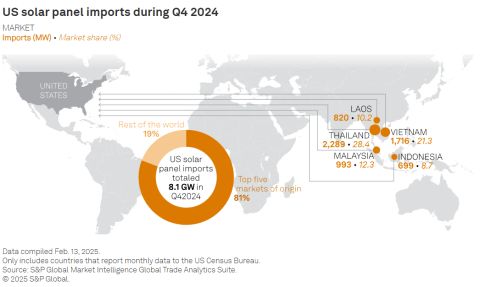
The UnitedStates has swung a solar sledgehammer — imposing tariffs as high as 3,521% on solar panel imports from Cambodia, Vietnam, Thailand, and Malaysia.
This stems from a Department of Commerce finding that Chinese companies were rerouting solar products through Southeast Asia to dodge existing duties.
Winners Emerging:
FirstSolar, Qcells, and other U.S. manufacturers celebrating a MadeInAmerica solar boom.
SolarBank CEO Dr. Richard Lu shared a sharp pivot — expanding domestic community solar and energy storage solutions, especially to feed the AI-driven data center boom.
SolarBank’s new 2.9 MW Gainesville, New York project is already under development.
Losers Worried:
Renewable project developers predict a 20–30% rise in project costs.
Supply chains could see 6–12 months delays, impacting Biden’s climate goals.
Global Echoes: Solar Under Trade Siege
EuropeanUnion’s CBAM (Carbon Border Adjustment Mechanism):
Though solar isn’t covered yet, solar supply chains are preparing for impact.
CBAM rollout from 2026 may push solar module prices up by ~10% if embedded carbon costs get added.
Manufacturers are already shifting wafer and polysilicon production to cleaner-energy countries like Canada and Brazil to avoid CBAM penalties.
India’s Solar Firewall:
Imposed 40% Basic Customs Duty on solar modules from April 2022 to promote Atmanirbhar Bharat.
Indian players like Adani Solar and Tata Power Solar are scaling local module capacity aggressively.
Canada’s Quiet Defense:
Continuing antidumping duties on Chinese modules, aiming to build a resilient domestic clean energy base.
Money Moves: Follow the Smart Investors
Brookfield Renewable Partners and BlackRock are pivoting funds into localized solar manufacturing and battery storage ecosystems.
NextEra Energy eyes major gains by scaling U.S.-based clean energy supply chains.
Ktalyst Perspective:
This tariff wave, plus the CBAM ripple effect, isn’t protectionism — it’s market redesign by climate necessity.
The winners will be solar companies that decarbonize supply chains, invest in local resilience, and pivot toward clean manufacturing clusters in NorthAmerica and India.

Originally published on LinkedIn on 2025-04-26 18:06:28: https://www.linkedin.com/feed/update/urn%3Ali%3AgroupPost%3A2153908-7321957853764677632
Why ESG Isn’t a Global Roadmap—It’s a Country_by_Country_Compass
ESG Isn’t One-Size-Fits-All—It’s One-Strategy-Fits-Nation
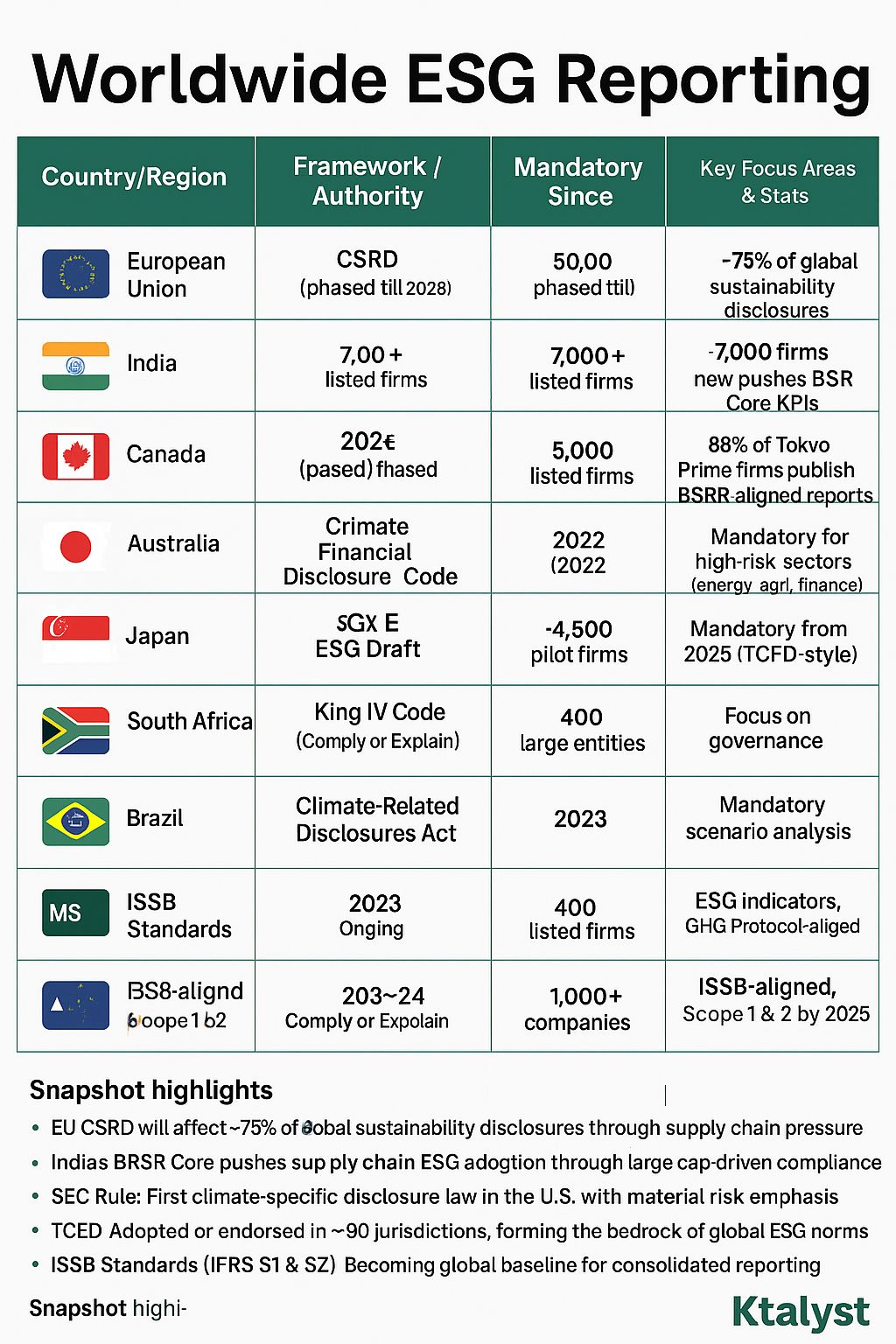
ESG reporting takes different roads because nations prioritize differently—economic maturity, regulatory style, investor pressure, and trade exposure all shape the path. The EU leads with CSRD—affecting 50,000+ firms through double materiality, taxonomy alignment, and mandatory assurance. The US sticks to financial materiality and climate risk, sidestepping Scope 3 and S&G. India’s BRSR ties ESG to development goals, starting with the top 1,000 and easing into assurance. Export-driven China, Malaysia, and Singapore accelerate ESG to meet global buyer expectations and bypass EU CBAM fallout. Japan prefers voluntary codes; South Africa excels in governance (King IV), but lacks integrated data.
Bottom line? ESG mirrors what each country values—growth, governance, global edge, or green capital. It’s not just compliance—it’s strategy, sovereignty, and survival.
🇪🇺 European Union
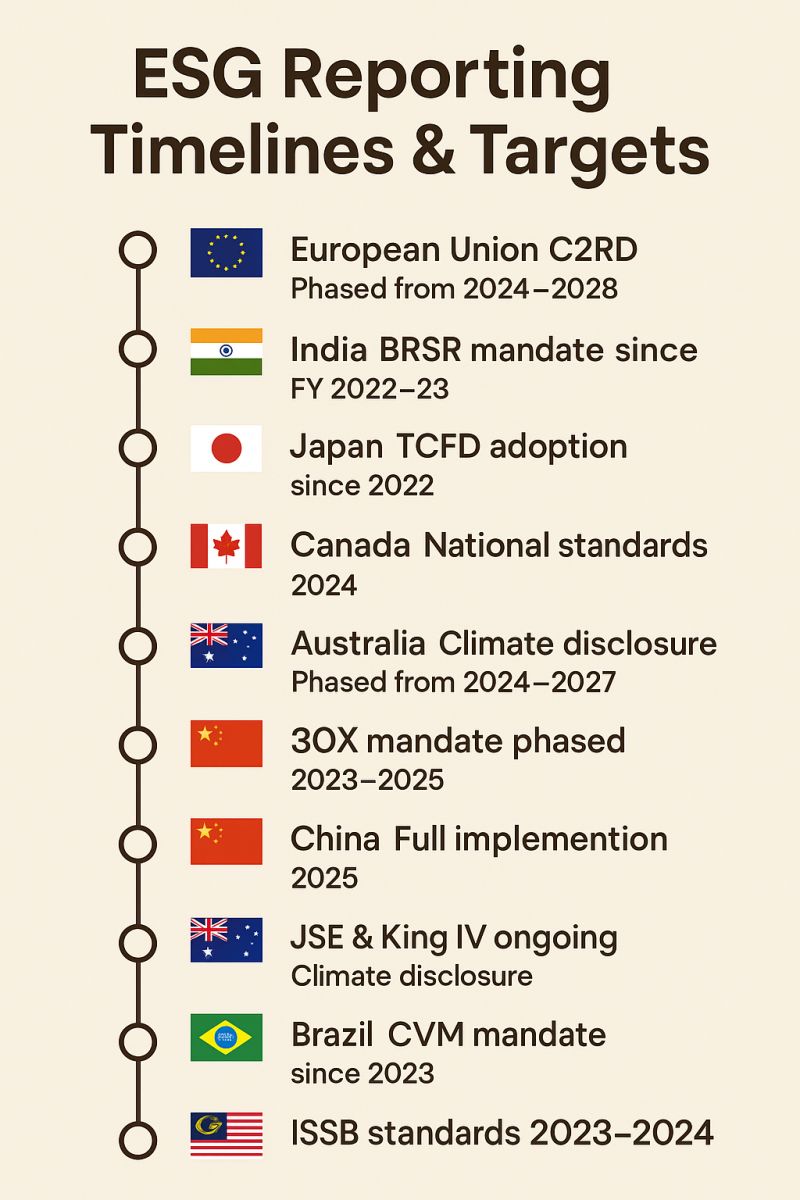
Timeline: CSRD phased from 2024 to 2028
Mandatory from:
2024: Large public-interest companies
2025: All large companies
2026–28: SMEs (limited scope)
FunFact: Will impact 75%+ of global ESG reporting indirectly via supply chains
🇺🇸 United States
Timeline: SEC Rule effective 2024–2025
Mandatory from:
FY2024: Large Accelerated Filers
FY2025: Accelerated Filers
Scope 3? Only if material (and still debated)
🇮🇳 India
Timeline:
BRSR mandatory since FY 2022–23
BRSR Core with limited assurance from FY 2023–24
Next up: Potential rollout for mid-size unlisted companies by 2026
🇯🇵 Japan
Timeline:
TCFD adoption by Prime listed firms since 2022
No fixed law, but >80% of large firms are already onboard voluntarily
🇨🇦 Canada
Timeline:
CSA rule aligned with TCFD from 2024
Mandated for:
Publicly listed entities, expanding coverage gradually
🇦🇺 Australia
Timeline:
Climate Disclosure Framework phased from July 2024
Rollout:
2024: Large companies
2026–27: Mid and small entities
🇸🇬 Singapore
Timeline:
SGX ESG reporting mandatory since 2023
Sector phased:
Energy, Agri, Finance by 2024
All others by 2025
🇨🇳 China
Timeline:
Draft ESG rules under CSRC in 2024
Target:
Full mandatory rollout by 2025
Pilots ongoing in green finance and energy sectors
🇿🇦 SouthAfrica
Timeline:
JSE & King IV apply ongoing since 2016
Mandate:
Comply or explain” model, no fixed year — but tightening expected by 2025
🇳🇿 NewZealand
Timeline:
Climate-Related Disclosure Act enforced from 2023
Applies to:
Financial institutions & large corporates (>NZ$1B AUM or turnover)
🇧🇷 Brazil
Timeline:
CVM ESG disclosure mandatory since 2023
Focus:
Annual reporting, with increasing pressure for Scope 3 inclusion by 2026
🇲🇾 Malaysia
Timeline:
ISSB-aligned standards adopted in 2023–2024
Mandated by:
Bursa Malaysia, full Scope 1–2 by 2025, Scope 3 optional till 2026


Originally published on LinkedIn on 2025-04-21 21:59:46: https://www.linkedin.com/feed/update/urn%3Ali%3AugcPost%3A7320204627323289601
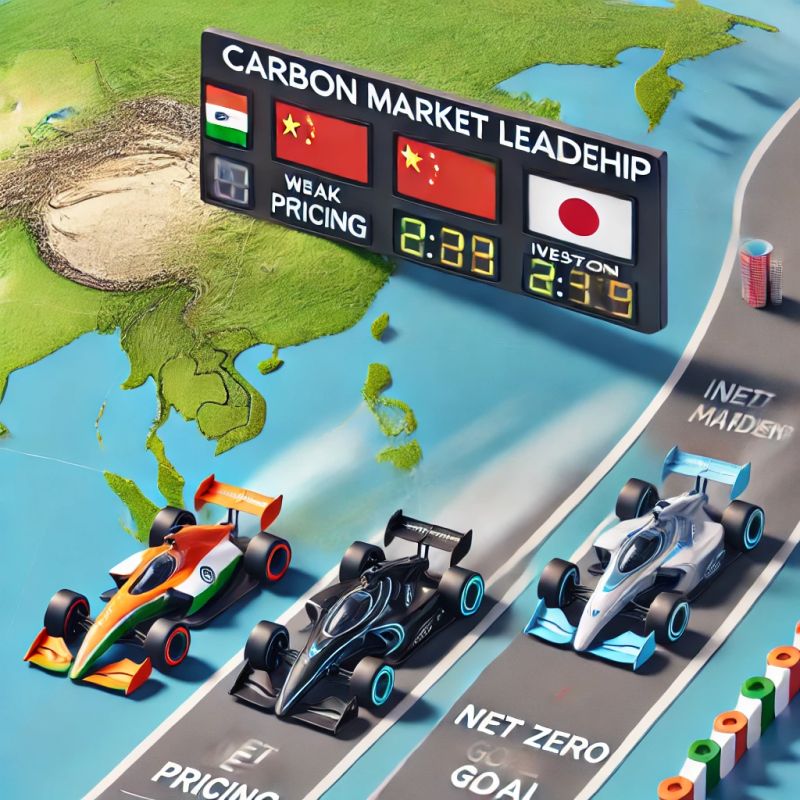
Asia’s Carbon_Market_Race: Who’s Leading and Who’s Lagging?” 🌏💨
Carbon markets are booming across Asia as nations compete to turn emissions into economic opportunities. But with different strategies at play, who’s actually making an impact, and who’s just carbon hustling? Let’s break it down data-first.
🇨🇳 China: The World’s Biggest Carbon Market
✅ Launched in 2021, covering 40% of national emissions.
✅ Expanding to heavy industries like cement & steel.
🚨 Challenge: Weak carbon pricing (~$8/ton) reduces impact. (Source: ICAP, 2024)
🏆 Verdict: Huge scale but weak incentives.
🇮🇳 India: The Emerging Carbon Giant
✅ Legislated in 2022, evolving into a regulated market.
✅ Integrating Renewable & Energy Savings Certificates by 2025.
🚨 Challenge: No firm carbon pricing yet. (Source: Ministry of Power, 2024)
🏆 Verdict: High potential, still in execution mode.
🇸🇬 Singapore: The Smart Carbon Hub
✅ Rising carbon tax from $5/ton (2022) to $50-80/ton by 2030.
✅ Pioneering biodiversity credits for ecosystem conservation.
🚨 Challenge: Small domestic market, reliant on external trading. (Source: Singapore Gov, 2024)
🏆 Verdict: Innovating beyond carbon into full environmental markets.
🇯🇵 Japan: The Tech-Driven Trader
✅ Carbon trading exchange launched in 2023 with investor backing.
✅ Banks investing heavily in climate advisory firms.
🚨 Challenge: Needs stricter corporate compliance. (Source: METI Japan, 2024)
🏆 Verdict: Strong financial backing but low enforcement
🇮🇩 Indonesia: The Controversial Play
✅ First global carbon credit transactions tied to energy projects.
✅ Huge potential from rainforests & nature-based solutions.
🚨 Challenge: Heavy reliance on fossil fuel-linked credits raises greenwashing concerns. (Source: Financial Times, 2024)
🏆 Verdict: Big opportunity, but investor skepticism is rising.
🇲🇾 Malaysia: The Carbon Market Architect
✅ Bursa Carbon Exchange (BCX) launched in 2022, first Shariah-compliant carbon trading platform.
✅ Voluntary Carbon Market (VCM) enabling corporate offsets.
✅ Carbon Tax by 2026 for high-emission industries.
🚨 Challenge: Needs stronger policy enforcement & carbon pricing clarity. (Source: PwC, 2024)
🏆 Verdict: Well-structured but awaiting execution impact.
📊 Who’s Winning the Carbon Market Race?
China = Biggest but Weak Pricing
India = High Potential, Early Stage
Singapore = Smartest Model, Small Scale
Japan = Investment-Driven, Needs Enforcement
Indonesia = High Risk, High Reward
Malaysia = Structuring Well, Needs Execution
🚀 The Future? Asia’s carbon markets must balance financial opportunities with real emission cuts—or risk becoming just another greenwashing tool.
👉 Which country’s approach will set the global standard?
CarbonMarkets AsiaLeadership NetZero Sustainability GreenInvesting ClimateAction

Originally published on LinkedIn on 2025-01-29 07:31:38: https://www.linkedin.com/feed/update/urn%3Ali%3AgroupPost%3A82951-7290270350309756931
Protecting Local Steel: Malaysia’s Stand Against Unfair Trade Practices
Malaysia’s Strategic Move
Malaysia has taken decisive action to safeguard its domestic steel industry by imposing anti-dumping duties on imports of flat-rolled iron or non-alloy steel from four major exporting nations. Here’s what you need to know:
Key Highlights:
🌏 Targeted Nations:
🇨🇳 China: Duty up to 36.80%
🇮🇳 India: Duty between 2.52% – 36.80%
🇯🇵 Japan: Duty between 2.52% – 36.80%
🇰🇷 South Korea: Duty up to 36.80%
#🛠️ Affected Products:
Flat_rolled iron or non-alloy steel products, >600mm width
#📅 Effective Date:
January 11, 2025, for a 120-day provisional period
#🕒 Final Decision:
Expected by May 10, 2025
#🚨 Why This Matters
#📉 Unfair Trade Practices:
Imports were allegedly priced below production costs in their home countries, causing harm to Malaysian manufacturers.
#🏗️ Protecting Local Industry:
These duties aim to level the playing field and shield local businesses from unfair pricing.
#📊 Key Statistics on Anti-Dumping Measures:
Malaysia has enforced 9 anti-dumping actions between 2015 and 2023.
Currently investigating 4 ongoing cases targeting steel and plastic products.
#🌟 Impact on Trade
#🇨🇳 China: Frequent subject of anti-dumping investigations in Malaysia.
#🇮🇳 India: Faces growing scrutiny for its export practices.
#🇯🇵 Japan: High-quality steel imports challenge local markets.
#🇰🇷 South Korea: A competitive player in Malaysia’s steel sector.
Malaysia’s commitment to fair trade sends a strong message to global exporters. By imposing these duties, the government is safeguarding local industries, ensuring economic stability, and fostering long-term growth.
#💬 What are your thoughts on these measures? Let’s discuss below.

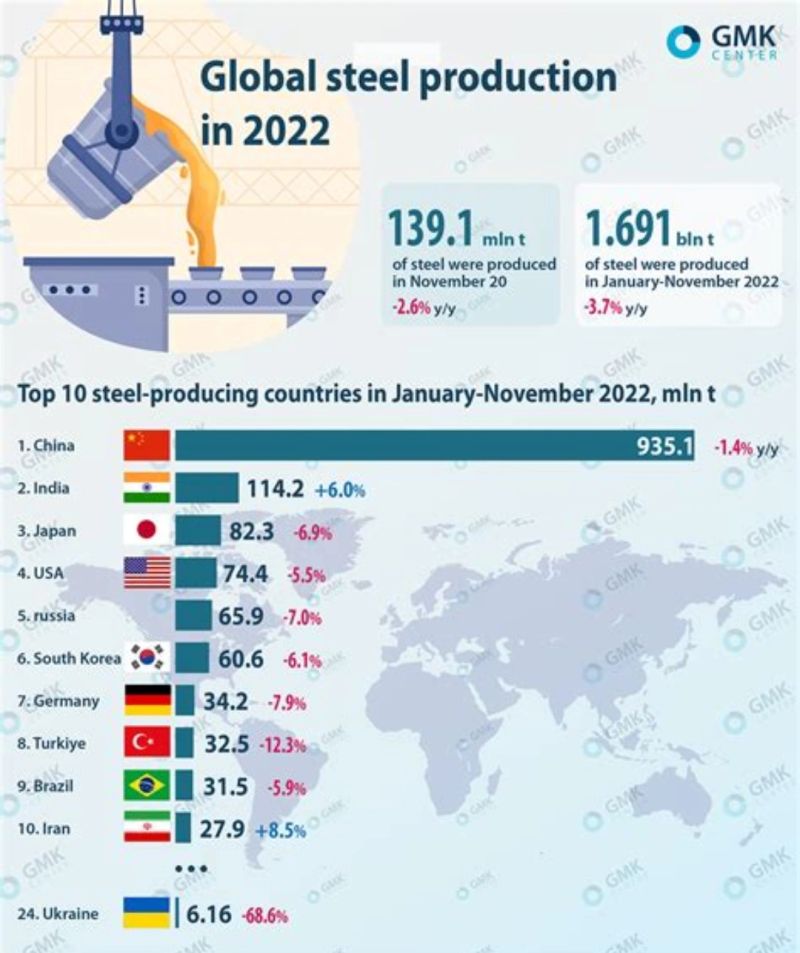
Originally published on LinkedIn on 2025-01-14 11:28:07: https://www.linkedin.com/feed/update/urn%3Ali%3AgroupPost%3A2368335-7284894047507206146
US Department of Commerce has imposed new tariff duties of up to whooping 165.04%on crystalline silicon photovoltaic (PV) solar imports from China and Taiwan.
This decision was made after finding that panels were being sold too cheaply in the U.S. market.
Additionally, it’s worth noting that AD/CVD tariffs for U.S.-imported solar components from Vietnam, Malaysia, Thailand, and Cambodia have been paused since 2022. If they resume, tariffs ranging from 50% to 250% of the cost of shipped goods would apply to components from China found to have been dumped in these Southeast Asian nations for import to the United States.
https://lnkd.in/d6f9nFqi.
https://lnkd.in/dYPGFyzN
Originally published on LinkedIn on 2024-07-26 19:37:12: https://www.linkedin.com/feed/update/urn%3Ali%3Ashare%3A7222686416395227138

