TheCircularEconomyBoom
📊 Market Growth: $339B → $712B (2030)
🛍 Key Sectors: ♻️ Recycling | 📦 Packaging | ⚡ Waste-to-Energy | 👕 Textile Circularity
💰 Big Investors: BlackRock | Goldman Sachs | Breakthrough Energy
Circular Economy vs. Traditional Returns
📈 ROI (5-year average):
🟢 Circular Economy: 8-12% CAGR
🔴 Traditional Markets: 5-7% CAGR
⚡ Waste-to-Energy IRR: 10-15% (Beats traditional waste management)
🛍 Consumer Trend: 73% willing to pay more for sustainability
VC & PrivateEquity Betting Big
🌎 Global Funding: $75B+ in Circular Startups
💰 Top-Funded Startups:
🔋 Northvolt – Battery Recycling
♻️ Loop Industries – Plastic Circularity
📦 Zume – Biodegradable Packaging
🚀 Major Investors: Sequoia | KKR | TPG Rise
Policy Tailwinds Driving Investments
📜 Global Incentives:
🇪🇺 EU Green Deal: €1T Sustainability Fund
🇺🇸 IRA: $370B in Climate Incentives
🇨🇳 China 5-Year Plan: $460B Circular Infra
📊 Policy-Driven Sectors: ⚡ EV Battery Recycling | 🔄 Industrial Waste Upcycling | 🌍 Carbon Markets
Circular Business Models Winning Capital
📊 High-Growth Revenue Models:
🔄 Product-as-a-Service (PaaS): 15-20% YoY
♻️ Recommerce & Reverse Logistics: 12-18% YoY
🌱 Upcycling & Material Innovation: 10-15% YoY
📌 Investment Hotspots:
🔹 Asia-Pacific – Fastest-Growing 🌏
🔹 Europe – Corporate Circular Leaders 🇪🇺
🔹 North America – VC & PE Capital Hub 💰
Impact Metrics Investors Track
📊 Data-Driven KPIs:
♻️ Material Recovery Rate – % Waste Reused
💰 Resource Productivity – GDP/kg Material
🌍 CO₂ Reduction Impact – Carbon Saved/$
📈 RoSI – Return on Sustainability Investment
🚀 Tech Game-Changers: AI & Blockchain in Circular Supply Chains
Future of Circular Investing (2025-2030)
🔮 Market Outlook:
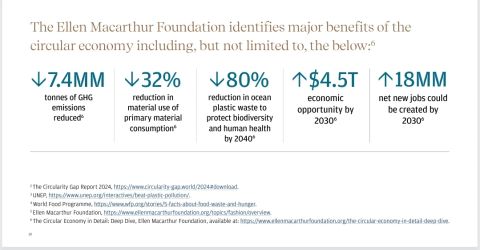
📊 $4.5T+ Circular Economy by 2030
📈 VC/PE Capital to 3x by 2028
🔥 Fastest-Growing Sectors:
🏗 Circular Construction 💰 $500B+
⚡ Green Hydrogen 💰 $600B+
🧠 AI-Driven Waste Mgmt 💰 $100B+
🌍 InvestForImpact – High returns meet sustainability. 💰♻️
💬 Which sector interests you most? Drop a comment!
CircularEconomy ImpactInvesting SustainableFinance ClimateInvestment
Originally published on LinkedIn on 2025-03-05 14:01:17: https://www.linkedin.com/feed/update/urn%3Ali%3Ashare%3A7303051986592014336
NamasteGreenIndia’s DDGS Export Boom: USD 717 Million Market, But 2025 Holds the Key
The Surge: A 314% Export Boom
India is making waves in the global Distillers Dried Grains with Solubles (DDGS) market, a key ethanol byproduct used as animal feed. Here’s the story behind the numbers:
📦 1,212 shipments of DDGS in the last 12 months (314% growth).
🌏 Major buyers:
🇻🇳 Vietnam: 51% share.
🇳🇵 Nepal: 21% share.
🇺🇸 United States: 7% share.
💰 Market Value:
2023: USD 420.67 million.
2032 (Projected): USD 717.81 million (CAGR: 6.17%).
The Challenge: Falling Prices
Despite the export surge, the industry is battling a steep price drop:
🏷️ Domestic DDGS prices: #₹14–15/kg (~USD 0.17–0.18).
🌍 Global competition and oversupply are hitting margins hard.
1. Expanded Production Capabilities:
With ethanol blending targets set to increase to 20% by 2025, India’s DDGS production will reach record levels.
2. Market Diversification:
New export agreements with Africa, Southeast Asia, and Latin America are expected to reduce over-reliance on existing markets like Vietnam and Nepal.
3. Government Interventions:
Policies promoting minimum price guarantees and export incentives are likely to stabilize DDGS prices.
Focus on value-added DDGS products, such as enriched feed, to attract premium markets.
4. Sustainability Push:
Growing demand for sustainable feed solutions globally aligns perfectly with DDGS as a cost-effective, eco-friendly option.
Indian DDGS could gain significant traction in European markets following stricter feed sustainability regulations.
5. Technological Advancements:
Adoption of advanced processing techniques will improve DDGS quality and reduce production costs, ensuring competitiveness in global markets.
India is turning its ethanol growth into a global export advantage, but to sustain the momentum in 2025 and beyond:
🛠️ Strengthen Domestic Support: Build strategic reserves to manage price fluctuations.
🌍 Capture New Markets: Target countries with rising feed demand like Brazil, Indonesia, and Nigeria.
🚀 Lead the Sustainability Charge: Establish India as a key supplier of sustainable animal feed.
Why It Matters
India’s ethanol-driven DDGS market is poised for exponential growth in 2025. By embracing innovation, diversification, and sustainability, India can become a global powerhouse in the animal feed sector while ensuring long-term industry stability.
💬 Let’s connect to explore how IndiaExports and EthanolEconomy are setting the stage for a transformative 2025. 🚀
Originally published on LinkedIn on 2025-01-15 19:30:29: https://www.linkedin.com/feed/update/urn%3Ali%3Ashare%3A7285377825862283264
NamasteNewIndia Currently, the ethanol blending in Indian petrol stands at 10%. The government aims to increase this to 20% by 2025.
Further the plan is to have put 100% ethanol-run vehicles:
Toyota: Setting up a plant in Aurangabad, Maharashtra to produce flex-fuel cars; Investment: $2.4 billion USD; Timeline: By 2025.
Tata Motors: Developing 100% ethanol or flex engine cars; Timeline: By 2025.
Suzuki: Developing 100% ethanol or flex engine cars; Timeline: By 2025.
Bajaj: Producing flex-engine bikes and scooters; Timeline: By 2025.
TVS: Producing flex-engine bikes and scooters; Timeline: By 2025.
Hero MotoCorp: Producing flex-engine bikes and scooters; Timeline: By 2025.
Mahindra & Mahindra: Initiating pilot projects in Pune to produce flex fuel-based engines for two-wheelers; Timeline: By 2025.
Hyundai: Developing 100% ethanol or flex engine cars; Timeline: By 2025.
Ethanol-Run Vehicles**: Indian auto companies are gearing up to produce 100% ethanol-run cars and two-wheelers. These vehicles are expected to be available by 2025.
Major Players: Companies like Toyota, Tata, Suzuki, Bajaj, TVS, and Hero are involved in this initiative.
Environmental Impact: These vehicles will comply with Euro 6 emission norms, offering net zero emissions.
Economic Benefits: The shift to ethanol is expected to reduce pollution, save costs, and benefit farmers by increasing the demand for ethanol.
Investment: Toyota is setting up a plant in Aurangabad, Maharashtra, with an investment of approximately $2.4 billion USD to produce these vehicles.
*Fuel Stations Adaptation*:
Infrastructure Upgrade: Fuel stations will need to upgrade their infrastructure to handle ethanol. This includes installing new storage tanks and pumps specifically designed for ethanol.
Training: Staff at fuel stations will require training to manage and dispense ethanol safely.
Distribution Network: A robust distribution network will be established to ensure a steady supply of ethanol to fuel stations across the country.
Source / shared link: https://m.economictimes.com/industry/auto/auto-news/indian-auto-companies-will-soon-produce-100-pc-ethanol-run-cars-and-2-wheelers-nitin-gadkari/articleshow/112297060.cms
Originally published on LinkedIn on 2024-08-07 12:53:45: https://www.linkedin.com/feed/update/urn%3Ali%3Ashare%3A7226933537424211969

