SevenWonders to MagnificentSeven to SpaceX 🚀
Dr. Anju Sharma MrsSustainability
The SevenWonders showed what humanity could build. 🏛️
The MagnificentSeven showed what markets could price. 📈
SpaceX is now testing what capital is willing to fund when ambition leaves the ground. 🌍
This is not a rocket story.
It is a capital-market architecture story.
SpaceX has entered public markets as one of the most valuable listed companies in the US.
Yet under the headline sits a sharper tension: about $18.7bn revenue in 2025, a near $5bn net loss, and a valuation richer than most conventional market logic would comfortably explain.
Add the SpaceX–xAI combination, bringing launch systems, Starlink connectivity and AI compute into one strategic perimeter, and the analyst question changes shape.
It is no longer only:
What is the company worth?
It becomes:
What becomes valuable when Earth is no longer the boundary condition?
KtalystKlues™ the questions that evolve in financial template:
1. Market leadership 🧭
What replaces the Magnificent Seven logic when leadership migrates from digital platforms to planetary infrastructure?
2. Valuation architecture 💰
With losses sitting under a trillion-dollar-plus market cap, how much of the price is current cash flow versus strategic optionality, quasi-monopoly expectation and founder premium?
3. Infrastructure classification 🛰️
Should orbit be valued like telecom towers, ports, cloud regions and defence corridors — or as a sovereign strategic asset with no clean comparable?
4. Capital-flow impact 🔁
If SpaceX becomes index-relevant, what gets reweighted, repriced or sold to make room in institutional portfolios?
5. Defence-tech multiplier 🛡️
Does this reset multiples for companies sitting between national security, satellite networks, AI compute and strategic communication?
6. Retail risk 😅
Is this democratised access to the future or FOMO entering portfolios in a spacesuit?
7. Planetary concentration risk 🌍⚠️
When one company becomes critical to launch access, connectivity, defence, AI infrastructure and orbital systems at once, does it become too strategic to fail?
Dr. Anju Lens 🔍
SevenWonders were monuments.
MagnificentSeven were platforms.
SpaceX may be something more complex: a listed expression of civilisational direction.
The financial system may now need a new lens.
Not just ESG.
Not just technology.
Not just growth.
But planetary capital allocation.
As SpaceX is not simply thinking outside the box.
It is asking whether the box was ever meant to be Earth!
Sourcenote | KtalystProofStack™: Built on Reuters & public market reporting around SpaceX’s IPO pricing, valuation, 2025 financials and xAI combination. Figures move with the share price.
Originally published on LinkedIn on 2026-06-14 05:12:02: https://www.linkedin.com/feed/update/urn%3Ali%3Ashare%3A7471791540621721600
🚨 Moody’s & Sustainability: ESG is Now a Credit Rating Factor! 📊💚
With #$40T in ESG assets under management, Moody’s is reshaping how financial markets assess creditworthiness. No longer just about profits & losses, a company’s sustainability risks now directly impact credit ratings, borrowing costs, & investment potential.
🔍 How Moody’s Integrates Sustainability into Credit Ratings
🟢 ESG factors impact the credit ratings of 18% of companies & governments rated by Moody’s. (Source)
📊 Issuer Profile Scores (IPS): Measures 15 ESG subfactors (climate risk, governance strength, social responsibility).
📊 Credit Impact Scores (CIS): Rates how ESG performance affects a company’s credit rating & risk profile.
📊 Second Party Opinions (SPOs): Validates Green Bonds & Sustainability-Linked Loans, ensuring funds are climate-aligned.
🔹 Moody’s now assesses over 3,000 entities based on ESG factors.
💰 ESG & Financial Impact: Why Credit Ratings Depend on Sustainability
🏦 Banks & Investors Are Watching
📌 Companies with poor ESG ratings face higher borrowing costs, as investors demand sustainability-linked loans & bonds.
📉 Carbon-Intensive Companies Are High-Risk
📌 Firms with high Scope 3 emissions face 15-20% valuation risks due to carbon pricing & regulatory changes. (Source)
🚀 Sustainability-Linked Bonds & Loans Are Surging
📌 #$1.6T in sustainability-linked bonds & loans have been issued, with Moody’s validating green claims to prevent greenwashing. (Source)
🌍 Moody’s ESG Leadership: Recognitions & Market Influence
🏆 FTSE4Good Index Inclusion (6 Years Running) → Recognizing top ESG performers.
🏆 EcoVadis Bronze Medal → Top 35% of global companies for sustainability.
🏆 CDP Supplier Engagement Leader → Among the top 4% of companies driving supply chain decarbonization. (Source)
🔥 The Takeaway: Sustainability is No Longer Optional
🟢 18% of Moody’s rated companies now have ESG-driven credit adjustments.
🟢 Investors demand transparent sustainability metrics before lending.
🟢 Greenwashing is no longer profitable—credit ratings now hold companies accountable.
📢 Should ESG be an even bigger factor in credit ratings? Let’s discuss below! 👇

Originally published on LinkedIn on 2025-02-27 04:39:26: https://www.linkedin.com/feed/update/urn%3Ali%3AgroupPost%3A82951-7300736262829711360
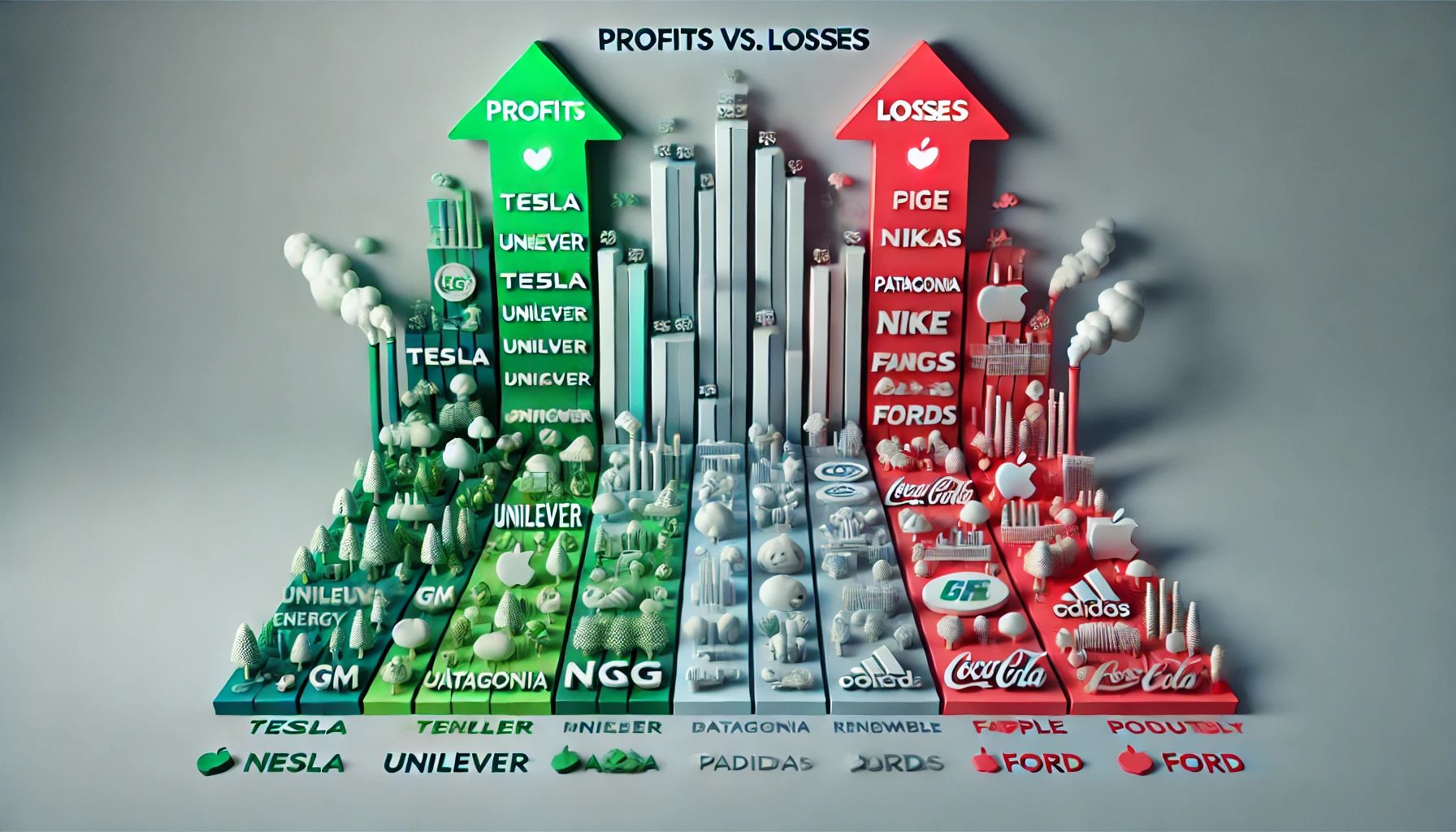
Sustainability Wars: Profits of the Bold, Losses of the Blind
Sustainability isn’t just a buzzword—it’s the defining strategy for profitability in modern business. These 10 examples showcase how companies that embraced sustainability secured financial success, while competitors who hesitated faced staggering losses and shrinking market share.
📊 1. Unilever vs. Procter & Gamble (P&G)
Unilever: Sustainable brands grew 69% faster, saving #€1 billion by 2020.
P&G: Lost #$8 billion in 2023, struggling to appeal to eco-conscious consumers in Europe.
📊 2. Tesla vs. General Motors (GM)
Tesla: EV dominance earned #$12.6 billion net income (2022) and an 800% valuation increase in 5 years.
GM: EVs accounted for just 2% of revenue (2022), causing a 25% market share drop in China.
📊 3. IKEA vs. Wayfair
IKEA: Renewable energy and circular practices saved #€2 billion and grew customer loyalty by 25%.
Wayfair: Suffered #$1.5 billion losses (2022) due to unsustainable operations.
📊 4. Patagonia vs. Columbia Sportswear
Patagonia: Eco-friendly initiatives helped achieve #$1 billion annual revenue and build brand trust.
Columbia: Lost 15% market share between 2020-2023 to Patagonia due to lack of sustainability focus.
📊 5. Walmart vs. Target
Walmart: Energy efficiency saved #$1 billion annually, cutting operational costs significantly.
Target: Reported a #$2 billion profit dip (2022) due to slower sustainability adoption.
📊 6. Nike vs. Adidas
Nike: Flyknit technology saved 60% material costs, generating #$3.5 billion in savings.
Adidas: Faced a #€500 million revenue loss (2023) from delayed sustainable innovations.
📊 7. Apple vs. Samsung
Apple: 100% renewable energy adoption fueled record #$394 billion revenue (2022) and 40% brand equity growth.
Samsung: Lost 15% EU market share, criticized for lagging in renewable energy initiatives.
📊 8. Microsoft vs. Oracle
Microsoft: Sustainability efforts drove 27% Azure growth (2023), securing eco-conscious enterprise clients.
Oracle: Missed #$1.2 billion in contracts, trailing in cloud services for sustainability-focused industries.
📊 9. PepsiCo vs. Coca-Cola
PepsiCo: Water-saving initiatives saved #$80 million annually, stabilizing global supply chains.
Coca-Cola: Lost #$2 billion (2022) due to water mismanagement protests and plant shutdowns in India.
📊 10. Toyota vs. Ford
Toyota: Sold 16 million hybrid vehicles, generating #$70 billion in cumulative profits.
Ford: Lost 10% market share (2020-2023) due to delayed EV and hybrid innovations.
The Bottom Line
Companies that lead with sustainability strategies not only maximize profits but also future-proof their business. Those that delay or ignore the shift face crippling losses in revenue, market share, and reputation.
SustainabilityWins GreenGrowth ProfitWithPurpose CorporateLeadership
Originally published on LinkedIn on 2025-01-24 05:11:11: https://www.linkedin.com/feed/update/urn%3Ali%3AgroupPost%3A82951-7288423065552609280

