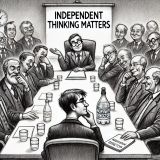
🏛️ The Power & Pitfalls of IndependentDirectors in Corporate Governance
🔹 Independent directors are the guardians of corporate governance, ensuring transparency, accountability, and ethical decision-making. Yet, history shows that their effectiveness is often tested in times of crisis. Here are some lessons from the boardroom:
✅ Success Stories: When Independent Directors Stepped Up
🛞 Tata Nano Project – When land acquisition and operational hurdles threatened Tata’s “People’s Car,” independent directors played a crucial role in navigating the crisis.
🏢 Infosys Leadership Shuffle (2013) – The return of Narayana Murthy, accompanied by his son, sparked concerns over governance norms, pushing independent directors to uphold fairness and transparency.
🚗 Maruti Suzuki Gujarat Plant (2014) – A move that could have impacted minority shareholders was scrutinized by independent directors, reinforcing the need for stakeholderprotection.
🚨 Corporate Failures: When Oversight Fell Short
📉 Satyam Scandal (2009) – A corporate fraud that exposed how ineffective oversight can erode trust and devastate businesses.
⚖️ Nagarjuna Finance Scandal (2009) – Legal trouble for an independent director led to mass resignations across corporate India, raising concerns about their liability.
💰 Byju’s Financial Crisis (2024) – Governance failures at India’s edtech giant underscored why independent directors must challenge financial mismanagement proactively.
These cases reveal a clear message: IndependentDirectors are not just ornamental figures—they are critical to business ethics and sustainability. However, their ability to function effectively hinges on:
🔹 Real independence from promoters and management
🔹 Robust regulations that protect their autonomy
🔹 A corporate culture that values their role in decision-making
💬 What do you think? Are independent directors truly empowered in today’s corporate landscape? Let’s discuss!
Read more at:
Originally published on LinkedIn on 2025-02-18 05:06:55: https://www.linkedin.com/feed/update/urn%3Ali%3AugcPost%3A7297481688115249152
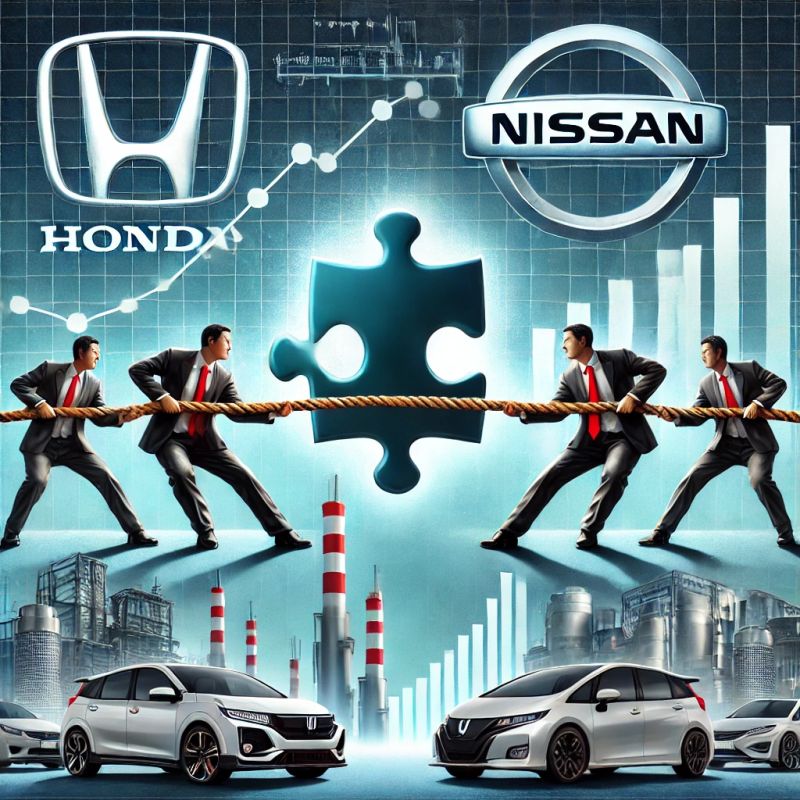
🚗TheHondaNissanStandoff: When Collaboration_Hits_Roadblocks
In the world of corporate mergers, numbers often tell one story, but leadership dynamics tell another. The #$60 billion Honda-Nissan merger, which could have created the world’s third_largest automaker, has officially collapsed—not due to financial infeasibility, but strategic misalignment.
📊 Breaking Down the Numbers
📌 9.5 million vehicles – Combined production of Honda and Nissan in 2023, making them a formidable force against global leaders Toyota and Volkswagen.
📌 20% market share loss in China – Nissan and Honda collectively struggled as Chinese EV makers gained dominance, pushing them toward collaboration.
📌 #$17 billion R&D spending – Honda and Nissan together invested heavily in electric and autonomous vehicle tech, but fragmentation in strategy led to inefficiencies.
📌 41% drop in Nissan’s market cap over 5 years – Pressure to restructure and regain investor confidence was a key driver for the discussions.
🚨 Why Did the Merger Fail?
⚠️ Power Play: Honda proposed making Nissan a subsidiary, triggering resistance from Nissan’s leadership, which feared a loss of autonomy.
⚠️ Culture Clash: Despite both being Japanese automakers, they operate under different leadership styles and decision-making frameworks.
⚠️ Strategic Divergence: Nissan leans toward alliances (e.g., Renault-Mitsubishi), while Honda prefers independent innovation and control.
📉 Lessons for Corporate Collaborations
✅ Size ≠ Success – Scale alone isn’t enough; without aligned governance, even a well-funded partnership can fail.
✅ Autonomy vs. Synergy – Balancing integration while respecting independent strengths is the key to sustainable partnerships.
✅ Adaptability Wins – Now, Nissan is eyeing a potential partnership with Foxconn for EVs, proving that agility matters more than size in today’s fast-moving auto industry.
💡 Advice for Business Leaders:
Collaboration is not about dominance, but about alignment. The best partnerships are those where both parties feel valued, respected, and empowered to contribute.
💬 What’s your take? Have you seen partnerships fail due to leadership clashes rather than financial issues? Drop your thoughts below!
Originally published on LinkedIn on 2025-02-13 08:01:13: https://www.linkedin.com/feed/update/urn%3Ali%3AgroupPost%3A82093-7295713613879640064
🚨 CorporateGovernance The Lodha Brothers’ Brand Dispute: A Case of Legacy, Law, and Leadership
🔍 Overview
The high-profile legal battle between Abhishek Lodha (Macrotech Developers Ltd.) and Abhinandan Lodha (House of Abhinandan Lodha) over the “Lodha” brand is more than a family feud—it’s a masterclass in governance, brand strategy, and crisis management.
With over ₹1,700 crore invested in marketing and ₹91,000 crore in revenues attributed to the “Lodha” brand (FY14–FY24), the stakes are sky-high. At the heart of the dispute lies a YR2017 family settlement and differing interpretations of rights to the iconic name.
⚡ Why It Matters
Brand Equity: A four-decade legacy risks dilution.
Reputation: Public disputes among business leaders erode stakeholder confidence.
Financial Impact: Rebranding, legal costs, and operational distractions loom large.
📈 Key Lessons
1️⃣ Brand Governance: Clear ownership rights and robust agreements are non-negotiable.
2️⃣ Conflict Resolution: Mediation, not litigation, protects legacy and relationships.
3️⃣ Crisis Communication: Transparent messaging is essential to maintain trust.
4️⃣ Future-Proof Agreements: Regular reviews of family/business settlements can prevent ambiguity.
🎯 What’s Next?
The Bombay High Court will hear the case on January 21, 2025. The decision could reshape how family businesses approach brand governance and conflict management.
💡 Takeaway
For leaders and boards, this dispute serves as a wake-up call: protecting legacy requires more than just great business acumen—it demands foresight, clarity, and a proactive approach to governance.
What’s your perspective on managing brand rights in family businesses? Share your thoughts below!
https://lnkd.in/diXWty7C
Originally published on LinkedIn on 2025-01-21 13:13:50: https://www.linkedin.com/feed/update/urn%3Ali%3AgroupPost%3A2153908-7287457364532695040
🚨 CorporateGovernance The Lodha Brothers’ Brand Dispute: A Case of Legacy, Law, and Leadership
🔍 Overview
The high-profile legal battle between Abhishek Lodha (Macrotech Developers Ltd.) and Abhinandan Lodha (House of Abhinandan Lodha) over the “Lodha” brand is more than a family feud—it’s a masterclass in governance, brand strategy, and crisis management.
With over ₹1,700 crore invested in marketing and ₹91,000 crore in revenues attributed to the “Lodha” brand (FY14–FY24), the stakes are sky-high. At the heart of the dispute lies a YR2017 family settlement and differing interpretations of rights to the iconic name.
⚡ Why It Matters
Brand Equity: A four-decade legacy risks dilution.
Reputation: Public disputes among business leaders erode stakeholder confidence.
Financial Impact: Rebranding, legal costs, and operational distractions loom large.
📈 Key Lessons
1️⃣ Brand Governance: Clear ownership rights and robust agreements are non-negotiable.
2️⃣ Conflict Resolution: Mediation, not litigation, protects legacy and relationships.
3️⃣ Crisis Communication: Transparent messaging is essential to maintain trust.
4️⃣ Future-Proof Agreements: Regular reviews of family/business settlements can prevent ambiguity.
🎯 What’s Next?
The Bombay High Court will hear the case on January 21, 2025. The decision could reshape how family businesses approach brand governance and conflict management.
💡 Takeaway
For leaders and boards, this dispute serves as a wake-up call: protecting legacy requires more than just great business acumen—it demands foresight, clarity, and a proactive approach to governance.
What’s your perspective on managing brand rights in family businesses? Share your thoughts below! 👇
Originally published on LinkedIn on 2025-01-21 13:13:22: https://www.linkedin.com/feed/update/urn%3Ali%3AgroupPost%3A2205762-7287457247146733569
Solar Frauds: The Dark Side of the Renewable Revolution
As the world accelerates its transition to clean energy, solar power has emerged as a beacon of hope. But with rapid growth comes challenges—fraudulent practices that undermine progress, trust, and investments. Here’s a snapshot of how solar fraud has impacted India and the world:
📊 Key Stats: India and Global Solar Frauds
1. Misuse of Subsidies
India:
₹150 crore ($18M) lost in Gujarat’s Solar Pump Scam (2022).
₹350 crore ($42M) in fraudulent subsidy claims uncovered in audits.
Global:
Spain: €2.6B ($2.9B) lost in subsidy fraud (2012).
China: $350M reclaimed in false claims (2019).
2. Fake Solar Projects and Ponzi Schemes
India:
₹200 crore ($24M) swindled in Tamil Nadu’s Ponzi scheme (2021).
₹100 crore ($12M) lost in fake panel scams in North India (2023).
Global:
Germany: €10M ($11M) defrauded in a Ponzi scheme (2020).
Europe: $50M stolen via fake investment platforms (2023).
3. Bribery and Corporate Misconduct
India:
$265M bribery allegations linked to Adani Group contracts (2024).
₹500 crore ($60M) lost in rigged state tenders (2020–23).
Global:
Brazil: $200M in inflated solar project costs due to bribery (2021).
US.: SunEdison bankruptcy revealed $16B in mismanagement (2016).
4. Financing and Loan Scams
India:
₹50 crore ($6M) lost in Maharashtra’s fake solar loans (2023).
₹50 lakh ($60K) defrauded in Rajasthan rooftop lease scams (2022).
Global:
Kenya: Substandard solar kits caused national losses (2021).
Nigeria: Predatory solar loans trapped thousands in debt (2020).
5. Cyber_Enabled Frauds
India:
₹10 crore ($1.2M) stolen via fake subsidy portals (2024).
₹100 crore ($12M) in e-commerce scams selling non-existent products (2023).
Global:
Canada: $5M lost to phishing targeting solar shipments (2020).
Europe: $50M siphoned via investment frauds (2023).
6. Greenwashing and Carbon Credit Scams
India:
₹100 crore ($12M) tied to fake carbon credits from non-existent solar farms (2021).
Global:
Australia: $10M in fake carbon credit sales (2021).
EU: Massive fraud led to stricter carbon trading rules (2022).
🚨 Lessons for the Industry
1. Transparency is Non-Negotiable: Stricter audits and real-time monitoring are essential for subsidy programs and tenders.
2. Educate and Empower: Public awareness campaigns can protect investors and consumers.
3. Global Collaboration: Cross-border efforts are needed to tackle international solar fraud.
💡 Why It Matters
Solar power is critical to meeting global sustainability goals, but fraud undermines its potential. It’s time for governments, businesses, and innovators to come together to build a fraud-free solar ecosystem.

Originally published on LinkedIn on 2024-12-14 05:42:39: https://www.linkedin.com/feed/update/urn%3Ali%3AgroupPost%3A2368335-7273573083842510848

