🌍 NamasteIndia Series: Bioplastic Asia vs West in the GreenPackagingRace ♻️
KtalystInsights BioPlasticAsia NamasteIndia CircularEconomy GreenMyths SustainableMaterials PolicyToPlastic
🔬 Japan 🇯🇵
Marine-degradable PHA (Polyhydroxyalkanoates), seaweed-based plastics
¥6.3B biomass R&D (2023)
Clean design meets ocean-safe mindset
🌱 India 🇮🇳
PLA (Polylactic Acid), starch blends, bagasse-based films
Single-use plastic ban (2022)
Only ~5% of cities with compost infra ⚠️
High startup energy, but systems lag
🔁 SouthKorea 🇰🇷
Cellulose acetate and biodegradable blends
EPR (Extended Producer Responsibility) enforcement
Target: 20% landfill reduction by 2030
🏙️ China 🇨🇳
PBAT (Polybutylene Adipate Terephthalate), cassava-starch blends
Plastic bans in 80+ cities
Scaling fast, but traceability gaps remain
🌊 Indonesia 🇮🇩
Seaweed to sachets & foams (e.g., Evoware)
Addressing 650K tons/year marine waste
Local solutions, global promise
🧪 Thailand 🇹🇭
Leading exporter of PLA (Polylactic Acid)
Target: 30% bio-based plastic production by 2030
Composting infrastructure growing with state support
🧬 USA 🇺🇸
PHA, PBAT, PLA (NatureWorks, Danimer Scientific)
$400M+ bioplastic investment (2022–24)
Regulation varies across states
♻️ EU (Germany, France, Italy) 🇪🇺
EN13432-certified PLA, bio-PET (Bio-based Polyethylene Terephthalate)
Plastic taxes, harmonized EPR policies
High consumer awareness + policy pressure
🎯 Decode the Label (with full forms):
✅ Biodegradable
Includes: PLA (Polylactic Acid), PHA (Polyhydroxyalkanoates), PBAT (Polybutylene Adipate Terephthalate)
Decomposes with microbes—but only under industrial composting conditions
♻️ EcoFriendly
Includes: Bio-PET (Bio-based Polyethylene Terephthalate), Cellulose acetate, long-life recyclable polymers
Designed for reuse, recycling, or low emissions—not necessarily biodegradable
🚫 PromotedPlastic
Often marketed with vague terms like “earth-safe” or “bio-enhanced
May be fossil-based with no proven lifecycle benefit
💡 India has the biomass, brains, and business base to lead this revolution.
👇 Who’s leading the real bioplastic breakthrough in your view—Japan’s deep-tech, Europe’s policy power, or India’s startup spirit? Drop a tag. Let’s unbox the buzz and build true circularity.
Originally published on LinkedIn on 2025-06-21 04:26:24: https://www.linkedin.com/feed/update/urn%3Ali%3AgroupPost%3A82951-7342045200246042624
🚨 “Sustainability is No Longer Optional: How Australia is Leading the Corporate GreenShift” 🌏♻️
Australia’s corporate sector is making headlines as a global leader in sustainability readiness, driven by strict upcoming climate disclosure laws set to roll out in January 2025. A Capgemini report highlights that Australian businesses are outpacing their global counterparts in energy tracking, workforce sustainability training, and green compliance efforts.
📊 KeyFindings: What’s Driving Australia’s Corporate Sustainability?
✅ RegulatoryPressure: Companies are proactively integrating sustainability due to strict government mandates and penalties for non-compliance. (Capgemini, 2024)
✅ ESGMetricsMatter: Over 70% of Australian businesses now measure their energy consumption, a significant rise compared to 45% globally. (Capgemini, 2024)
✅ BoardroomShift: 67% of senior executives now see sustainability as a profitability driver, up from 40% in 2022. (Capgemini, 2024)
✅ WorkforceTraining: Employees at 80% of Australian companies are undergoing sustainability-focused training, double the global average. (Capgemini, 2024)
📌 CaseStudy: Woolworths’ Sustainable Growth Strategy
Australian retail giant Woolworths is setting a benchmark for sustainability with:
✔️ CarbonNeutralGoal: Targeting net-zero emissions by 2050 with major investments in solar energy & supply chain decarbonization. (Woolworths Sustainability Report, 2024)
✔️ FoodWasteReduction: Diverted 100% of food waste from landfills through redistribution & composting programs. (Woolworths, 2024)
✔️ GreenTransport: Piloting 100% electric delivery fleets, reducing fuel dependency. (Woolworths, 2024)
⚖️ The Global Perspective: How Does Australia Compare?
🔹 Australia 🇦🇺: Leading in policy-driven corporate sustainability with mandatory ESG disclosure laws from 2025.
🔹 US 🇺🇸: Lags in mandatory ESG rules; SEC’s proposed climate disclosure law is facing resistance.
🔹 India 🇮🇳: BRSR mandatory for top 1,000 firms, but enforcement remains a challenge.
🔹 EU 🇪🇺: Corporate Sustainability Reporting Directive (CSRD) enforces strict green reporting, with huge penalties for greenwashing.
🔎 KeyLearnings: What Should Businesses Do?
📌 ProactiveCompliance: Companies must integrate sustainability before regulations force costly last-minute changes.
📌 BoardroomEngagement: Sustainability must shift from CSR to a core profitability strategy.
📌 DataTransparency: ESG data must be measurable & verifiable to avoid greenwashing risks.
🏆 KeyTakeaway
📌 Sustainability could be a compliance headache or a competitive advantage.
📌 Sustainability should be backed by real action, not just reports.
📌 Sustainability would be a financial risk if businesses don’t act before regulations hit.

Originally published on LinkedIn on 2025-02-22 05:21:28: https://www.linkedin.com/feed/update/urn%3Ali%3AgroupPost%3A9270968-7298934901536428032
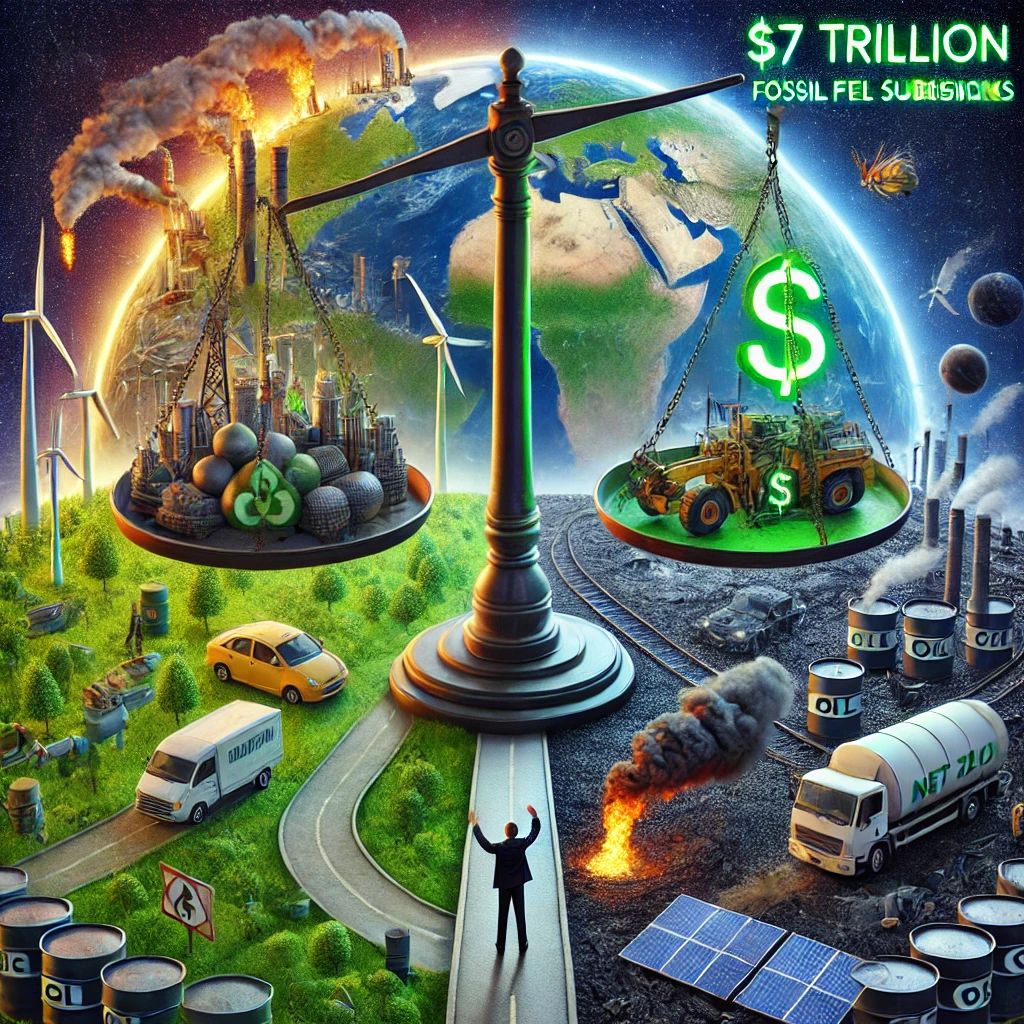
🚨 “The USD_7 Trillion Green Paradox: Saving the Planet or Fueling the Crisis?” 🌍♻️💰
📊 1. The Green Investment Paradox: More Money, More Emissions
✅ #$1.7 trillion invested in clean energy in 2023 (IEA, 2024)
❌ #$7 trillion in fossil fuel subsidies were paid out in 2023 (IMF, 2024)
✅ 120+ countries pledged net-zero targets
❌ Only 20% have actual policies & execution plans (Net Zero Tracker, 2024)
❌ CO₂ emissions hit a record high of 37.5 billion tons in 2023 (Global Carbon Budget, 2024)
🚨 Reality Check: For every $1 spent on green energy, $4 still funds fossil fuels.
🇩🇰 Denmark: 75% renewables, carbon-neutral by 2045 (EPI, 2024)
🇸🇪 Sweden: 98% recycling rate, world leader in circular economy (WEF, 2024)
🇳🇴 Norway: 80% of new car sales are EVs, hydro-powered energy (IEA, 2024)
🇪🇺 EU: #€1 trillion Green Deal investment, strict carbon pricing (EU Commission, 2024)
🚨 Reality Check: Even the greenest nations rely on imported fossil fuels & high energy consumption.
🟡 3. The Green Economy Paradox: Investing While Polluting
🇨🇳 China: World’s largest renewable energy investor, but 55% of power still comes from coal.
🇮🇳 India: Fastest-growing solar market, but remains the third-largest CO₂ emitter. (MNRE, 2024)
🇺🇸 USA: #$369B Inflation Reduction Act to fund green tech, but oil production reached a record 13.1M barrels/day in 2023. (DOE, 2024)
🚨 Reality Check: Countries are investing in renewables but not cutting fossil fuel use fast enough.
🔴 4. The Worst Green Offenders: Promises Without Action
❌ 🇦🇺 Australia: The world’s second-largest coal exporter, despite ‘green economy’ branding. (Climate Council, 2024)
❌ 🇷🇺 Russia: No net-zero plan, fossil fuel revenue = 40% of its economy. (UNEP, 2024)
❌ 🇸🇦 Saudi Arabia: Announced $260B for renewables but still earns 90% of its GDP from oil. (IEA, 2024)
🚨 Reality Check: Without emission cuts, green projects don’t fix the problem.
📉 5. The Harsh Truth: Emissions Are Still Rising
❌ 2023 was the hottest year ever recorded, with global temperatures 1.48°C above pre-industrial levels. (NASA, 2024)
❌ Carbon capture tech only offsets 0.1% of annual global emissions. (IPCC, 2024)
❌ At current transition rates, the world will miss its 1.5°C climate target by 2040. (UNEP, 2024)
🚨 Reality Check: We must cut global emissions 43% by 2030 to stay on track—but we’re nowhere close.
🏆 KeyTakeaway
The Green Economy paradox is real—we invest in sustainability while financing fossil fuels even more. Until green investments outpace fossil fuel spending, and emissions actually drop, we’re not in a real transition.
Originally published on LinkedIn on 2025-02-03 04:11:43: https://www.linkedin.com/feed/update/urn%3Ali%3AgroupPost%3A82951-7292031979921797120
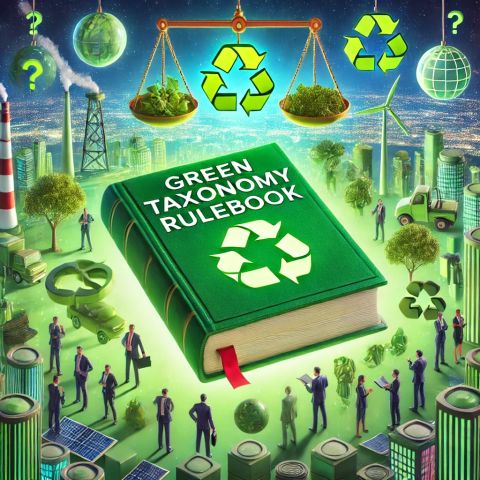
🌍 Green_Taxonomy: The Billion_Dollar_Climate_Rulebook” 📖💰♻️
Governments & investors are pumping trillions into ‘green projects’, but how do we know what’s actually sustainable and what’s greenwashing? That’s where Green Taxonomy comes in—a global rulebook defining what’s truly green.
Let’s break it down data-first.
📖 1. What is Green_Taxonomy?
✅ A classification system that defines which economic activities are truly ‘green.
✅ Prevents greenwashing by ensuring companies & funds don’t falsely claim sustainability.
✅ Guides investors & governments toward legitimate climate-friendly projects.
🚨 Why It Matters? Over $1.5 trillion in ESG investments may be at risk due to misleading green claims. (Bloomberg, 2024)
🏆 Key Impact: Governments use Green Taxonomy to shape climate policies, carbon markets, and financial incentives.
🌎 2. Global Green Taxonomies: Who’s Leading?
✅ 🇪🇺 EU Taxonomy: Strictest framework, defining what counts as green. (Source: EU Commission, 2024)
✅ 🇨🇳 China’s Green Bonds Catalog: Focuses on renewable energy & pollution control. (PBOC, 2024)
✅ 🇮🇳 India’s Green Taxonomy: Aligned with Sustainable Finance Guidelines. (RBI, 2024)
✅ 🇺🇸 US SEC ESG Rules: Weaker than EU’s, but cracking down on greenwashing. (SEC, 2024)
🚨 The Problem? Each country defines ‘green’ differently, creating market confusion for investors.
🏆 What’s Needed? A globally harmonized green taxonomy to ensure credibility & consistency.
💰 3. How Green Taxonomy Affects Business & Investments
✅ Corporations Must Report Sustainability Metrics or risk losing ESG funding.
✅ Green Bonds & Climate Finance—Only certified green projects qualify for funding.
✅ High-Carbon Industries (Oil, Gas, Cement) face stricter compliance & reporting rules.
🚨 Reality Check: #$4.2 trillion in green bonds were issued in 2023—but without strong taxonomy rules, many may not be truly ‘green.’ (Climate Bonds Initiative, 2024)
🏆 Who Wins? Companies investing in real sustainability, not just optics.
⚖️ 4. The Green Taxonomy Controversies
🔴 Is Nuclear Energy Green? 🇪🇺 The EU says YES. Critics say radioactive waste isn’t sustainable.
🔴 Is Natural Gas Green? 🇪🇺 Labeled it ‘transitional green’, sparking backlash from climate groups.
🔴 Are Carbon Offsets Valid? Many taxonomies exclude carbon credits due to verification concerns.
🚨 The Challenge? Balancing economic growth & real sustainability without greenwashing.
🏆 KeyTakeaway
The Green Taxonomy is reshaping global finance & sustainability rules. Countries that set clear standards will attract more green investments, while loopholes & weak regulations risk fueling greenwashing.
👉 Will Green Taxonomy stop greenwashing or just create more loopholes?
GreenFinance Sustainability ESG CarbonMarkets NetZero ClimateAction

Originally published on LinkedIn on 2025-01-31 08:57:08: https://www.linkedin.com/feed/update/urn%3Ali%3AgroupPost%3A100646-7291016643428704256
NamasteGreenIndia at COP29 GetRid_of_GreenWashing
COP29 is currently underway in Baku, Azerbaijan (November 11-22, 2024), as nearly 200 nations converge to confront the Climate Emergency.
COP29 Key_Actions_Tensions:
USD120 Billion Climate Finance: Multilateral Development Banks pledge $120 billion annually by 2030 to empower low- and middle-income nations for climate resilience.
GlobalCarbonMarkets: A groundbreaking carbon trading framework under Article6.4 of the Paris Agreement, poised to unlock critical financing for developing nations.
Fossil_Fuels in Focus: Azerbaijan’s defense of oil and gas underscores the deep divide between economic dependency on fossil fuels and global climate ambitions.
Skepticism from Argentina: Argentina’s exit from COP29 emphasizes the growing friction between national interests and global climate commitments.
UN’s UrgentPlea: The UN Secretary-General’s stark warning that 2024 is a “masterclass in climate destruction” calls for immediate, intensified action.
India, China, SouthKorea: Leading Voices with Distinct Goals
India: Leading calls for at least $1 trillion in annual climate finance by 2025, India advocates for transparent, fair funding mechanisms and a robust carbon market framework to guide industry-specific emission cuts.
China: Urges developed countries to exceed their $100 billion pledge, seeking $1.3 trillion annually for developing nations. China continues to prioritize large-scale investments in renewables and emphasizes the importance of US-China collaboration on climate issues.
SouthKorea: Sets ambitious 2030 emission reduction targets, expanding investment in green tech, particularly hydrogen and electric vehicles, while fostering regional cooperation to tackle shared environmental challenges.
Originally published on LinkedIn on 2024-11-14 03:21:58: https://www.linkedin.com/feed/update/urn%3Ali%3AgroupPost%3A131340-7262666040386486272
NamasteGreenIndia at COP29 GetRid_of_GreenWashing
COP29 is currently underway in Baku, Azerbaijan (November 11-22, 2024), as nearly 200 nations converge to confront the Climate Emergency.
COP29 Key_Actions_Tensions:
USD120 Billion Climate Finance: Multilateral Development Banks pledge $120 billion annually by 2030 to empower low- and middle-income nations for climate resilience.
GlobalCarbonMarkets: A groundbreaking carbon trading framework under Article6.4 of the Paris Agreement, poised to unlock critical financing for developing nations.
Fossil_Fuels in Focus: Azerbaijan’s defense of oil and gas underscores the deep divide between economic dependency on fossil fuels and global climate ambitions.
Skepticism from Argentina: Argentina’s exit from COP29 emphasizes the growing friction between national interests and global climate commitments.
UN’s UrgentPlea: The UN Secretary-General’s stark warning that 2024 is a “masterclass in climate destruction” calls for immediate, intensified action.
India, China, SouthKorea: Leading Voices with Distinct Goals
India: Leading calls for at least $1 trillion in annual climate finance by 2025, India advocates for transparent, fair funding mechanisms and a robust carbon market framework to guide industry-specific emission cuts.
China: Urges developed countries to exceed their $100 billion pledge, seeking $1.3 trillion annually for developing nations. China continues to prioritize large-scale investments in renewables and emphasizes the importance of US-China collaboration on climate issues.
SouthKorea: Sets ambitious 2030 emission reduction targets, expanding investment in green tech, particularly hydrogen and electric vehicles, while fostering regional cooperation to tackle shared environmental challenges.
As COP29 unfolds, these strategic moves from India, China, and South Korea underline their critical roles in shaping a global path forward. Their approaches reveal the spectrum of solutions needed to mitigate climate risks while balancing growth and sustainability in the face of complex geopolitical, economic, and environmental pressures.
Source / shared link: https://www.indiatoday.in/environment/story/why-are-countries-fighting-over-money-at-cop29-climate-summit-2632757-2024-11-13
Originally published on LinkedIn on 2024-11-14 03:19:55: https://www.linkedin.com/feed/update/urn%3Ali%3Ashare%3A7262665526169010177

