CustomerInfluence is Driving CorporateSustainability—Are Businesses Ready? 🇮🇳🌍🛍️
What if every dollar (or rupee!) you spent was a vote for the future you wanted?
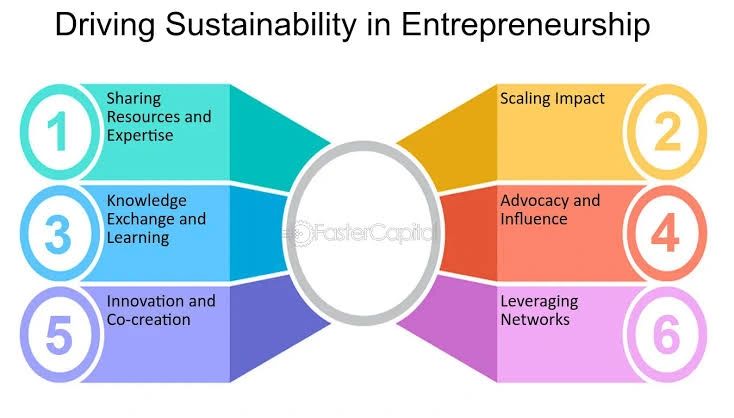
Consumers are no longer just buying products—they’re reshaping industries. In India, 85% of urban shoppers now prefer eco-friendly brands (Nielsen, 2024), pushing businesses to align with sustainability or risk losing relevance.
📢 WhichIndustries Are Most Affected by Customer Demand for Sustainability?
🚗 Automobile & Mobility
✔️ India’s EV market grew 48% YoY as consumers shift to greener transport (SIAM, 2024).
✔️ Tata Motors leads India’s EV sector with a 74% market share, while global automakers scramble to meet demand (Economic Times, 2024).
✔️ Uber & Ola face pressure to electrify fleets, with government mandates accelerating the shift.
🛍️ Retail & Fashion
✔️ Fast fashion faces a reckoning: 73% of Gen Z in India prefer sustainable brands (Deloitte, 2024).
✔️ H&M & Zara under fire for greenwashing, while local sustainable brands like FabIndia & B Label are thriving.
✔️ Shein & Flipkart Fashion have faced sustainability backlash, yet mass-market appeal keeps them afloat.
🥤 Food & Beverage
✔️ 70% of Indian consumers prefer eco-friendly packaging, pushing brands to reduce plastic use (Mint, 2024).
✔️ Nestlé & PepsiCo face bans on single-use plastics, while Amul & Mother Dairy work on sustainable dairy farming.
✔️ Plant-based meat & dairy alternatives are gaining ground, with a 32% YoY growth in demand (FICCI, 2024).
🏡 RealEstate & Construction
✔️ Green buildings account for 7% of new constructions in India, but demand for sustainable housing is rising (JLL India, 2024).
✔️ Godrej Properties & Mahindra Lifespaces are leading in green-certified real estate.
✔️ Builders failing on sustainability face regulatory & buyer scrutiny, pushing firms toward solar power & eco-friendly materials.
💄 Beauty & Personal Care
✔️ India’s natural beauty segment is growing 35% YoY, driven by demand for chemical-free, cruelty-free products (Statista, 2024).
✔️ Forest Essentials & Kama Ayurveda thrive, while L’Oréal & Unilever struggle with green claims scrutiny.
📊 KeyTakeaway: Consumers Hold the Power
📌 Customers could be the biggest force in driving corporate climate action.
📌 Brands should be transparent & proactive—greenwashing is no longer an option.
📌 The future would be shaped by companies prioritizing real impact over marketing.
👉 Do you factor sustainability into your purchasing decisions? Let’s discuss below! 👇

Originally published on LinkedIn on 2025-02-26 05:06:26: https://www.linkedin.com/feed/update/urn%3Ali%3AgroupPost%3A95089-7300380670919426049
🚨 India’s Emission Intensity Targets: A Game_Changer for Industries & Carbon#Markets?
India is set to release EmissionIntensityTargets for nine industrial sectors by the end of February 2025—marking a major milestone in its NetZero commitment. With industries given one year to comply, CarbonCreditTrading is expected to follow, reshaping how businesses approach Decarbonization and Sustainability.
📊 What’s Changing?
🔹 Industries Impacted: Steel, Cement, Petrochemicals, Fertilizers, Textiles, Pulp & Paper, Power, and more.
🔹 Compliance Window: Companies get one year to implement emission-cutting measures.
🔹 Carbon Markets Activation: After compliance, CapAndTrade kicks in—firms exceeding targets can sell credits, while high emitters must buy them.
🔹 India’s Net Zero Push: Aims to cut GHG emissions intensity by 45% by 2030 (vs. 2005 levels). (MoEFCC, 2025)
💡 What’s the Opportunity?
✔️ Green Investment Boom: Expect a surge in Renewables, CCUS (Carbon Capture), and EnergyEfficiency projects.
✔️ Competitive Advantage: Early adopters of clean tech & low-carbon solutions will benefit from carbon credits.
✔️ Global Alignment: Brings India closer to EU CBAM, US IRA, & China’s ETS—making exports competitive.
⚠️ The Challenges Ahead
🚨 Cost of Compliance: Industries must invest in LowCarbonTech, Electrification, and AlternativeFuels.
🚨 Regulatory Uncertainty: Clarity on CarbonPricing, OffsetRules, and international trading needed.
🚨 SMEs at Risk: Large firms may comply, but MSMEs could struggle due to financial constraints.
🏆 KeyTakeaway: Green Mandates & Market Forces Converging
📌 India could be a global leader in carbon markets & industrial sustainability.
📌 India should be providing clear policy incentives & transition funds.
📌 India would be missing out if compliance turns into just another Greenwashing exercise.
👉 Will India’s emission trading system be a breakthrough or just another regulatory hurdle? Let’s discuss! 👇
Originally published on LinkedIn on 2025-02-25 17:55:58: https://www.linkedin.com/feed/update/urn%3Ali%3Ashare%3A7300211941875052544
🚀 “Green Investment2025: Who’s Leading the Sustainability Race?” 🌍💰♻️
Green capital is now a global power play—who’s winning?
🇺🇸 US: Clean Tech Boom or Protectionist Slowdown?
✔️ $370B in InflationReductionAct incentives driving EVs, solar, and hydrogen. (DOE, 2025)
✔️ $130B in new clean energy projects in Q1 2025 alone. (Bloomberg, 2025)
✔️ 40% drop in China-sourced clean energy imports after policy shifts. (Reuters, 2025)
📌 RealityCheck: Can US protectionism sustain long-term investment confidence?
🇪🇺 EU: Balancing Green Growth & Trade Barriers
✔️ €100B in GreenIndustrialPlan for renewable manufacturing & clean energy. (EC, 2025)
✔️ 40% tariff on China’s EV exports—protecting EU firms but raising costs. (Financial Times, 2025)
✔️ €78B Carbon Border Tax (CBAM) set to impact high-emission imports. (EC, 2025)
📌 RealityCheck: Will EU’s strict policies drive innovation or limit global trade?
🇨🇳 China: Clean Energy Leader but Investor Risk?
✔️ 50% of the world’s renewables produced in China. (IEA, 2025)
✔️ $500B in GreenBonds & subsidies to accelerate solar, wind, EVs. (Nikkei Asia, 2025)
✔️ FDI drops 18% due to global concerns over regulatory risks. (China Briefing, 2025)
📌 RealityCheck: Can China’s state-driven model maintain foreign investor trust?
🇮🇳 India: Fastest-Growing Green Economy?
✔️ $100B green energy investment for 500GW non-fossil capacity by 2030. (MNRE, 2025)
✔️ 10% rise in GreenFDI in Q1 2025—biggest jump in Asia. (ORF, 2025)
✔️ 40% cheaper GreenHydrogen vs. global average—making India a CleanEnergy hub. (IEA, 2025)
📌 RealityCheck: Can India sustain its green investment momentum?
🏆 KeyTakeaway: Green Capital is the New Global Currency
📌 US could be leading in incentives but risks isolation.
📌 EU should be innovating, but trade restrictions may backfire.
📌 China would be dominating clean tech but must regain investor trust.
📌 India must be the rising star, leveraging policy & affordability.
👉 Who do you think is winning the green finance race? Drop your insights below! 👇

Originally published on LinkedIn on 2025-02-25 13:55:53: https://www.linkedin.com/feed/update/urn%3Ali%3AgroupPost%3A2474261-7300151521655062528
🚀 “The Dark Side of Sustainability: Are We Creating a Green Divide?” 🌍⚖️💰
Sustainability for whom? If green solutions leave half the world behind, is it truly sustainable?
As the world pushes for NetZero, EVs, CarbonTaxes, and SustainableFinance, a new reality emerges—TheGreenDivide.
📊 The Hidden Cost of Going Green
🔹 EV Affordability Gap: The average EV costs 50-70% more than petrol/diesel cars in India, making them a luxury, not a necessity. (IEA, 2024)
🔹 Carbon Taxes & Inequality: EU’s Carbon Border Adjustment Mechanism (CBAM) is expected to cost developing economies $16B annually as they struggle to decarbonize. (IMF, 2024)
🔹 Green Job Displacement: 2.7 million fossil fuel jobs are set to be lost globally by 2030, while only half will be replaced by green jobs. (WEF, 2024)
🔹 Rural Access to Sustainability: While urban India talks about solar panels & ESG investing, only 7% of rural households have access to renewable energy. (MNRE, 2024)
📌 RealityCheck: If sustainability leaves millions behind, is it truly progress?
💰 Who Wins & Who Pays?
🏆 Winners: Corporations & Wealthy Nations
✔️ Carbon Credit Traders: The voluntary carbon market hit $2B in 2024, but 80% of credits are purchased by MNCs to offset emissions instead of reducing them. (Bloomberg, 2024)
✔️ Developed Nations: US & EU firms control 90% of critical minerals used in batteries, keeping the supply chain monopolized. (World Bank, 2024)
✔️ Tech & EV Giants: Companies like Tesla & BYD gained over $400B in green subsidies, while developing nations struggle to fund clean tech. (IEA, 2024)
❌ Losers: SMEs, Emerging Markets & The Poor
🔻 SMEs: Over 60% of Indian MSMEs cannot afford ESG compliance costs, risking lost global contracts. (FICCI, 2024)
🔻 Developing Nations: Bangladesh & Vietnam are losing textile exports due to high sustainability requirements from EU buyers. (OECD, 2024)
🔻 Consumers: Sustainable products cost 30-50% more, pricing out low-income families. (McKinsey, 2024)
📌 RealityCheck: Green capitalism is real. Who’s paying the price?
📜 What Needs to Change?
🔹 Equitable Green Policies: Climate financing must prioritize developing nations.
🔹 Accessible Green Tech: EV & solar subsidies should be focused on affordability for the masses.
🔹 Real ESG Accountability: Stop “green compliance” from becoming a pay-to-play game.
🔹 Inclusive Sustainability: Policy reforms must address rural electrification, SME funding & job displacement.
🏆 KeyTakeaway: Sustainability Shouldn’t Be a Privilege
📌 Sustainability could be the great equalizer—if green policies support all economies.
📌 It should be accessible, not a corporate power game.
📌 If it remains profit-driven, it would be another tool of economic disparity.

Originally published on LinkedIn on 2025-02-24 07:22:32: https://www.linkedin.com/feed/update/urn%3Ali%3AgroupPost%3A82951-7299690143739764736
🚜🌾 PolicyGovernance & ClimateResilience: Can India Protect Its Farmers from an Uncertain Future? 🌦️🔥💰
A farmer’s success depends on the sky, but survival now depends on policy.
India’s agriculture sector, contributing 18% of GDP & employing 43% of the workforce, is facing climate volatility & policy gaps that threaten both farm incomes & national food security.
🌡️ Climate Impact: Why Farmers Are at Risk?
✔️ Heatwaves & Crop Failures: India saw 273 heatwave days in 2023, reducing wheat yields by 15% in major agricultural belts. (IMD, 2024)
✔️ Monsoon Irregularities: 12 states recorded deficient rainfall in 2023, leading to 20% lower kharif crop production. (MoAFW, 2024)
✔️ Debt Crisis & Migration: Farm loan defaults may rise by 30% by 2030, forcing 7M+ rural workers to migrate annually. (RBI, 2024; World Bank, 2024)
✔️ Insurance Gaps: Only 34% of farmers are insured under PMFBY, leaving millions exposed to climate-related crop losses. (NITI Aayog, 2024)
📌 RealityCheck: Can policy reforms keep pace with climate shocks?
💰 Economic Fallout: Food Prices, Farmer Distress & Rural Unrest
✔️ Food Inflation: Wheat prices surged 24% & onion prices by 60% in 2023 due to supply chain disruptions. (MoAFW, 2024)
✔️ Declining Farm Incomes: The average farmer earns ₹10,218 ($123) per month, while input costs keep rising. (NSO, 2024)
✔️ Rural Finance Gaps: India’s agri-credit disbursement was ₹18 lakh crore ($216B) in 2023, but small farmers struggle to access formal finance. (RBI, 2024)
✔️ Climate-Induced Farmer Suicides: Over 10,800 farmer suicides were reported in 2023, linked to crop failures & mounting debt. (NCRB, 2024)
📌 RealityCheck: Without stronger governance, rural distress will fuel inflation, unemployment & food shortages.
📜 Governance Gaps: Where Policy Needs Urgent Reform
🔹 Ineffective Crop Insurance: Expanding PMFBY coverage to 70% can protect farmers from weather shocks. (NABARD, 2024)
🔹 Delayed Compensation & Relief Funds: Farmers wait 6-12 months for compensation payouts, leading to financial ruin. (CAG Report, 2024)
🔹 Lack of Climate-Adaptive Infrastructure: Only 45% of farms have irrigation coverage, making them overdependent on erratic monsoons. (MoWR, 2024)
🔹 No Long-Term Climate Resilience Strategy: India lacks a national roadmap for climate-proofing agriculture, unlike the EU & US. (WEF, 2024)
📌 RealityCheck: Strong governance must replace temporary relief measures to secure India’s food future.
🏆 KeyTakeaway: India’s Food Security Hinges on Policy & Climate Action
📌 ClimateResilientFarming could be India’s best bet for sustainable agriculture.
📌 PolicyReforms should be designed for long-term farmer protection, not just crisis management.
📌 StrongGovernance would be the game-changer in bridging the gap between food security & farmer welfare.
Originally published on LinkedIn on 2025-02-24 06:32:13: https://www.linkedin.com/feed/update/urn%3Ali%3AgroupPost%3A81198-7299677483526688768
🚀 Sustainability in 2025: Who’s Leading, Who’s Lagging & What’s Changing? 🌍📉⚡
If sustainability were a race, some are sprinting, some are jogging, and others are still tying their shoes.
In 2025, sustainability is no longer just about ESGCompliance—it’s about survival. But as regulations shift, businesses hesitate, and grassroots efforts grow stronger, the question remains: Who is truly walking the talk?
📊 1. Europe is Tightening Rules—But Not for Everyone 🇪🇺
🔹 EU’s Corporate Sustainability Reporting Directive (CSRD) is evolving—planning to raise the reporting threshold from 250 employees & €40M turnover to 1,000 employees & €450M.
🔹 Impact? This will exempt thousands of smaller companies while still holding big corporations accountable.
🔹 RealityCheck: Is this a win for business flexibility or a loophole for greenwashing?
📌 Source: Reuters
📊 2. CEOs Know Sustainability = Profit, But Are They Acting? 📈
🔹 PwC’s 2025 CEO Survey: 🌱 29% of Irish CEOs skipped climate investments last year due to regulatory confusion—yet companies that link sustainability to executive compensation see higher revenues.
🔹 The Dilemma: CEOs acknowledge climate risks but struggle with unclear policies.
🔹 RealityCheck: Are companies stalling progress just because it’s complicated?
📌 Source: The Times
📊 3. Grassroots Action is Filling the Gaps 🌱🏡
🔹 Local Sustainability Wins: In Iowa City, a retirement community has diverted thousands of pounds of food waste from landfills—something that big corporations fail to do at scale.
🔹 The Takeaway: Real impact isn’t just about billion-dollar pledges—it’s about execution, big or small.
📌 Source: The Gazette
🏆 KeyTakeaway: The Sustainability Race in 2025
✅ Regulators could be making reporting easier, but risks of weaker accountability loom.
✅ CEOs should be making sustainability a financial strategy, not just PR.
✅ Communities are proving that action matters more than announcements.
💬 What’s your take? Are we moving forward fast enough, or just shifting responsibilities? Drop your thoughts below! 👇
Sustainability ESG ClimateAction GreenBusiness CorporateResponsibility CircularEconomy
https://lnkd.in/d-EBgCzk
Source / shared link: https://www.reuters.com/sustainability/eu-pare-back-sustainability-rules-companies-draft-shows-2025-02-22/
Originally published on LinkedIn on 2025-02-23 03:52:40: https://www.linkedin.com/feed/update/urn%3Ali%3Ashare%3A7299274941965721601
🚨 “Sustainability is No Longer Optional: How Australia is Leading the Corporate GreenShift” 🌏♻️
Australia’s corporate sector is making headlines as a global leader in sustainability readiness, driven by strict upcoming climate disclosure laws set to roll out in January 2025. A Capgemini report highlights that Australian businesses are outpacing their global counterparts in energy tracking, workforce sustainability training, and green compliance efforts.
📊 KeyFindings: What’s Driving Australia’s Corporate Sustainability?
✅ RegulatoryPressure: Companies are proactively integrating sustainability due to strict government mandates and penalties for non-compliance. (Capgemini, 2024)
✅ ESGMetricsMatter: Over 70% of Australian businesses now measure their energy consumption, a significant rise compared to 45% globally. (Capgemini, 2024)
✅ BoardroomShift: 67% of senior executives now see sustainability as a profitability driver, up from 40% in 2022. (Capgemini, 2024)
✅ WorkforceTraining: Employees at 80% of Australian companies are undergoing sustainability-focused training, double the global average. (Capgemini, 2024)
📌 CaseStudy: Woolworths’ Sustainable Growth Strategy
Australian retail giant Woolworths is setting a benchmark for sustainability with:
✔️ CarbonNeutralGoal: Targeting net-zero emissions by 2050 with major investments in solar energy & supply chain decarbonization. (Woolworths Sustainability Report, 2024)
✔️ FoodWasteReduction: Diverted 100% of food waste from landfills through redistribution & composting programs. (Woolworths, 2024)
✔️ GreenTransport: Piloting 100% electric delivery fleets, reducing fuel dependency. (Woolworths, 2024)
⚖️ The Global Perspective: How Does Australia Compare?
🔹 Australia 🇦🇺: Leading in policy-driven corporate sustainability with mandatory ESG disclosure laws from 2025.
🔹 US 🇺🇸: Lags in mandatory ESG rules; SEC’s proposed climate disclosure law is facing resistance.
🔹 India 🇮🇳: BRSR mandatory for top 1,000 firms, but enforcement remains a challenge.
🔹 EU 🇪🇺: Corporate Sustainability Reporting Directive (CSRD) enforces strict green reporting, with huge penalties for greenwashing.
🔎 KeyLearnings: What Should Businesses Do?
📌 ProactiveCompliance: Companies must integrate sustainability before regulations force costly last-minute changes.
📌 BoardroomEngagement: Sustainability must shift from CSR to a core profitability strategy.
📌 DataTransparency: ESG data must be measurable & verifiable to avoid greenwashing risks.
🏆 KeyTakeaway
📌 Sustainability could be a compliance headache or a competitive advantage.
📌 Sustainability should be backed by real action, not just reports.
📌 Sustainability would be a financial risk if businesses don’t act before regulations hit.

Originally published on LinkedIn on 2025-02-22 05:21:28: https://www.linkedin.com/feed/update/urn%3Ali%3AgroupPost%3A9270968-7298934901536428032
🚀 “CorporateGovernance: Can India Match the US?” 🇮🇳⚖️🇺🇸
India’s corporate governance is evolving, but enforcement gaps remain. How does it compare to the US? Here’s a data-driven reality check.
✅ Where India & US Align
🔹 Mandatory ESG Disclosures
✔️ India: Top 1,000 listed firms follow BRSR. (SEBI, 2024)
✔️ US: SEC mandates climate disclosures. (SEC, 2024)
🔹 Board Diversity
✔️ India: 35% of Nifty500 firms have women directors. (NSE, 2024)
✔️ US: Women hold 32% of S&P500 board seats. (Harvard Law, 2024)
🔹 Whistleblower Protections
✔️ India: SEBI enforces audit committees & whistleblower policies. (SEBI, 2024)
✔️ US: SOX Act ensures strict penalties for corporate fraud. (SEC, 2025)
📌 RealityCheck: Laws exist, but enforcement is the game-changer.
⚖️ Where India Lags
🔻 Board Independence
✔️ US: 90% of S&P500 firms separate CEO & Chair roles. (Spencer Stuart, 2024)
✔️ India: Only 33% of Nifty500 firms do the same. (ICSI, 2025)
🔻 Investor Protection
✔️ US: SEC enforces shareholder voting rights. (SEC, 2025)
✔️ India: Promoter-led firms limit investor influence. (SEBI, 2025)
🔻 Legal Delays
✔️ US: Corporate cases resolve in 6-12 months. (Bloomberg, 2025)
✔️ India: Takes 5-7 years. (Economic Times, 2025)
🔻 ESG Penalties
✔️ US: $1.5B in greenwashing fines. (SEC, 2025)
✔️ India: ₹500 Cr ($60M) in fines. (SEBI, 2025)
📌 RealityCheck: India needs stricter oversight & faster dispute resolution.
🏆 KeyTakeaway
📌 India has strong policies but weak enforcement.
📌 US leads in investor rights & legal efficiency.
📌 India must act fast to boost global trust.
💬 Will India bridge the governance gap? Drop your thoughts! 👇


Originally published on LinkedIn on 2025-02-21 17:50:23: https://www.linkedin.com/feed/update/urn%3Ali%3AgroupPost%3A95089-7298760984062488577
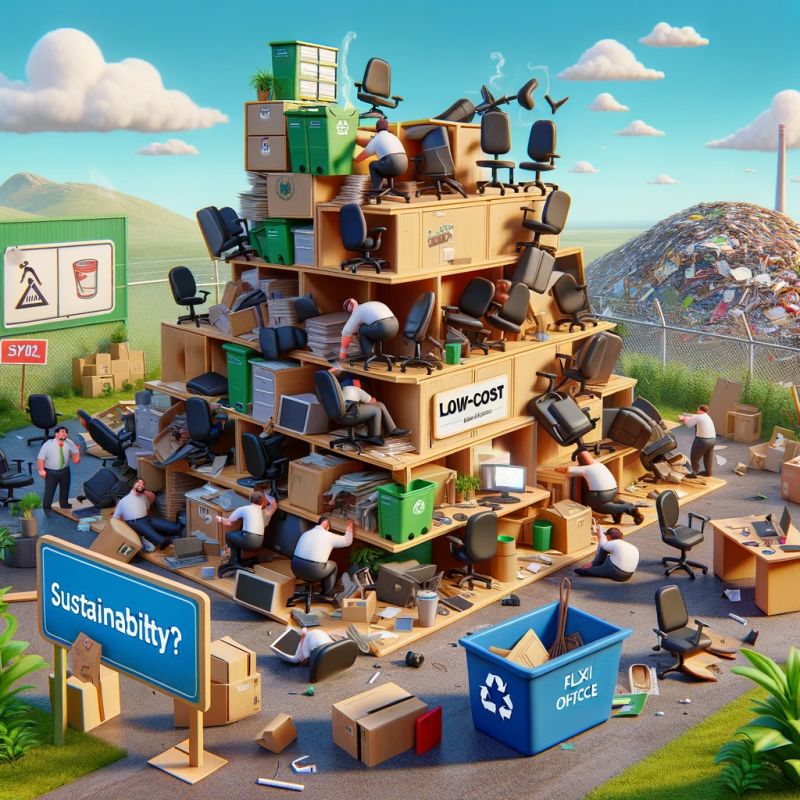
Knowledge Series: “Flexi Offices & Low_Cost Furniture – The Hidden Sustainability Crisis
You wouldn’t throw away your office every year—so why do we treat office furniture as disposable?
As FlexiOffices and coworking spaces boom, so does the demand for low-cost, fast furniture. While these setups are great for cost-cutting, they come with a massive environmental price tag—landfill waste, deforestation, and rising carbon emissions.
📊 The Hidden Environmental Cost of Flexi Office Trends
🔹 Furniture Waste Explosion
✔️ Over 12 million tons of furniture end up in landfills yearly in the US alone. (EPA, 2024)
✔️ 90% of discarded office furniture is non-recyclable due to toxic glues and laminates. (Circular Economy Report, 2024)
✔️ RealityCheck: The average lifespan of cheap office furniture? Just 5 years.
🔹 Deforestation & Resource Drain
✔️ The furniture industry drives 60% of illegal logging globally. (WWF, 2024)
✔️ One desk = One tree (50+ years to grow), yet most desks are discarded within 3-5 years. (FAO, 2024)
✔️ RealityCheck: The “cost-effective” furniture trend is accelerating deforestation and biodiversity loss.
🔹 Carbon Footprint & Toxic Chemicals
✔️ Many budget office setups rely on MDF and particleboard, releasing formaldehyde, a known carcinogen. (Environmental Health Report, 2024)
✔️ The furniture industry contributes 5% of global carbon emissions. (Carbon Trust, 2024)
✔️ RealityCheck: That “affordable” office setup could be an environmental nightmare.
🛠️ What Needs to Change?
✅ CircularEconomy Approach – Promote furniture leasing, second-hand markets, and repair initiatives.
✅ SustainableMaterials – Choose solid wood, bamboo, or recycled materials over disposable MDF.
✅ DesignForLongevity – Furniture should be modular, durable, and repairable—not landfill-bound.
🏆 KeyTakeaway
🌍 FlexiOffices could be both cost-efficient and sustainable with better material choices.
📉 They should be designed for reuse, not rapid disposal.
🚨 But they would be an environmental crisis if businesses prioritize cheap over green.
👉 Would you pay more for sustainable office furniture? Let’s discuss! 👇
Originally published on LinkedIn on 2025-02-21 14:47:52: https://www.linkedin.com/feed/update/urn%3Ali%3AgroupPost%3A2474261-7298715054588239872
🚨 “TheGreenParadox: If the Top100 Polluters Go Green, Do Economies Go Red?” 🌍💸🔥
71% of global emissions come from just Just100 companies—but what happens if they actually go green?
📊 TheHardNumbers: Who’s Driving Emissions?
🔹 100Companies = 71% of Global Emissions (CDP Carbon Majors Report, 2025)
🔹 TotalMarketValue = $15.4 Trillion (Forbes, 2025)
🔹 Sectors Dominating Emissions:
✔️ Oil & Gas (ExxonMobil, Shell, Aramco, BP, Reliance) – 52% of global industrial CO₂.
✔️ Coal Giants (ChinaEnergy, Peabody, Glencore) – 14% of all emissions, powering entire nations.
✔️ Steel & Cement (ArcelorMittal, Holcim, TataSteel, JSW) – 8% of emissions, critical to infrastructure.
✔️ Shipping & Aviation (Maersk, Boeing, Delta, Emirates) – 5% of emissions, enabling global trade.
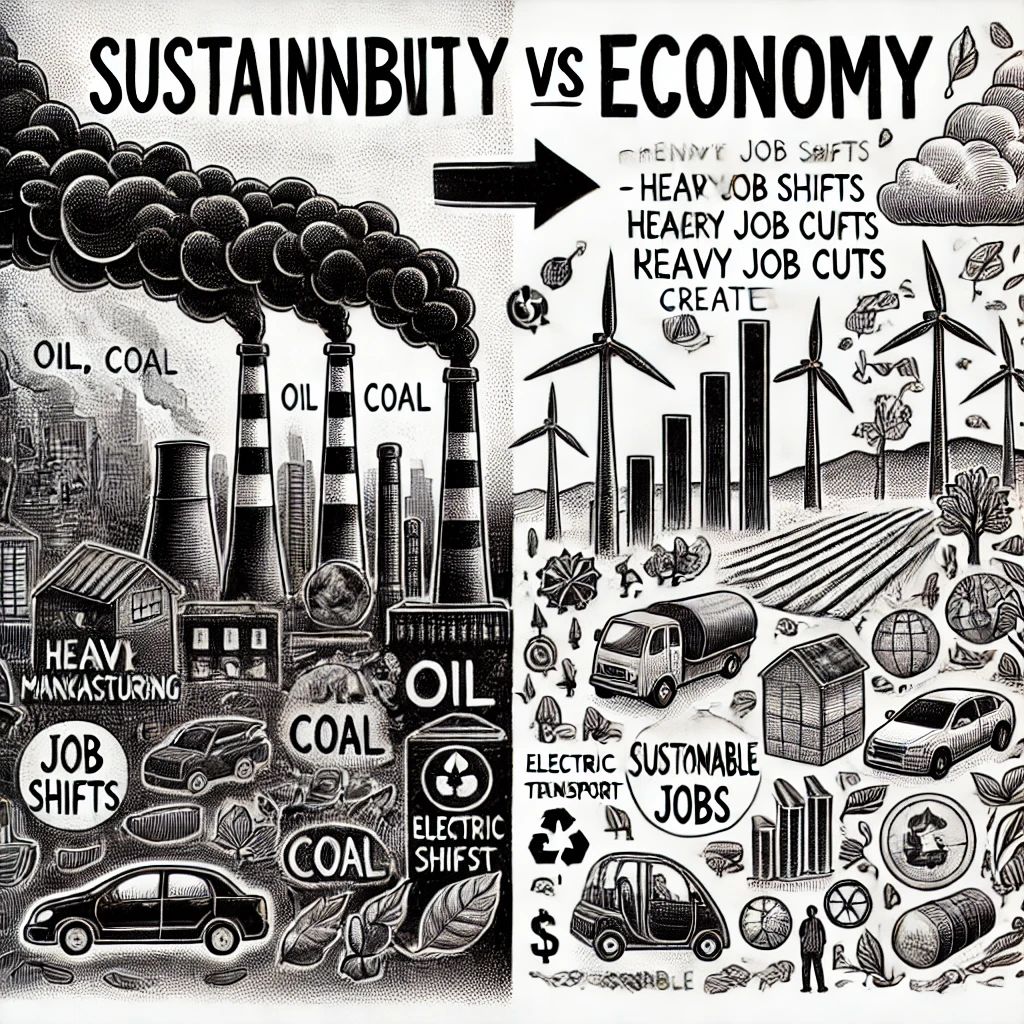
🚨 RealityCheck: Transitioning these industries overnight would shake economies to the core.
💰 TheEconomicCrashPotential
🔻 JobLosses in FossilFuel Sectors – 34M jobs globally depend on oil, coal, and heavy industries. (ILO, 2025)
🔻 GDPImpact on EmergingMarkets – India, China, and Indonesia rely on fossilfuels for 20-35% of GDP. (World Bank, 2025)
🔻 SupplyChain Disruptions – 42% of global logistics, steel, and chemicals are tied to high-emission industries. (McKinsey, 2025)
🔻 EnergyTransition Costs – Full decarbonization needs #$275T investment by 2050—but who’s paying? (IEA, 2025)
📌 TheDilemma: Accelerating sustainability risks a financialcrisis, while delaying it fuels climate disaster.
🔄 IsThereAMiddlePath?
🏆 IndustriesFindingBalance:
✅ SaudiAramco’s CarbonCapture Push – #$50B invested, but still expanding fossilfuel extraction.
✅ Tesla & BYD’s EVRevolution – EVs now 18% of global carsales, but lithiummining is a sustainability disaster.
✅ GreenSteel Investments (Hybrit, H2GreenSteel) – Promising tech, but adoption is too slow.
🚨 TheProblem: Green initiatives often don’t move fast enough—or they create new environmental costs.
🏆 KeyTakeaway: The TradeOff No One Wants to Talk About
📌 GoingGreen could be an economic revolution if planned strategically.
📌 ItShouldBe a shift that protects jobs, not eliminates them overnight.
📌 ItWouldBe an economicdisaster if industries collapse before sustainable alternatives scale.
👉 CanTheWorldAffordToDecarbonize without crashing economies? Drop your insights below! 👇
Originally published on LinkedIn on 2025-02-20 03:57:07: https://www.linkedin.com/feed/update/urn%3Ali%3AgroupPost%3A82951-7298188896939479040

