Watts, What-Ifs & UnfireableCareers — From Stranded Assets to GreenSkillsets
UnpopularOpinion:
Everyone wants an “AI job” or a “climate job”, but a lot of careers are still running on old wattage.
By Dr. Anju Sharma | MrsSustainability | KtalystInsights
In a turbo-voltage world, an old-wattage career is just another stranded asset.
We love talking megawatts, gigafactories, net-zero PPTs.
Cute.
The real alpha move?
People who turn molecules into megatrends and policies into paycheques without needing a TED Talk.
The world’s changing; we’re still charging at 2G wattage while Gen Alpha runs on turbo voltage, turning passion into fashion every two years.
If you can’t leave the manufacturing line, at least upgrade your design before they swipe past your decade-old settings.
Reality_Check
💸 ~USD 4.1T green investment potential by 2047
👷♀️ Tens of millions of green / greenish jobs
🧑🏭 A sliver are truly “green”, some are highcarbon
⚙️ Most of us sit in the greyzone → perfect for a career recolour, not a restart.
Yet we still hire oneSustainabilityPerson
and expect them to fix 40years of cheap carbon. “The real layoff risk isn’t AI. It’s staying fossil in a green world.
The_Green_Job_Stack
DevilAdvocateAsks: okay, but can you…
✅ Speak PFAS & P&L in one meeting (toxic + topic).
✅ Use LCA to kill bad ideas, not just decorate reports.
✅ Treat Scope 3 like a lifestyle, not a footnote.
✅ Explain “just transition” to plant, policy and PE without changing your ethics.
That’s the stack: Courage + Chemistry + Cashflows.
> “Your job title won’t save you. Your carbon + cashflow IQ might.
You don’t need a new life.
You need a Green Upgrade Pack: carbon in costs, circular in products, climate risk in strategy.
Sunday_Devils_Question 🌱😈
If India does create tens of millions of green jobs by 2047 (or just gets “green-ish”)…
👉 Which ONE “green upgrade” are you betting your career on?
Pick one & comment:
✅ “Unfireable because I get carbon + cashflows.
✅ “Unfireable because I translate plant floor → boardroom.
✅ “Unfireable because I make AI, data & sustainability talk.
😅 “Still on fossil KPIs. Need a reboot.
Then add your role + industry and tag 1–2 people who shouldn’t sleep on this transition.
Spiciest honest answers get a reply and a repost.
🩺 Disclaimer: If this post makes no sense, you don’t need a like you need an Upskill Certificate ASAP and a Dr. Anju Sharma Career Health Check before the market does it for you.
Originally published on LinkedIn on 2025-11-30 05:26:56: https://www.linkedin.com/feed/update/urn%3Ali%3AugcPost%3A7400767267644280832
KtalystInsight | Power Shift: The Inequality of the Energy Transition
The climate crisis isn’t just about emissions—it’s about equity. Who leads the energy transition, and who gets left behind?
Earth will divorce humanity if this imbalance continues. Custody of rivers, forests, and skies won’t be negotiable — and the compensation will be billed in the heat of Earth’s fever: floods, famines, and lost futures.” Dr. Anju Sharma
Trend Data & Forward Momentum
1. In 2024, total global energy investment exceeded US $3 trillion, with $2 trillion in clean energy—double fossil fuels (IEA). By 2030, this must rise above $4 trillion annually to stay on a Net Zero path.
2. Renewable capacity expanded by a record 585 GW in 2024 (IRENA). By 2030, renewables could triple vs. 2020 levels, supplying ~50% of global electricity.
3. Only 15% of clean energy finance reached developing nations (ex-China), despite them being most climate-vulnerable (UNCTAD, IEA).
4. Africa’s clean energy investment hit $40B in 2024, but annual needs are $200–250B by 2030. Capital costs remain 2–3× higher than OECD markets (IEA).
5. Global fossil fuel subsidies peaked at $7T in 2022 (IMF). Without reform, they could still exceed $4T annually by 2030, undermining progress.
The Challenges
1. Financing Disparity – Higher cost of capital makes clean projects unviable in Africa & South Asia.
2. Policy Asymmetry – The EU’s Fit for 55 and the U.S. IRA contrast sharply with weaker policy frameworks in many emerging markets.
3. Technology Gaps – Hydrogen, storage, and digital grid technologies remain concentrated in developed economies.
4. Investment Inequity – Two-thirds of the world’s population receives only 15% of climate-related investment.
5. Carbon Colonialism – Border carbon tariffs and trade barriers risk penalizing the Global South rather than enabling its transition.
The Way Forward
1. Redirect Subsidies – Shifting even 10% of fossil subsidies would close renewable finance gaps in developing nations.
2. Just Transition Funds – Invest in reskilling, local supply chains, and green job creation.
3. Technology Partnerships – Democratize hydrogen, storage, and carbon capture through global cooperation.
4. APRA Scaling – Lift Africa’s renewables from 56 GW (2022) to 300 GW by 2030 (COP28 target).
5. Global Clean Power Alliance – Mobilize G20 efforts to triple renewables and double efficiency by 2030.
KtalystInsight
The transition is inevitable. But unless equity is hardwired, the Global South will inherit climate risks without compensation.
Originally published on LinkedIn on 2025-09-05 02:08:52: https://www.linkedin.com/feed/update/urn%3Ali%3AgroupPost%3A2474261-7369552065573875713
KtalystInsight
SunTameAbility is not Sustainability
When every rooftop wants a piece of the sun, who’s clearing the mess when it’s done?
SolarPower is shining everywhere—from Texas to Telangana, Berlin to Bhopal—but no one’s talkingtrash. Literally.
While the panels keep beaming, the planet is bracing for a new kind of pollution: SolarHastePollution
🌍 GloballyGlowing
The world crossed 1 TW of solar capacity in 2023—
But by 2050, we’ll be staring at 78 million tonnes of PV waste.
🇪🇺 EuropeLeads
France’s PV Cycle program recycles panels under EPR laws—a bright spot in circular success.
🇺🇸 USAInProgress
Big installs, small legislation.
Only Washington State has formal PV waste rules. The rest? Still sunny-side up.
🇨🇳 MadeInChina
China makes 80% of global panels, but panel recycling is still in the shadows—costs and clarity are the barriers.
🇮🇳 IndiaOnEdge
With solar soaring, Budget 2025 finally called for mandatory take-back via E-Waste Rules.
But infrastructure? Still MIA.
🌍 AfricaUnplugged
Off-grid solar boom, on-grid waste silence.
No disposal plans, no policies. The sun sets with no exit ramp.
🇦🇺 AustraliaWarns
Highest rooftop solar uptake per capita, but heading toward 100,000+ tonnes of waste by 2035—with limited recycling options.
KtalystQuote
You can’t call it clean energy if it leaves behind a dirty trail.
How to Make SolarTruly Sustainable?
♻️ DesignForDisassembly: Panels that come apart cleanly, recycle easily
📜 EPREverywhere: Global take-back and recycling mandates
🏗️ BuildWasteInfra: Not just farms—build solar disposal systems
🔍 TrackTheTech: Use digital IDs for full lifecycle tracking
💰 GreenExitIncentives: Give points in bids for end-of-life plans
Let’s stop chasing the sun blindly.
The future is bright—but only if the exit plan is clean.
SolarWaste | CircularEconomy | JustTransition | GreenPolicy | KtalystKeystone | CleanEnergyRealityCheck | SunsetClause | EnergyWithAnExit | TechForTrash | PlanetOverPanels
Originally published on LinkedIn on 2025-05-17 14:07:54: https://www.linkedin.com/feed/update/urn%3Ali%3AgroupPost%3A2368335-7329507961687445505
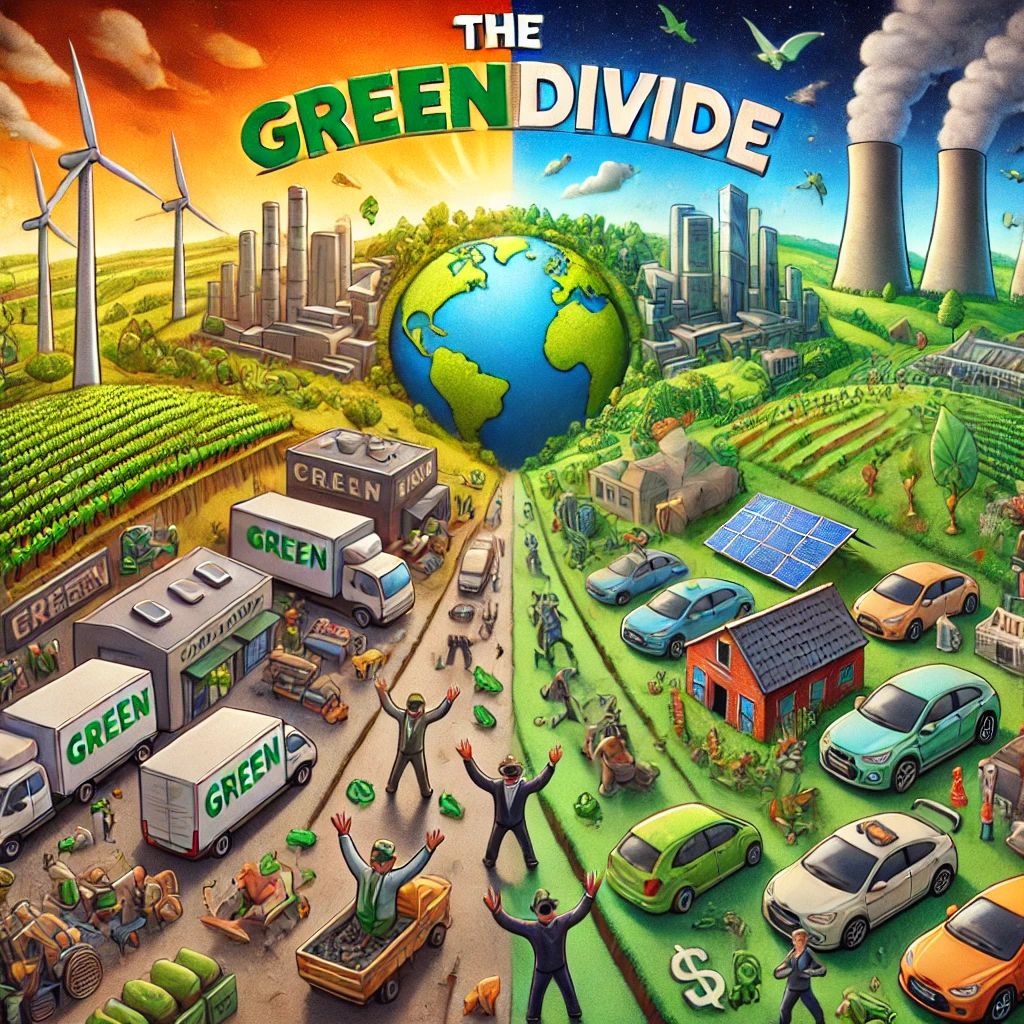
🚀 “The Dark Side of Sustainability: Are We Creating a Green Divide?” 🌍⚖️💰
Sustainability for whom? If green solutions leave half the world behind, is it truly sustainable?
As the world pushes for NetZero, EVs, CarbonTaxes, and SustainableFinance, a new reality emerges—TheGreenDivide.
📊 The Hidden Cost of Going Green
🔹 EV Affordability Gap: The average EV costs 50-70% more than petrol/diesel cars in India, making them a luxury, not a necessity. (IEA, 2024)
🔹 Carbon Taxes & Inequality: EU’s Carbon Border Adjustment Mechanism (CBAM) is expected to cost developing economies $16B annually as they struggle to decarbonize. (IMF, 2024)
🔹 Green Job Displacement: 2.7 million fossil fuel jobs are set to be lost globally by 2030, while only half will be replaced by green jobs. (WEF, 2024)
🔹 Rural Access to Sustainability: While urban India talks about solar panels & ESG investing, only 7% of rural households have access to renewable energy. (MNRE, 2024)
📌 RealityCheck: If sustainability leaves millions behind, is it truly progress?
💰 Who Wins & Who Pays?
🏆 Winners: Corporations & Wealthy Nations
✔️ Carbon Credit Traders: The voluntary carbon market hit $2B in 2024, but 80% of credits are purchased by MNCs to offset emissions instead of reducing them. (Bloomberg, 2024)
✔️ Developed Nations: US & EU firms control 90% of critical minerals used in batteries, keeping the supply chain monopolized. (World Bank, 2024)
✔️ Tech & EV Giants: Companies like Tesla & BYD gained over $400B in green subsidies, while developing nations struggle to fund clean tech. (IEA, 2024)
❌ Losers: SMEs, Emerging Markets & The Poor
🔻 SMEs: Over 60% of Indian MSMEs cannot afford ESG compliance costs, risking lost global contracts. (FICCI, 2024)
🔻 Developing Nations: Bangladesh & Vietnam are losing textile exports due to high sustainability requirements from EU buyers. (OECD, 2024)
🔻 Consumers: Sustainable products cost 30-50% more, pricing out low-income families. (McKinsey, 2024)
📌 RealityCheck: Green capitalism is real. Who’s paying the price?
📜 What Needs to Change?
🔹 Equitable Green Policies: Climate financing must prioritize developing nations.
🔹 Accessible Green Tech: EV & solar subsidies should be focused on affordability for the masses.
🔹 Real ESG Accountability: Stop “green compliance” from becoming a pay-to-play game.
🔹 Inclusive Sustainability: Policy reforms must address rural electrification, SME funding & job displacement.
🏆 KeyTakeaway: Sustainability Shouldn’t Be a Privilege
📌 Sustainability could be the great equalizer—if green policies support all economies.
📌 It should be accessible, not a corporate power game.
📌 If it remains profit-driven, it would be another tool of economic disparity.
Originally published on LinkedIn on 2025-02-24 07:22:32: https://www.linkedin.com/feed/update/urn%3Ali%3AgroupPost%3A82951-7299690143739764736

