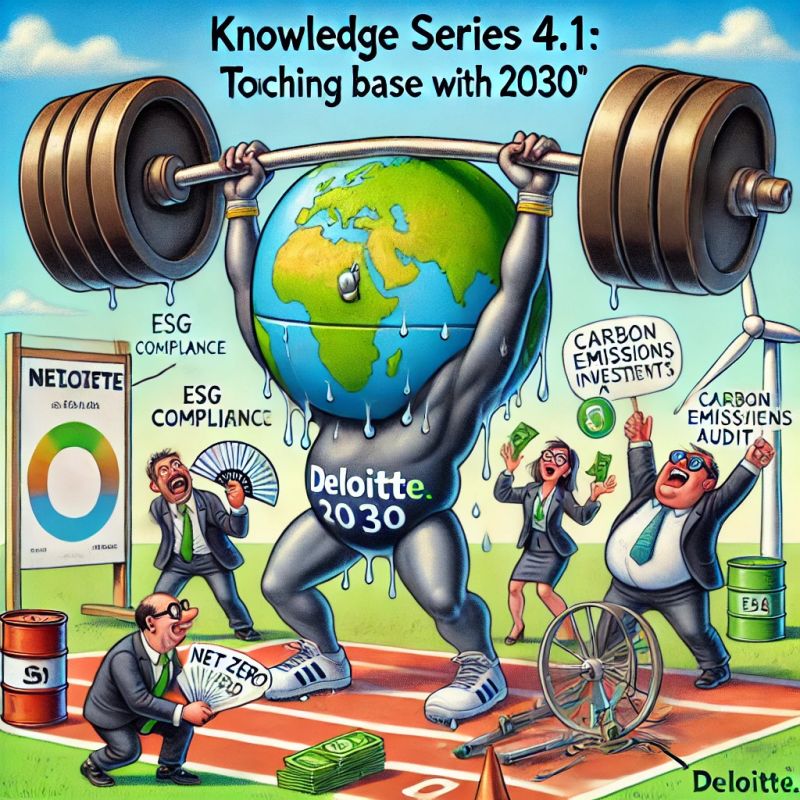
KnowledgeSeries 4.1: Deloitte – Touching Base with Sustainability 🌍♻️
🚀 Deloitte’s Green Footprint
One of the Big Four, Deloitte is at the forefront of ESG and sustainability with bold goals, smart strategies, and data-driven outcomes.
🌱 Vision for a Sustainable Future
> “Sustainability is no longer an option—it’s an imperative.” – Deloitte Insights
Operating in 150+ countries, Deloitte offers consulting, strategy, and finance services to help businesses navigate climate risks and ESG challenges.
Core_Focus_Areas:
✅ Net Zero & Decarbonization
✅ ESG Strategy & Governance
✅ Sustainable Finance
✅ Reporting & Impact Metrics
📊 Key Numbers That Matter
Net_Zero by YR2030
82% drop in travel emissions since 2019
47% cut in energy use across offices
100% renewable energy goal by 2025
$1B for Sustainability Services
Advising 1000+ global firms
Co_developed WEF ESG Metrics
People & Purpose
50% carbon footprint reduction by 2030
40+ CSR hours/employee annually
50% women in leadership target
📑 Insights from Deloitte Reports
2024 Sustainability_Action_Report
98% of companies progressing on ESG goals
56% formed ESG taskforces
2022 CxO Report
89% execs see climate as an emergency
67% increased ESG investments
FTSE 100 ESG Recalibration
46% companies revised their ESG scores
SDG Impact
Aligned with 12 of 17 SDGs, focusing on climate, consumption & governance
🔧 Deloitte’s 4-Step ESG Playbook
1️⃣ Measure carbon & ESG impact
2️⃣ Optimize operations for sustainability
3️⃣ Decarbonize with tech & renewables
4️⃣ Report to global standards (GRI, TCFD, WEF)
The Sustainability Reporting Catalyst helps companies comply across 60+ countries
🔭 What’s Next?
Green Finance innovation
AI for ESG data
Circular economy solutions
Renewable energy scaling
🌱 Deloitte isn’t just consulting on sustainability—it’s living it.
Next in KnowledgeSeries 4.1: Deloitte’s Green Power Play! ♻️
Which Big Four firm is leading the ESG charge? Let us know!
Originally published on LinkedIn on 2025-03-21 08:55:37: https://www.linkedin.com/feed/update/urn%3Ali%3AgroupPost%3A7041748-7308773265890566146
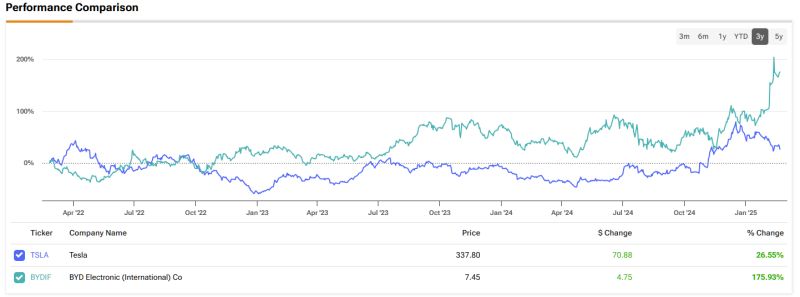
🚀 Global EV Investments Hit $100B+: Who’s Leading the Charge? BYD, Hyundai, Geely and Suzuki ⚡🌍
With EV sales projected to hit 20M by 2025, automakers & governments are pouring #$100B+ into manufacturing, batteries, & infrastructure worldwide. Here’s where the money is flowing:
📊 Country-Wise EV Investment Breakdown (2024-2025)
🇺🇸 United States – $20B+ Invested
🔹 Tesla – $3B investment, 500K EVs/year target, low-cost model planned (~₹20-25L).
🔹 Hyundai & Kia – $7.6B EV & battery plant in Georgia.
🔹 Volkswagen – $7.1B to expand North American EV offerings.
🇮🇳 India – $10B+ Expansion
🔹 Tesla – Finalizing retail entry in Delhi, Mumbai, Bengaluru.
🔹 Tata Motors – 400K+ charging stations planned by 2027.
🔹 Mahindra – New BE 6e & XUV 9e electric SUVs (500+ km range, $22K+ price).
🔹 Suzuki – $1.3B EV factory in Gujarat, launching 2025.
🇨🇳 China – $25B+ Global Expansion
🔹 BYD – $1B factory in Indonesia, 150K EVs/year.
🔹 Nio & Xpeng – Expanding aggressively into Europe.
🔹 Geely & Volvo – Collaborating on premium electric vehicles.
🇮🇩 Indonesia – $8B+ in EV Investments
🔹 BYD, GAC Aion, Citroën – New factories, benefiting from 15% tax cuts.
🔹 Nickel Processing – Critical battery supply chain boost.
🇲🇾🇻🇳 Malaysia & Vietnam – $5B+ Rising Hubs
🔹 Great Wall Motors, SAIC Motor – Relocating production to bypass tariffs.
🔹 VinFast – $2.5B expansion for global EV production.
🇯🇵 Japan – $6B+ in Advanced Tech
🔹 Toyota & Suzuki – Launching E-Vitara EV (India-Japan-Europe).
🔹 Idemitsu Kosan – $143M lithium sulphide battery plant, solid-state batteries by 2027-28.
🇰🇷 South Korea – $20B+ Battery & EV Push
🔹 LG Energy Solution – $5.2B expansion in battery manufacturing.
🔹 Hyundai – $16.5B, 1.44M EVs/year target by 2030.
🇪🇺 Europe – $10B+ Scaling Production
🔹 BYD – New Hungary plant for electric buses & passenger EVs.
🔹 Mercedes-Benz & BMW – Investing in solid-state battery research.
🔥 Key Takeaways
📌 EV sales up 42% YoY – 20M expected by 2025 (vs. 14M in 2023).
📌 Battery supply chain shifts – Indonesia, South Korea, & Japan leading.
📌 #$100B+ global investment – Who will dominate the next EV revolution?
📢 Which country is making the smartest EV investments? Let’s discuss! 👇

Originally published on LinkedIn on 2025-02-27 16:45:40: https://www.linkedin.com/feed/update/urn%3Ali%3AgroupPost%3A2474261-7300919026338168832
🚨 CaseStudyAnalysis: “Volkswagen’s $1.4 Billion Tax Clash in India – A Wake-Up Call for MNCs & Policymakers?” 🚗💸
A stable tax system builds investor trust, but unpredictability drives them away.
Volkswagen, one of the world’s largest automakers, is battling a massive $1.4 billion tax dispute with Indian authorities over misclassification of imported car parts. This case is not just about one company—it reflects systemic tax challenges that impact FDI, business confidence, and India’s economic reputation.
🔍 WhatWentWrong?
📌 RegulatoryAmbiguity: India’s tax system lacks clear, consistent classifications. Volkswagen’s import methods were accepted for years before being reclassified.
📌 RetrospectiveTaxation: India has a history of sudden tax demands on MNCs (Vodafone – $2B, CairnEnergy – $1.2B), eroding investor trust. (Source: Reuters, 2025)
📌 LengthyLitigation: Tax disputes in India take an average of 7-10 years to resolve, delaying investments. (Source: EconomicTimes, 2025)
📌 PolicyShiftsWithoutClarity: Frequent rule changes without transition time force companies into costly legal battles.
🚀 HowIndiaCanImprove?
✅ PredictabilityInTaxation: Stable, transparent tax structures can boost FDI inflows beyond $80B/year. (DPIIT, 2025)
✅ Fast-TrackDisputeResolution: A dedicated tax tribunal for MNCs could cut dispute timelines by 60%. (NITIAayog, 2025)
✅ CustomsClarity: Pre-rulings on tax classifications will reduce compliance risks for 1,000+ global firms operating in India.
✅ InvestorConfidenceReforms: Proactive government engagement with MNCs could prevent capital flight (like SEAsia gaining $25B from exiting investors). (IMF, 2025)
✅ EaseOfDoingBusiness: India improved from Rank142 (2014) to Rank63 (2024) but still struggles with tax complexity. (WorldBank, 2025)
⚖️ TheBiggerPicture
Volkswagen’s case isn’t just about one company—it’s a test for India’s tax and regulatory future. Striking the right balance between RevenueMaximization and InvestorTrust is crucial for long-term economic stability.
💬 What’s your take? Are tax disputes a cost of doing business in India, or can better policies fix this? Let’s discuss! 👇
Originally published on LinkedIn on 2025-02-20 11:41:29: https://www.linkedin.com/feed/update/urn%3Ali%3AgroupPost%3A95089-7298305762500501504
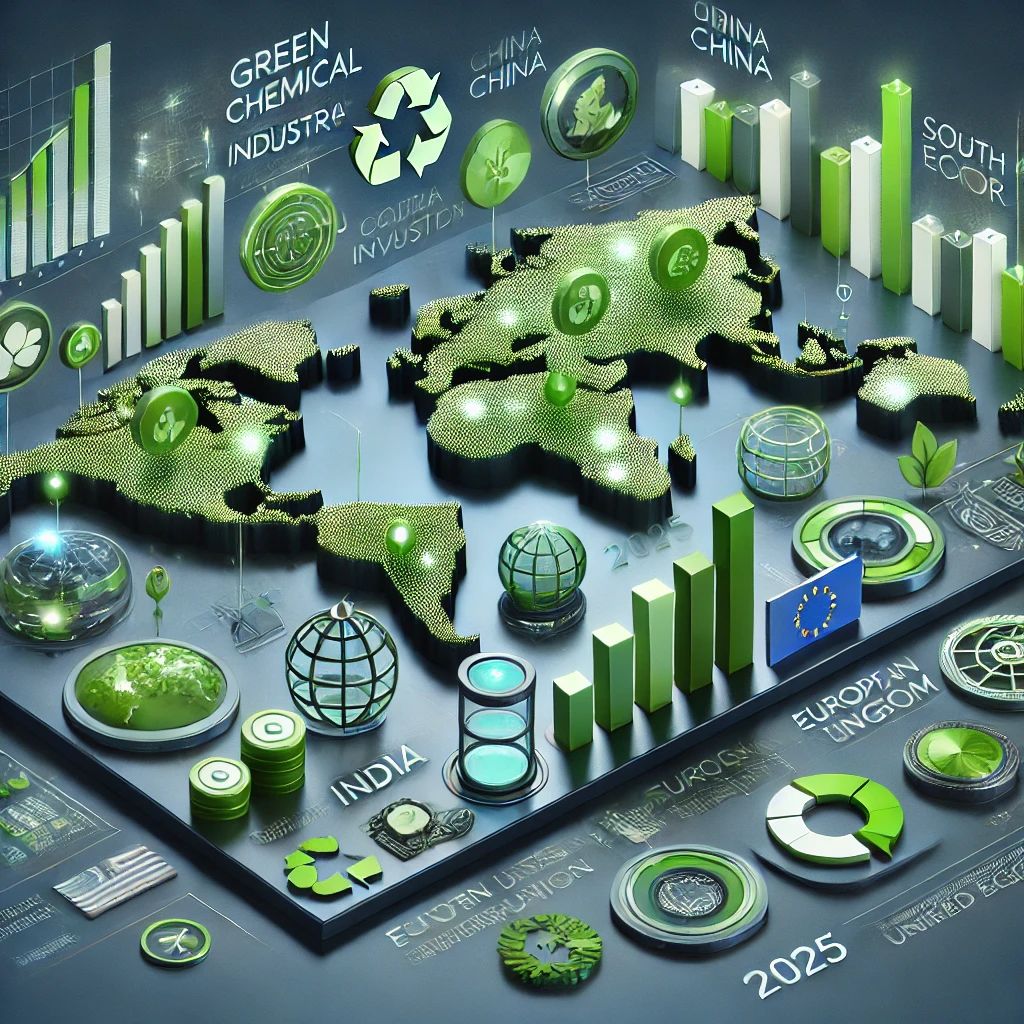
Global Chemical Industry 2025: Challenges, Growth, and the Green Transition
Additonal_costs_for_GreenChemcals_20%???
The USD 6.3 trillion global chemical industry is navigating a pivotal year, facing regulatory hurdles, rising costs, and the demand for sustainability. With green investments surging, YR2025 marks a transformative period for this vital sector.
📊 India
🌟 $383 billion market projected by 2030.
🌟 Environmental compliance costs up 20%.
🌟 Part of Asia-Pacific’s $51.41 billion green chemical market in 2024.
🧪 China
🌟 70% of hazardous producers impacted by stricter safety laws.
🌟 Sustainability spending increased by 15% in 2025.
🌟 Driving Asia-Pacific green market to $137.73 billion by 2034 (CAGR 10.35%).
🌱 Japan
🌟 9.6% CAGR in green chemical investments (2023-2033).
🌟 Prioritizing hydrogen and clean energy for carbon neutrality by 2050.
🌿 South Korea
🌟 15% YoY rise in K-REACH compliance costs.
🌟 Major investments in AI-driven carbon capture technologies.
💧 United States
🌟 PFAS compliance costs exceed $1 billion.
🌟 Green market grew from $64.52 billion (2023) to $71.82 billion (2024), projected to reach $141.33 billion by 2030 (CAGR 11.85%).
🌍 European Union
🌟 REACH compliance costs increased by 30%.
🌟 $50 billion invested in circular economy initiatives.
🌟 Green market projected to reach $387.97 billion by 2034.
⚡ United Kingdom
🌟 Production output dropped 10% since 2021 due to high energy costs.
🌟 Ineos halts ethanol production at Grangemouth.
Global Trends in 2025
📈 Energy Costs
🌟 Increased by 20%-30%, challenging operational efficiencies.
🛠️ Compliance Challenges
🌟 Over 50% of companies report regulation as their top concern.
🌱 Sustainability Investments
🌟 Expected to exceed $150 billion, emphasizing green chemistry and circular economy goals.
The Road Ahead
🌟 The industry’s transformation depends on innovation, collaboration, and green investment strategies. With strategic actions, the chemical sector is poised to lead in shaping a sustainable, resilient global economy.
Let’s connect to build a sustainable future together! 🌍✨
Originally published on LinkedIn on 2025-01-13 16:33:25: https://www.linkedin.com/feed/update/urn%3Ali%3AgroupPost%3A3880479-7284608488431906816
Namaste🌞India
Sun Shines Bright on India’s Chemical Industry with Solar Energy
India’s solar energy revolution isn’t just about generating clean energy; it’s also creating a golden opportunity for the chemical industry, which supplies critical materials like polysilicon, silver paste, and encapsulation films. With record-breaking investments, cutting-edge technology partnerships, and government incentives, the chemical sector is positioned to power India’s renewable energy journey.
🏢 Key Industry Players
Tata Chemicals: Focused on high-performance coatings and encapsulation films.
Waaree Energies: Pioneering durable, recyclable solar modules.
Adani Solar: Strengthening in-house chemical production for vertical integration.
Reliance Industries: Partnering with global firms to enter polysilicon manufacturing.
💰 Key Investments in YR2024
🔹 Adani Group: ₹7.5 trillion ($88.53 billion) in Rajasthan, including 100 GW solar projects.
🔹 Tata Power Solar: ₹43 billion invested in a 4.3 GW solar module facility in Tamil Nadu.
🔹 Hero Future Energies: $20 billion to expand renewable capacity to 30 GW by 2030.
🔹 FDI Surge: $3.76 billion in FY 2023-24, a 50% YoY growth in renewable energy.
🤝 Key Technology Partnerships
🔹 Waaree Energies & IIT Bombay: Researching cost-effective perovskite solar cells.
🔹 Reliance Industries & NexWafe (Germany): Developing low-cost polysilicon technologies.
🔹 Tata Chemicals & JohnsonMatthey (UK): Innovating sustainable encapsulation materials.
📍 Geographic & Global Challenges
🔸 Extreme Weather: Heatwaves demand heat-resistant coatings; cyclones call for weatherproof materials.
🔸 Regional Disparities: Solar adoption thrives in western/northern states but lags in the northeast.
🔸 Global Competition:
China dominates polysilicon production.
Southeast Asia offers cost-competitive solar materials.
🔸 Resource Scarcity: Shortages of silver and polysilicon create supply chain challenges.
🔸 Sustainability Demands: Global buyers require eco-friendly and low-carbon solar panels.
🚀 Opportunities for India’s Chemical Industry
🔹 Scale domestic manufacturing of critical materials.
🔹 Develop climate-resilient coatings tailored for diverse Indian geographies.
🔹 Leverage green technology partnerships for innovation.
🔹 Expand into underdeveloped regions with decentralized solar projects.
🌍 Conclusion
The Indian chemical industry has a pivotal role in powering the solar energy boom. By addressing global challenges, leveraging investments, and fostering innovation, it can solidify its position as a global leader in solar-related chemical manufacturing.

Originally published on LinkedIn on 2024-12-13 18:37:46: https://www.linkedin.com/feed/update/urn%3Ali%3AgroupPost%3A3880479-7273405759328038912
NamasteShiningIndia YR2024:
Milestone Year for Solar Investments in India
India’s solar energy journey reached new heights in 2024, with record-breaking investments and landmark collaborations paving the way for a cleaner, greener future. Here are the highlights:
🌞 Tata Power: Announced a ₹1.2 trillion ($14.32 billion) investment over the next decade to develop 10 GW of renewable energy capacity in Rajasthan.
🌞 Adani Green Energy: Secured a 25-year bid to supply Maharashtra with 6,600 MW of power, including 5,000 MW of solar energy from its Khavda, Gujarat park.
🌞 Jakson Green: Closing in on a $476 million fundraise to expand its capacity by 1 GW by 2026.
🌞 State_Level Initiatives: Rajasthan hosted the Rising Rajasthan Investment Summit 2024, attracting Saudi Arabian investments in solar and wind energy.
🌞 Global Collaborations: Technology giants like Keppel Ltd. partnered with Tata Power and JBM Group to advance India’s energy transition with innovative solutions in e-mobility and smart energy systems.
India’s Solar Potential is Shining Bright
With over 300 sunny days annually, India reached 92.1 GW of solar capacity by October 2024, contributing 59% of its renewable energy portfolio. The ambitious target? 500 GW of renewable energy capacity by 2030.
Challenges Under the Sun
Despite the progress, India faces obstacles:
🔸 Land Conflicts: Solar farms require extensive land, often leading to disputes.
🔸 Storage Gaps: Intermittent solar energy needs robust storage solutions.
🔸 Import Dependency: Heavy reliance on imported solar panels poses risks.
🔸 Financial Strain: State electricity boards often delay payments to producers.
🔸 Sustainability Concerns: Recycling end-of-life solar panels remains a challenge.
Innovations Lighting the Way Forward
The solar sector is embracing exciting advancements:
✅ Floating Solar Farms: Utilizing reservoirs like Kerala’s Banasura Sagar.
✅ Agri-Photovoltaics: Integrating farming with solar energy generation.
✅ Hybrid Systems: Combining solar with wind or hydro for consistent power.
The Road Ahead
India is on the brink of a solar revolution, with 2024 marking a turning point. Unprecedented investments, robust policies, and innovative technologies are setting the stage for India to lead the global renewable energy movement.
☀️ The question is: Will India rise to the occasion and cement its place as a solar energy superpower?

Originally published on LinkedIn on 2024-12-13 18:13:24: https://www.linkedin.com/feed/update/urn%3Ali%3AgroupPost%3A2474261-7273399624835432448
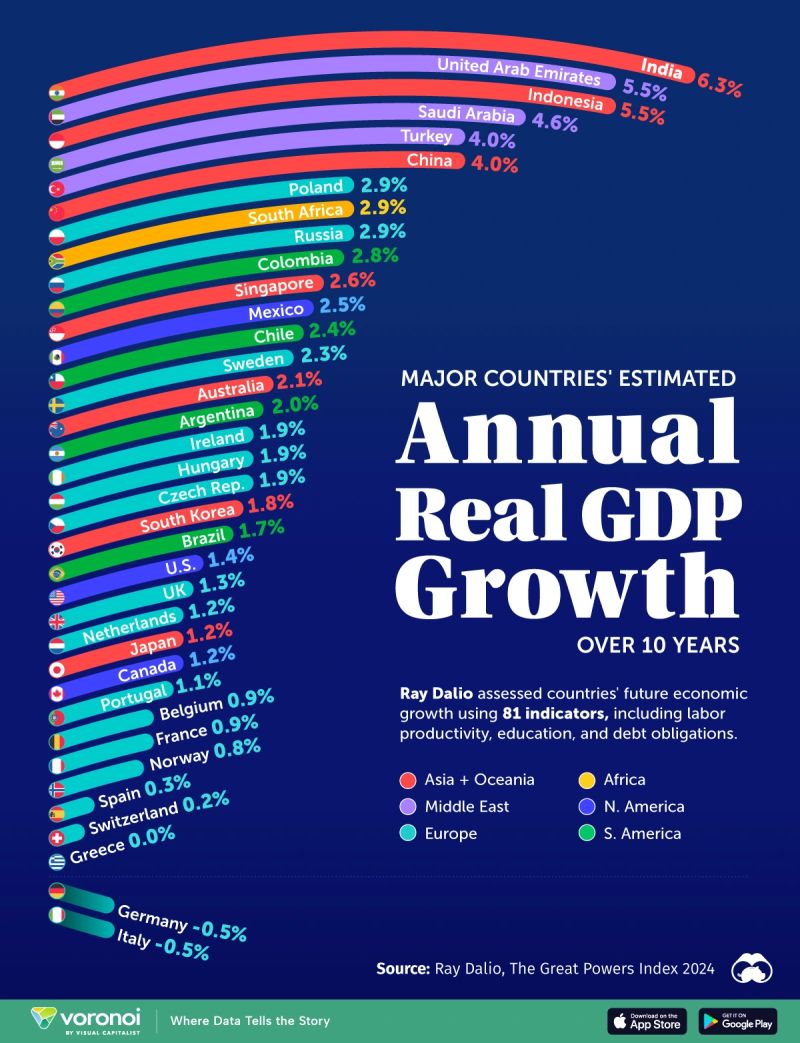
NamasteIndia’s Economic_Ascent: Leading_Among_Unequals and the Path to Higher Per Capita Income
India is projected to lead global economic growth over the next decade, driven by a youthful population, significant infrastructure investments, policy reforms, and rapid technological adoption. This positions India as a major economic powerhouse.
Digging_deeper Per_Capita_Income_Comparison
1. India:
Current_$2,500
Projected (2034): Significant rise, but lower than advanced economies.
2. China:
Current: $12,000
Projected (2034): Higher than India.
3. Vietnam:
Current: $3,500
Projected (2034): Potentially surpassing India.
4. Bangladesh:
Current: $2,200
Projected (2034): Likely below India.
5. Philippines:
Current: $3,500
Projected (2034): Higher than India.
India_Path to $12,000 Per Capita Income
India’s per capita income is expected to reach $4,000 by 2030. Sustaining a 6-7% growth rate, it could take 20-25 years to reach $12,000, around 2050.
Influencing Factors
Continued economic reforms.
Investment in education and healthcare.
Leveraging technology.
Infrastructure development.
Conclusion
India’s growth highlights its potential to become a leading global economy. However, improving individual economic well-being remains a challenge, requiring sustained efforts in various sectors.
Originally published on LinkedIn on 2024-09-24 09:56:55: https://www.linkedin.com/feed/update/urn%3Ali%3Ashare%3A7244283652468043777
BPCL’s joint ventures with Sembcorp Green Hydrogen India and GPS Renewables involve a significant investment of #$1.5 billion USD. The projects are expected to be completed by 2030.
NamasteIndia initiatives are part of BPCL’s broader strategy to achieve net-zero emissions and support India’s energy transition. It’s encouraging to see such substantial investments in renewable energy and green hydrogen.
What are your thoughts on the timeline and investment amount?
Originally published on LinkedIn on 2024-09-12 17:36:19: https://www.linkedin.com/feed/update/urn%3Ali%3AgroupPost%3A2635374-7240050612158005249
NamasteIndia automaker Mahindra & Mahindra and China’s Shaanxi Automobile Group have agreed to set up a $3 billion joint venture to build a car manufacturing plant in India and are awaiting New Delhi’s approval.
Joint Venture: Mahindra & Mahindra (India) and Shaanxi Automobile Group (China)
Investment: $3 billion
Majority Stake: Mahindra & Mahindra
Location: Proposed in Gujarat, India
Focus: Manufacturing assembled cars, engines, and car batteries
Types of Vehicles: Electric vehicles (EVs), commercial vehicles, and passenger cars
Approval Status: Awaiting approval from New Delhi
Regulations: Subject to Indian government regulations on Chinese investments since 2020
This venture aims to boost India’s automotive industry and export capabilities, with a strong emphasis on electric and commercial vehicles.
Originally published on LinkedIn on 2024-08-09 20:16:34: https://www.linkedin.com/feed/update/urn%3Ali%3AgroupPost%3A2474261-7227769754013298688

