ESG Watch: Trump’s SEC Tightens the Noose on Sustainable Investing
📉 The ESG Backslide – What’s at Stake?
The U.S. sustainability landscape just took a sharp turn. The SEC under the Trump administration has introduced new rules that make it harder for ESG investors to hold companies accountable for climate and social impacts. The implications? A potential slowdown in sustainable finance and a rollback on climate progress.
🚨 Key Policy Shifts That Could Derail ESG Investing
🔻 Stricter Shareholder Proposals – Investors now need higher ownership thresholds to file resolutions on sustainability concerns. Fewer proposals mean companies are under less pressure to disclose ESG risks.
🔻 Weaker Disclosure Requirements – Corporations no longer need to publicly report climate-related financial risks, making it harder for investors to assess long-term sustainability performance.
🔻 Financial Institutions Backtracking – Fear of legal pushback has led major Wall Street players to scale back their net-zero commitments, signaling a retreat from climate-conscious investing.
📊 ESG in Decline? The Data Speaks
📌 $8.4 trillion – Total ESG-related assets in the U.S. (2023), expected to drop by 20% under new regulations.
📌 55% – Shareholder support for ESG resolutions in 2022. The new SEC rules make such resolutions significantly harder to file.
📌 3 out of 5 – Top U.S. banks that quietly exited climate finance alliances post-regulatory changes.
📌 40% of Fortune 500 companies – Now re-evaluating their sustainability targets due to regulatory uncertainty.
🌎 The Global Fallout – U.S. vs. The World
The U.S. is moving in the opposite direction of global markets:
✅ EU & UK: Tightening ESG regulations, forcing companies to disclose sustainability metrics.
❌ U.S.: Loosening rules, allowing companies to operate with less transparency on climate risks.
🌏 Emerging Markets: Seeing a boom in ESG investing, as capital shifts to regions with clearer regulatory frameworks.
🚀 The Future of ESG Investing – What’s Next?
💡 Adapt or Exit? Investors may shift focus to voluntary ESG frameworks or pivot to international markets with stronger sustainability policies.
⚠️ Lawsuits Incoming? Some shareholder groups are preparing legal challenges, arguing the SEC’s rollback puts both investors and the planet at risk.
🔄 Corporate Greenwashing? Without strict reporting, companies might fake sustainability commitments without real action.
🛡️ ESG Isn’t Dead Yet. Climate risks aren’t going away. Investors will find new ways to drive sustainable finance, even in a tougher regulatory environment.
🔗 Read More: Reuters Report
Originally published on LinkedIn on 2025-03-18 09:19:16: https://www.linkedin.com/feed/update/urn%3Ali%3AgroupPost%3A100646-7307692054954835969
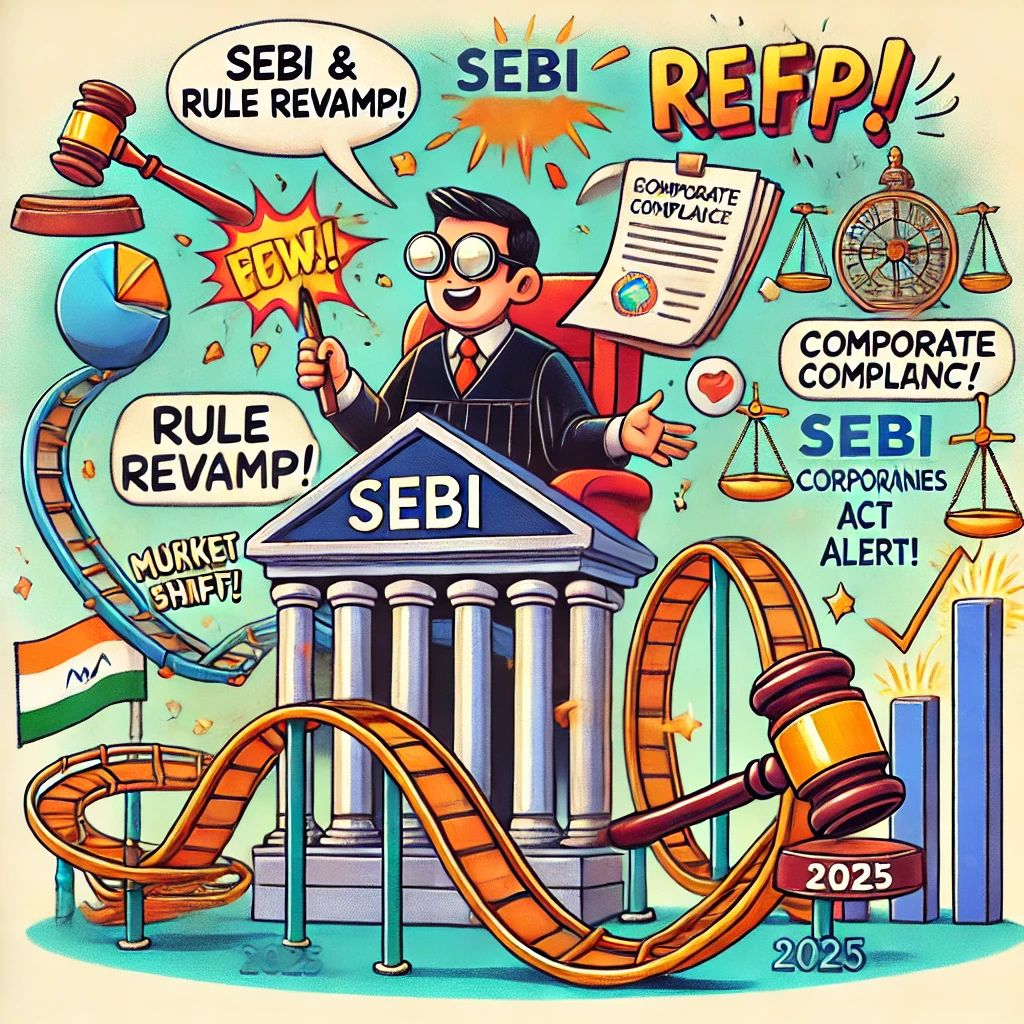
#️⃣ RegulatoryRadar | SEBI&#CompaniesAct: KeyChangesin2025YouNeedtoKnow 📜⚖
🚀 India’sregulatorylandscapeisevolving—areyouready? SEBI has rolled out major reforms in derivatives,mutualfunds,andinvestmentfunds, while global updates in companylaws are reshaping compliance norms.
📢 KeySEBIReforms(India,2025)
StricterDerivativesMarketRules
📉To enhance market stability, SEBI introduced measures resulting in a 20-30%declineinF&O(Futures&Options)tradingactivity. (Source: Economic Times)
IntroductionofSpecializedInvestmentFunds(SIFs)
💰Starting April 1, 2025, SEBI permits long-shortequityanddebtfunds for high-net-worth individuals, requiring a minimuminvestmentof₹1million. (Source: Reuters)
MandatoryNominationforMutualFunds&DematAccounts
🔹Effective March 1, 2025, investors must provideanomineeorexplicitlyoptout, enhancing financial security. (Source: Business Today)
OptionalSame-DaySettlement(T+0)
🔄From January 31, 2025, SEBI expanded the T+0settlementoptiontothetop500stocksbymarketcapitalization, aiming to improveliquidityandreducesettlementrisks. (Source: Reuters)
CrackdownonMisleadingFinancialInfluencers
🚨SEBI banned six individuals, including Asmita Patel, freezing illegalgainsof₹530million($6.3million), to protect investors from fraudulent schemes. (Source: Financial Times)
🌍 GlobalCompaniesActUpdates
BritishVirginIslands(BVI)Amendments
🌏New filingrequirementsandcomplianceobligations for offshore companies, enhancing transparency. (Source: Lexology)
SouthAfrica’sCompaniesActReforms
📑Simplified sharebuybackandfinancialassistanceprovisions, streamlining corporate actions. (Source: Lexology)
DelawareGeneralCorporationLaw(DGCL)Amendments
🔍Proposed changes aim to clarifydirectorindependencestandards and restrictcontrollingshareholdertransactions, enhancing corporate governance. (Source: Skadden)
💡 WhyThisMatters
📊 EnhancedMarketIntegrity – Stricter regulations aim to reducespeculativetradingandprotectretailinvestors.
📈 DiversifiedInvestmentOpportunities – Introduction of SIFs offers newavenuesforwealthierinvestors, promoting market depth.
🌐 GlobalComplianceAlignment – Updates to company laws reflect a trendtowardgreatertransparencyandaccountability.
🔥 TheBigQuestion:Arethesereformsshapingabettercorporatefuture,oraddingcomplexity?Droopyourthoughtsbelow! 👇

Originally published on LinkedIn on 2025-03-02 15:43:30: https://www.linkedin.com/feed/update/urn%3Ali%3Ashare%3A7301990542890930176
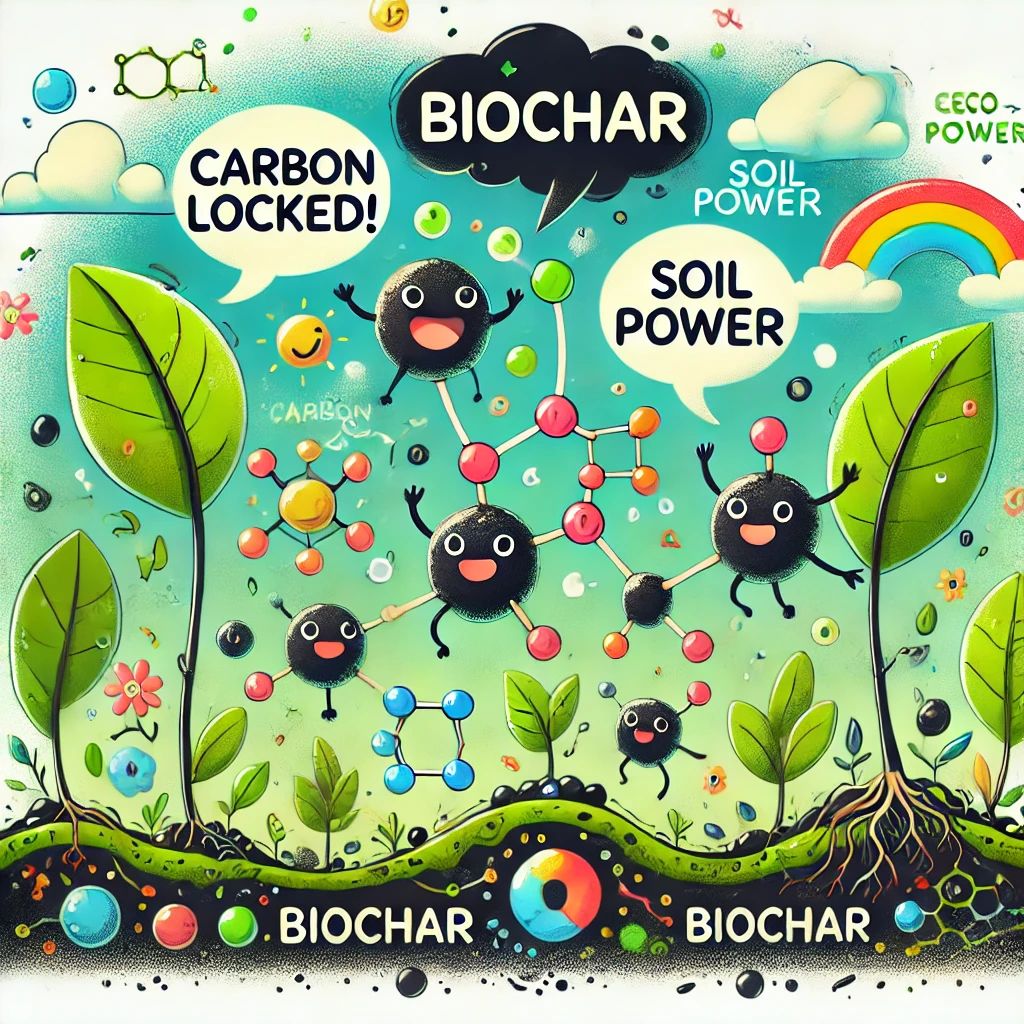
#️⃣ KnowledgeSeries | Biochar: The Silent Climate Solution 🌱🔥
🌍 Can_We_Lock_Carbon for Centuries While Boosting Soil? Yes—With Biochar!
📊 # Key Biochar Facts & Figures
📉 3Tons of CO₂ Sequestered Per Ton of Biochar – One of the most efficient carbon capture tools. (IPCC)
🌾 # 28% Increase in Crop Yields – Improves soil fertility and water retention. (Nature Communications)
💧 # 50% Less Nitrogen Runoff – Reduces water pollution from fertilizers. (Environmental Science & Technology)
♻ 3BillionUSD Market by 2030 – Growing at 13.2% CAGR, driven by climate policies. (MarketsandMarkets)
🏗 60% Lower Concrete Emissions – Biochar-infused cement is cutting industrial carbon footprints. (MIT Research)
🏭 # 90% Efficiency in Industrial Wastewater Treatment – Filters heavy metals & pollutants. (Journal of Environmental Management)
🔥 Who’s Investing?
💰 Microsoft & Shopify – Using biochar as verified carbon offsets.
🛍 IKEA & H&M – Researching biochar-infused textiles.
🚜 Indian & African Farmers – Improving soil health in degraded lands.
🏆 Biochar’s Future: From Farms to Factories
💡 Could biochar become a global standard in climate strategy? Drop your thoughts! 👇

Originally published on LinkedIn on 2025-03-02 15:37:10: https://www.linkedin.com/feed/update/urn%3Ali%3AgroupPost%3A2474261-7301988952033419264
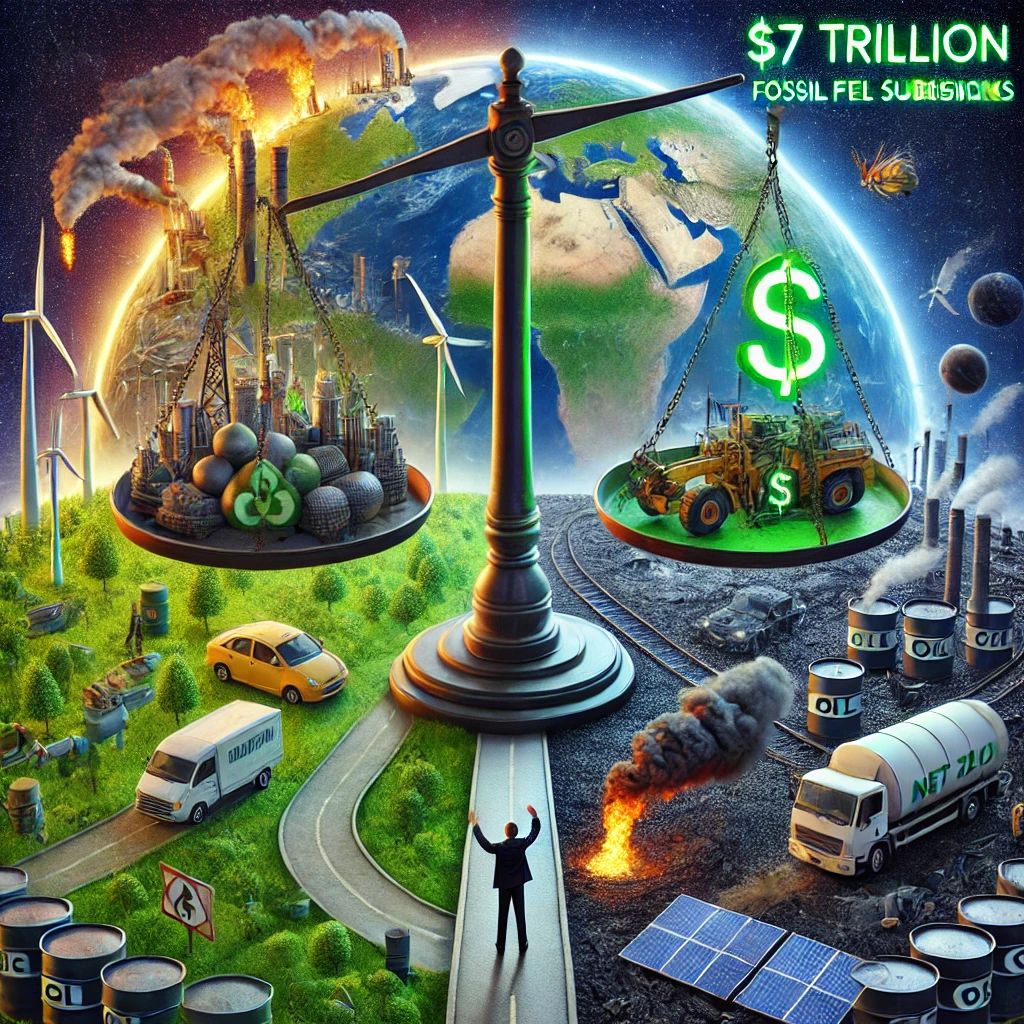
🚨 “The USD_7 Trillion Green Paradox: Saving the Planet or Fueling the Crisis?” 🌍♻️💰
📊 1. The Green Investment Paradox: More Money, More Emissions
✅ #$1.7 trillion invested in clean energy in 2023 (IEA, 2024)
❌ #$7 trillion in fossil fuel subsidies were paid out in 2023 (IMF, 2024)
✅ 120+ countries pledged net-zero targets
❌ Only 20% have actual policies & execution plans (Net Zero Tracker, 2024)
❌ CO₂ emissions hit a record high of 37.5 billion tons in 2023 (Global Carbon Budget, 2024)
🚨 Reality Check: For every $1 spent on green energy, $4 still funds fossil fuels.
🇩🇰 Denmark: 75% renewables, carbon-neutral by 2045 (EPI, 2024)
🇸🇪 Sweden: 98% recycling rate, world leader in circular economy (WEF, 2024)
🇳🇴 Norway: 80% of new car sales are EVs, hydro-powered energy (IEA, 2024)
🇪🇺 EU: #€1 trillion Green Deal investment, strict carbon pricing (EU Commission, 2024)
🚨 Reality Check: Even the greenest nations rely on imported fossil fuels & high energy consumption.
🟡 3. The Green Economy Paradox: Investing While Polluting
🇨🇳 China: World’s largest renewable energy investor, but 55% of power still comes from coal.
🇮🇳 India: Fastest-growing solar market, but remains the third-largest CO₂ emitter. (MNRE, 2024)
🇺🇸 USA: #$369B Inflation Reduction Act to fund green tech, but oil production reached a record 13.1M barrels/day in 2023. (DOE, 2024)
🚨 Reality Check: Countries are investing in renewables but not cutting fossil fuel use fast enough.
🔴 4. The Worst Green Offenders: Promises Without Action
❌ 🇦🇺 Australia: The world’s second-largest coal exporter, despite ‘green economy’ branding. (Climate Council, 2024)
❌ 🇷🇺 Russia: No net-zero plan, fossil fuel revenue = 40% of its economy. (UNEP, 2024)
❌ 🇸🇦 Saudi Arabia: Announced $260B for renewables but still earns 90% of its GDP from oil. (IEA, 2024)
🚨 Reality Check: Without emission cuts, green projects don’t fix the problem.
📉 5. The Harsh Truth: Emissions Are Still Rising
❌ 2023 was the hottest year ever recorded, with global temperatures 1.48°C above pre-industrial levels. (NASA, 2024)
❌ Carbon capture tech only offsets 0.1% of annual global emissions. (IPCC, 2024)
❌ At current transition rates, the world will miss its 1.5°C climate target by 2040. (UNEP, 2024)
🚨 Reality Check: We must cut global emissions 43% by 2030 to stay on track—but we’re nowhere close.
🏆 KeyTakeaway
The Green Economy paradox is real—we invest in sustainability while financing fossil fuels even more. Until green investments outpace fossil fuel spending, and emissions actually drop, we’re not in a real transition.
Originally published on LinkedIn on 2025-02-03 04:11:43: https://www.linkedin.com/feed/update/urn%3Ali%3AgroupPost%3A82951-7292031979921797120
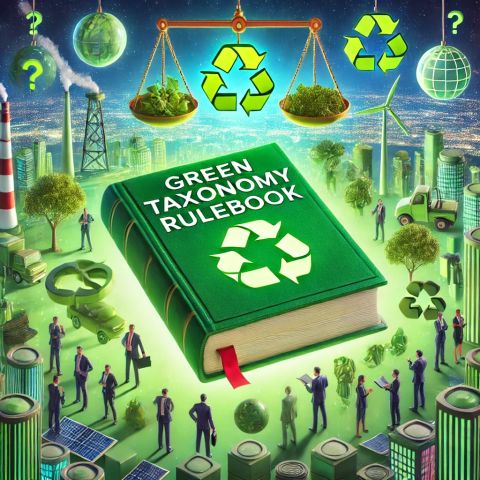
🌍 Green_Taxonomy: The Billion_Dollar_Climate_Rulebook” 📖💰♻️
Governments & investors are pumping trillions into ‘green projects’, but how do we know what’s actually sustainable and what’s greenwashing? That’s where Green Taxonomy comes in—a global rulebook defining what’s truly green.
Let’s break it down data-first.
📖 1. What is Green_Taxonomy?
✅ A classification system that defines which economic activities are truly ‘green.
✅ Prevents greenwashing by ensuring companies & funds don’t falsely claim sustainability.
✅ Guides investors & governments toward legitimate climate-friendly projects.
🚨 Why It Matters? Over $1.5 trillion in ESG investments may be at risk due to misleading green claims. (Bloomberg, 2024)
🏆 Key Impact: Governments use Green Taxonomy to shape climate policies, carbon markets, and financial incentives.
🌎 2. Global Green Taxonomies: Who’s Leading?
✅ 🇪🇺 EU Taxonomy: Strictest framework, defining what counts as green. (Source: EU Commission, 2024)
✅ 🇨🇳 China’s Green Bonds Catalog: Focuses on renewable energy & pollution control. (PBOC, 2024)
✅ 🇮🇳 India’s Green Taxonomy: Aligned with Sustainable Finance Guidelines. (RBI, 2024)
✅ 🇺🇸 US SEC ESG Rules: Weaker than EU’s, but cracking down on greenwashing. (SEC, 2024)
🚨 The Problem? Each country defines ‘green’ differently, creating market confusion for investors.
🏆 What’s Needed? A globally harmonized green taxonomy to ensure credibility & consistency.
💰 3. How Green Taxonomy Affects Business & Investments
✅ Corporations Must Report Sustainability Metrics or risk losing ESG funding.
✅ Green Bonds & Climate Finance—Only certified green projects qualify for funding.
✅ High-Carbon Industries (Oil, Gas, Cement) face stricter compliance & reporting rules.
🚨 Reality Check: #$4.2 trillion in green bonds were issued in 2023—but without strong taxonomy rules, many may not be truly ‘green.’ (Climate Bonds Initiative, 2024)
🏆 Who Wins? Companies investing in real sustainability, not just optics.
⚖️ 4. The Green Taxonomy Controversies
🔴 Is Nuclear Energy Green? 🇪🇺 The EU says YES. Critics say radioactive waste isn’t sustainable.
🔴 Is Natural Gas Green? 🇪🇺 Labeled it ‘transitional green’, sparking backlash from climate groups.
🔴 Are Carbon Offsets Valid? Many taxonomies exclude carbon credits due to verification concerns.
🚨 The Challenge? Balancing economic growth & real sustainability without greenwashing.
🏆 KeyTakeaway
The Green Taxonomy is reshaping global finance & sustainability rules. Countries that set clear standards will attract more green investments, while loopholes & weak regulations risk fueling greenwashing.
👉 Will Green Taxonomy stop greenwashing or just create more loopholes?
GreenFinance Sustainability ESG CarbonMarkets NetZero ClimateAction

Originally published on LinkedIn on 2025-01-31 08:57:08: https://www.linkedin.com/feed/update/urn%3Ali%3AgroupPost%3A100646-7291016643428704256

