GeoShock: When_Politics_Hijack_Profit_Planet & Production
War rooms are the new boardrooms—because supply chains don’t salute borders.
KtalystKeystone
The world isn’t flat anymore—it’s fractured.
And business isn’t just about strategy—it’s about survival through shifting borders.
McKinsey Economic Outlook (Mar 2025) confirms it:
Geopolitics is now Boardroom Agenda 1.
Margins, maps, and mandates are colliding.
TheTripleShock
Industry | Profit | Planet
Industry Impact – ReroutingResilience
68% of global manufacturing execs rank geopolitics as a top 3 business risk
🔄 EVs & Batteries: 30–40% price swings due to unstable lithium/cobalt supply
⛔ Pharma: Indian exports to CIS & Africa fell 9% in Q1 2025 (port + policy delays)
🔐 Tech Platforms: 25%+ new integrations delayed by cross-border data laws
Geopolitics is no longer background noise—it’s the beat driving every business decision.
ChristineLagarde
Profit Impact – MarginsAtWar
📉 2.4% YoY EBIT drop in firms exposed to volatile regions
🚧 #$170B in CapEx shelved globally in 2024 due to policy unpredictability
💸 #$130B+ lost to EM currency swings (J.P. Morgan)
🧾 Carbon Taxes: 8–14% cost surge for Indian metals under EU CBAM
If you’re not worried, you’re not paying attention.
RayDalio
Sustainability Impact – NetZeroInNeutral
🌍 Only 12% of firms are 2030-net-zero aligned (UNEP)
⚠️ Green Protectionism: 50+ disputes on clean-tech subsidies
🛢️ Fossils up 5%, Renewables down 22% in conflict zones
❌ 47% of investors doubt ESG claims’ credibility (Bloomberg, 2025)
Control oil and you control nations; control food and you control the people.
HenryKissinger
ExploreFurther
Michael Froman on business & geopolitics
Daniel Yergin on energy & world order
CEO Guide: Tariff Moves 2025
Global Trade Geometry – The New Map
KtalystView | ProfitVsPlanet | GeoShock | GlobalRiskMatrix | SustainableStrategy | GreenProtectionism | NetZeroInNeutral

Originally published on LinkedIn on 2025-04-20 18:37:00: https://www.linkedin.com/feed/update/urn%3Ali%3AgroupPost%3A2474261-7319791211194515457
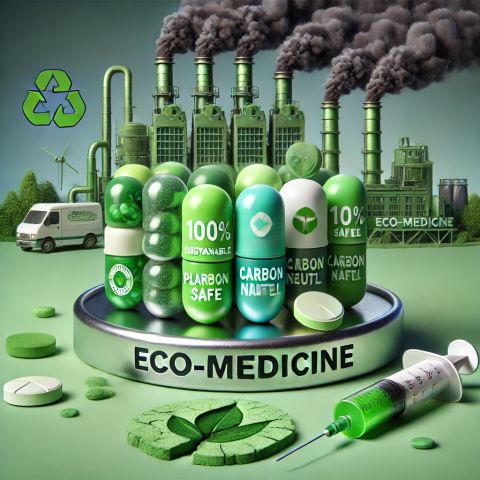
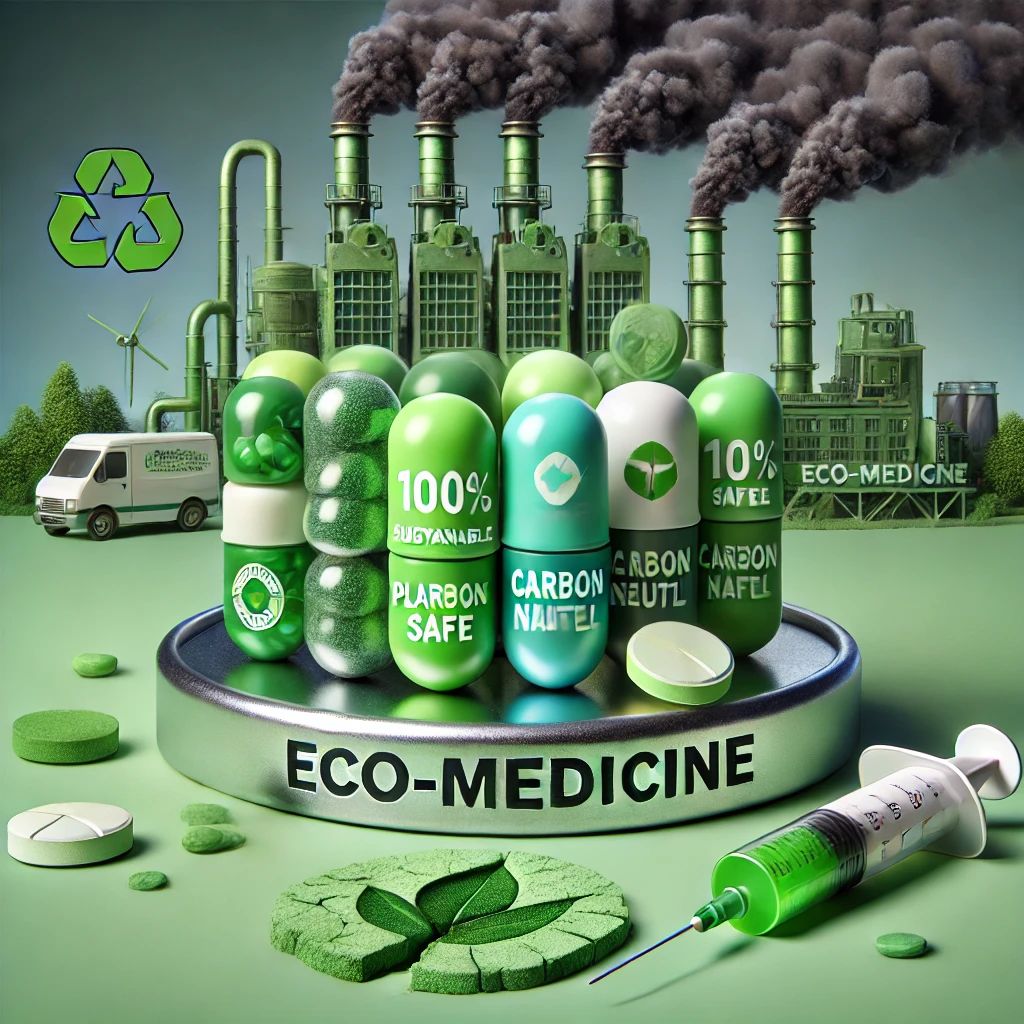
GreenwashedPills: When Pharma Prescribes Sustainability, But Swallows None of It
Green_lab_certified.
Eco_packaged.
Sustainably sourced APIs.
The claims sound clean—but the industry’s environmental footprint is anything but.
Welcome to GreenwashingInPharma, where glossy ESG reports hide toxic truths.
💊 The Industry Diagnosis:
🌍 Pharma emits 13% more CO₂ than the automotive sector (McMaster University, 2023)
🌊 Over 3,000 pharmaceutical compounds found polluting rivers globally (UNEP, 2022)
🧴 Billions of plastic blister packs are non-recyclable—despite “eco-packaging” claims
🔬 Waste incineration from expired drugs releases hazardous dioxins and furans
📉 Real Cases, Real Fines:
1. Teva Pharmaceuticals – Fined #$2.25M (USA, 2011) for violating Clean Air & Water Acts
2. Pfizer Inc. – Fined #$975K (USA, 2008) for hazardous air emissions at its Groton plant
3. Polypeptide Labs – Fined #$57K (USA, 2022) for improper waste and emission controls
4. Curia Global (AMRI) – Fined #$175K (USA, 2024) for unpermitted air emissions; also paid #$250K in community penalties
5. Merck & Co. – Fined #$1.5M (USA, 2011) for violations across air, water, and hazardous waste regulations
🚨 GreenwashingSymptoms:
🧾 CSR reports filled with offsets, not reductions
🌱 “Green APIs” with zero traceability in supply chain
⚕️ Hospitals praised for solar roofs—while sourcing drugs from polluting plants
📦 Biodegradable slogans on non-biodegradable packaging
🧠 Why This Matters:
⚠️ Greenwashing erodes public trust in an industry built on health
⛔ Improper waste disposal fuels antibiotic resistance
🌡️ Most pharma firms don’t disclose full environmental footprints
📊 70% of consumers feel misled by eco-claims in healthcare purchases
FinalThoughts:
In medicine, we demand efficacy backed by trials.
Shouldn’t we demand the same for sustainability claims?
If greenwashing becomes the prescription—
Trust is the patient we lose.
GreenwashingInPharma
CleanCuresNotCleanClaims
EcoEthicsInMedicine
ESGTransparency
PlanetOverPR
PharmaFootprint

Originally published on LinkedIn on 2025-03-25 16:59:09: https://www.linkedin.com/feed/update/urn%3Ali%3Ashare%3A7310344501275897856
🚀 NamasteIndiaMobilityMarket to Exceed $600B by YR2030
Revolutionizing Growth through Electrification & Innovation
The Indian mobility industry is charting its unique course, poised to double and surpass $600B by 2030, with $100B fueled by emerging revenue streams.” — Google-BCG Report
🔑 KeyInsights
💰 RevenueProjections
Classic Revenue Pools:
🔧 ClassicComponents: $65B (+$23B).
🚙 NewSales (ICE Vehicles): $120B (+$33B).
🔄 ClassicAftersales: $162B (+$71B).
💳 Financing&Insurance: $133B (+$59B).
Emerging Revenue Pools:
⚡ BEV&AVComponents: $25B (+$20B).
🌍 NewSales (BEVs): $37B (+$33B).
🔧 NewAftersales: $8B (+$8B).
🚖 NewMobilitySolutions: $62B (+$37B).
👥 ConsumerTrends
⚡ EVAdoption: 1 in 3 planning to buy EVs.
🌸 WomenDriveChange: Women lead 52% of EV purchase decisions.
🌿 WhyItMatters
India’s mobility market is transforming through Sustainability & Electrification. Both classic & emerging revenue pools are converging to shape a global leader in MobilityInnovation.
👉 Are you ready to ride the wave?
Let’s lead the FutureOfMobility! EVs Growth Sustainability BCG Google
Source / shared link: https://m.economictimes.com/industry/auto/auto-news/india-mobility-market-to-double-surpassing-600-mn-by-2030-google-bcg-report/articleshow/117354350.cms
Originally published on LinkedIn on 2025-01-20 13:19:59: https://www.linkedin.com/feed/update/urn%3Ali%3AgroupPost%3A60128-7287096526823153664
**Adani 2023: A Turning Point for Corporate Governance in India?**
The 2023 Adani Group saga, brought to global attention by the Hindenburg report, underscored the significance of corporate governance in shaping trust and stability. Allegations of opaque dealings and stock manipulation reverberated beyond Indian markets, capturing international interest due to the group’s pivotal role in infrastructure, energy, and global partnerships.
### 🌟 The Hindenburg report alleged:
🟢 Stock Manipulation:Use of offshore entities to inflate valuations.
🟢 Opaque Transactions: Limited transparency in related-party dealings.
🟢 Governance Lapses: Concerns over auditor independence and board oversight.
👉 **Impact:** A $100 billion erosion in market capitalization triggered concerns about financial health and governance practices.
🌍 Why the Global Interest?
🟢Global Funding: Adani’s projects are heavily backed by international investors such as BlackRock and TotalEnergies.
🟢 Geopolitical Relevance: As a cornerstone of India’s infrastructure and energy ambitions, Adani’s stability is crucial for global partnerships.
🟢 Sustainability Leadership: With significant investments in renewable energy, Adani’s governance practices directly impact global sustainability goals.
🔑 Governance Gaps Highlighted
🟢 Transparency Issues: Insufficient disclosures eroded stakeholder trust.
🟢 Weak Board Oversight: Lack of rigorous mechanisms to monitor decisions.
🟢 Auditor Independence: Questions about impartiality undermined credibility.
🗣️ Industry Perspectives
🟢 Narayana Murthy: *“Sustainable success depends on transparency and trust. This case is a reminder to prioritize ethical governance.”*
🟢 Kiran Mazumdar-Shaw:“It’s a wake-up call for Indian businesses to align governance with global benchmarks and investor expectations.”*
🟢 Rajan Mittal:“Governance isn’t just compliance—it’s a culture that starts with leadership.”*
### 🛠️ Lessons for Indian Corporates
🟢 **Prioritize Transparency:** Clear, timely disclosures build trust and credibility.
🟢 **Strengthen Board Independence:** Empower directors to actively oversee and challenge management.
🟢 **Adopt Global Standards:** Benchmark governance practices to meet international norms.
🟢 **Manage Risks Proactively:** Identify and mitigate risks before they escalate.
🚦 Adani’s Reforms
In response, the Adani Group implemented key measures:
🟢 **Global Audits:** Partnered with global auditors for independent reviews.
🟢 **Improved Disclosures:** Enhanced financial transparency practices.
🟢 **Stakeholder Engagement:** Increased communication to rebuild trust.
### 📈 Governance as a Growth Driver
The Adani case demonstrates that robust governance isn’t merely a regulatory requirement—it’s a strategic advantage.
Originally published on LinkedIn on 2025-01-18 06:19:28: https://www.linkedin.com/feed/update/urn%3Ali%3AgroupPost%3A1967292-7286265921831100416
NamasteGreenIndia’s Ethanol Revolution: Achieving 20% Blending with a Sustainable Edge
India is on the brink of achieving a 20% ethanol blending target, a transformative step towards energy independence, environmental sustainability, and agricultural empowerment. Here’s how this revolution is shaping up:
📈 The Progress So Far
🟢 2014: Ethanol blending in petrol was just 1.53%.
🟢 2024: Achieved 15%, with 4.62 million metric tonnes (MMT) of ethanol produced.
🟢 2025 Target: Projected to produce 10.2 MMT annually to meet blending and industrial needs.
🌍 Economic & Environmental Wins
💰 USD 4 Billion Saved: Annual savings on crude oil imports.
🌎 10 MMT CO₂ Reduced: Emissions cut significantly with 20% ethanol blending.
👷 500,000 Jobs Created: Boosting rural employment through distilleries and supply chains.
🚢 USD 300 Million Export Potential: Surplus ethanol positioned for international markets.
🚗 Automotive Industry’s Ethanol Push
🔧 Flex-Fuel Vehicles: Tata Motors, Mahindra, Maruti Suzuki, and Hyundai to launch 100% bio-ethanol vehicles within six months.
🛢️ Fossil Fuel Demand Cut: Flex-fuel vehicles to reduce reliance on fossil fuels by 5.5 MMT annually.
🏭 Toyota’s Commitment: Investing ₹20,000 crore (USD 2.4 billion) in ethanol-compatible vehicle production.
🌾 Agricultural Boost
🌱 8-9 MMT of Sugar: Diverted annually for ethanol production, stabilizing prices and supporting farmers.
🌾 1.5 MMT of Surplus Grains: Utilized for ethanol, ensuring sustainable revenue for agriculture.
⚡ Challenges & Opportunities
📊 Feedstock Demand: India needs an additional 2 MMT of sugarcane and 1.5 MMT of surplus grains for sustainable production.
🏗️ Infrastructure Gaps: Only 30% of fuel pumps are ready for E20 blending.
🌍 Global Leadership: Scaling production and refining distribution could position India as a leader in ethanol exports.
💡 Why This Matters
India’s ethanol revolution is more than a blending target—it’s about energy self-reliance, cutting carbon footprints, and empowering rural economies. This initiative showcases India as a global benchmark for sustainable energy transitions.
💬 Let’s discuss how India’sEthanolJourney is driving SustainableEnergy, AutomotiveInnovation, and RuralEmpowerment! 🚀
Originally published on LinkedIn on 2025-01-16 09:51:29: https://www.linkedin.com/feed/update/urn%3Ali%3AgroupPost%3A12538632-7285594503120347137
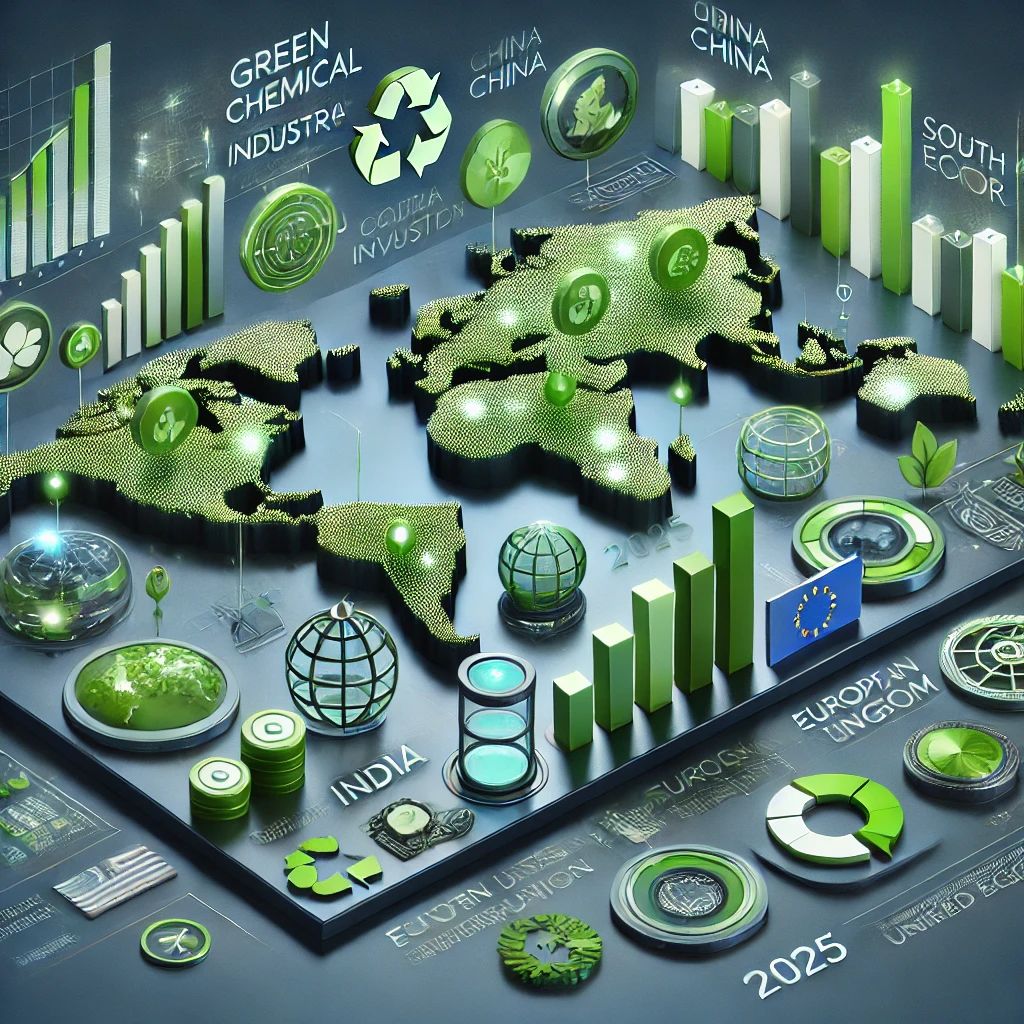
Global Chemical Industry 2025: Challenges, Growth, and the Green Transition
Additonal_costs_for_GreenChemcals_20%???
The USD 6.3 trillion global chemical industry is navigating a pivotal year, facing regulatory hurdles, rising costs, and the demand for sustainability. With green investments surging, YR2025 marks a transformative period for this vital sector.
📊 India
🌟 $383 billion market projected by 2030.
🌟 Environmental compliance costs up 20%.
🌟 Part of Asia-Pacific’s $51.41 billion green chemical market in 2024.
🧪 China
🌟 70% of hazardous producers impacted by stricter safety laws.
🌟 Sustainability spending increased by 15% in 2025.
🌟 Driving Asia-Pacific green market to $137.73 billion by 2034 (CAGR 10.35%).
🌱 Japan
🌟 9.6% CAGR in green chemical investments (2023-2033).
🌟 Prioritizing hydrogen and clean energy for carbon neutrality by 2050.
🌿 South Korea
🌟 15% YoY rise in K-REACH compliance costs.
🌟 Major investments in AI-driven carbon capture technologies.
💧 United States
🌟 PFAS compliance costs exceed $1 billion.
🌟 Green market grew from $64.52 billion (2023) to $71.82 billion (2024), projected to reach $141.33 billion by 2030 (CAGR 11.85%).
🌍 European Union
🌟 REACH compliance costs increased by 30%.
🌟 $50 billion invested in circular economy initiatives.
🌟 Green market projected to reach $387.97 billion by 2034.
⚡ United Kingdom
🌟 Production output dropped 10% since 2021 due to high energy costs.
🌟 Ineos halts ethanol production at Grangemouth.
Global Trends in 2025
📈 Energy Costs
🌟 Increased by 20%-30%, challenging operational efficiencies.
🛠️ Compliance Challenges
🌟 Over 50% of companies report regulation as their top concern.
🌱 Sustainability Investments
🌟 Expected to exceed $150 billion, emphasizing green chemistry and circular economy goals.
The Road Ahead
🌟 The industry’s transformation depends on innovation, collaboration, and green investment strategies. With strategic actions, the chemical sector is poised to lead in shaping a sustainable, resilient global economy.
Let’s connect to build a sustainable future together! 🌍✨
Originally published on LinkedIn on 2025-01-13 16:33:25: https://www.linkedin.com/feed/update/urn%3Ali%3AgroupPost%3A3880479-7284608488431906816
🚀 NamasteCSR_India’s $3.48 Billion CSR Revolution: Transforming Lives, Shaping the Future 🚀
Total CSR Spending: ₹29,000 crore (~$3.48 billion USD)
Corporate India is leading a powerful movement in social_responsibility_investing billions into initiatives that empower communities, address inequalities, and build a sustainable future.
📊 Industry-Wise CSR Spending
Where the $3.48 billion made a difference:
🎓 Education, Differently Abled, and Livelihood:
💰 ₹13,209 crore (~$1.58 billion USD) | 44% of Total CSR
Empowering individuals through skill-building and education.
🩺 Healthcare and Sanitation:
💰 ₹8,739 crore (~$1.05 billion USD) | 29%
Improving health access and sanitation for underserved communities.
🌾 Rural Development:
💰 ₹2,005 crore (~$240 million USD) | 7%
Building sustainable livelihoods and infrastructure in rural areas.
🌿 Environment and Conservation:
💰 ₹2,921 crore (~$350 million USD) | 10%
Driving green initiatives and conserving biodiversity.
👩🎓 Gender Equality and Women Empowerment:
💰 ₹893 crore (~$107 million USD) | 3%
Breaking barriers and empowering women across sectors.
🏅 Encouraging Sports:
💰 ₹526 crore (~$63 million USD) | 2%
Fostering sporting talent and creating opportunities.
🏛️ Heritage and Culture:
💰 ₹441 crore (~$53 million USD) | 1%
Preserving India’s rich cultural legacy.
🤝 PM Relief and Other Funds:
💰 ₹815 crore (~$98 million USD) | 3%
Supporting disaster relief and community aid initiatives.
🏆 Top 10 Contributors Driving the Revolution
These companies collectively spent ₹5,070 crore (~$608 million USD):
1. ⭐ Reliance Industries Limited: ₹1,592 crore (~$190M)
2. 💼 HDFC Bank Limited: ₹945 crore (~$113M)
3. 💻 Tata Consultancy Services: ₹900 crore (~$108M)
4. 🏭 Tata Steel Limited: ₹827 crore (~$99M)
5. 🛢️ ONGC Limited: ₹635 crore (~$76M)
6. ⛽ Indian Oil Corporation: ₹580 crore (~$70M)
7. 💡 Infosys Limited: ₹458 crore (~$55M)
8. 🌱 ITC Limited: ₹404 crore (~$48M)
9. 🔌 Power Grid Corporation: ₹331 crore (~$40M)
10. 💻 HCL Technologies: ₹261 crore (~$31M)
🌟 Why This Matters
This is more than compliance—it’s transformational. India’s CSR ecosystem is creating lasting change, targeting critical issues like education gaps, healthcare disparities, environmental challenges, and community empowerment.
By YR2047, as India marks 100Years of independence, these contributions will shape an inclusive, sustainable, and empowered future for generations to come.
💬 What are your thoughts on this revolution? Let’s connect and collaborate!
CSR India Impact Sustainability CorporateLeadership ChangeMakers

Originally published on LinkedIn on 2025-01-11 15:12:43: https://www.linkedin.com/feed/update/urn%3Ali%3AgroupPost%3A10020629-7283863402731479040
Google’s $20 Billion Renewable Revolution: A Blueprint for Future Data Centers
Google’s visionary $20 billion partnership with Intersect Power and TPG Rise Climate is pioneering a sustainable future for data center operations by seamlessly integrating them with renewable energy sources. This transformative approach not only caters to the intense energy demands of AI technologies but also sets a new benchmark for environmental responsibility in the tech sector.
Strategic Highlights:
Direct Renewable Integration: Data centers will be strategically co-located with solar and wind farms, leveraging direct access to renewable energy to significantly reduce carbon emissions and enhance energy efficiency.
Robust Investment in Sustainability: An $800 million equity investment in Intersect Power underscores a deep commitment to expanding renewable energy capacity, integral to powering these next-gen data facilities.
Aggressive Timeline for Implementation: The project’s first operational phase is set for 2026, with full-scale completion targeted for 2027, demonstrating a rapid rollout plan that aligns with global sustainability targets.
Transformational Impact:
Reduction in Carbon Footprint: By harnessing solar and wind energy, these data centers are expected to reduce carbon emissions by up to 40% compared to conventional facilities.
Enhancement of Grid Stability: Generating their own power, these centers will decrease reliance on traditional power grids, preventing the typical surge in local energy prices and improving grid resilience.
Efficiency in Energy Usage: Co-located renewable resources will minimize energy loss that occurs during transmission, making these centers exemplars of energy efficiency.
Benchmarking Industry Excellence:
Facebook: Invests in bespoke renewable energy solutions, including a recent 350 MW solar power initiative aimed at exclusively powering its data operations.
Amazon: On track to achieve 100% renewable energy for its global operations by 2025, with 270 renewable energy projects currently operational or underway.
Microsoft: Pioneered a zero-carbon certification for its new data centers, backed by over 200 MW of new solar energy projects in states like Georgia and Nevada.
Apple: Dedicated 100% of its global operations to renewable energy since 2018, with ongoing investments in regional renewable projects tailored to data center needs.
Google’s proactive strategy not only emphasizes the critical role of sustainability in technological advancements but also illustrates a profound shift in corporate responsibility towards global climate goals. This ambitious project signals a pivotal movement within the tech industry, advocating for a sustainable and energy-independent future for data centers worldwide.
Source / shared link: https://www.edgemiddleeast.com/green-tech/the-green-shift-googles-20-billion-bet-on-renewable-energy-for-ai
Originally published on LinkedIn on 2024-12-16 22:52:50: https://www.linkedin.com/feed/update/urn%3Ali%3AgroupPost%3A3880479-7274557112268058624
NamasteGreenIndia:
Waiting for ESG Data in India: A $70 Billion Question
The long wait for ESG (Environmental, Social, and Governance) data in India isn’t just about patience—it’s about progress. With over 70% of Indian suppliers in global value chains yet to adopt digitized reporting, the delay has real-world implications, affecting decisions worth billions of dollars in sustainable investments.
India’s ESG Clock: Time to Move from Waiting to Winning!
Key Challenges with an Indian Twist
1. Fragmented Supply Chains
Over 80% of suppliers in industries like textiles and leather operate in unorganized clusters, making data collection chaotic.
2. Regulatory Complexity
Suppliers juggle three to five different ESG frameworks, such as SEBI’s BRSR and global standards like GRI. Compliance often feels like clearing a bureaucratic maze.
3. Digitization Gaps
Only 25% of MSMEs have adopted digital record-keeping systems, leading to delays and inaccuracies in ESG reporting.
4. Cost Constraints
With razor-thin margins, 60% of MSMEs cite financial challenges as the main reason for delayed ESG compliance.
5. Cultural Awareness
Surveys show that 40% of small suppliers lack awareness of ESG’s impact, resulting in delays in aligning with sustainability goals.
Real Impact
The textile sector in India risks losing $1.5 billion in exports annually due to delayed compliance with European buyers’ ESG requirements.
Delayed data from the chemical industry in Gujarat has led to stalled global partnerships, estimated to impact $500 million in deals.
Workflow for ESG Data Reporting
1. Supplier Operations: Ensure sustainability practices at ground level.
2. Data Collection: Implement digital systems for accurate tracking.
3. Standardization: Align with BRSR and global standards.
4. Validation: Ensure accuracy through third-party audits.
5. Submission: Deliver timely data to buyers.
6. Analysis: Buyers evaluate performance metrics.
7. Insights: Use the data for strategic sustainability actions.
Originally published on LinkedIn on 2024-12-03 07:19:14: https://www.linkedin.com/feed/update/urn%3Ali%3AgroupPost%3A131340-7269611122905763840
NamasteIndia’s Global Biofuel Milestone: Opportunities and Challenges
1. India Rises to 2nd in Biofuel_Blending
India has achieved the second position globally in biofuel blending, as announced by Union Petroleum Minister Hardeep Singh Puri on November 12, 2024, at the 27th Energy Technology Summit in Bengaluru. This achievement underscores the nation’s commitment to energy security and sustainability, saving approximately USD 11 billion (₹91,000 crore) in fuel imports and significantly benefiting the agricultural sector.
2. Future Targets
India is set to achieve 20% ethanol blending by Yr2025, ahead of schedule, marking a pivotal step in reducing greenhouse gas emissions, enhancing energy independence, and fostering economic resilience.
3. Global Context
India joins global leaders in biofuel blending:
Brazil: 27% ethanol blending mandate; 15% biodiesel target by 2026.
UnitedStates: Promotes E10, E15, and E85 under the Renewable Fuel Standard.
Indonesia: 30% biodiesel blending mandate.
European Union: Country-specific biofuel targets led by France.
Thailand: E20/E85 promotion with a 10% ethanol blending goal.
4. Economic and Agricultural Impact
Sugar Industry Shift: Increased ethanol production has reduced sugar exports, with India expected to become a net importer of sugar in the 2024/25 season.
Policy Adjustments: The government has extended the sugar export ban and allowed ethanol production from cane juice to ensure adequate feedstock.
5. Addressing Challenges
Feedstock Diversification: Over-reliance on sugarcane raises concerns about water usage. Exploring alternative feedstocks like corn and agricultural residues is crucial.
Infrastructure Development: Scaling up storage, blending, and distribution infrastructure is necessary to support higher blending targets.
Technological Advancements: Investments in second-generation biofuels and non-food ethanol sources will ensure sustainability.
6. Global Leadership with Sustainability
India’s biofuel journey not only reduces dependence on imports but also strengthens its agricultural sector and contributes to global climate goals. Addressing challenges like sugar industry shifts and resource management will be critical to sustaining momentum and cementing India’s position as a leader in biofuel innovation.
Originally published on LinkedIn on 2024-11-19 12:35:40: https://www.linkedin.com/feed/update/urn%3Ali%3Ashare%3A7264617323976683521

