Engine_Drinks_from_the_Fields | On Track to YR2030?
GlobalOutlook | Top7 Biofuel-Producing Countries
(by Dr. Anju Sharma | MrsSustainability)
Biofuels are now a mainstream pillar of the global energy transition — not a supplement.
🔹 Global demand: +25–30 % by 2030 → ~200 Bn L Ethanol + 70 Mt Biodiesel (OECD-FAO 2025–34)
🔹 Asia Rising: NamasteIndia + Indonesia + China = 50 % of incremental demand
🔹 Advanced biofuels (cellulosic / algal / SAF): < 2 % → ≈ 10 % share by 2030 (aviation + marine mandates)
🔹 NetGHGImpact: ≈ 1.2 Bn boe displaced | > 350 Mt CO₂ cut annually
🔹 InvestmentTrend: Global CAPEX > USD 50 Bn (2024) → 2× by 2030
NetGHG impact: Biofuels could displace ≈ 1.2 billion barrels of oil equivalent annually, cutting CO₂ emissions by > 350 million tonnes per year.
The next five years will define how efficiently countries connect farm economics to fuel security.
The world’s fuel mix is changing, quietly but decisively. Biofuels now contribute over 5 % of transport energy globally, and nations are scaling up blending mandates to cut emissions, diversify energy, and strengthen rural economies.
Top7 biofuel-producing countries stand in 2025:
USA
Global share: ~38 % of total biofuel output
Ethanol: ≈ 59 billion L (from maize)
Biodiesel: ≈ 19 % of world supply (soybean oil & waste oils)
Blend mandate: E10 nationwide; E15–E85 in flex-fuel vehicles
Outlook: Renewable Fuel Standard targets > 79 billion L by 2026
Brazil
Global share: ~24 % ethanol, 12 % biodiesel
Blends: E30 ethanol and B15 biodiesel (2025)
Feedstocks: Sugarcane, soybean oil
Policy: RenovaBio incentivizes carbon-intensity reduction via tradable decarbonization credits
NamasteIndia 🇮🇳
Rank: 3rd largest ethanol producer (~ 6 billion L)
Blend: Nationwide E20 rollout (April 2025)
Feedstock: Molasses, maize, damaged grains
Policy: Ethanol Blended Petrol Programme; flex-fuel vehicles mandated from 2024
EU
Global share: 5 % ethanol, 36 % biodiesel
Output: ~ 25 billion L (biodiesel) + 6 billion L (ethanol)
Feedstock: Rapeseed oil, waste oils, sugar beet
Policy: Renewable Energy Directive III — 42.5 % renewables in total energy by 2030
China
Global share: 8 % ethanol, 3 % biodiesel
Blends: E10 in major provinces; SAF export quotas in 2025
Feedstock: Maize, used cooking oil
Outlook: Scaling SAF and bio-methanol capacity for aviation and shipping
Indonesia
Global share: 10 % of biodiesel output
Blend: B40 implemented (2025); E10 pilot under review
Production: ≈ 12 million tonnes biodiesel (palm oil base)
Target: B50 by 2028 under Indonesia Bioenergy Roadmap
Canada
Global share: ~ 1.6 % ethanol, 1.4 % biodiesel
Blend: E10–E15; B5–B10
Feedstock: Maize, wheat, waste oil, forest residues
Focus: Investment in cellulosic biofuels and low-carbon liquid fuel standards
By YR2030, the world may not just refill at petrol pumps, it will be recharged by the planet itself?
Originally published on LinkedIn on 2025-10-30 22:13:09: https://www.linkedin.com/feed/update/urn%3Ali%3AgroupPost%3A121193-7389786467960602624
🎰 KtalystInsights High Stakes GlobalMarkets in 2026?
GlobalMarkets2026 NamasteIndia MarketMoodWatch DesertHedge
🎲 Welcome to 2026’s WallStreet Casino—where liquidity is tight, inflation is moody, and every country working on their winning hand. Let’s peek at the top tables:
🇺🇸 US. – The Cowboy Gambler
Trump 2.0 is back and he’s rolling deregulation dice like it’s 2017.
🎯 Bets: Defense, oil, and industrial swagger.
📉 Fed’s still holding the chips; tech stocks sweating at the poker table.
Ktalyst Take: Wild west energy, but watch for policy potholes.
🇪🇺 EU – The Budgeted Banker
🗳️ Political hangovers, green fatigue, and a nervous ECB.
🎯 Bets: Luxury stocks, pharma, and infra.
Ktalyst Take: Rebalancing act with one foot on a banana peel.
🇨🇳 China – The Strategist with Strings
Pulling the puppet strings on AI, EVs, and stimulus dollars—just don’t ask about real estate.
🎈 Property sector’s balloon is leaking slowly.
🎯 Bets: Self-reliant tech and controlled chaos.
Ktalyst Take: Powerful hand, but it’s all in sleeves.
🌏 ASEAN – The Silent Sniper
Low noise, high precision. While others argue, ASEAN picks the prize.
📦 Vietnam, Malaysia, and Indonesia bagging China+1 chips.
🎯 Bets: Logistics, EV assembly, green bonds.
Ktalyst Take: The turtle in a room full of racing hares.
🇮🇳 NamasteIndia – The Yogic Bull Rider
Riding the reforms bull up a DPI-powered stock ramp—calm on top, compounding at the bottom.
🚆 Make in India, Gati Shakti, and BharatFintech brewing.
🎯 Bets: PLI, FMCG, Infra REITs, and Renewable India Inc.
📈 GDP at ~6+% and still sipping chai.
Ktalyst Take: NotGambling—just meditating on momentum.
🕌 MiddleEast – The Desert Hedge
Gulf nations rolling out oil-funded oasis economies—NEOMs, crypto sandboxes, and hydrogen highways.
🎯 Bets: Green energy, AI, sovereign VC, and Expo-led real estate.
💥 Dubai’s back in startup headlines, Riyadh’s building fast and bold.
Ktalyst Take: If oil is Plan A, tech is now Plan A.1.
🇨🇦 Canada – The Maple-Fed Market Whisperer
Calm voice, cold weather, hot commodities.
🎯 Bets: Rare earths, green energy, AI exports
🧊 Risk: Over-reliance on U.S. and a frosty housing market
Ktalyst Take: Polite but profitable—Canada’s playing the quiet compounding game.
🇦🇺 Australia – The Kangaroo with Clean Chips
Bounces between minerals and megawatts.
🎯 Bets: Critical minerals, hydrogen, rooftop solar
🔥 Risk: China trade tension, housing heat
Ktalyst Take: Outback cool with a green gold rush. Steady, not splashy.
💬 KtalystInsight:
Some bet. Some bluff. Some build quietly. 2025 to 2026 isn’t about who has chips—it’s about who plays the long game.” — KtalystKeystone
Originally published on LinkedIn on 2025-06-22 09:14:28: https://www.linkedin.com/feed/update/urn%3Ali%3Ashare%3A7342480082071863296
🌍 NamasteIndia Series: Bioplastic Asia vs West in the GreenPackagingRace ♻️
KtalystInsights BioPlasticAsia NamasteIndia CircularEconomy GreenMyths SustainableMaterials PolicyToPlastic
🔬 Japan 🇯🇵
Marine-degradable PHA (Polyhydroxyalkanoates), seaweed-based plastics
¥6.3B biomass R&D (2023)
Clean design meets ocean-safe mindset
🌱 India 🇮🇳
PLA (Polylactic Acid), starch blends, bagasse-based films
Single-use plastic ban (2022)
Only ~5% of cities with compost infra ⚠️
High startup energy, but systems lag
🔁 SouthKorea 🇰🇷
Cellulose acetate and biodegradable blends
EPR (Extended Producer Responsibility) enforcement
Target: 20% landfill reduction by 2030
🏙️ China 🇨🇳
PBAT (Polybutylene Adipate Terephthalate), cassava-starch blends
Plastic bans in 80+ cities
Scaling fast, but traceability gaps remain
🌊 Indonesia 🇮🇩
Seaweed to sachets & foams (e.g., Evoware)
Addressing 650K tons/year marine waste
Local solutions, global promise
🧪 Thailand 🇹🇭
Leading exporter of PLA (Polylactic Acid)
Target: 30% bio-based plastic production by 2030
Composting infrastructure growing with state support
🧬 USA 🇺🇸
PHA, PBAT, PLA (NatureWorks, Danimer Scientific)
$400M+ bioplastic investment (2022–24)
Regulation varies across states
♻️ EU (Germany, France, Italy) 🇪🇺
EN13432-certified PLA, bio-PET (Bio-based Polyethylene Terephthalate)
Plastic taxes, harmonized EPR policies
High consumer awareness + policy pressure
🎯 Decode the Label (with full forms):
✅ Biodegradable
Includes: PLA (Polylactic Acid), PHA (Polyhydroxyalkanoates), PBAT (Polybutylene Adipate Terephthalate)
Decomposes with microbes—but only under industrial composting conditions
♻️ EcoFriendly
Includes: Bio-PET (Bio-based Polyethylene Terephthalate), Cellulose acetate, long-life recyclable polymers
Designed for reuse, recycling, or low emissions—not necessarily biodegradable
🚫 PromotedPlastic
Often marketed with vague terms like “earth-safe” or “bio-enhanced
May be fossil-based with no proven lifecycle benefit
💡 India has the biomass, brains, and business base to lead this revolution.
👇 Who’s leading the real bioplastic breakthrough in your view—Japan’s deep-tech, Europe’s policy power, or India’s startup spirit? Drop a tag. Let’s unbox the buzz and build true circularity.
Originally published on LinkedIn on 2025-06-21 04:26:24: https://www.linkedin.com/feed/update/urn%3Ali%3AgroupPost%3A82951-7342045200246042624
🧲 Asia’sCarbonFinanceSurge: RealCreditsOnly, FakesGetTaxed!
🚧 MadamSustainability isn’t letting any “OffsetVibes” sneak past her GreenTaxonomy shield.
🎯 KtalystKeystone View
Asia is no longer just talking CarbonMarkets — it’s certifying, taxonomizing, and zombifying the fakes.
Here’s what’s magnetizing real finance to Asia’s ClimateGameboard:
💚 NamasteIndia:
🧾 Unveiled a Draft ClimateFinanceTaxonomy (May 2025) — targeting 💰 $2.5 trillion by 2030
🛡️ Categorizes projects into ClimateAligned vs TransitionEfforts
📍 Focus: CleanEnergy, GreenInfrastructure, LowCarbonManufacturing
🏙️ PCMC Goes First!
📉 ₹200 crore via GreenMunicipalBonds for SmartCity NMT & HaritSetu projects.
India’s UrbanFunding now has ESGDNA.
🚇 MumbaiMetro:
✅ Achieved CarbonNeutrality on Lines 2A & 7
📦 Earned 85,849 CertifiedOffsetUnits – a major registry milestone
🌏 ASEAN Isn’t a Side Character Either:
🌊 BlueCarbon & FinanceProfiling Project launched by ASEAN, UNDP & Japan
🌿 Focus: Oceanic & Mangrove CarbonSinks = the newest credit class
🧩 ASEANCarbonFramework syncing Methodologies for CrossBorderCarbonTrade
🇮🇩 Indonesia’sForestryCarbonMarket
🌳 Prepping for GlobalTrade – aligned with Verra, GoldStandard & PlanVivo
🎙️ MadamSustainability Says:
🗯️ “NoTaxonomy? NoEntry.
🧟 “But I’ve offset vibes, not emissions!” – says the GreenwashingZombie
📊 QuickStats
📌 IndiaTaxonomy: $2.5T by 2030
📌 PCMC GreenBonds: ₹200 Cr
📌 ASEAN BlueCarbon: Multi-nation rollout
📌 MumbaiMetro: 85K+ Offsets
📌 IndonesiaCarbonMarket: Forestry credits up next
🧠 KtalystInsight
Asia is not playing catch-up anymore.
It’s SettingTheRules, DefiningGreen, and CallingOutTheFakes with Humour and HardPolicy.
Originally published on LinkedIn on 2025-06-07 18:12:21: https://www.linkedin.com/feed/update/urn%3Ali%3Ashare%3A7337179627234152449
KnowledgeSeries: The Future of CarbonCredits – A USD250B Market by 2050
The carboncredit market is no longer a side conversation—it’s becoming a mainstream financial instrument. With projections hitting #$250B by 2050, businesses and investors must pay attention.
Why? Because companies that integrate NetZero strategies today will gain a competitive edge, while those that don’t will face higher costs, regulatory risks, and shrinking investor confidence.
🌎 The Carbon Credit Boom: Why It’s a Business Imperative
✔️ The voluntary carbon market is set to grow 15X by 2030, reaching #$10B–$40B. (McKinsey)
✔️ Investments in carbon credits hit #$1.7B in 2023, up 50% YoY. (BloombergNEF)
✔️ 6,000+ global companies have set Science-Based Targets (SBTi), driving demand for verified carbon offsets.
✔️ Indonesia, Brazil, and Kenya are integrating carbon markets into their economies, generating revenue from forests, renewable energy, and carbon capture projects.
✔️ Article 6 of the ParisAgreement is enabling international carbon credit trading, boosting market credibility.
🚀 What does this mean for businesses?
✔️ A carbon credit strategy is no longer optional—it’s a business necessity.
✔️ Companies without a decarbonization plan will face higher compliance costs.
✔️ Investors are prioritizing NetZero leaders, making carbon credits a key ESG performance driver.
📊 Who’s Leading the Carbon Credit Race?
✔️ Big Tech & Carbon Capture:
Meta, Microsoft, and Google are securing multi-million-dollar deals in Direct Air Capture (DAC) to future-proof their carbon strategies.
✔️ Financial Institutions Going Green:
BlackRock, JP Morgan, and Goldman Sachs are launching climate-focused funds, treating carbon credits as an emerging asset class.
✔️ Corporate Adoption Soaring:
40%+ of Fortune500 companies are embedding carbon offsets into their business models.
✔️ Government-Led Action:
The EU, Singapore, and Japan are developing regulated carbon exchanges to ensure transparency & standardization.
🌱 What to Expect in 2025 & Beyond?
✔️ Stricter Regulations → Carbon credit verification will be tighter, reducing low-quality offsets & greenwashing risks.
✔️ Rising Prices → As demand outstrips supply, carbon credit prices could triple by 2030, making early adoption a smart financial move.
✔️ Emerging Markets in Play → Africa, Southeast Asia, and Latin America will dominate nature-based carbon solutions (reforestation, soil carbon, etc.).
✔️ Carbon as a Tradable Asset → Institutional investors are pushing for liquid carbon credit markets, making carbon a financialized commodity.
🔍 ComingUpNext: “The Business Case for Carbon Credits – Risks, Rewards & Strategy
Originally published on LinkedIn on 2025-03-08 07:02:05: https://www.linkedin.com/feed/update/urn%3Ali%3AgroupPost%3A82951-7304033651044839424
🚨 “TheGreenParadox: If the Top100 Polluters Go Green, Do Economies Go Red?” 🌍💸🔥
71% of global emissions come from just Just100 companies—but what happens if they actually go green?
📊 TheHardNumbers: Who’s Driving Emissions?
🔹 100Companies = 71% of Global Emissions (CDP Carbon Majors Report, 2025)
🔹 TotalMarketValue = $15.4 Trillion (Forbes, 2025)
🔹 Sectors Dominating Emissions:
✔️ Oil & Gas (ExxonMobil, Shell, Aramco, BP, Reliance) – 52% of global industrial CO₂.
✔️ Coal Giants (ChinaEnergy, Peabody, Glencore) – 14% of all emissions, powering entire nations.
✔️ Steel & Cement (ArcelorMittal, Holcim, TataSteel, JSW) – 8% of emissions, critical to infrastructure.
✔️ Shipping & Aviation (Maersk, Boeing, Delta, Emirates) – 5% of emissions, enabling global trade.
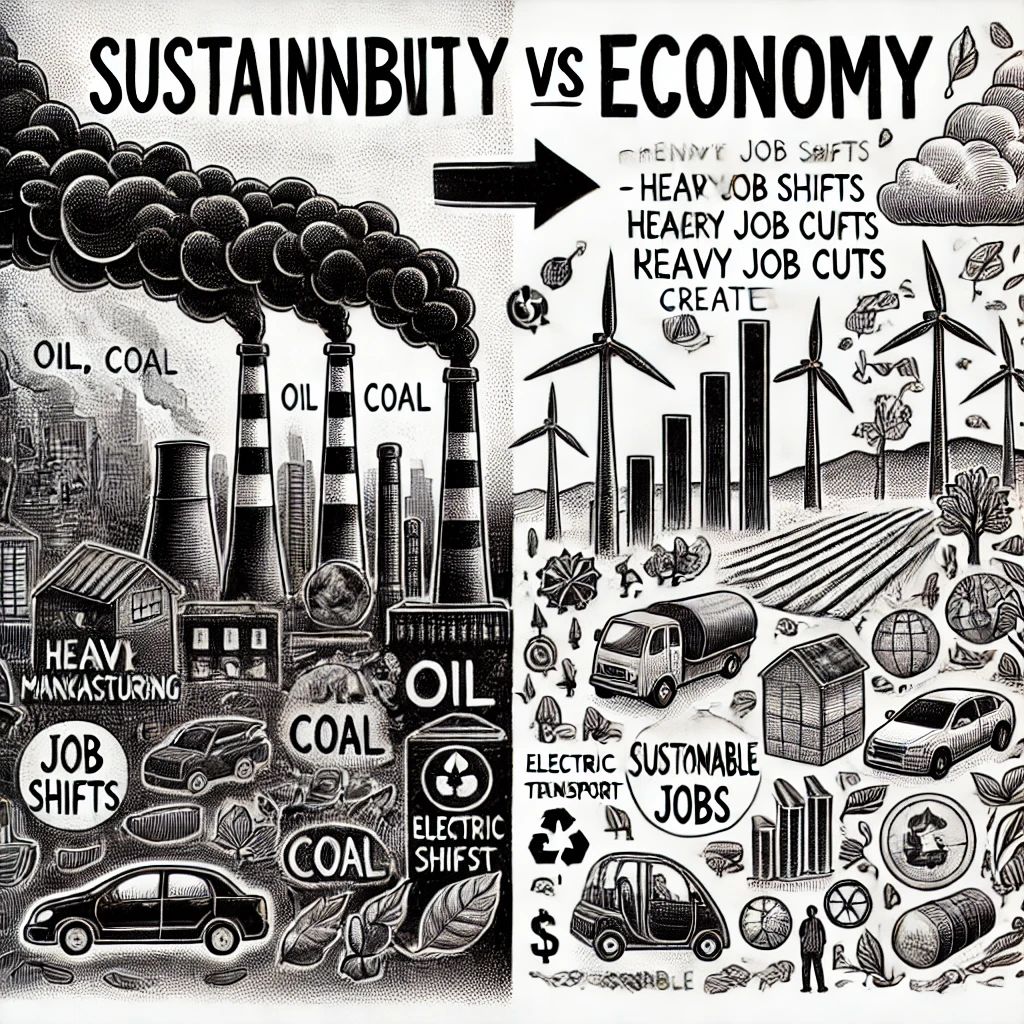
🚨 RealityCheck: Transitioning these industries overnight would shake economies to the core.
💰 TheEconomicCrashPotential
🔻 JobLosses in FossilFuel Sectors – 34M jobs globally depend on oil, coal, and heavy industries. (ILO, 2025)
🔻 GDPImpact on EmergingMarkets – India, China, and Indonesia rely on fossilfuels for 20-35% of GDP. (World Bank, 2025)
🔻 SupplyChain Disruptions – 42% of global logistics, steel, and chemicals are tied to high-emission industries. (McKinsey, 2025)
🔻 EnergyTransition Costs – Full decarbonization needs #$275T investment by 2050—but who’s paying? (IEA, 2025)
📌 TheDilemma: Accelerating sustainability risks a financialcrisis, while delaying it fuels climate disaster.
🔄 IsThereAMiddlePath?
🏆 IndustriesFindingBalance:
✅ SaudiAramco’s CarbonCapture Push – #$50B invested, but still expanding fossilfuel extraction.
✅ Tesla & BYD’s EVRevolution – EVs now 18% of global carsales, but lithiummining is a sustainability disaster.
✅ GreenSteel Investments (Hybrit, H2GreenSteel) – Promising tech, but adoption is too slow.
🚨 TheProblem: Green initiatives often don’t move fast enough—or they create new environmental costs.
🏆 KeyTakeaway: The TradeOff No One Wants to Talk About
📌 GoingGreen could be an economic revolution if planned strategically.
📌 ItShouldBe a shift that protects jobs, not eliminates them overnight.
📌 ItWouldBe an economicdisaster if industries collapse before sustainable alternatives scale.
👉 CanTheWorldAffordToDecarbonize without crashing economies? Drop your insights below! 👇
Originally published on LinkedIn on 2025-02-20 03:57:07: https://www.linkedin.com/feed/update/urn%3Ali%3AgroupPost%3A82951-7298188896939479040
Asia’s Carbon_Market_Race: Who’s Leading and Who’s Lagging?” 🌏💨
Carbon markets are booming across Asia as nations compete to turn emissions into economic opportunities. But with different strategies at play, who’s actually making an impact, and who’s just carbon hustling? Let’s break it down data-first.
🇨🇳 China: The World’s Biggest Carbon Market
✅ Launched in 2021, covering 40% of national emissions.
✅ Expanding to heavy industries like cement & steel.
🚨 Challenge: Weak carbon pricing (~$8/ton) reduces impact. (Source: ICAP, 2024)
🏆 Verdict: Huge scale but weak incentives.
🇮🇳 India: The Emerging Carbon Giant
✅ Legislated in 2022, evolving into a regulated market.
✅ Integrating Renewable & Energy Savings Certificates by 2025.
🚨 Challenge: No firm carbon pricing yet. (Source: Ministry of Power, 2024)
🏆 Verdict: High potential, still in execution mode.
🇸🇬 Singapore: The Smart Carbon Hub
✅ Rising carbon tax from $5/ton (2022) to $50-80/ton by 2030.
✅ Pioneering biodiversity credits for ecosystem conservation.
🚨 Challenge: Small domestic market, reliant on external trading. (Source: Singapore Gov, 2024)
🏆 Verdict: Innovating beyond carbon into full environmental markets.
🇯🇵 Japan: The Tech-Driven Trader
✅ Carbon trading exchange launched in 2023 with investor backing.
✅ Banks investing heavily in climate advisory firms.
🚨 Challenge: Needs stricter corporate compliance. (Source: METI Japan, 2024)
🏆 Verdict: Strong financial backing but low enforcement
🇮🇩 Indonesia: The Controversial Play
✅ First global carbon credit transactions tied to energy projects.
✅ Huge potential from rainforests & nature-based solutions.
🚨 Challenge: Heavy reliance on fossil fuel-linked credits raises greenwashing concerns. (Source: Financial Times, 2024)
🏆 Verdict: Big opportunity, but investor skepticism is rising.
🇲🇾 Malaysia: The Carbon Market Architect
✅ Bursa Carbon Exchange (BCX) launched in 2022, first Shariah-compliant carbon trading platform.
✅ Voluntary Carbon Market (VCM) enabling corporate offsets.
✅ Carbon Tax by 2026 for high-emission industries.
🚨 Challenge: Needs stronger policy enforcement & carbon pricing clarity. (Source: PwC, 2024)
🏆 Verdict: Well-structured but awaiting execution impact.
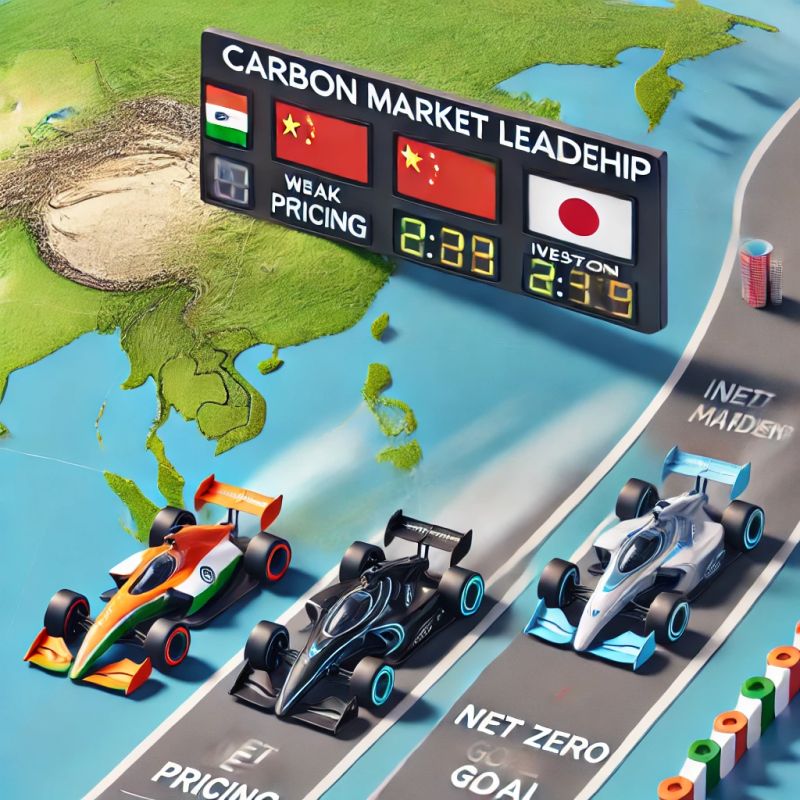
📊 Who’s Winning the Carbon Market Race?
China = Biggest but Weak Pricing
India = High Potential, Early Stage
Singapore = Smartest Model, Small Scale
Japan = Investment-Driven, Needs Enforcement
Indonesia = High Risk, High Reward
Malaysia = Structuring Well, Needs Execution
🚀 The Future? Asia’s carbon markets must balance financial opportunities with real emission cuts—or risk becoming just another greenwashing tool.
👉 Which country’s approach will set the global standard?
CarbonMarkets AsiaLeadership NetZero Sustainability GreenInvesting ClimateAction

Originally published on LinkedIn on 2025-01-29 07:31:38: https://www.linkedin.com/feed/update/urn%3Ali%3AgroupPost%3A82951-7290270350309756931

