🌱 GreenIsTheNewLean
KtalystInsights | SmartSustainability | NetZeroBusiness | GreenMargins
> “It’s not just the Earth we’re saving. It’s the balance sheet.
Sustainability has left the CSR desk — and entered the C-suite.
Here’s the data AND proof that going green is the leanest business strategy today.
📊 5Data-Backed Reasons + Case Studies Why Green = Growth
1️⃣ 💡 Energy Efficiency = 30% OPEX Savings
💬 Case Study: Infosys (India)
Reduced per capita energy consumption by 55% since 2008
Achieved carbon neutrality in 2020 — saving #₹500 crore (~$60M) in energy and offset costs
👉 [Source: Infosys ESG Report]
2️⃣ 📦 Packaging Optimization = 20% Cost Reduction
💬 Case Study: Unilever India
Switched to lightweight, recyclable sachets & cartons
Saved #₹300 crore (~$36M) over 3 years by reducing material and logistics costs
👉 [Source: Unilever Sustainability Dashboard]
3️⃣ 👩💼 Talent Preference = 67% GenZ Alignment
💬 Case Study: Schneider Electric
Ranked consistently in Top10 Sustainable Employers
Improved retention by 15% among early-career hires
Launched global Green Employee Training Program
👉 [Source: Forbes, Schneider CSR Report]
4️⃣ 📈 ESG-Driven Outperformance = +12.4% ROI Boost
💬 Case Study: Tata Group (TCS & Tata Steel)
Tata Steel’s decarbonization roadmap boosted investor confidence
TCS integrated AI for energy efficiency — saving #$25M/year
Tata Group’s ESG stocks have outperformed Nifty by 10% in the last 3 years
👉 [Source: BSE, Moneycontrol]
5️⃣ ♻️ Circular Economy = New Revenue Streams
💬 Case Study: Dalmia Cement
Recycled industrial waste as alternative fuel
Reduced thermal energy cost by 15–20%
Declared goal to become carbon-negative by 2040
👉 [Source: CII, Dalmia Reports]
🔍 KtalystTakeaway:
✅ Reduce energy and packaging costs
✅ Attract and retain top talent
✅ Increase investor trust and returns
✅ Open new circular revenue pathways
✅ Meet Net Zero goals — with margin uplift
> 💡 “Sustainability is not a sacrifice. It’s a strategic upgrade.
💬 Are you still treating green as a cost center?
Let’s decode your GreenMargins together.
Originally published on LinkedIn on 2025-07-03 17:53:26: https://www.linkedin.com/feed/update/urn%3Ali%3AgroupPost%3A82951-7346596949829062656
GoogleDropsDEITargets: What Does It Mean for the Future of Inclusive Hiring?
📢 BreakingNews: Google has officially ended its diversity hiring targets, stating it will no longer have #”aspirational goals” for workforce representation. This move follows legal and political pressures around DEI (Diversity, Equity, and Inclusion) initiatives, particularly for federal contractors.
📊 TheBackdrop
🔹 DEI hiring practices aimed to increase representation across underrepresented groups in the workforce.
🔹 90% of Fortune 500 companies have dedicated DEI programs.
🔹 Diversity-driven companies outperform industry benchmarks by 35% in financial returns (McKinsey).
🔹 75% of job seekers consider workforce diversity an important factor in choosing an employer (Glassdoor).
🔄 WhatChanges at Google?
📌 No more workforce representation targets → Google will stop setting hiring quotas based on diversity metrics.
📌 Reviewing DEI programs → Existing policies and hiring practices are under internal review.
📌 Retaining inclusion efforts → Google states that it will continue supporting employee resource groups and build inclusive products.
⚖️ TheLargerDebate
✅ Proponents say:
✔️ Encourages merit-based hiring rather than diversity quotas.
✔️ Reduces legal risks amid growing scrutiny on DEI initiatives.
⚠️ Critics argue:
❌ DEI targets hold companies accountable for inclusive hiring.
❌ Without targets, diversity progress may slow down in male-dominated sectors like tech.
🚀 WhatNext?
With Google redefining its diversity strategy, will other tech giants follow?
👥 Is this a step toward equal opportunity or a setback for workplace diversity?
Drop your thoughts below! ⬇️
DiversityMatters HiringTrends WorkplaceInclusion CorporateStrategy
Originally published on LinkedIn on 2025-02-06 11:43:22: https://www.linkedin.com/feed/update/urn%3Ali%3Ashare%3A7293232805738651649
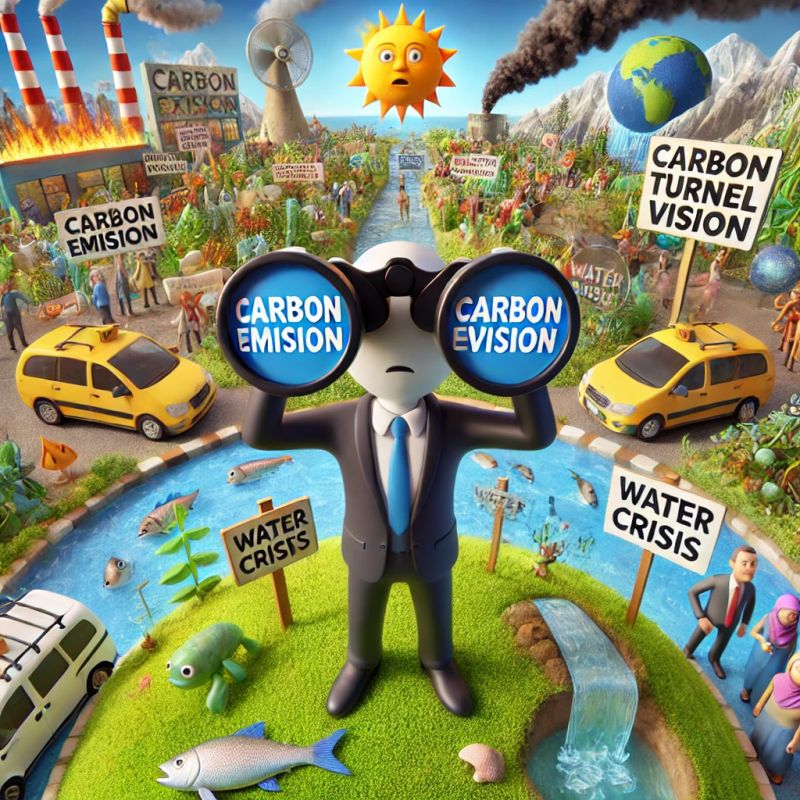
CarbonTunnelVision Gigantic_Mistake: Are We Missing the Big Picture? 🌍🌱
What is Carbon Tunnel Vision?
Focusing solely on carbon emissions while ignoring other sustainability factors like biodiversity, water, pollution, and equity.
KeyStats:
🟢 Afforestation_Gone_Wrong
Fact: Non-native tree plantations in Chile increased carbon storage but reduced local biodiversity by 60%. (Source: UNEP, 2023)
🔵 Water_Trade-Offs in Agriculture
Fact: Low-carbon crops like almonds require 1.1 gallons of water per almond, worsening droughts in water-scarce regions. (Source: WWF, 2023)
🟣 Biodiversity_Loss
Fact: Solar farms in India save 1.2M tons of CO₂ annually, but displace endangered wildlife habitats. (Source: WRI, 2023)
🟠 Pollution Ignored
Fact: Factories cutting carbon emissions often increase water and soil pollution by 30-40%. (Source: IPCC, 2023)
🔴 Social Impact Overlooked
Fact: Renewable energy projects displaced 42 million people globally between 2000 and 2022. (Source: Oxfam, 2023)
Takeaway
Carbon_Tunnel_Vision limits true sustainability. To create a balanced future, we must go BeyondCarbon and adopt HolisticStrategies that protect ecosystems, water, and communities. 🌱
👉 Are your sustainability goals stuck in the tunnel? Time to zoom out!
Sustainability ClimateAction ESG Leadership
Originally published on LinkedIn on 2025-01-25 06:05:01: https://www.linkedin.com/feed/update/urn%3Ali%3AgroupPost%3A3880479-7288799002844667904
NamasteGreenIndia : Ethanol producer BCL Industries
BCL Industries, a major grain-based ethanol and ENA producer in India, is expanding into the biodiesel sector.
A 75 KLPD biodiesel plant is under construction in Bathinda, Punjab, with statutory clearances and civil work in progress.
The new plant will use technical maize_oil from their maize-based ethanol production, creating full vertical integration for greater efficiency.
This expansion supports India’s biofuel initiatives, including the Ethanol_Blending_Program and the 5% biodiesel blending target by 2030.
BCL aims to increase its ethanol production capacity to 850 KLPD over the next year, aligning with rising biofuel demand.
India’s Ethanol Blending Program (EBP) aims to achieve a 20% ethanol_blend in petrol by YR_2025 to reduce dependency on crude oil imports and lower carbon emissions.
By YR_2030, the Indian government targets to save nearly $4 billion annually by substituting imported fuel with domestically produced ethanol.
Benefits of EBP 2030: Apart from reducing emissions, the program will enhance rural incomes, increase farmer profitability, and create new employment opportunities in the biofuel industry.
BCL aims to increase its ethanol production capacity to 850 KLPD over the next year, aligning with rising biofuel demand.
In Q1 FY2025, BCL reported a 47.3% year-on-year increase in total revenue, reaching approximately USD 79.5 million.
The distillery segment saw a significant growth in ethanol volumes, doubling to 50,000 KL compared to the previous year.
The company has allocated approximately USD 16.9 million for the biodiesel plant and a new power plant, with around USD 10.9 million funded by debt and the remainder from internal accruals.
Leveraging its expertise in maize processing, BCL is positioned to contribute to India’s renewable energy goals while enhancing operational capabilities.
https://lnkd.in/dQ8NUhbw
Originally published on LinkedIn on 2024-11-04 15:50:45: https://www.linkedin.com/feed/update/urn%3Ali%3Ashare%3A7259230602892075008

