What_You_Havenot_Heard_About_the_New_Income_Tax_Bill 2025 💼💰
While headlines have focused on new tax slabs and simplified tax laws, there are hidden provisions in the Income Tax Bill 2025 that could quietly reshape how individuals and businesses manage their taxes. Here’s what hasn’t made the news yet—but should be on your radar.
🔎 What’s New & What You Haven’t Heard Yet
📌 NRIs Now Have a Tax Wake-Up Call → If you earn over #₹15 lakh ($18,000) in India, you’re now classified as a tax resident. This means taxation on salary, property income, capital gains, and dividends from Indian sources. But foreign earnings? They remain outside India’s tax net for now.
📌 The Unspoken Impact on Gig Workers & Freelancers → With the rise of digital taxation and AI-driven audits, freelancers, content creators, and independent consultants who previously operated in a tax grey area may now be pulled into the formal tax system.
📌 Your Digital Footprint is Being Watched → The bill lays the foundation for AI-driven tax compliance tracking. Expect automated scrutiny of large transactions, crypto earnings, and foreign remittances linked to India.
📌 No Clear Carbon Tax Yet—But Watch This Space → Sustainability is a global priority, but this bill doesn’t yet introduce green tax incentives or penalties for high-emission businesses. However, future amendments may align India’s tax policies with ESG (Environmental, Social, and Governance) goals.
📌 Real Estate May No Longer Be a Safe Tax Haven for NRIs → With stricter capital gains taxation, NRIs who buy and sell Indian property may face higher tax liabilities, especially if they don’t reinvest in eligible tax-saving assets.
📌 More Tax Scrutiny for High-Income Earners → If you fall in the #₹20 lakh+ ($24,000+) bracket, tax authorities may now flag large transactions and offshore holdings, ensuring better compliance without manual intervention.
📉 What Should You Do Next?
✅ NRIs: Review your income sources from India and DTAA agreements in your country to avoid double taxation.
✅ Freelancers & Gig Workers: Ensure your earnings are properly declared to avoid potential penalties.
✅ Investors: Keep an eye on potential capital gains tax reforms affecting stocks, crypto, and real estate.
✅ Businesses: Start preparing for digital compliance requirements that could change audit processes.
💡 “The real impact of tax reform isn’t in what’s obvious—it’s in what changes behind the scenes.
💬 What are your thoughts? Have we missed an important tax change that will impact professionals and businesses? Let’s discuss!

Originally published on LinkedIn on 2025-02-13 11:43:42: https://www.linkedin.com/feed/update/urn%3Ali%3Ashare%3A7295769602515431426
NamasteIndia’s Economic_Ascent: Leading_Among_Unequals and the Path to Higher Per Capita Income
India is projected to lead global economic growth over the next decade, driven by a youthful population, significant infrastructure investments, policy reforms, and rapid technological adoption. This positions India as a major economic powerhouse.
Digging_deeper Per_Capita_Income_Comparison
1. India:
Current_$2,500
Projected (2034): Significant rise, but lower than advanced economies.
2. China:
Current: $12,000
Projected (2034): Higher than India.
3. Vietnam:
Current: $3,500
Projected (2034): Potentially surpassing India.
4. Bangladesh:
Current: $2,200
Projected (2034): Likely below India.
5. Philippines:
Current: $3,500
Projected (2034): Higher than India.
India_Path to $12,000 Per Capita Income
India’s per capita income is expected to reach $4,000 by 2030. Sustaining a 6-7% growth rate, it could take 20-25 years to reach $12,000, around 2050.
Influencing Factors
Continued economic reforms.
Investment in education and healthcare.
Leveraging technology.
Infrastructure development.
Conclusion
India’s growth highlights its potential to become a leading global economy. However, improving individual economic well-being remains a challenge, requiring sustained efforts in various sectors.
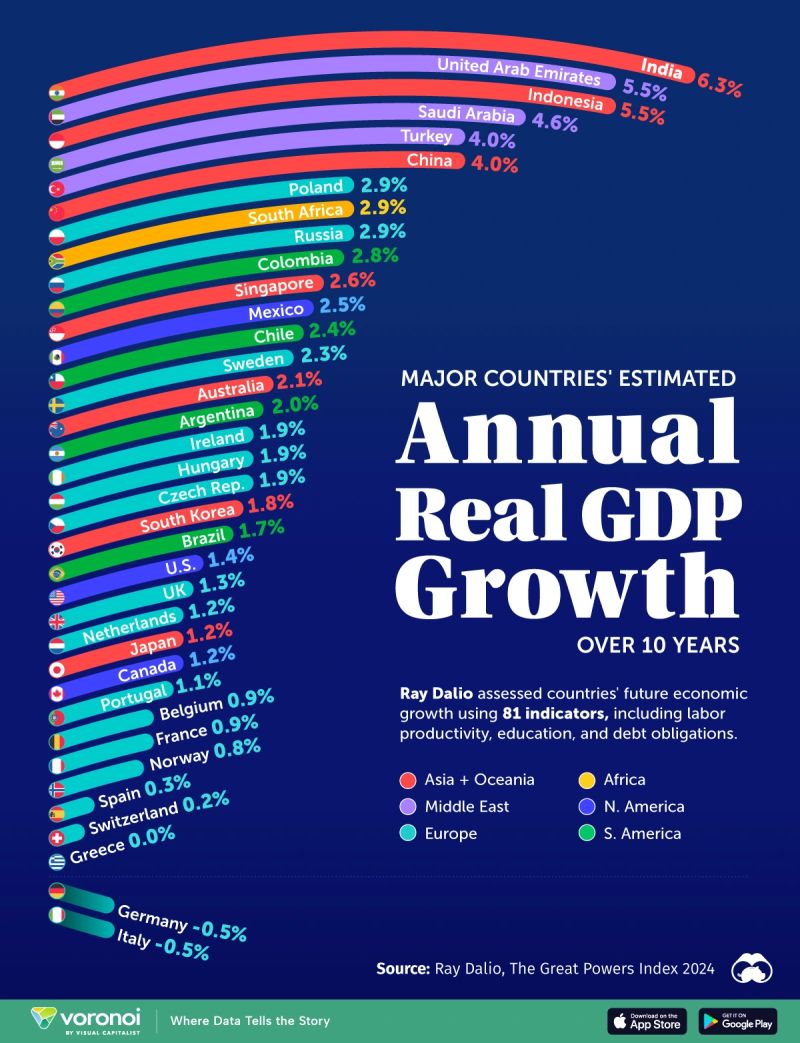
Originally published on LinkedIn on 2024-09-24 09:56:55: https://www.linkedin.com/feed/update/urn%3Ali%3Ashare%3A7244283652468043777
NamasteBudgetIndia2024: Key Takeaways
Finance Minister Nirmala Sitharaman’s Budget 2024:
Economic Growth and Fiscal Policy:
GDP Growth: Projected growth rate of 6.5-7% for the current financial year.
Fiscal Deficit: Targeted to reduce to 5.1% of GDP in 2024-25, with a further reduction to 4.5% by 2025-26.
Taxation:
Angel Tax Abolished: Relief for start-ups and investors.
Personal Income Tax: No major changes, but some adjustments in tax slabs to benefit middle-income groups.
Infrastructure and Capex:
Capital Expenditure: Increased by 37% to boost infrastructure development.
Green Initiatives: Significant investments in renewable energy projects, including solar and wind power.
Social Welfare:
Healthcare: Increased allocation for healthcare infrastructure and services.
Education: Enhanced funding for educational institutions and skill development programs.
Industry and Innovation:
MSMEs: Special focus on micro, small, and medium enterprises with increased funding and support.
Digital Economy: Continued push for digitalization and tech-driven growth.
Agriculture and Rural Development:
Farmers’ Welfare: Increased subsidies and support for sustainable farming practices.
Rural Infrastructure: Investments in rural roads, housing, and sanitation.
Overall, the budget aims to balance growth with fiscal prudence, while focusing on infrastructure, social welfare, and green initiatives.
Big changes in income tax slabs, STT, STCG, LTCG, and angel tax
Download Economic Times App to stay updated with Business News – https://lnkd.in/gvCUBh-r
Originally published on LinkedIn on 2024-07-23 09:57:48: https://www.linkedin.com/feed/update/urn%3Ali%3Ashare%3A7221453440915238912

