Sustainability should change behaviour, not exhaust organisations.
That’s the difference the EU Omnibus is trying to create.
And from a world-impact lens, that difference matters.
Before EU Omnibus vs After EU Omnibus
BEFORE
🔸 CSRD, CSDDD & EU Taxonomy running in parallel
🔸 ~50,000 companies pulled into scope, often reporting the same data multiple times
🔸 30–40% of ESG budgets spent on compliance mechanics, not outcomes
🔸 SMEs in EU value chains absorbing 2–5% EBITDA pressure, weakening community resilience
🔸 Leaders managing ESG as a reporting project—not a risk or capital-allocation tool
What this meant for the world:
More paperwork.
Less money reaching climate action, worker safety, biodiversity, and communities.
AFTER (EU Omnibus intent)
🔹 Aligned disclosure & due-diligence logic
🔹 Reduced duplication across ESG datapoints
🔹 Phased timelines → fewer panic hires & rushed IT spends
🔹 Better data consistency across suppliers & value chains
🔹 ESG moves closer to boardroom decision-making
What this means for the world:
Clearer signals on real risk.
More capital freed for actual impact.
Stronger, more resilient value chains.
What really changes
➡️ From volume of reporting → quality of insight
➡️ From compliance fear → execution confidence
➡️ From ESG fatigue → ESG credibility
This isn’t dilution.
It’s regulatory maturity.
Because sustainability doesn’t fail due to lack of ambition it fails when systems reward disclosure over decisions.
What helps the world isn’t more data.
It’s clarity that moves money, responsibility, and behaviour in the right direction.
Question for leaders:
Is your ESG effort reducing real-world risk—or just producing reports?
Dr. Anju Sharma
KtalystInsights EUOmnibus ESG Leadership BusinessExcellence Impact MrsSustainability
Abbreviations
EU: European Union | CSRD: Corporate Sustainability Reporting Directive | CSDDD: Corporate Sustainability Due Diligence Directive | ESG: Environmental, Social and Governance
Originally published on LinkedIn on 2025-12-16 13:34:22: https://www.linkedin.com/feed/update/urn%3Ali%3AgroupPost%3A82951-7406688141094535168
🌐 TheNewEra: Sky_has_New_Regulators
Atmospheric Governance
Dr. Anju Sharma
KtalystInsights | MrsSustainability)
Climate governance has quietly changed hands not from governments to corporations, but from disclosures to detection.
A new constellation of climate-intelligence networks ClimateTRACE, GHGSat, WattTime, CarbonPlan, Earthrise, OceanMind is now shaping global credibility through data physics, not promises.
1️⃣ The Global ClimateIntelligence Infrastructure
1. Scale of Observation
a. 300+ satellites track CO₂, CH₄, NO₂, aerosols, forest loss.
b. 11,500+ sensors map methane, biomass, oceans, heat signatures.
c. 72,000+ industrial facilities monitored for real-time footprints.
2. Global Coverage
a. Climate TRACEmaps 352 million emission sources.
b. GHGSat detects methane plumes as small as 25–50 metres.
c. WattTime assesses carbon intensity across 210+ grids (~99% of global consumption).
3. Open-Source Transparency
a. APIs, dashboards, real-time alerts.
b. No permission needed — emissions become public the moment they occur.
c. Accountability shifts from reported → visible.
2️⃣ What the Data Is Revealing
1. Methane Reality
US & China methane emissions: 2–3× higher than official inventories.
2. Land-Use & Deforestation Truths
a. Indonesia’s peatland emissions: 41% higher than reported.
b. Brazil’s Amazon: 23–32% underreported in specific zones.
c. CarbonPlan flagged 30 million tCO₂ in California offsets as over-credited.
3. Electricity Emissions (Scope 2 Reality)
a. India peaks: 950–1,050 gCO₂/kWh.
b. EU wind/solar hours: <150 gCO₂/kWh.
c. China provinces: 500–1,200 gCO₂/kWh.
3️⃣ Why This Matters for Boards & CEOs (The Governance Shift)
1. Impact Ratings Will Change
a. Satellite-mapped methane leaks enter ESG ratings.
b. Deforestation alerts reshape commodity risk scores.
c. Offset validity recalibrated by scientific audits.
2. Transition Risk Gets Priced
a. Methane super-emitters flagged as high-risk assets.
b. CBAM applies actual emissions, not disclosed ones.
3. Litigation & Compliance Accelerate
a. Satellite evidence strengthens cases of misreporting.
b. Maritime emissions benchmarked through AIS + radar data.
4️⃣ Impact, Challenge & Risk — The Reality Check
1. Impact
a. Atmospheric due diligence replaces sustainability storytelling.
b. Real-time detection influences policy & procurement.
c. Investors reward transition truth with premium valuations.
2. Challenges
a. Many countries lack capability to interpret satellite data.
b. Cross-border plume attribution sparks political friction.
c. Corporate inventories lag behind detection cycles.
3. Risks
a. Green-claim invalidation becomes common.
b. Offset portfolios risk devaluation.
c. CBAM penalises opaque or inaccurate disclosures.
The energy world is shifting from narratives to evidence & those who thrive will be the ones whose climate claims already match what the satellites see.
Originally published on LinkedIn on 2025-11-18 21:44:03: https://www.linkedin.com/feed/update/urn%3Ali%3Ashare%3A7396664512910704640
ValleyOfVoids | When Leadership Wears Empathy and Leaves Gaps Unchecked
> “He called them guests. The valley called it home. The bullets called it war. And now, they call it an incident. May the souls rest in peace—because clearly, leadership won’t let the living rest their faith.” MyHeartAches
KashmirChronicles | A Timeline of Terror, Tourism & LeadershipAccountability
Yr2000 | Amarnath Pilgrimage Massacre
What: 89+ people killed in a coordinated militant strike
Leader: FarooqAbdullah (JKNC)
Impact: Exposed early vulnerabilities in YatraSecurity
Response: ToughRhetoric, but little SystemicOverhaul
Yr2008 | LandTransferProtests & Civil Unrest
Leader: GhulamNabiAzad (INC) → Governor’sRule
What: 40+ civilians killed in CommunalPolitical clashes
Outcome: Lost public mandate. Early signs of TrustBreakdown
Yr2009–Yr2015 | OmarAbdullah – Between Vision and Vacuum
Yr2010: 120+ civilians killed during MachilProtests
LeadershipLapse: Delay in acknowledging public anger worsened unrest
Yr2011–Yr2013: Repeated LOCViolations, internal PreparednessLagged
Yr2014: 222 terror incidents | 28 civilian deaths
Despite falling national militancy, LocalVolatility persisted
Tourism: Recovery halted by repeated flare-ups
> Omar’s era was marked by EarnestSpeeches, yet InstitutionalInertia. The gap between Intent and Impact widened.
Yr2017 | AmarnathYatraAttack
Leader: MehboobaMufti (PDP-BJP)
What: 7 pilgrims killed, 32 injured
Response: Strong condemnation, but exposed ConvoyRouteVulnerability
Yr2019 | PulwamaAttack & Article370 Revocation
Leader: PresidentsRule
What: 40 CRPF jawans killed – largest single-day loss
Aftermath: OmarAbdullah detained under PSA.
Previously warned against HardlinePolicy escalations.
Yr2024–Yr2025 | ReturnOfOmar & the PahalgamMassacre
Yr2024: Omar sworn in again as ChiefMinister
Yr2025: 26 tourists killed in Pahalgam
Tourism was booming: 2.7Million arrivals in KashmirValley in Yr2023
Failure: No LayeredSecurity despite known risks during peak season
Response: Strong words, attended funerals—yet PublicPerception questions his Preparedness
KtalystTake:
> “Leadership is not about lamenting loss. It’s about ensuring it doesn’t repeat. For Omar, the shadow of Yr2010 now echoes in Yr2025.
TourismUnderThreat | SecurityGap | EmpathyVsExecution | KashmirTerrorTimeline | KtalystKeystone | CrisisLeadership | SubtleFailures


Originally published on LinkedIn on 2025-04-23 14:25:14: https://www.linkedin.com/feed/update/urn%3Ali%3Ashare%3A7320815014976663556
IndiaAtCOP26: Are We Walking the Talk — or Just Talking the Talk?
You cannot greenwash a deadline. Climate targets don’t wait, and neither should leadership.
Anju Sharma
In 2021, India made a powerful promise to the planet.
By 2025, the applause has faded. It’s time for accountability — not just ambition.
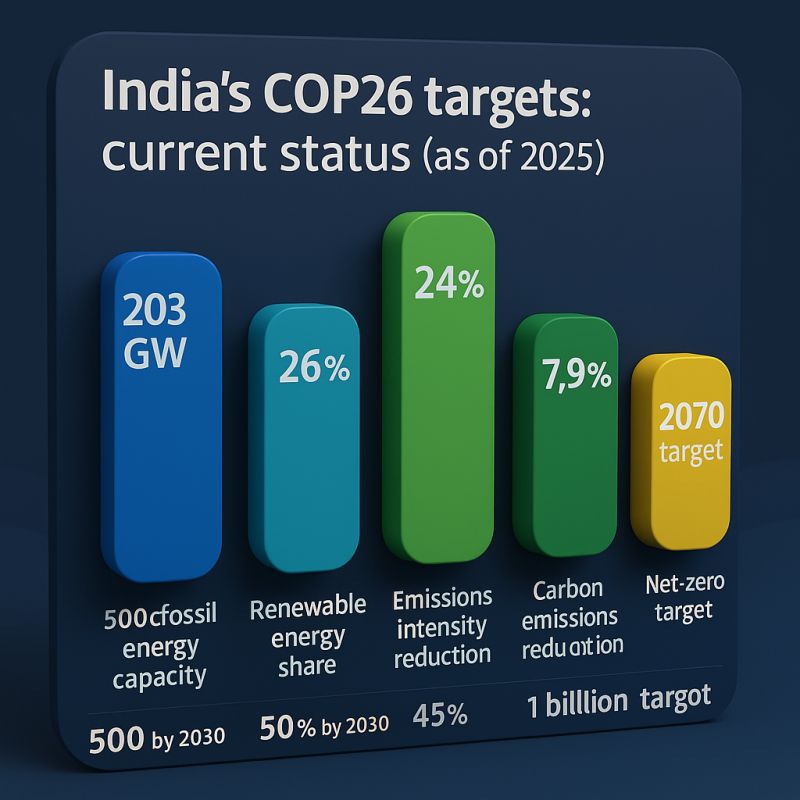
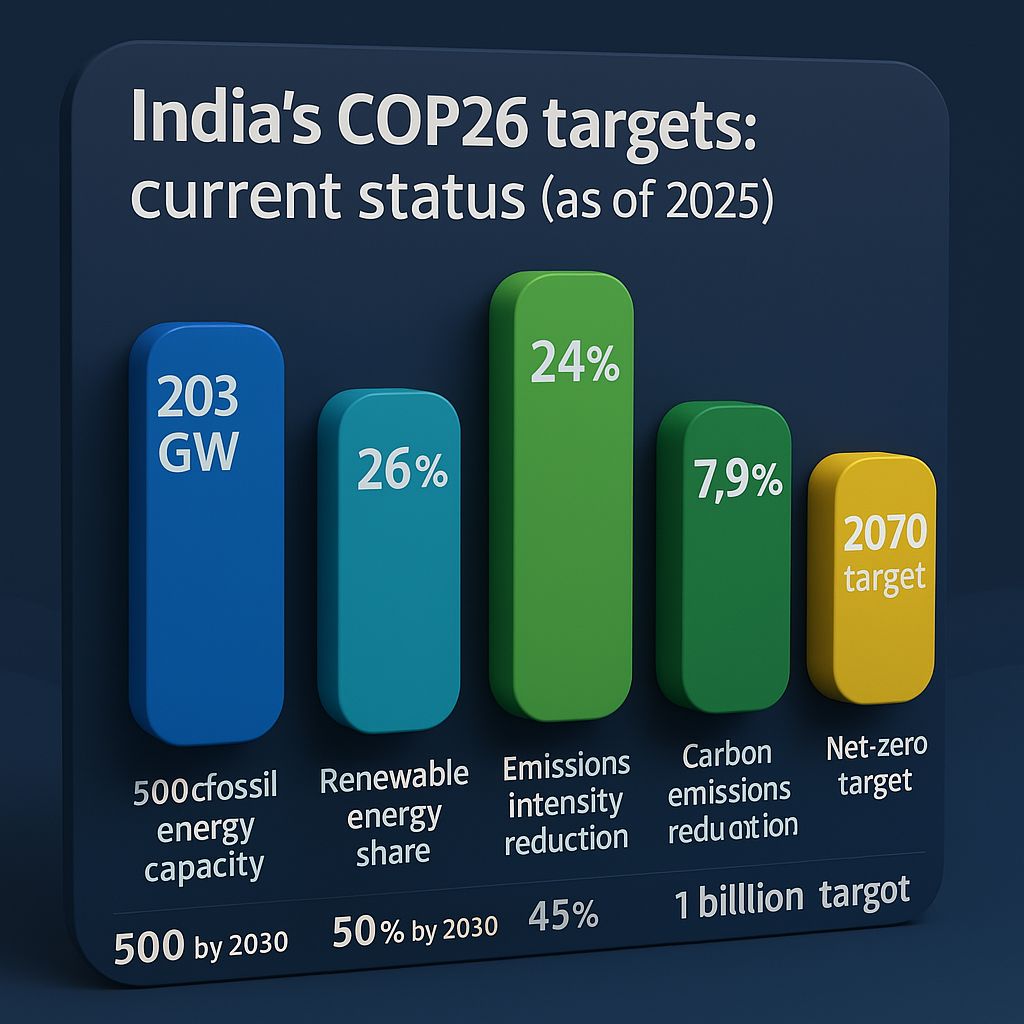
The 5Targets. The 5Year Reality Check:
🔋 500 GW Non-Fossil Energy by 2030
✅ 203.18 GW achieved (as of Oct 2024)
⚠️ Slowing pace. Grid and land hurdles choking large projects.
⚡ 50% Power from Renewables
✅ 26% YoY growth in clean energy (Jan 2025)
⚠️ Rooftop solar under 15% of target. State policies? All over the place.
📉 45% Emission Intensity Cut by 2030
✅ 33% achieved
⚠️ Driven by GDP growth — not aggressive emissions management.
🌫️ 1 Billion Tonnes CO₂ Reduction by 2030
✅ 7.9% drop in 2020
⚠️ But coal production surged 9% in 2024. Net gains? Neutralized.
🕰️ Net-Zero by 2070
✅ Roadmap submitted.
⚠️ No sectoral mandates. No accountability. No serious momentum.
Where’s the Leadership?
🚫 Ministries in silos
🚫 Power sector still fossil-heavy
🚫 EV infra crawling
🚫 Agriculture untouched
Are we really driving the transition — or just riding a global narrative?
And the Money?
💰 India has raised billions — Green Bonds, FDI, PLI schemes…
But…
❌ Utilization = uneven
❌ Outcome tracking = missing
❌ Impact per rupee = unclear
The climate rupee has wings — but no flight path.
The Fix — And Fast
✅ Appoint sector-wise climate champions with KPIs
✅ Launch public climate spend dashboards (Geo-tagged)
✅ Train bureaucrats in ESG, climate finance & tech
✅ Incentivize state-wise performance on climate goals
At_This_Pace, Where_Will_We_Land?
⏳ 3/5 targets may be missed
⏳ Investor confidence may fade
⏳ India’s brand as a climate leader may turn into a paper tiger
India doesn’t lack ambition.
It lacks the fire to deliver.
Time to shift gears.
From policy promises to powerful performance.
Originally published on LinkedIn on 2025-03-30 11:31:32: https://www.linkedin.com/feed/update/urn%3Ali%3AgroupPost%3A4385073-7312073993270784000
MistWashed Priorities in Sustainability: When Data Exposes the Gaps
Sustainability often looks good but lacks real impact. Here’s where well-intended efforts get lost in the fog of MistWash:
1. Eco-Friendly Illusions
✅ Recycled & biodegradable products
❌ High carbon footprints from transport & packaging
🔢 A bamboo toothbrush shipped globally > Higher CO₂ than local plastic one
Plastic Bans vs. Bigger Pollutants
✅ Straws & cutlery banned
❌ Ignored: Industrial plastic waste, fishing nets
🔢 Straws = 0.03% of ocean waste | Fishing gear = 46%
3. Carbon Offsets: License to Pollute?
✅ Tree planting & carbon credits
❌ Excuse to keep emitting CO₂
🔢 NY–London flight emits more CO₂ than 12 trees absorb in a year
4. “Sustainable” Fashion = Overproduction
✅ Eco-friendly clothing lines
❌ Still polluting & microplastics in water
🔢 Fashion = 10% of global CO₂ & 35% of ocean microplastics
5. GreenBuildings ≠ Energy Efficient
✅ LEED-certified skyscrapers
❌ Glass-heavy designs need more cooling
🔢 30% more energy use vs. traditional buildings
6. RenewableEnergy: Unseen Costs
✅ Solar & wind farms
❌ Deforestation, wildlife displacement
🔢 15% of solar farms replace forests & wetlands
7. The Recycling Illusion
✅ More recycling efforts
❌ Mass production keeps growing
🔢 9% of plastic is recycled | 380M+ tons produced yearly
8. EVs: The Clean Energy Myth
✅ EVs reduce tailpipe emissions
❌ Coal-powered grids, lithium mining
🔢 EV battery production = 74% more CO₂ than gas car lifecycle
9. Greenwashing > Real Impact
✅ “Carbon Neutral” claims
❌ Offsets instead of real cuts
🔢 70% of corporate claims lack verified reductions
10. Aesthetics Over Impact
✅ Green walls & rooftop gardens
❌ Costly but negligible climate impact
🔢 Vertical gardens cost 10X more than planting trees
🚀 RealSustainability means: Less hype, more impact. Systemic change > Symbolic bans. Accountability > Optics.
ESG Sustainability ClimateAction ImpactOverImage
Originally published on LinkedIn on 2025-03-10 18:45:32: https://www.linkedin.com/feed/update/urn%3Ali%3AgroupPost%3A4385073-7304935456536715264
📚 KnowledgeSeries: Sustainability Taxonomy – The Rulebook for Green Investments 🌱💰
As #$5T in ESG investments grows, defining what is truly sustainable is critical. Enter Sustainability Taxonomy—a classification system ensuring green capital flows into real climate solutions, not greenwashing.
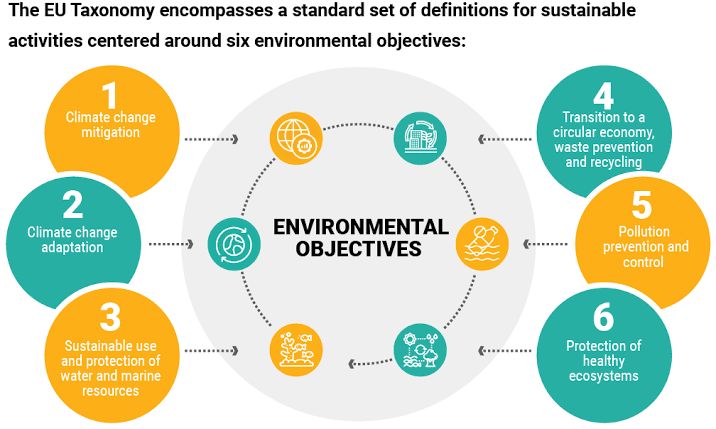
📊 EU Taxonomy – Setting the Global Standard
🟢 6 Environmental Objectives → Activities must significantly contribute to at least one while causing no harm to others:
Climate Change Mitigation
Climate Change Adaptation
Water & Marine Resource Protection
Circular Economy Transition
Pollution Prevention & Control
Biodiversity & Ecosystem Restoration
🟢 Impact → Covers 50K+ companies, shaping 80% of EU capital markets. (Source)
🟢 Challenges → Simplification Omnibus (2025 Proposal) could reduce company reporting, raising concerns about greenwashing risks. (Source)
🌍 Global Adoption: Who’s Following the EU Model?
🟢 Australia → Developing Sustainable Finance Taxonomy to attract #$200B+ in green capital. (Source)
🟢 China → Green Bond Principles aligned with EU Taxonomy in 2023, covering #$150B+ in issuances.
🟢 ASEAN → Launched ASEAN Taxonomy 2024, targeting climate finance growth in 10 nations.
🟢 US & UK → No official taxonomy, relying on SEC climate rules & UK Green Finance Strategy instead.
🔥 The Takeaway: Green Finance Needs Clear Rules
📌 #$5T+ ESG investments need clarity—taxonomy prevents greenwashing.
📌 EU model sets the benchmark, but simplification risks loosening standards.
📌 More countries adopting taxonomies → Will we see a global standard soon?
📢 Do we need a worldwide taxonomy for sustainability? Let’s discuss! 👇
Originally published on LinkedIn on 2025-03-04 03:47:30: https://www.linkedin.com/feed/update/urn%3Ali%3AgroupPost%3A2474261-7302535131989164034
🚨 Moody’s & Sustainability: ESG is Now a Credit Rating Factor! 📊💚
With #$40T in ESG assets under management, Moody’s is reshaping how financial markets assess creditworthiness. No longer just about profits & losses, a company’s sustainability risks now directly impact credit ratings, borrowing costs, & investment potential.
🔍 How Moody’s Integrates Sustainability into Credit Ratings
🟢 ESG factors impact the credit ratings of 18% of companies & governments rated by Moody’s. (Source)
📊 Issuer Profile Scores (IPS): Measures 15 ESG subfactors (climate risk, governance strength, social responsibility).
📊 Credit Impact Scores (CIS): Rates how ESG performance affects a company’s credit rating & risk profile.
📊 Second Party Opinions (SPOs): Validates Green Bonds & Sustainability-Linked Loans, ensuring funds are climate-aligned.
🔹 Moody’s now assesses over 3,000 entities based on ESG factors.
💰 ESG & Financial Impact: Why Credit Ratings Depend on Sustainability
🏦 Banks & Investors Are Watching
📌 Companies with poor ESG ratings face higher borrowing costs, as investors demand sustainability-linked loans & bonds.
📉 Carbon-Intensive Companies Are High-Risk
📌 Firms with high Scope 3 emissions face 15-20% valuation risks due to carbon pricing & regulatory changes. (Source)
🚀 Sustainability-Linked Bonds & Loans Are Surging
📌 #$1.6T in sustainability-linked bonds & loans have been issued, with Moody’s validating green claims to prevent greenwashing. (Source)
🌍 Moody’s ESG Leadership: Recognitions & Market Influence
🏆 FTSE4Good Index Inclusion (6 Years Running) → Recognizing top ESG performers.
🏆 EcoVadis Bronze Medal → Top 35% of global companies for sustainability.
🏆 CDP Supplier Engagement Leader → Among the top 4% of companies driving supply chain decarbonization. (Source)
🔥 The Takeaway: Sustainability is No Longer Optional
🟢 18% of Moody’s rated companies now have ESG-driven credit adjustments.
🟢 Investors demand transparent sustainability metrics before lending.
🟢 Greenwashing is no longer profitable—credit ratings now hold companies accountable.
📢 Should ESG be an even bigger factor in credit ratings? Let’s discuss below! 👇

Originally published on LinkedIn on 2025-02-27 04:39:26: https://www.linkedin.com/feed/update/urn%3Ali%3AgroupPost%3A82951-7300736262829711360
🚀 Sustainability in 2025: Who’s Leading, Who’s Lagging & What’s Changing? 🌍📉⚡
If sustainability were a race, some are sprinting, some are jogging, and others are still tying their shoes.
In 2025, sustainability is no longer just about ESGCompliance—it’s about survival. But as regulations shift, businesses hesitate, and grassroots efforts grow stronger, the question remains: Who is truly walking the talk?
📊 1. Europe is Tightening Rules—But Not for Everyone 🇪🇺
🔹 EU’s Corporate Sustainability Reporting Directive (CSRD) is evolving—planning to raise the reporting threshold from 250 employees & €40M turnover to 1,000 employees & €450M.
🔹 Impact? This will exempt thousands of smaller companies while still holding big corporations accountable.
🔹 RealityCheck: Is this a win for business flexibility or a loophole for greenwashing?
📌 Source: Reuters
📊 2. CEOs Know Sustainability = Profit, But Are They Acting? 📈
🔹 PwC’s 2025 CEO Survey: 🌱 29% of Irish CEOs skipped climate investments last year due to regulatory confusion—yet companies that link sustainability to executive compensation see higher revenues.
🔹 The Dilemma: CEOs acknowledge climate risks but struggle with unclear policies.
🔹 RealityCheck: Are companies stalling progress just because it’s complicated?
📌 Source: The Times
📊 3. Grassroots Action is Filling the Gaps 🌱🏡
🔹 Local Sustainability Wins: In Iowa City, a retirement community has diverted thousands of pounds of food waste from landfills—something that big corporations fail to do at scale.
🔹 The Takeaway: Real impact isn’t just about billion-dollar pledges—it’s about execution, big or small.
📌 Source: The Gazette
🏆 KeyTakeaway: The Sustainability Race in 2025
✅ Regulators could be making reporting easier, but risks of weaker accountability loom.
✅ CEOs should be making sustainability a financial strategy, not just PR.
✅ Communities are proving that action matters more than announcements.
💬 What’s your take? Are we moving forward fast enough, or just shifting responsibilities? Drop your thoughts below! 👇
Sustainability ESG ClimateAction GreenBusiness CorporateResponsibility CircularEconomy
https://lnkd.in/d-EBgCzk
Source / shared link: https://www.reuters.com/sustainability/eu-pare-back-sustainability-rules-companies-draft-shows-2025-02-22/
Originally published on LinkedIn on 2025-02-23 03:52:40: https://www.linkedin.com/feed/update/urn%3Ali%3Ashare%3A7299274941965721601
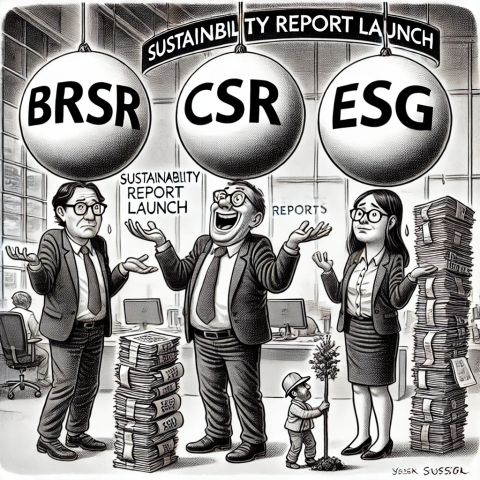
🚨 BRSR, CSR & ESG: Invading the Thin Line Between Sustainability & Showbiz! 🎭💰♻️
📌 RealityCheck:
CSR = Spending money.
BRSR = Reporting about spending money.
ESG = Rating the reports on spending money. None ensure real impact!
If a company plants a tree but spends twice as much marketing it—did it really go green?
In India’s corporate boardrooms, BRSR (Business Responsibility and Sustainability Reporting), CSR (Corporate Social Responsibility), and ESG (Environmental, Social, and Governance) are now mandatory checkboxes—but are they driving real impact or just polished PR campaigns?
🧐 BRSR vs. CSR vs. ESG: What’s Actually Happening?
🔹 CSR (Spend to Pretend?)
✔️ Companies must spend 2% of net profits on “good causes.” (Companies Act, 2013)
✔️ #₹14,300 Cr ($1.7B) spent in 2024—but 47% went to company-affiliated NGOs. (MCA, 2025)
✔️ Only 27% of CSR funds linked to sustainability. (SEBI, 2025)
🔹 BRSR (Report to Impress?)
✔️ Mandatory ESG disclosures for the top 1,000 listed firms. (SEBI, 2022)
✔️ 62% of reports claim “sustainability progress”—but no third-party verification. (ESG India, 2025)
✔️ 88% of firms skip reporting Scope 3 emissions (indirect pollution). (SEBI, 2025)
🔹 ESG (Ratings to Manipulate?)
✔️ Over $35T in global assets claim ‘ESG compliance’—but 70% lack real sustainability actions. (Morningstar, 2025)
✔️ India ranked 120th in ESG adoption—lagging behind Vietnam & Indonesia. (WEF, 2025)
✔️ 52% of ESG funds globally are now under scrutiny for ‘greenwashing’ claims. (EU Green Finance Report, 2025)
💰 Follow the Money: Greenwashing in Disguise?
🚨 If CSR was a school project, most companies would fail for copying answers.
🚨 If BRSR was a medical check-up, it would be self-diagnosed with no lab tests.
🚨 If ESG was a cricket match, most firms would just focus on looking good in the highlights.
🔎 Who’s Actually Doing Something?
🏆 The Real Deal:
✅ Tata Group: Large-scale renewable projects & real net-zero efforts.
✅ ITC: Circular economy & carbon-positive initiatives beyond paper.
✅ Hindustan Unilever: Science-based net-zero targets & sustainable sourcing.
🚨 The Greenwashers:
❌ Reliance: Talking renewables but expanding fossil fuel projects.
❌ Adani: Carbon-neutral claims exposed as accounting tricks.
❌ Vedanta: Reports “social impact,” but fined ₹120 Cr for pollution violations in 2024.

Originally published on LinkedIn on 2025-02-19 14:07:18: https://www.linkedin.com/feed/update/urn%3Ali%3Ashare%3A7297980065252843524
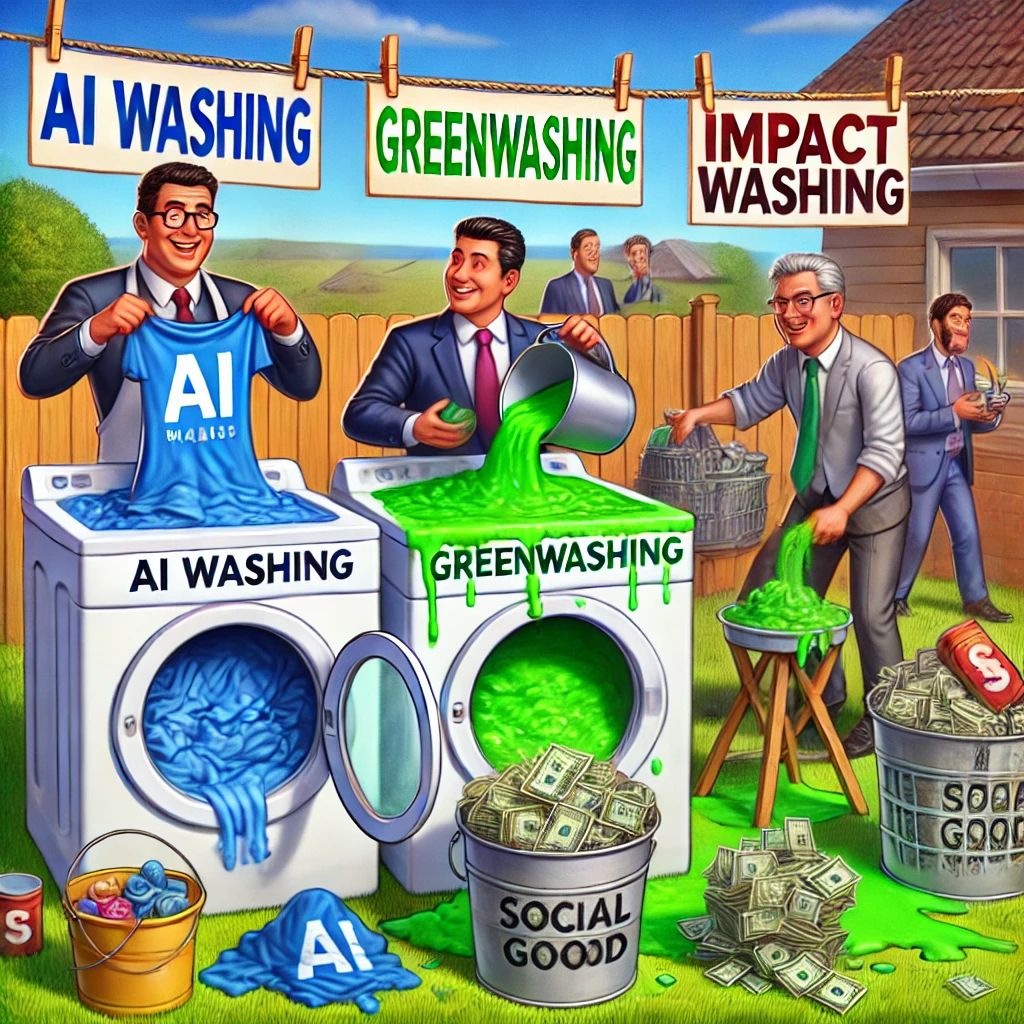
🚨 “The Corporate Hattrick of Deception: AI Washing, Greenwashing & Impact Washing!” 🤖💚🌍💸
If corporate Greenwashing was a sport, they’d be playing in the finals every year!
Just when AI Washing and Greenwashing weren’t enough, a third player has emerged—Impact Washing. Companies are not just misleading on AI and Sustainability, but also inflating their ‘SocialImpact’ to attract Investors and dodge scrutiny.
In 2025, these deceptive practices have led to Billions in InvestorLawsuits, RegulatoryCrackdowns, and GreenFinanceMisallocations across US, EU, China, India, and Asia.
📊 The Hattrick of Corporate Washing & Global Case Studies
🛑 1. AI Washing: The ArtificialIntelligence Illusion
🚨 75% of firms claiming AI leadership lack real AI adoption. (MIT Sloan, 2025)
🚨 InvestorLawsuits for AI deception doubled in 2024. (Stanford Law, 2025)
📌 Case Studies:
🔹 US: Tesla’s “Full Self-Driving” Fraud 🚗 – #$2.3B lawsuit for misleading AI claims. (SEC, 2025)
🔹 China: Fake AI CarbonTracking 📊 – #$1.1B in GreenBonds issued for fabricated AI-based EmissionsMonitoring. (Nikkei Asia, 2025)
🌱 2. Greenwashing: The FakeSustainability Playbook
🚨 #$1.3 Trillion in ‘Sustainable’ investments exposed as misleading. (EU GreenFinance Report, 2025)
🚨 60% of ‘CarbonNeutral’ pledges lack ScientificValidation. (UNEP, 2025)
📌 Case Studies:
🔹 EU: Volkswagen’s EV Greenwashing 🚗 – #€500M fine for false CarbonSavings claims. (European Commission, 2025)
🔹 India: Adani Group’s “CarbonNeutral” Ports 🚢 – #₹8,200 crore ($1B) GreenBond probe. (SEBI, 2025)
🔹 Asia: FastFashion’s “EcoFriendly” Lie 👗 – #$780M in Penalties for misleading “100% Sustainable” fabric claims. (Reuters, 2025)
💸 3. Impact Washing: The ESG & SocialResponsibility Mirage
🚨 Only 17% of companies reporting ‘SocialImpact’ actually measure it. (WEF, 2025)
🚨 #$400B in ESG funds reclassified due to FalseClaims. (Morningstar, 2025)
📌 Case Studies:
🔹 US: Meta’s “EthicalAI” Ad Controversy 📱 – #$500M lawsuit over manipulative AI-driven ads. (Bloomberg, 2025)
🔹 India: Tata Group’s “InclusiveHiring” Scandal 🏭 – #₹2,100 crore ($250M) Penalty for inflating Diversity stats. (Economic Times, 2025)
🔹 China: ESG Failures in Tech SupplyChains 🏭 – #$3B InvestorPullout due to ForcedLabor revelations. (SCMP, 2025)
🏆 KeyTakeaway
🤖 AI Washing could be a powerful force for Innovation—if used Ethically.
🌍 Greenwashing should be eliminated with strict Regulations.
💸 Impact Washing would be the next BillionDollar Scandal if unchecked.
📌 Reality Check: Investors and Consumers must demand Transparency—not just PRSpin!
💬 Which of these Corporate Washings have you spotted? Drop your thoughts below! 👇
Originally published on LinkedIn on 2025-02-18 11:39:42: https://www.linkedin.com/feed/update/urn%3Ali%3AgroupPost%3A4385073-7297580537215434754

