If CarbonCredits are cheap, you should worry?
Low prices rarely signal efficiency.
They usually signal weak scrutiny.
For years, carbon credits were treated as a feel-good add-on
buy, offset, move on.
That phase is ending.
With CBAM tightening in the EU and domestic carbon markets taking shape in India, carbon pricing is no longer about goodwill.
It’s about credibility, trade access, and cost control.
Three shifts are becoming hard to ignore:
1️⃣ Cheap credits now carry risk
Quality screens are tightening around:
additionality
permanence
traceability
Credits that don’t hold up under future audits won’t just disappear —
they will leave behind uncomfortable explanations.
2️⃣ Carbon has entered finance and trade desks
When emissions affect:
export pricing
supplier selection
margin predictability
carbon stops being an ESG topic.
It becomes businessmath.
3️⃣ Low prices may signal future pain
The cheapest carbon credit today
may turn out to be the most expensive line item tomorrow.
The real question companies need to ask now isn’t
How many credits do we buy?
It’s:
Do our credits still make sense when rules tighten?
Curious how this is playing out where you work:
Are carbon credits still handled by ESG teams —
or already showing up in the CFO’s spreadsheet?
By Dr. Anju Sharma | MrsSustainability | KtalystInsights
CarbonCredits ClimateRisk CBAM CarbonMarkets IndiaBusiness
Source / shared link: https://www.reuters.com/sustainability/climate-energy/eu-aluminium-cement-imports-face-higher-emissions-costs-draft-shows-2025-12-12/?utm_source=chatgpt.com
Originally published on LinkedIn on 2025-12-13 03:47:09: https://www.linkedin.com/feed/update/urn%3Ali%3AgroupPost%3A82093-7405453196938166272
📚 KnowledgeSeries: The Hidden_Cost_of_Digital_Pollution – Is the Internet Killing the Planet? 🌍💻
While we focus on EVs, renewables, & plastic waste, digital pollution remains an invisible climate threat. From emails to AI, the internet’s carbon footprint is bigger than expected.
📊 Digital Pollution: The Data Behind the Screens
🟢 Data Centers = 2% of Global Electricity Use → That’s more than Germany’s entire energy consumption. (Source)
🟢 One Email = 4g CO₂ → With attachments, it’s 50g CO₂. 306B emails/day = 15M tons of CO₂ annually.
🟢 Video Streaming = 1% of Global CO₂ → One hour of Netflix in HD = 36g CO₂ → Watching at lower resolution cuts emissions by 40%.
🟢 Google Searches Emit 500 Tons CO₂/Day → Each search = 0.2g CO₂. 8.5B searches daily = annual emissions of 1.3M cars.
🟢 AI & Cloud Computing Are Carbon Guzzlers → Training one AI model emits 125,000 lbs CO₂, equal to five cars’ lifetime emissions.
🛑 How to Reduce Digital Pollution?
🟢 Delete Unnecessary Emails → Reducing 100 unneeded emails = saving 30kg CO₂ annually.
🟢 Declutter Cloud Storage → 1GB of deleted cloud data = 7kg CO₂ saved per year.
🟢 Use Green Hosting → Only 30% of websites are on carbon-neutral servers.
🟢 Limit AI Queries → Reducing unnecessary AI prompts & computations cuts energy waste.
🔥 The Takeaway: Is Digital the New Plastic?
🟢 If the internet were a country, it would be the 6th largest polluter in the world.
🟢 Digital sustainability is the next frontier—will businesses take action?
🟢 Every click, search, and email has a carbon cost—time to rethink digital habits.
📢 How can we build a cleaner, low-carbon internet? Let’s discuss! 👇

Originally published on LinkedIn on 2025-03-03 14:43:53: https://www.linkedin.com/feed/update/urn%3Ali%3AgroupPost%3A82951-7302337927789879296
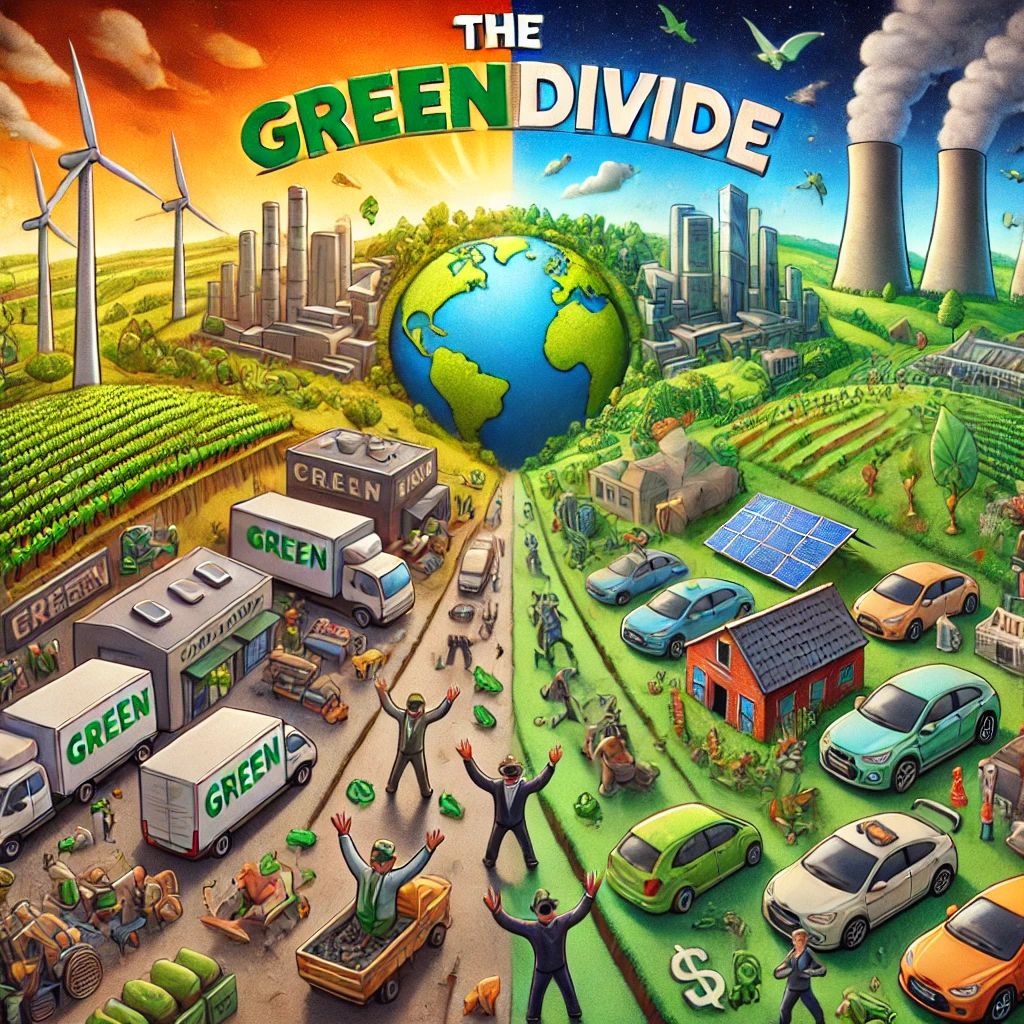
🚀 “The Dark Side of Sustainability: Are We Creating a Green Divide?” 🌍⚖️💰
Sustainability for whom? If green solutions leave half the world behind, is it truly sustainable?
As the world pushes for NetZero, EVs, CarbonTaxes, and SustainableFinance, a new reality emerges—TheGreenDivide.
📊 The Hidden Cost of Going Green
🔹 EV Affordability Gap: The average EV costs 50-70% more than petrol/diesel cars in India, making them a luxury, not a necessity. (IEA, 2024)
🔹 Carbon Taxes & Inequality: EU’s Carbon Border Adjustment Mechanism (CBAM) is expected to cost developing economies $16B annually as they struggle to decarbonize. (IMF, 2024)
🔹 Green Job Displacement: 2.7 million fossil fuel jobs are set to be lost globally by 2030, while only half will be replaced by green jobs. (WEF, 2024)
🔹 Rural Access to Sustainability: While urban India talks about solar panels & ESG investing, only 7% of rural households have access to renewable energy. (MNRE, 2024)
📌 RealityCheck: If sustainability leaves millions behind, is it truly progress?
💰 Who Wins & Who Pays?
🏆 Winners: Corporations & Wealthy Nations
✔️ Carbon Credit Traders: The voluntary carbon market hit $2B in 2024, but 80% of credits are purchased by MNCs to offset emissions instead of reducing them. (Bloomberg, 2024)
✔️ Developed Nations: US & EU firms control 90% of critical minerals used in batteries, keeping the supply chain monopolized. (World Bank, 2024)
✔️ Tech & EV Giants: Companies like Tesla & BYD gained over $400B in green subsidies, while developing nations struggle to fund clean tech. (IEA, 2024)
❌ Losers: SMEs, Emerging Markets & The Poor
🔻 SMEs: Over 60% of Indian MSMEs cannot afford ESG compliance costs, risking lost global contracts. (FICCI, 2024)
🔻 Developing Nations: Bangladesh & Vietnam are losing textile exports due to high sustainability requirements from EU buyers. (OECD, 2024)
🔻 Consumers: Sustainable products cost 30-50% more, pricing out low-income families. (McKinsey, 2024)
📌 RealityCheck: Green capitalism is real. Who’s paying the price?
📜 What Needs to Change?
🔹 Equitable Green Policies: Climate financing must prioritize developing nations.
🔹 Accessible Green Tech: EV & solar subsidies should be focused on affordability for the masses.
🔹 Real ESG Accountability: Stop “green compliance” from becoming a pay-to-play game.
🔹 Inclusive Sustainability: Policy reforms must address rural electrification, SME funding & job displacement.
🏆 KeyTakeaway: Sustainability Shouldn’t Be a Privilege
📌 Sustainability could be the great equalizer—if green policies support all economies.
📌 It should be accessible, not a corporate power game.
📌 If it remains profit-driven, it would be another tool of economic disparity.
Originally published on LinkedIn on 2025-02-24 07:22:32: https://www.linkedin.com/feed/update/urn%3Ali%3AgroupPost%3A82951-7299690143739764736
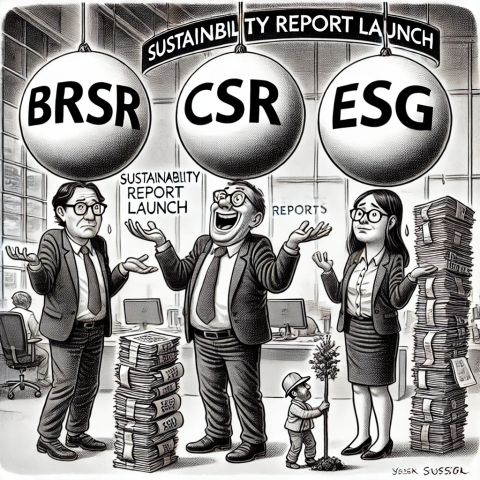
🚨 BRSR, CSR & ESG: Invading the Thin Line Between Sustainability & Showbiz! 🎭💰♻️
📌 RealityCheck:
CSR = Spending money.
BRSR = Reporting about spending money.
ESG = Rating the reports on spending money. None ensure real impact!
If a company plants a tree but spends twice as much marketing it—did it really go green?
In India’s corporate boardrooms, BRSR (Business Responsibility and Sustainability Reporting), CSR (Corporate Social Responsibility), and ESG (Environmental, Social, and Governance) are now mandatory checkboxes—but are they driving real impact or just polished PR campaigns?
🧐 BRSR vs. CSR vs. ESG: What’s Actually Happening?
🔹 CSR (Spend to Pretend?)
✔️ Companies must spend 2% of net profits on “good causes.” (Companies Act, 2013)
✔️ #₹14,300 Cr ($1.7B) spent in 2024—but 47% went to company-affiliated NGOs. (MCA, 2025)
✔️ Only 27% of CSR funds linked to sustainability. (SEBI, 2025)
🔹 BRSR (Report to Impress?)
✔️ Mandatory ESG disclosures for the top 1,000 listed firms. (SEBI, 2022)
✔️ 62% of reports claim “sustainability progress”—but no third-party verification. (ESG India, 2025)
✔️ 88% of firms skip reporting Scope 3 emissions (indirect pollution). (SEBI, 2025)
🔹 ESG (Ratings to Manipulate?)
✔️ Over $35T in global assets claim ‘ESG compliance’—but 70% lack real sustainability actions. (Morningstar, 2025)
✔️ India ranked 120th in ESG adoption—lagging behind Vietnam & Indonesia. (WEF, 2025)
✔️ 52% of ESG funds globally are now under scrutiny for ‘greenwashing’ claims. (EU Green Finance Report, 2025)
💰 Follow the Money: Greenwashing in Disguise?
🚨 If CSR was a school project, most companies would fail for copying answers.
🚨 If BRSR was a medical check-up, it would be self-diagnosed with no lab tests.
🚨 If ESG was a cricket match, most firms would just focus on looking good in the highlights.
🔎 Who’s Actually Doing Something?
🏆 The Real Deal:
✅ Tata Group: Large-scale renewable projects & real net-zero efforts.
✅ ITC: Circular economy & carbon-positive initiatives beyond paper.
✅ Hindustan Unilever: Science-based net-zero targets & sustainable sourcing.
🚨 The Greenwashers:
❌ Reliance: Talking renewables but expanding fossil fuel projects.
❌ Adani: Carbon-neutral claims exposed as accounting tricks.
❌ Vedanta: Reports “social impact,” but fined ₹120 Cr for pollution violations in 2024.

Originally published on LinkedIn on 2025-02-19 14:07:18: https://www.linkedin.com/feed/update/urn%3Ali%3Ashare%3A7297980065252843524
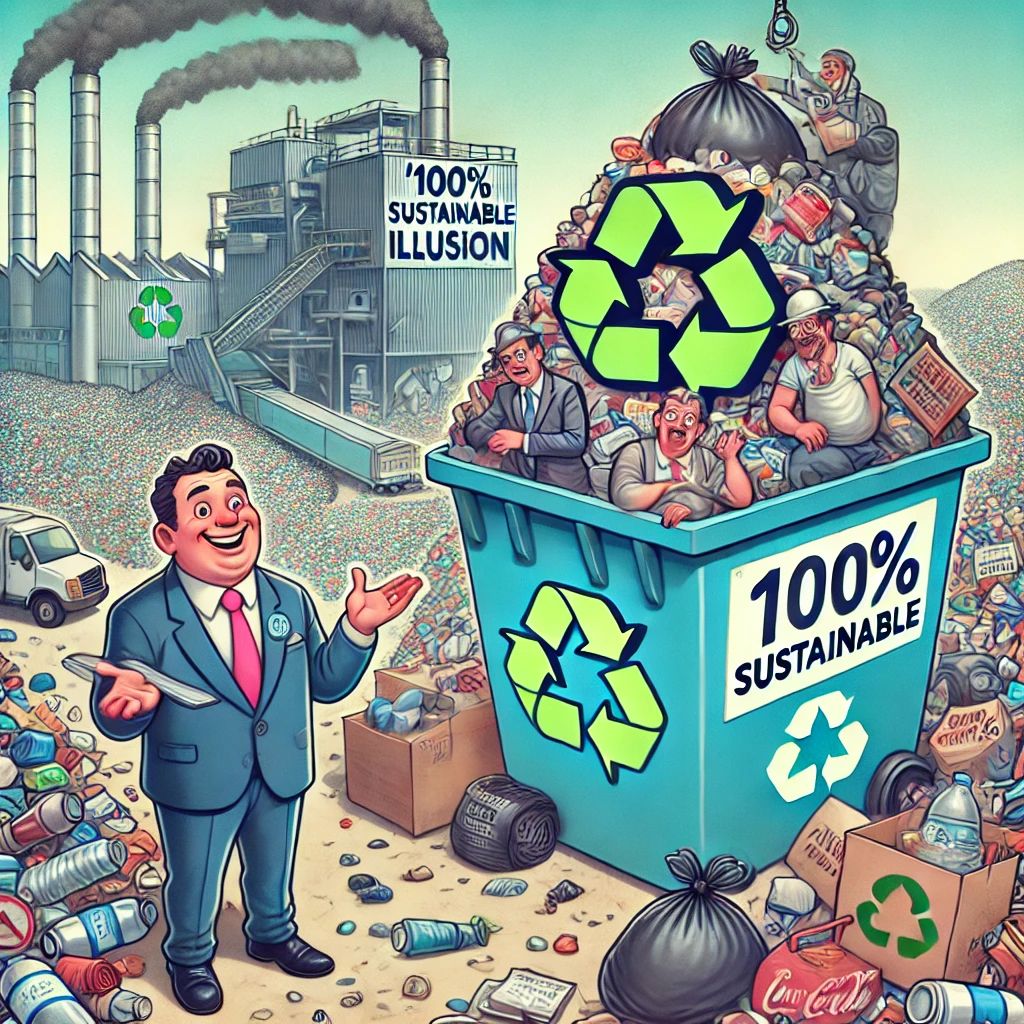
♻️ “The Waste Illusion: Is Sustainability Solving or Just Shifting_the_Problem?” 🌍🚮
Recycling alone won’t save the planet if we keep producing waste at record speed.
From plastic bans to circular economies, sustainability efforts often focus on waste reduction and recycling. But the truth? We’re generating_more_waste_than_ever_before.
🚨 Global waste production will hit 3.4 billion metric tons by 2050—a 70% increase from today. (WorldBank, 2025)
🚨 Only 9% of all plastic waste ever produced has been recycled. (UNEP, 2025)
🚨 Fashion waste alone contributes 92 million tons of landfill every year. (EllenMacArthurFoundation, 2025)
📌 RealityCheck: If sustainability isn’t fixing the waste cycle, are we just postponing the crisis?
🔄 The Waste Cycle: Are We Really Closing the Loop?
✅ Reduce – Brands promote low-waste lifestyles, yet global consumerism is at an all-time high.
✅ Reuse – Circular economies grow, but single-use culture dominates in food, fashion, and tech.
✅ Recycle – Waste sorting improves, but less than 20% of e-waste and plastics are ever recycled. (WEF, 2025)
🚨 RealityCheck: If new waste keeps outpacing recycling, how sustainable is our solution?
⚠️ Biggest Sustainability Loopholes in Waste Management
🔹 Plastic Offsets: Many brands buy plastic credits instead of reducing actual waste. (WWF, 2025)
🔹 Fast Fashion Recycling Myths: Less than 1% of clothing is truly recycled into new garments. (Greenpeace, 2025)
🔹 Food Waste Greenwashing: 30% of all food produced is still wasted despite “sustainable” sourcing. (FAO, 2025)
🔹 E-Waste Lies: Brands promote “recyclable electronics,” but 53.6M tons of e-waste were trashed last year. (UN, 2025)
📌 RealityCheck: A circular economy isn’t working if companies keep producing waste faster than we can recycle.
🏆 KeyTakeaway
♻️ Sustainability should be about eliminating waste at its source, not just recycling it later.
🚨 Greenwashing could be misleading us into thinking waste is under control.
🔄 A real circular economy would be about reducing overproduction, not just increasing recycling efforts.
👉 Are we solving waste or just shifting it around? Drop your thoughts below! 👇
Originally published on LinkedIn on 2025-02-19 05:44:35: https://www.linkedin.com/feed/update/urn%3Ali%3AgroupPost%3A9088131-7297853557188227072
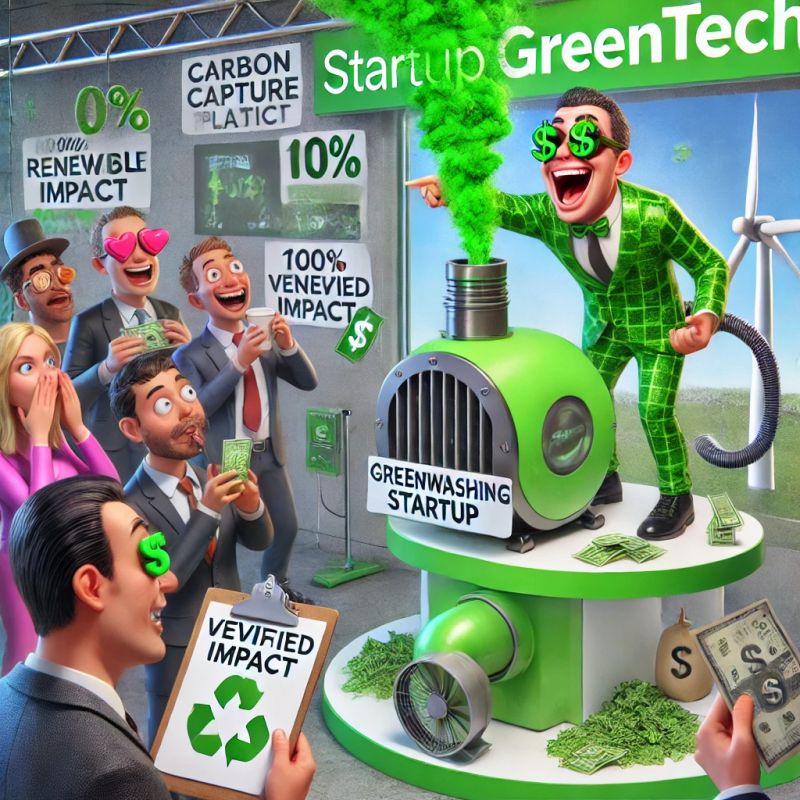
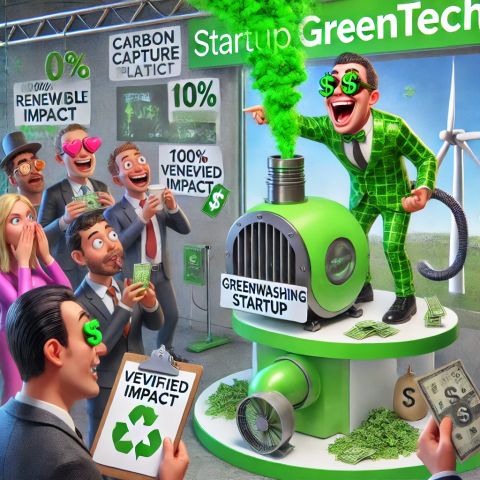
🌿💸 “The Billion_Dollar_Carbon_Mirage: Are Climate Startups the New Face of Greenwashing?
With venture capital flooding into climate tech, the world is betting big on startups promising net-zero innovations. But how many of these so-called ‘climate disruptors’ are truly sustainable, and how many are just cashing in on the green gold rush?
📊 The_Climate_Startup_Boom – Hype vs. Reality
✅ VC Money is Pouring In:
✔️ $60B invested in climate startups in 2024, a record high. (PitchBook, 2025)
✔️ Green energy & carbon capture saw a 310% funding surge in 3 years. (WEF, 2025)
🚨 Reality Check: Funding doesn’t equal impact—many startups prioritize valuations over verified sustainability.
🔍 How Climate Startups Greenwash Investors & Consumers
🛑 1. Carbon_Capture Scams: Startups claiming to remove CO₂ from air but with no independent verification.
🛑 2. ‘Green_AI’ That Isn’t Green: AI-powered sustainability platforms that run on carbon-heavy data centers.
🛑 3. Fake_Circular_Economy Models: Brands advertising “100% recycled” but only 10% of their product actually is.
🛑 4. Tree_Planting Offsets Without Proof: Companies raising billions on reforestation projects—but the land remains barren.
📌 Reality Check: Green startups can be just as guilty of false sustainability claims as big corporations.
⚠️ Biggest Climate Startup Greenwashing Scandals (2024)
❌ CarbonX: Raised $500M for direct air capture, but reports show 95% of emissions “captured” were never stored. (Forbes, 2024)
❌ EcoFuel: Claimed “cleanest biofuel” but emitted 2x more CO₂ than diesel. (Bloomberg, 2024)
❌ ReGen Plastics: Promised 100% ocean plastic recycling, but used only 8% in production. (Greenpeace, 2024)
📌 Reality Check: If climate startups mislead, are they solving the problem—or becoming it?
🏆 KeyTakeaway
The Climate Startup Boom could be a game-changer if real innovation leads the way, should be held accountable through independent audits, but would be the next greenwashing scandal if hype replaces real action.
👉 Are climate startups the future or just another sustainability bubble? Let’s discuss! 👇
Originally published on LinkedIn on 2025-02-17 17:37:01: https://www.linkedin.com/feed/update/urn%3Ali%3AgroupPost%3A4385073-7297308068034363394
🚨 “Workforce, Workplace & Greenwashing: The ESG Illusion?” 🌍💼📊
Companies boast sustainability targets, but without employee buy_in, ESG is just a boardroom mirage. Are businesses embedding sustainability in workplace culture, or just selling a greenwashed dream?
📊 The Workforce Sustainability Gap
🚨 83% of ESG commitments lack workforce integration. (Morningstar, 2025)
🚨 Only 17% of employees understand their company’s sustainability strategy. (WEF, 2025)
🚨 65% don’t know how their work impacts ESG goals. (McKinsey, 2025)
🚨 92% of CEOs discuss ESG, but only 46% invest in workforce training. (Deloitte, 2025)
🚨 Just 18% of businesses provide sustainability upskilling. (ILO, 2025)
📌 RealityCheck: If employees don’t understand sustainability, ESG is just corporate greenwashing.
🏢 The Workplace ESG Contradiction
🔻 Companies push sustainability, but offices tell another story:
✔️ 56% of companies with net-zero pledges still run high-carbon workspaces. (Carbon Disclosure Project, 2025)
✔️ 78% of corporate buildings lack energy-efficient retrofits. (Green Building Council, 2025)
🔻 Greenwashing in workplace sustainability:
✔️ 48% of “paperless” companies still rely heavily on printed documents. (PwC, 2025)
✔️ 73% of companies claim sustainable procurement, yet 60% import from high-emission suppliers. (Supply Chain ESG, 2025)
📌 RealityCheck: The modern workplace often contradicts corporate sustainability goals.
🛑 Who’s Greenwashing? Workforce & ESG Failures
🔻 Big Tech – Companies like Google & Meta push clean energy narratives but struggle with e-waste & server carbon footprints.
🔻 Fast Fashion – Brands like H&M & Zara promote ‘conscious collections’ while continuing mass production.
🔻 Automotive Giants – Toyota & GM commit to EVs but still invest billions in fossil fuel vehicles.
📌 RealityCheck: ESG goals without internal transformation = Greenwashing 101.
🏆 Who’s Getting ESG Right?
✅ Unilever – Mandatory ESG training for all employees.
✅ Microsoft – Internal ‘Green Skills’ certification program.
✅ Mahindra Group – Ties sustainability KPIs to employee performance.
📌 RealityCheck: Real ESG progress starts with an informed and engaged workforce.
🏆 KeyTakeaway
ESG could be the key to a greener corporate world, should be part of daily workforce operations, but would be just corporate greenwashing if it doesn’t go beyond PR.
👉 Does your workplace walk the ESG talk, or is it just a well-branded illusion? Drop your thoughts below! 👇
Originally published on LinkedIn on 2025-02-16 08:06:14: https://www.linkedin.com/feed/update/urn%3Ali%3AgroupPost%3A100646-7296802039798403073
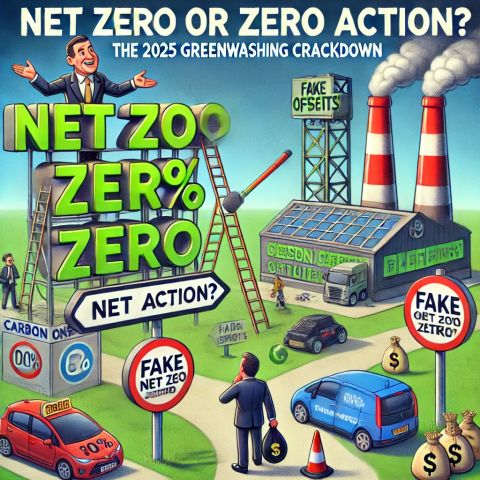
🚨 “NetZero or ZeroAction? The YR2025 GreenwashingCrackdownBegins” 🌍💰
With corporate greenwashing under the microscope, 2025 could be the year net-zero pledges get real—or exposed.
📊 Only 30% of companies with net-zero targets have interim milestones. (UNEP, 2024)
📊 $2B in voluntary carbon offsets are now flagged as ‘ineffective.’ (Carbon Market Watch, 2024)
📌 Reality Check: If a company has no interim milestones, is net zero just a PR move?
🔍 Who’s Transparent & Who’s Stalling?
✅ Companies with Clear Interim Targets
✔️ Procter & Gamble (P&G): Targets 2030 reductions en route to net zero by 2040. (P&G, 2024)
✔️ Volkswagen Group: Aims for 30% carbon reduction in vehicles by 2030 before hitting net zero in 2050. (Volkswagen, 2024)
✔️ Colgate-Palmolive: Science-based targets as part of its 2025 Sustainability Strategy. (Colgate, 2024)
✔️ Stellantis, Mercedes-Benz, Volvo: Net-zero by 2040, a decade ahead of industry peers. (JustAuto, 2024)
✔️ Morgan Stanley: Industry-specific 2030 milestones for a 2050 net-zero goal. (MorganStanley, 2024)
❌ Companies with Vague or No Interim Goals
🔻 Rio Tinto: Net-zero by 2050 but no Scope 3 milestones—95% of their emissions left unchecked. (TheTimes, 2024)
🔻 ExxonMobil: No interim goals, relying on offset purchases instead of real emission cuts. (IEA, 2024)
🔻 General Motors (GM): Claims 100% electric future but lacks clear reduction goals before 2040. (Bloomberg, 2024)
🔻 Nestlé: Net-zero by 2050, yet plastic packaging waste remains a growing issue. (Consumer Reports, 2024)
📌 Reality Check: A 2050 net-zero target without 2030 action is just corporate procrastination.
🚨 Greenwashing Trends to Watch in 2025
🔹 Net Zero Without a Roadmap – 70% of corporate pledges lack accountability checkpoints. (UNEP, 2024)
🔹 Carbon Offsets Scrutiny – Up to 80% of offset credits are now under question. (Carbon Market Watch, 2024)
🔹 Hydrogen Hype vs. Reality – 95% of global hydrogen is still fossil-fuel-based. (IEA, 2024)
🔹 #‘Recycled’ Claims Under Fire – Brands using 1% recycled content but advertising 100% green. (Consumer Reports, 2024)
🔹 EV Greenwashing – Companies exaggerating EV sustainability while relying on coal-powered grids. (IEA, 2024)
📌 Reality Check: 2025 will test which companies walk the talk—and which just greenwash.
🏆 KeyTakeaway
💰 NetZero could be a real climate solution, should be backed by real milestones, but would be a legal disaster for companies that fake it.
👉 Which companies do you trust to deliver real climate action—and which are just playing the PR game? Let’s discuss. 💬

Originally published on LinkedIn on 2025-02-11 03:39:18: https://www.linkedin.com/feed/update/urn%3Ali%3AgroupPost%3A82951-7294922924702978049
💰🌍 GreenBonds: A $5 Trillion Climate Fix or Just a Financial Illusion?
🚨 USD_5_Trillion. That’s the estimated value of the green bond market—but is it financing real climate action or just another Wall Street ESG bubble? Let’s break down who’s issuing, who’s benefiting, and who’s being misled.
📊 Global Green Bond Issuance: Who’s Leading?
🏦 Top Green Bond Issuers (2023):
🇨🇳 China – $85B issued, but 50% linked to ‘clean coal’ and fossil gas. (CBI, 2024)
🇺🇸 United States – $96B issued, primarily in renewables, clean transport, and grid expansion. (Climate Bonds Initiative, 2024)
🇪🇺 Europe – $309.6B total issuance, with Germany ($36B) and France ($42B) leading. (FT, 2024)
🇮🇳 India – $15B issued, with 60% YoY growth, targeting solar, wind & green hydrogen. (RBI, 2024)
📌 Reality Check: If ‘clean coal’ qualifies for green bonds, are we really funding sustainability?
⚠️ The Greenwashing Problem
❌ Only 2% of corporate & municipal green bonds actually fund new green projects. (NYU Stern, 2024)
❌ 60% of green bonds lack full transparency on fund usage. (Moody’s, 2024)
❌ Many green bonds still finance high-carbon sectors, using weak ESG criteria.
📌 Reality Check: Without strict regulations, green bonds are just cheap debt for corporations, not climate solutions.
🔍 Green Bond Market Success vs. Failures
✅ Success: EU’s Green Bond Leadership
The EU is set to become the first region with a mandatory ‘Green Bond Standard’. (EU Commission, 2024)
#$160B in green bond issuance funded renewables, clean mobility & climate adaptation.
❌ Failure: India’s Green Bond Struggles
70% of India’s latest green bond auction failed to attract buyers. (Reuters, 2024)
Investors demanded higher yields, questioning climate impact & financial viability.
✅ Success: Sovereign Green Bonds Booming
Governments in Germany, France, and Canada are issuing record green bonds to fund infrastructure.
📌 Reality Check: Green bonds work when they’re strictly regulated—but weak rules = corporate greenwashing.
🏆 KeyTakeaway
💡 Green Bonds could be the financial engine of global decarbonization, should be held to stricter transparency standards, but would be just another Wall Street ESG gimmick if accountability doesn’t improve.
👉 Are we financing sustainability, or just making Wall Street feel good?
SustainableFinance GreenInvesting ClimateBonds ESG ImpactInvestment Greenwashing

Originally published on LinkedIn on 2025-02-07 13:17:22: https://www.linkedin.com/feed/update/urn%3Ali%3AgroupPost%3A2474261-7293618848744808448
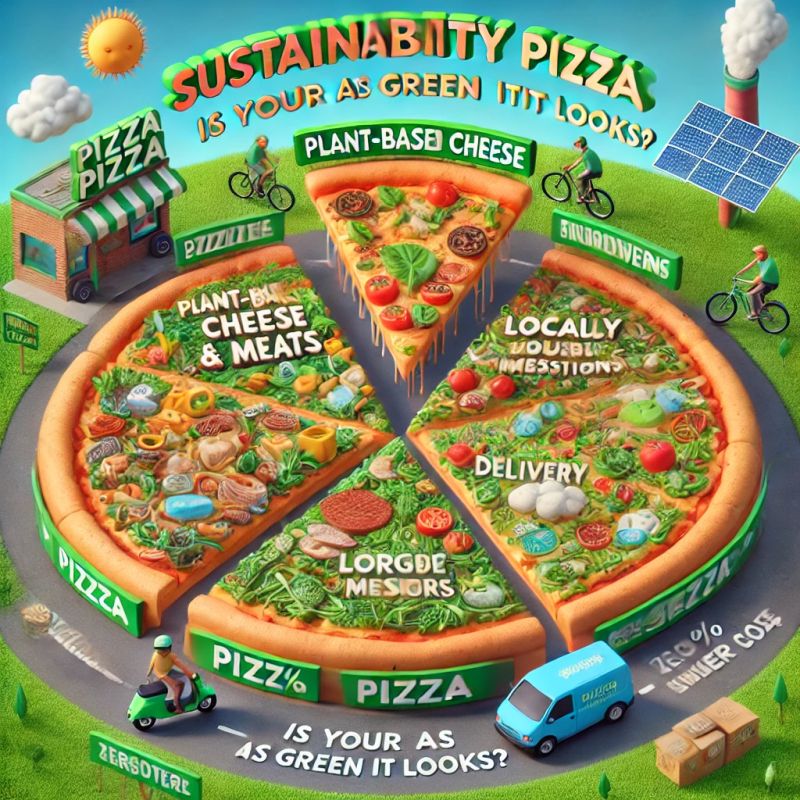
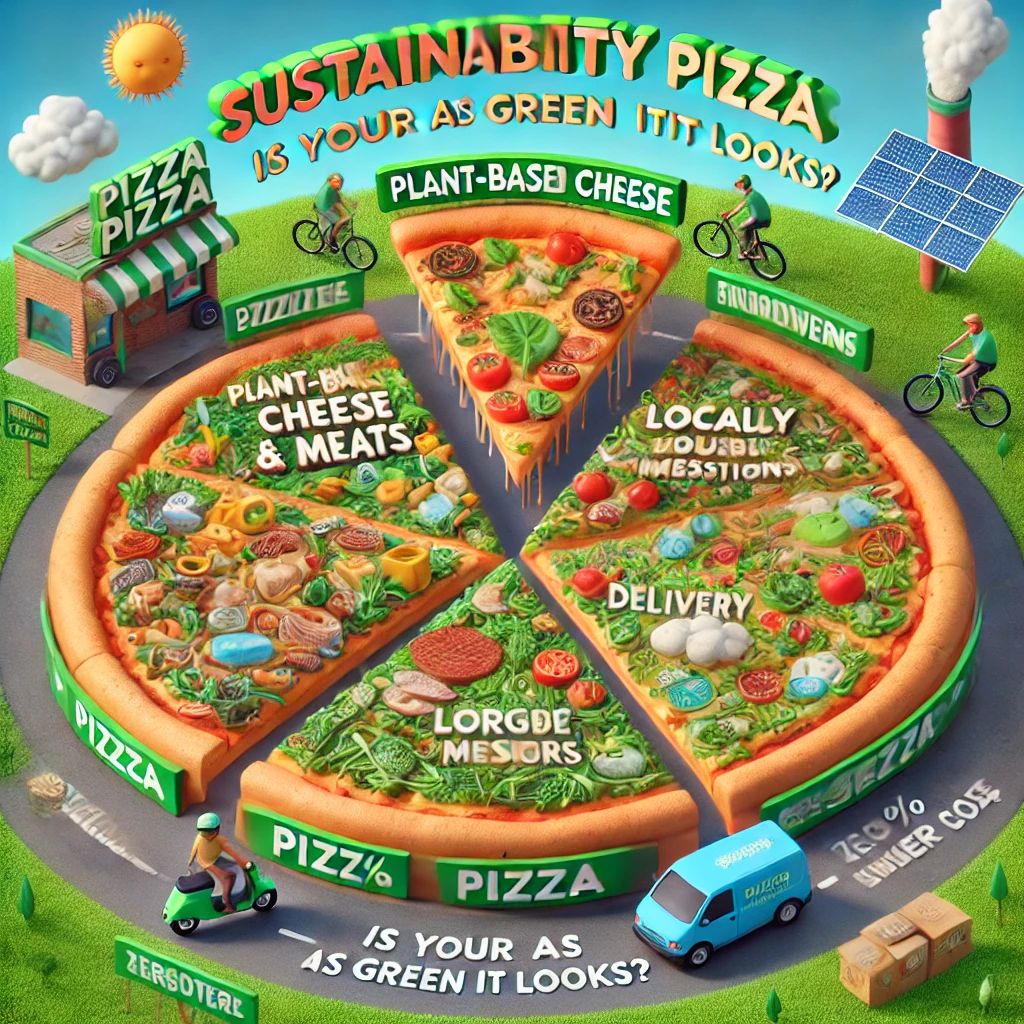
🍕🌱 The_Sustainability_Pizza: Is Your Slice Saving or Polluting the Planet?
Pizza might be the ultimate comfort food, but is it eco-friendly or a hidden climate offender? From cheese emissions to delivery impact, your favorite slice might not be as green as it looks.
📊 The Carbon Footprint of a Pizza
🚨 Dairy Disaster – Cheese production accounts for 60% of a pizza’s total carbon footprint, with dairy farming emitting 4% of global greenhouse gases. (FAO, 2024)
🚨 Meat Overload – Adding pepperoni or sausage increases pizza emissions by 80%, making it one of the least sustainable toppings. (IPCC, 2024)
🚨 Flour Footprint – Wheat farming for pizza dough consumes 35 trillion liters of water annually. (WWF, 2024)
🚨 Packaging Problem – 3 billion pizza boxes are used globally each year, but only 27% are actually recycled due to grease contamination. (EPA, 2024)
🚨 Delivery Emissions – Food deliveries generate 6% of all urban transport emissions, with pizza orders leading the pack. (IEA, 2024)
📌 Reality Check: That cheesy, meaty slice may have a higher footprint than your daily commute.
♻️ How to Make Pizza More Sustainable?
✅ Plant-Based Cheese & Meats – Vegan cheese and alt-meats reduce emissions by 50-80% compared to dairy & pork. (Sustainable Food Report, 2024)
✅ Locally-Sourced Ingredients – Using regional veggies and grains cuts transport emissions by 40%. (UNEP, 2024)
✅ Compostable Pizza Boxes – Some brands now use 100% biodegradable packaging, reducing landfill waste. (Recycling International, 2024)
✅ Energy-Efficient Ovens – New tech lowers energy consumption by 30% while reducing kitchen heat waste. (Clean Energy Council, 2024)
✅ Green Delivery – Bicycle and EV deliveries slash CO₂ emissions by 60% compared to gas scooters. (McKinsey, 2024)
📌 Reality Check: Pizza sustainability isn’t just about the ingredients—it’s the entire supply chain.
🛑 Greenwashing in the Pizza Industry
❌ #‘Eco-Friendly’ Labels Without Action – Some brands highlight one sustainable ingredient while ignoring wasteful packaging and supply chains.
❌ Carbon Offsets Instead of Real Change – Offsetting emissions without actually reducing footprint is a marketing trick.
❌ Recyclable Boxes That Aren’t Recycled – Most pizza boxes are contaminated by grease, making them non-recyclable despite green branding. (Recycling Myths, 2024)
📌 Reality Check: If a pizza brand claims to be ‘green,’ check if their entire supply chain follows through.
🏆 KeyTakeaway
Sustainable pizza could be the next big food revolution, should be focused on reducing food waste & emissions, but would be another greenwashing trend if brands don’t take real action.
👉 Is your favorite pizza actually sustainable, or just a slice of marketing?
SustainableFood GreenPizza EcoFriendlyEats CarbonNeutral CircularEconomy
Originally published on LinkedIn on 2025-02-06 05:19:07: https://www.linkedin.com/feed/update/urn%3Ali%3AgroupPost%3A2474261-7293136103753080832

