EcoIndigestion When Growth Doesn’t Digest Its Waste.
Dr. Anju Sharma MrsSustainability
Food poisoning?
Acute. It passes.
Growth toxicity?
Chronic. It compounds.
We scale GDP.
We scale production.
We scale energy.
But we don’t scale digestion.
And undigested growth becomes systemic risk.
Here’s the 2026 reality check:
1️⃣ CarbonStack
38.1 billion tons fossil CO₂.
Still rising.
Still cumulative.
Carbon doesn’t reset annually.
It accrues like debt.
2️⃣ PlasticSurge
445 million tons produced.
~130 million tons leak into nature each year.
Plastic-related emissions already 2.7 GtCO₂e — projected 4.2 Gt.
That would make plastics the world’s 3rd largest emitter.
Circularity isn’t optional.
It’s atmospheric math.
3️⃣ ChemicalLegacy
140,000+ synthetic chemicals in commerce.
Millions of tons of persistent pollutants circulating globally.
Molecules outlive management teams.
Low carbon ≠ low toxicity.
4️⃣ AirToll
~7 million premature deaths annually.
Estimated $5 trillion economic drag.
Air quality isn’t an environmental issue.
It’s productivity economics.
5️⃣ WaterStress
~1.7–2.2 billion people without safely managed drinking water.
Water scarcity projected to worsen ~20% in high-risk regions.
Water remembers discharge long after quarterly earnings forget.
6️⃣ WasteEscalation
~2.3 billion tons municipal waste annually.
Projected near 3.8 billion by 2050.
Global cost already in the hundreds of billions.
Linear growth becomes landfill backlog.
7️⃣ BiodiversityCrash — 2026 Signal
~1 million species at risk of extinction.
Recent hotspot analysis shows ~26% species decline in biodiversity-rich regions driven by agriculture.
3,483 high-risk ecological zones identified — many unprotected.
That’s not abstract.
That’s:
Pollination instability
Crop yield volatility
Raw material disruption
Insurance repricing
Supply chain fragility
Nature loss is input risk.
Here’s the uncomfortable truth:
You cannot:
Unburn carbon
Unfragment plastics
Unleach persistent chemicals
Uncollapse ecosystems
Dashboards can look green.
But ecosystems don’t run on dashboards.
Portfolio indigestion becomes systemic risk.
I recovered in 24 hours.
The planet doesn’t.
Dr. Anju Sharma
MrsSustainability KtalystInsights CircularEconomy ClimateRisk Biodiversity2026 DataComa GreenLove
Originally published on LinkedIn on 2026-02-20 16:48:41: https://www.linkedin.com/feed/update/urn%3Ali%3AgroupPost%3A82951-7430654642163752961
🌱 GreenIsTheNewLean
KtalystInsights | SmartSustainability | NetZeroBusiness | GreenMargins
> “It’s not just the Earth we’re saving. It’s the balance sheet.
Sustainability has left the CSR desk — and entered the C-suite.
Here’s the data AND proof that going green is the leanest business strategy today.
📊 5Data-Backed Reasons + Case Studies Why Green = Growth
1️⃣ 💡 Energy Efficiency = 30% OPEX Savings
💬 Case Study: Infosys (India)
Reduced per capita energy consumption by 55% since 2008
Achieved carbon neutrality in 2020 — saving #₹500 crore (~$60M) in energy and offset costs
👉 [Source: Infosys ESG Report]
2️⃣ 📦 Packaging Optimization = 20% Cost Reduction
💬 Case Study: Unilever India
Switched to lightweight, recyclable sachets & cartons
Saved #₹300 crore (~$36M) over 3 years by reducing material and logistics costs
👉 [Source: Unilever Sustainability Dashboard]
3️⃣ 👩💼 Talent Preference = 67% GenZ Alignment
💬 Case Study: Schneider Electric
Ranked consistently in Top10 Sustainable Employers
Improved retention by 15% among early-career hires
Launched global Green Employee Training Program
👉 [Source: Forbes, Schneider CSR Report]
4️⃣ 📈 ESG-Driven Outperformance = +12.4% ROI Boost
💬 Case Study: Tata Group (TCS & Tata Steel)
Tata Steel’s decarbonization roadmap boosted investor confidence
TCS integrated AI for energy efficiency — saving #$25M/year
Tata Group’s ESG stocks have outperformed Nifty by 10% in the last 3 years
👉 [Source: BSE, Moneycontrol]
5️⃣ ♻️ Circular Economy = New Revenue Streams
💬 Case Study: Dalmia Cement
Recycled industrial waste as alternative fuel
Reduced thermal energy cost by 15–20%
Declared goal to become carbon-negative by 2040
👉 [Source: CII, Dalmia Reports]
🔍 KtalystTakeaway:
✅ Reduce energy and packaging costs
✅ Attract and retain top talent
✅ Increase investor trust and returns
✅ Open new circular revenue pathways
✅ Meet Net Zero goals — with margin uplift
> 💡 “Sustainability is not a sacrifice. It’s a strategic upgrade.
💬 Are you still treating green as a cost center?
Let’s decode your GreenMargins together.
Originally published on LinkedIn on 2025-07-03 17:53:26: https://www.linkedin.com/feed/update/urn%3Ali%3AgroupPost%3A82951-7346596949829062656
#️⃣ Sustainability Compliance or Competitive Edge? The Rising Demand for ESG Advisory
🌍 Sustainability is No Longer a Choice—It’s a Business Mandate. With global ESG (Environmental, Social, and Governance) regulations tightening, companies are turning to specialized sustainability consultants to navigate compliance, mitigate risks, and unlock new growth opportunities.
🔍 # Why is ESG Consulting Booming?
📈 6% Growth in Sustainability Consulting (2024-25) – The demand for ESG advisory is projected to rise as companies adjust to new disclosure norms. (Source: FT)
📈 # $2 Trillion in Global Climate Investments – A significant surge in funds directed towards renewable energy, infrastructure, and ESG-driven innovation. (Source: WSJ)
📈 # 50,000+ Companies Impacted by EU CSRD – The Corporate Sustainability Reporting Directive (CSRD) expands compliance requirements beyond financial disclosures, affecting supply chains worldwide.
📈 # 40% Reduction in Scope 3 Emissions – Leading companies like Mastercard are already driving sustainability transformations, proving that ESG is more than a compliance burden—it’s a profitability driver. (Source: TIME)
📉 # The Risk_of_Inaction
🟠 # Fines, Reputation Damage & Investor Backlash – Non-compliance with ESG norms isn’t just a regulatory issue—it can cost businesses millions in penalties and lost investments.
🟠 Greenwashing Scrutiny is Increasing – Governments and watchdogs are cracking down on misleading sustainability claims, making authentic ESG action more critical than ever.
🟠 Banks Are Reducing ESG Roles – While companies are hiring ESG consultants, financial institutions like Barclays and Wells Fargo are scaling back dedicated sustainability teams, signaling shifting priorities in the corporate world.
🏆 Sustainability as a Competitive Advantage
🔵 Companies that move beyond compliance and integrate sustainability into their core strategy are:
✔ Building stronger investor confidence 💰
✔ Enhancing brand reputation & consumer trust 🌱
✔ Driving cost efficiencies through resource optimization ♻️
✔ Attracting & retaining top talent 👥
💡 # What’s Your ESG Strategy? Are you simply meeting compliance requirements, or are you leveraging sustainability to build long-term resilience and profitability? 🚀


Originally published on LinkedIn on 2025-03-02 05:24:18: https://www.linkedin.com/feed/update/urn%3Ali%3AgroupPost%3A2474261-7301834718403084290
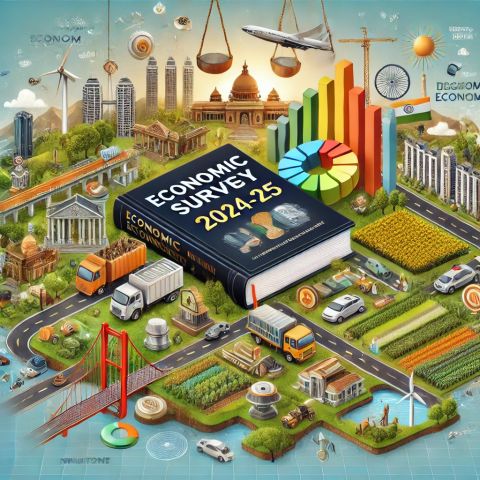
📊 India_Economic_Survey_2024-25: Growth, Resilience & Future Focus 🇮🇳📈
India’s economy is defying global uncertainties, powered by investment, reforms, and innovation. Here’s a concise breakdown of the key takeaways.
🌏 Economic Strength & Fiscal Health
✅ Growth remains strong, driven by domestic investment.
✅ Inflation moderate, but food prices remain volatile.
✅ Capital spending up, ensuring long-term stability.
🏆 Key Shift: India prioritizes investment over short-term spending.
💰 Banking & Financial Sector
✅ Low NPAs & strong credit growth signal a healthy banking sector.
✅ Global interest rate risks monitored to ensure market stability.
🏆 Key Shift: A robust financial system supports economic momentum.
🌐 Trade & External Sector
✅ FDI remains a focus, with business reforms easing entry.
✅ Export challenges persist, due to global trade tensions.
✅ Reducing import dependency on China to boost self-reliance.
🏆 Key Shift: Reshaping trade policies to adapt to global disruptions.
🏗️ Infrastructure & Industry
✅ Post-election boost to infrastructure—transport, digital, energy.
✅ MSMEs get policy push, enhancing industrial output.
🏆 Key Shift: Building for the future with targeted investments.
🌱 Climate & Sustainability
✅ Energy transition & green investments expanding.
✅ Air pollution & emissions remain critical issues.
🏆 Key Shift: Sustainability is now a policy priority, not an afterthought.
🚀 Employment, AI & Future of Work
✅ Upskilling & gig economy shaping future jobs.
✅ AI disruption expected, but workforce adaptation in progress.
🏆 Key Shift: Balancing tech advancement with job security.
📈 Vision 2047: India’s Long-Term Economic Strategy
✅ Deregulation & ease of doing business accelerating growth.
✅ Viksit Bharat 2047 aims to make India a developed economy.
🏆 Key Shift: From short-term fixes to long-term economic transformation.
🏆 KeyTakeaway
India’s Economic Survey 2024-25 highlights resilience, investment-driven growth, and policy innovation. The focus is on long-term stability, sustainability, and self-reliance.
👉 Is India ready for its next economic leap?
EconomicSurvey IndiaGrowth Infrastructure GreenEconomy DigitalIndia ViksitBharat2047
Originally published on LinkedIn on 2025-01-31 19:21:29: https://www.linkedin.com/feed/update/urn%3Ali%3Ashare%3A7291173766041059329
🚀 NamasteIndiaMobilityMarket to Exceed $600B by YR2030
Revolutionizing Growth through Electrification & Innovation
The Indian mobility industry is charting its unique course, poised to double and surpass $600B by 2030, with $100B fueled by emerging revenue streams.” — Google-BCG Report
🔑 KeyInsights
💰 RevenueProjections
Classic Revenue Pools:
🔧 ClassicComponents: $65B (+$23B).
🚙 NewSales (ICE Vehicles): $120B (+$33B).
🔄 ClassicAftersales: $162B (+$71B).
💳 Financing&Insurance: $133B (+$59B).
Emerging Revenue Pools:
⚡ BEV&AVComponents: $25B (+$20B).
🌍 NewSales (BEVs): $37B (+$33B).
🔧 NewAftersales: $8B (+$8B).
🚖 NewMobilitySolutions: $62B (+$37B).
👥 ConsumerTrends
⚡ EVAdoption: 1 in 3 planning to buy EVs.
🌸 WomenDriveChange: Women lead 52% of EV purchase decisions.
🌿 WhyItMatters
India’s mobility market is transforming through Sustainability & Electrification. Both classic & emerging revenue pools are converging to shape a global leader in MobilityInnovation.
👉 Are you ready to ride the wave?
Let’s lead the FutureOfMobility! EVs Growth Sustainability BCG Google
Source / shared link: https://m.economictimes.com/industry/auto/auto-news/india-mobility-market-to-double-surpassing-600-mn-by-2030-google-bcg-report/articleshow/117354350.cms
Originally published on LinkedIn on 2025-01-20 13:19:59: https://www.linkedin.com/feed/update/urn%3Ali%3AgroupPost%3A60128-7287096526823153664
NamasteGreenIndia’s DDGS Export Boom: USD 717 Million Market, But 2025 Holds the Key
The Surge: A 314% Export Boom
India is making waves in the global Distillers Dried Grains with Solubles (DDGS) market, a key ethanol byproduct used as animal feed. Here’s the story behind the numbers:
📦 1,212 shipments of DDGS in the last 12 months (314% growth).
🌏 Major buyers:
🇻🇳 Vietnam: 51% share.
🇳🇵 Nepal: 21% share.
🇺🇸 United States: 7% share.
💰 Market Value:
2023: USD 420.67 million.
2032 (Projected): USD 717.81 million (CAGR: 6.17%).
The Challenge: Falling Prices
Despite the export surge, the industry is battling a steep price drop:
🏷️ Domestic DDGS prices: #₹14–15/kg (~USD 0.17–0.18).
🌍 Global competition and oversupply are hitting margins hard.
1. Expanded Production Capabilities:
With ethanol blending targets set to increase to 20% by 2025, India’s DDGS production will reach record levels.
2. Market Diversification:
New export agreements with Africa, Southeast Asia, and Latin America are expected to reduce over-reliance on existing markets like Vietnam and Nepal.
3. Government Interventions:
Policies promoting minimum price guarantees and export incentives are likely to stabilize DDGS prices.
Focus on value-added DDGS products, such as enriched feed, to attract premium markets.
4. Sustainability Push:
Growing demand for sustainable feed solutions globally aligns perfectly with DDGS as a cost-effective, eco-friendly option.
Indian DDGS could gain significant traction in European markets following stricter feed sustainability regulations.
5. Technological Advancements:
Adoption of advanced processing techniques will improve DDGS quality and reduce production costs, ensuring competitiveness in global markets.
India is turning its ethanol growth into a global export advantage, but to sustain the momentum in 2025 and beyond:
🛠️ Strengthen Domestic Support: Build strategic reserves to manage price fluctuations.
🌍 Capture New Markets: Target countries with rising feed demand like Brazil, Indonesia, and Nigeria.
🚀 Lead the Sustainability Charge: Establish India as a key supplier of sustainable animal feed.
Why It Matters
India’s ethanol-driven DDGS market is poised for exponential growth in 2025. By embracing innovation, diversification, and sustainability, India can become a global powerhouse in the animal feed sector while ensuring long-term industry stability.
💬 Let’s connect to explore how IndiaExports and EthanolEconomy are setting the stage for a transformative 2025. 🚀
Originally published on LinkedIn on 2025-01-15 19:30:29: https://www.linkedin.com/feed/update/urn%3Ali%3Ashare%3A7285377825862283264
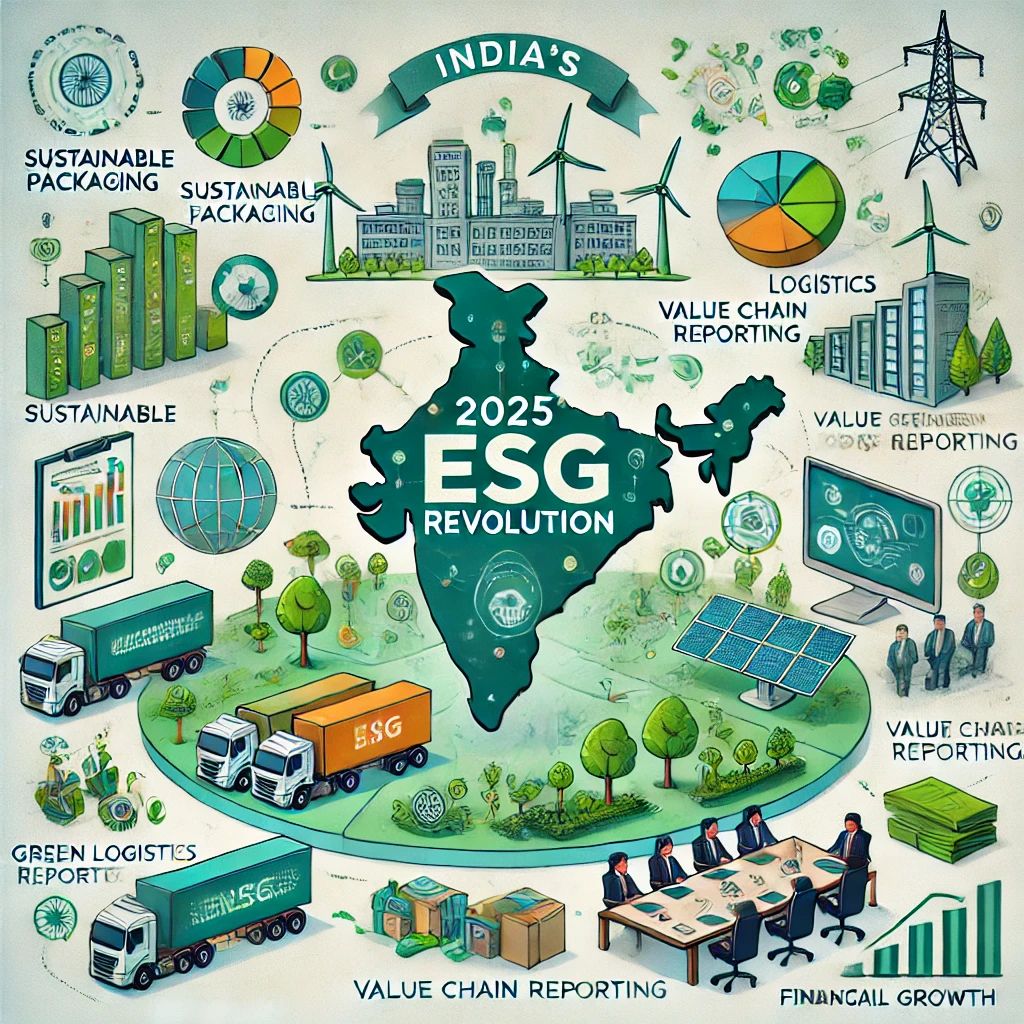
🌟 NamasteGreenIndia YR2025: India’s ESG Era Expands – Incorporating Packaging, Logistics, and More 🚀
The year YR2025 marks a transformative step in India’s corporate sustainability, with Environmental, Social, and Governance (ESG) regulations now including packaging, logistics, and operational efficiency. These changes align with global sustainability goals and drive innovation across industries.
📌 What’s New in 2025?
🌐 Value Chain Reporting:
Top 250 companies must disclose ESG metrics under SEBI’s “comply or explain” framework.
By 2026, expands to 500 companies, with mandatory assurance.
📜 BRSR Core Metrics:
Focus on 9 ESG KPIs like carbon emissions, water usage, and workforce diversity.
80% of top 500 companies are aligning operations with these standards.
📦 Sustainable Packaging:
New regulations target 50% reduction in single-use plastics by 2030.
Companies aim for 100% reusable packaging, with $3 billion invested in R&D.
🚚 Green Logistics:
Incentives for electric and hydrogen-powered fleets aim to cut emissions by 30% by 2030.
✅ Independent Verification:
ESG disclosures, including packaging and logistics, must undergo third-party assurance.
By 2025, 65% of listed entities will have verified ESG data.
📊 ESG Growth Impact
📦 Packaging Overhaul:
40% of FMCG and e-commerce companies have adopted eco-friendly packaging solutions.
🚛 Logistics Transformation:
Emissions reduced by 20% (2023–2025); green logistics market to hit $12 billion by 2030.
📈 Corporate Participation:
ESG disclosures grew 40%, with 70% of Nifty 50 companies including logistics and packaging metrics.
🌟 Why YR2025 is a Game_Changer
1️⃣ Global Leadership:
India leads in integrating packaging and logistics into ESG frameworks, aligning with global practices.
2️⃣ Investor Appeal:
Companies adopting eco-friendly practices attract funds managing $50 trillion+ in ESG assets.
3️⃣ Business Resilience:
Over 60% of companies report improved efficiency and reduced costs through ESG initiatives.
4️⃣ 🚨 Non_Compliance Risks:
Fines, loss of market share, and reputational damage await companies ignoring these standards.
📌 The Road Ahead
India’s 2025 ESG initiatives integrate packaging, logistics, and operational efficiency into corporate goals. These steps set Indian businesses on a path to lead the global sustainability revolution.
💬 How is your organization adapting to this challenge? Let’s discuss below! 👇

Originally published on LinkedIn on 2025-01-11 10:02:10: https://www.linkedin.com/feed/update/urn%3Ali%3AgroupPost%3A3880479-7283785251959529472
NamasteGrowthIndia’s Economy Needs a Fast Break Before It Hits a Growth Timeout!
India, the world’s fifth_largest economy, has hit a critical juncture as GDP growth in Q2_2024 slowed to 5.4%, the lowest in six quarters. The dream of becoming a $5 trillion economy is under threat unless swift and transformative actions are taken.
The Challenges:
Private_Consumption_Stagnation: Household spending, the backbone of India’s economy, is weakening. Declining sales of consumer goods and vehicles point to a deeper erosion of purchasing power.
Rising_Inflation: Soaring food prices are squeezing wallets, dampening demand, and increasing economic stress.
Global_Pressures: Sluggish exports and geopolitical tensions are exposing vulnerabilities in India’s external trade.
What India Must_Do_Now:
Ignite_Private_Investments:
Bold reforms to slash bureaucratic red tape and incentivize capital inflow are essential. India needs to transform into a hub where businesses thrive, fostering industrial growth and job creation.
Fuel_Domestic_Consumption:
Empower households with higher disposable incomes through targeted tax cuts or direct benefits. An economy grows when its people can afford to spend.
Tame_Inflation:
Price stability is non-negotiable. Invest in robust supply chains, particularly for essentials, to balance demand and supply while maintaining fiscal discipline.
Revolutionize_Exports:
Shift from low-value goods to high-tech, high-margin sectors. Diversify export markets to hedge against global demand slowdowns.
Invest in People, Not Just Projects:
Make education and skill-building the heart of India’s growth strategy. Equip the workforce to compete in AI-driven and digital economies, ensuring long-term productivity gains.
The Bigger Picture:
India stands at a crossroads. It’s not just about avoiding a slowdown; it’s about redefining its global narrative. A recalibrated approach—prioritizing sustainability, business excellence, and people_centric policies—will determine whether India emerges as a global powerhouse or misses its moment.
This is a call to action. India cannot afford to tread water—it must swim or risk sinking. The game must change—and fast.
Originally published on LinkedIn on 2024-12-01 17:54:50: https://www.linkedin.com/feed/update/urn%3Ali%3Ashare%3A7269046298840866816
NamasteGreenIndia : Ethanol producer BCL Industries
BCL Industries, a major grain-based ethanol and ENA producer in India, is expanding into the biodiesel sector.
A 75 KLPD biodiesel plant is under construction in Bathinda, Punjab, with statutory clearances and civil work in progress.
The new plant will use technical maize_oil from their maize-based ethanol production, creating full vertical integration for greater efficiency.
This expansion supports India’s biofuel initiatives, including the Ethanol_Blending_Program and the 5% biodiesel blending target by 2030.
BCL aims to increase its ethanol production capacity to 850 KLPD over the next year, aligning with rising biofuel demand.
India’s Ethanol Blending Program (EBP) aims to achieve a 20% ethanol_blend in petrol by YR_2025 to reduce dependency on crude oil imports and lower carbon emissions.
By YR_2030, the Indian government targets to save nearly $4 billion annually by substituting imported fuel with domestically produced ethanol.
Benefits of EBP 2030: Apart from reducing emissions, the program will enhance rural incomes, increase farmer profitability, and create new employment opportunities in the biofuel industry.
BCL aims to increase its ethanol production capacity to 850 KLPD over the next year, aligning with rising biofuel demand.
In Q1 FY2025, BCL reported a 47.3% year-on-year increase in total revenue, reaching approximately USD 79.5 million.
The distillery segment saw a significant growth in ethanol volumes, doubling to 50,000 KL compared to the previous year.
The company has allocated approximately USD 16.9 million for the biodiesel plant and a new power plant, with around USD 10.9 million funded by debt and the remainder from internal accruals.
Leveraging its expertise in maize processing, BCL is positioned to contribute to India’s renewable energy goals while enhancing operational capabilities.
https://lnkd.in/dQ8NUhbw
Originally published on LinkedIn on 2024-11-04 15:50:45: https://www.linkedin.com/feed/update/urn%3Ali%3Ashare%3A7259230602892075008
ElectricVehicles growth anywhere in the world is fascinating. Also taking a look at Growth of EV Market in India
Rapid Growth: India’s EV market is expected to grow at a compound annual growth rate (CAGR) of 90% to reach $150 billion by 2030⁶.
Government Targets: India aims to achieve 30% EV sales in private cars, 70% in commercial vehicles, 40% in buses, and 80% in two-wheelers and three-wheelers by 2030⁶.
Sales Surge: In 2023, EV sales in India increased by 49.25%, reaching 1.52 million units⁶.
Charging Infrastructure: As of February 2024, there are 12,146 operational public EV charging stations nationwide, with Maharashtra having the highest number.
Market Value: The Indian EV market is projected to expand from $3.21 billion in 2022 to $113.99 billion by 2029, with a 66.52% CAGR.
Employment: The EV industry is expected to create around 50 million direct and indirect jobs by 2030.
IncreasedTax for Hybrid and EVs: The Indian government maintains a significant tax difference to promote electric mobility, with electric cars taxed at 5% and hybrid cars at 48%.
Originally published on LinkedIn on 2024-09-05 17:27:41: https://www.linkedin.com/feed/update/urn%3Ali%3AgroupPost%3A60128-7237511723660828673

