When CONflict Becomes the Fastest ClimatePolicy
Dr. Anju Sharma | MrsSustainability | KtalystInsights
The GreenTransition is often framed as a story of conscience activism, ESG mandates & climate policy.
History suggests something less comfortable.
Geopolitical instability may be the most powerful venture capitalist of the energy transition.
The tensions around the Strait of Hormuz are not just another regional crisis. They represent a global price reset in energy risk.
War does not only destroy economies. It reprices EnergySystems.
When fossil fuels begin reflecting their true security risk, transition economics do not slowly evolve.
They flip.
The GeopoliticalFlashFlood
The Strait of Hormuz carries:
✔ ~20% of global oil flows
✔ ~33% of global LNG trade
For NamasteIndia, the exposure is enormous.
✔ ~66% of crude imports transit this chokepoint
✔ ~50% of LNG flows through this corridor
Even before disruption occurs, markets price risk.
This becomes the WarPremium a geopolitical tax on fossil fuels.
MacroImpact
A sustained 10% rise in crude can add ~0.3 percentage points to India’s CPI while widening the trade deficit.
Every oil shock quietly improves the economics of solar, wind and electrification.
Renewables: From Ideology → Security Hedge
In stable markets, renewables are framed as climate solutions.
In volatile markets, they become strategic assets.
Fossil systems remain exposed to:
❌ spot price shocks
❌ shipping chokepoints
❌ geopolitical leverage
Renewables operate differently:
✔ fuel-free generation
✔ predictable cost curves
✔ domestic energy supply
Once volatility crosses a threshold:
The GreenPremium disappears.
It becomes a Security Discount.
India’s Strategic Energy Shift
India imports roughly 88% of its crude oil. Every oil shock triggers a familiar chain reaction:
⚠ currency pressure
⚠ inflation spikes
⚠ fiscal intervention
The rational response is structural energy sovereignty.
India’s renewable capacity has one of the largest energy transitions ever attempted.
ConflictCarbonLoop
Energy markets are entering a reinforcing cycle:
Geopolitics → Fossil Volatility → Risk Premium → Renewable Investment → Energy Independence
Conflict unintentionally accelerates the transition that ultimately reduces fossil dependence.
HistoricalPatterns
Energy transitions rarely begin in calm periods.
They accelerate under system stress.
1970s oil shocks
→ nuclear expansion in France & Japan
2022 Russia–Ukraine war
→ record renewable build-out in Europe
2026 Gulf tensions
→ Asia re-pricing imported hydrocarbons.
KtalystInsights
Volatility converts climate policy into energy security policy.
KtalystInsights
KtalystKlues
DataComa
GreenLove$
5Ps 5Es
Originally published on LinkedIn on 2026-03-05 14:05:41: https://www.linkedin.com/feed/update/urn%3Ali%3Ashare%3A7435324663955849216
From SolarSurges to BiofuelBreakthroughs: What May 2025 Taught Us About Sustainability
The sun’s still shining, but so is the scrutiny.
In May2025, sustainability wasn’t just a checkbox—it was a headline. From GlobalPacts to LocalClimateWins, here’s what moved the needle:
Top 5 Signals from May 2025
1. G20 Goes Bold on Renewables
⚡ Commitment to TripleCapacity of Solar and Wind by 2035
⚡ Execution is the new challenge. Ambition is no longer the problem.
Source: WINs Solutions
2. WHO’s Pandemic Pact = Health + Equity
🌍 Global agreement on PandemicPreparedness with Sustainability at its core
🌍 Focus on ResilientSystems and EquitableAccess to resources
Source: WHO
3. Karnataka’s Biofuel Playbook Goes Global
🌱 Partnership with GermanUniversities to boost innovation
🌱 Focus on Biogas, EthanolVehicles, and ProducerIncentives
Source: Times of India
4. Europe Doubles Down on ESG—US Hesitates
♻️ EU pension funds tightening ESG demands
♻️ US investors show MixedIntent—some pulling back
Source: Financial Times
5. Tokyo E-Prix Walks the Talk
⚙️ Event PoweredByRenewables and spotlighting CleanTechCareers
⚙️ Speed, Sustainability, and SocialImpact on the same track
Source: Times of India
KtalystTakeaway
Sustainability in 2025 is about Tradeoffs, Transitions, and Timelines.
If you’re in the business of Circularity, Decarbonization, or ESGBackedGrowth, now is the time to ShowNotJustSay.
Let’s connect on CleanGrowth, ClimateAction, and the GreenTransition ahead.
Originally published on LinkedIn on 2025-05-22 04:13:40: https://www.linkedin.com/feed/update/urn%3Ali%3Ashare%3A7331170355719389184
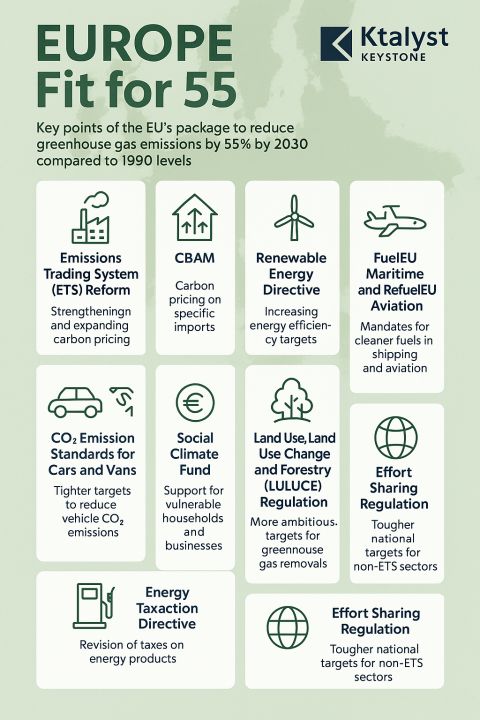
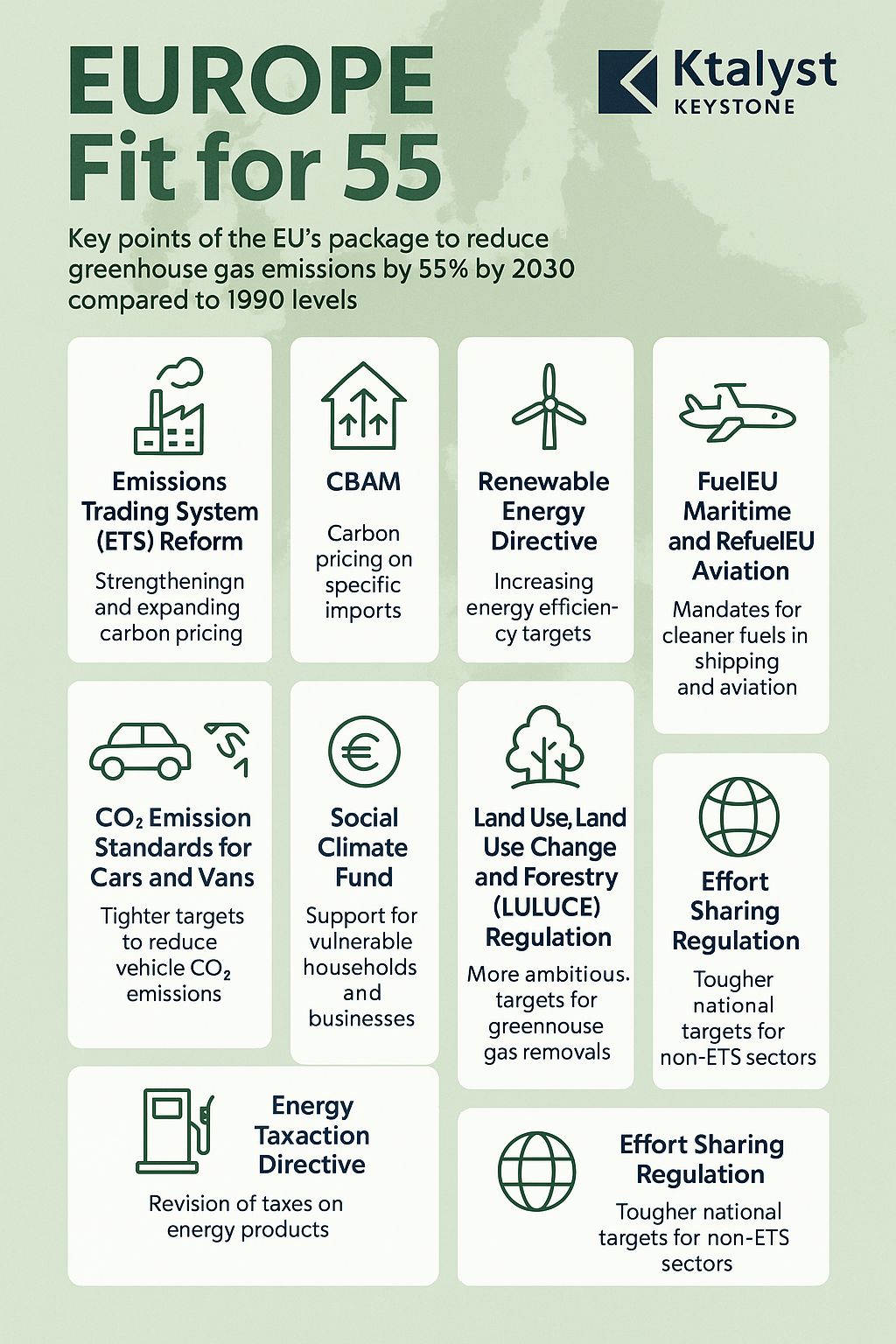
KatalystKnowledge | The FitFor55 Formula: Europe’s Race Against Time
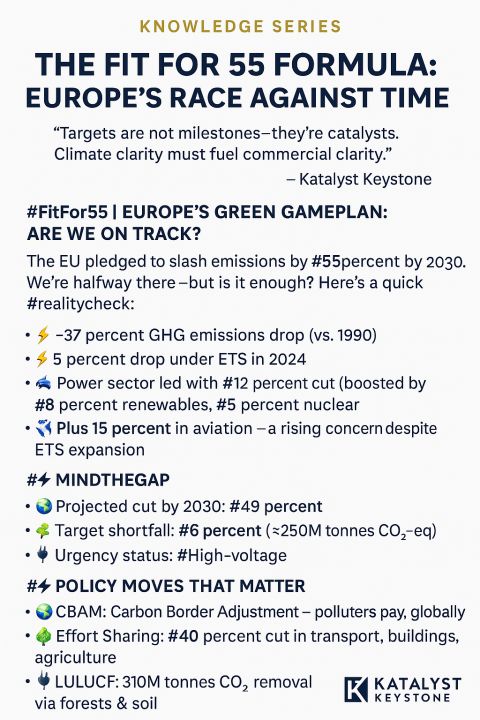
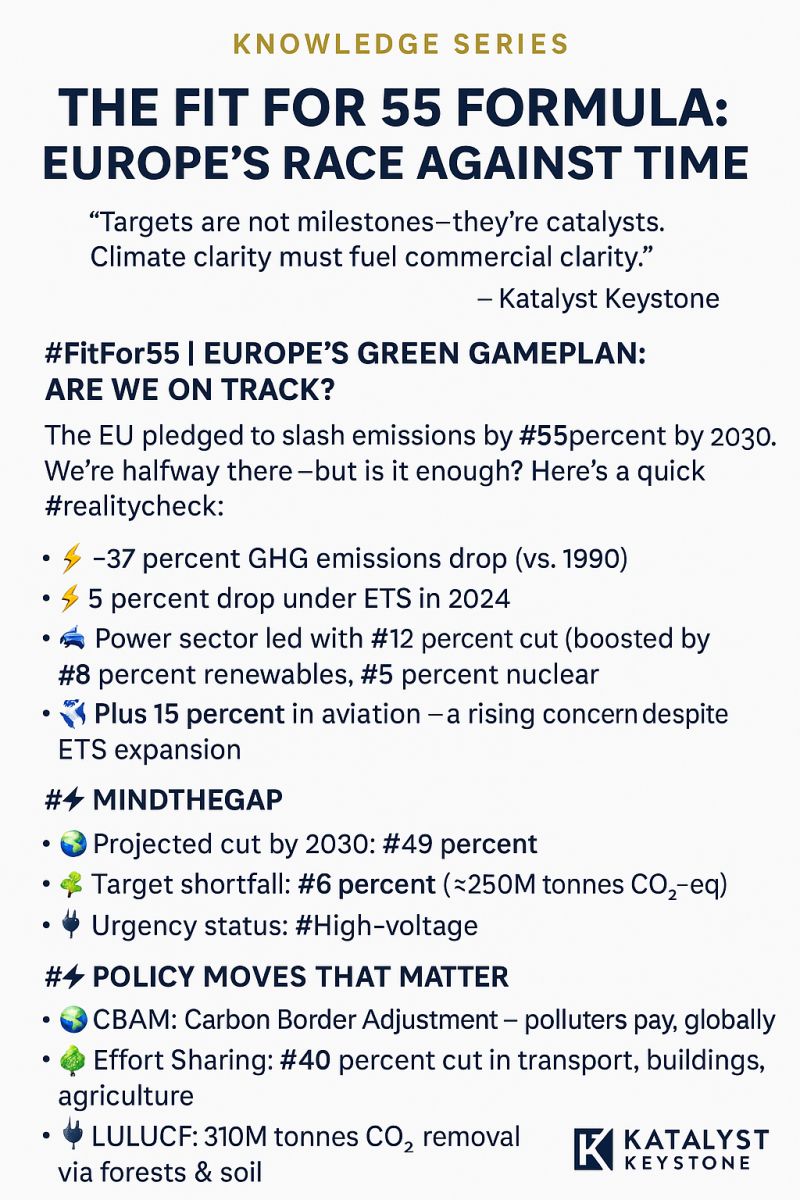
Targets are not milestones—they’re catalysts. Climate clarity must fuel commercial clarity.
KtalystKeystone
FitFor55 | Europe’s Green Gameplan: Are We On Track?
The EU pledged to slash emissions by 55percent by 2030. We’re halfway there—but is it enough? Here’s a quick realitycheck:
#️Progress So Far
⚡ Minus 37 percent GHG emissions drop (vs. 1990)
♻️ 5 percent drop under ETS in 2024
⚡ Power sector led with 12 percent cut (boosted by 8 percent renewables, 5 percent nuclear)
✈️ Plus 15 percent in aviation—a rising concern despite ETS expansion
🏭 Industry? Flat. Cement down, fertilizers up
MindTheGap
Projected cut by 2030: 49 percent
Target shortfall: 6 percent (≈250M tonnes CO₂-eq)
Urgency status: High-voltage
Policy Moves That Matter
🌍 CBAM: Carbon Border Adjustment – polluters pay, globally
🛣️ Effort Sharing: 40 percent cut in transport, buildings, agriculture
🌳 LULUCF: 310M tonnes CO₂ removal via forests & soil
🔌 Renewables Goal: 42.5 percent by 2030 (plus 2.5 percent aspirational boost to 45 percent)
Takeaway
The EU is moving—but not fast enough.
To reach the finish line:
Scale green hydrogen & biofuels
Electrify transport
Cut industrial emissions deeper
LeadershipLens
Green goals aren’t just numbers.
They’re strategy. They’re urgency. They’re our business future.
KtalystKeystone Insight:
We help you align business with policy—because climate clarity = profit clarity.
Originally published on LinkedIn on 2025-04-09 05:45:15: https://www.linkedin.com/feed/update/urn%3Ali%3AugcPost%3A7315610730253238272

