Sunburn or SunBoom?
U.S. Slaps 3,521% Tariffs on Solar Imports — The SolarSector Feels the Heat (and Opportunity)
When the sun shines too bright on unfair play, tariffs bring the shade.” — KtalystInsight
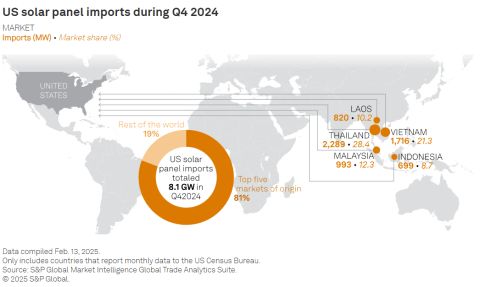
The UnitedStates has swung a solar sledgehammer — imposing tariffs as high as 3,521% on solar panel imports from Cambodia, Vietnam, Thailand, and Malaysia.
This stems from a Department of Commerce finding that Chinese companies were rerouting solar products through Southeast Asia to dodge existing duties.
Winners Emerging:
FirstSolar, Qcells, and other U.S. manufacturers celebrating a MadeInAmerica solar boom.
SolarBank CEO Dr. Richard Lu shared a sharp pivot — expanding domestic community solar and energy storage solutions, especially to feed the AI-driven data center boom.
SolarBank’s new 2.9 MW Gainesville, New York project is already under development.
Losers Worried:
Renewable project developers predict a 20–30% rise in project costs.
Supply chains could see 6–12 months delays, impacting Biden’s climate goals.
Global Echoes: Solar Under Trade Siege
EuropeanUnion’s CBAM (Carbon Border Adjustment Mechanism):
Though solar isn’t covered yet, solar supply chains are preparing for impact.
CBAM rollout from 2026 may push solar module prices up by ~10% if embedded carbon costs get added.
Manufacturers are already shifting wafer and polysilicon production to cleaner-energy countries like Canada and Brazil to avoid CBAM penalties.
India’s Solar Firewall:
Imposed 40% Basic Customs Duty on solar modules from April 2022 to promote Atmanirbhar Bharat.
Indian players like Adani Solar and Tata Power Solar are scaling local module capacity aggressively.
Canada’s Quiet Defense:
Continuing antidumping duties on Chinese modules, aiming to build a resilient domestic clean energy base.
Money Moves: Follow the Smart Investors
Brookfield Renewable Partners and BlackRock are pivoting funds into localized solar manufacturing and battery storage ecosystems.
NextEra Energy eyes major gains by scaling U.S.-based clean energy supply chains.
Ktalyst Perspective:
This tariff wave, plus the CBAM ripple effect, isn’t protectionism — it’s market redesign by climate necessity.
The winners will be solar companies that decarbonize supply chains, invest in local resilience, and pivot toward clean manufacturing clusters in NorthAmerica and India.

Originally published on LinkedIn on 2025-04-26 18:06:28: https://www.linkedin.com/feed/update/urn%3Ali%3AgroupPost%3A2153908-7321957853764677632
NamasteIndia 🚀
Framework_to_Future: India’s CCTS – A Data-Driven Power Play
YR2023–YR2025) 📊
India’s Carbon Credit Trading Scheme (CCTS) has rapidly transformed from a policy blueprint to a dynamic market. Here’s a concise, data-rich overview of its evolution:
YR2023: 🏗️ Foundation Laid
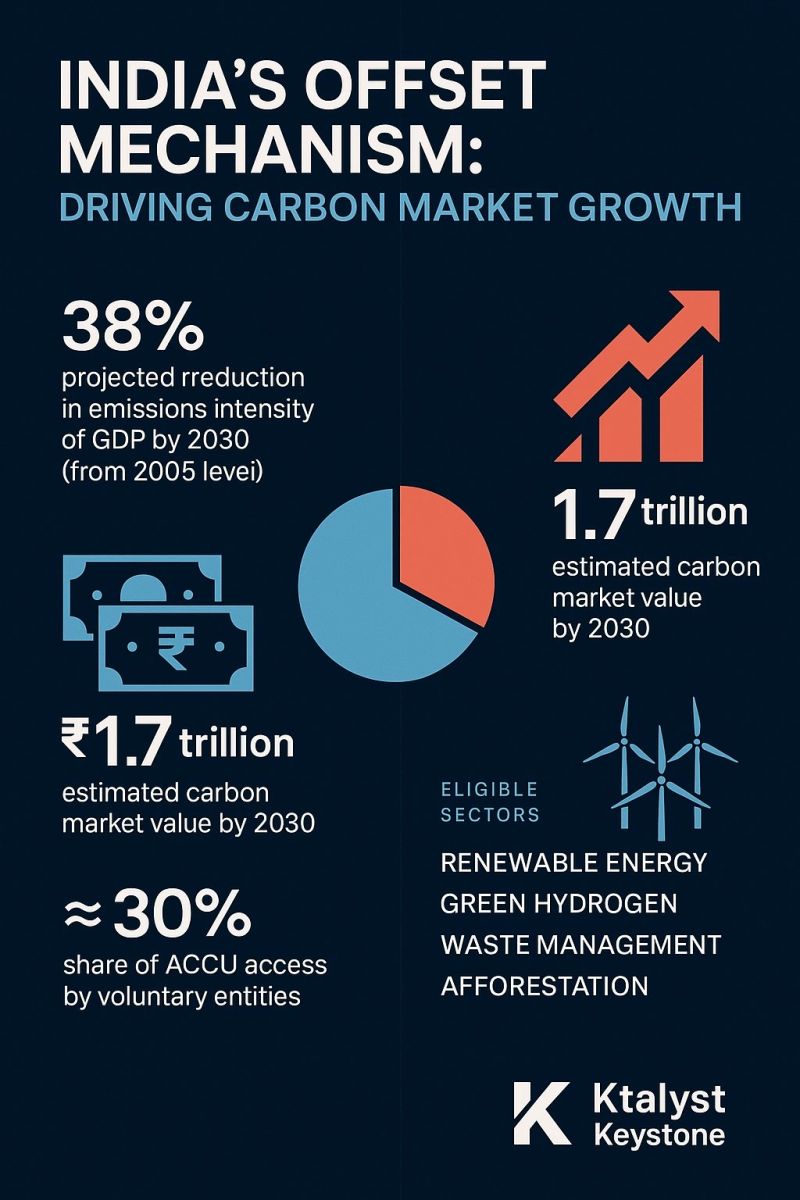
June2023: 📜 Government notifies CCTS, establishing a Compliance Mechanism.
* 🎯 Objective: Reduce GHG intensity in key sectors.
* 🏭 Sectors: Cement, Steel, Aluminium, Refineries, etc.
* ⚖️ Legal: Energy Conservation (Amendment) Act, 2022.
* 🏛️ Regulators: BEE, CERC.
YR2024: 📐 Architecture Built
* Dec2023: 🔄 Offset Mechanism integrated.
* 🌱 Key: Non-obligated entities can develop projects.
* 💳 CCCs: Tradable Carbon Credit Certificates.
* 🌍 Alignment: Paris Agreement’s Article 6.
* ✅ ACVAs: Validation & Verification agencies established.
* 🖥️ ICM: Indian Carbon Market registry conceptualized.
YR2025: 📈 Market Activated
* March2025: 8️⃣ Methodologies approved:
* ⚡ Renewable Energy
* 💧 Green Hydrogen
* 🏭 Industrial Efficiency
* 🗑️ Landfill Methane
* 🌳 Mangrove Afforestation
* 💰 Market Potential: USD 300 billion by 2030.
* 🌐 Global Projection: IETA: USD 1-1.5 trillion by 2050.
* 🤝 Transition: PAT scheme integration; full compliance by mid-2026.
Quote:
India’s carbon market is not just compliance—it’s climate economics in motion.” — Anju Sharma, MD, Ktalyst Keystone.
Future: 🔮 Innovation & Integration
* 💻 Digital Infrastructure: For Carbon Credits.
* 🤝 Global Links: International Carbon Market integration.
* 📊 Scope 3 & MRV: Standards inclusion.
* 💡 Private Sector: Tech & Nature-Based solutions.
Call_to_Action:
Let’s discuss how your organization can leverage India’s evolving carbon market. Connect with me!
Question:
How will CCTS reshape your industry? Share your insights!
Hashtags:
CarbonCredits IndiaCarbonMarket CCTS ClimateAction Sustainability EnergyTransition GreenEconomy EnvironmentalPolicy ParisAgreement ESG CleanEnergy Innovation DataDriven MarketInsights


Originally published on LinkedIn on 2025-04-07 17:18:44: https://www.linkedin.com/feed/update/urn%3Ali%3AugcPost%3A7315060472787955712
🚨 Moody’s Shakes_Up_Credit_Ratings: The Green_Penalty & Reward_Effect!♻
With #$1.6T+ in ESG-linked financing, Moody’s is redefining creditworthiness, rewarding sustainability leaders & penalizing ESG laggards. 📉🚀 Companies failing on climate, social, & governance metrics are seeing their ratings cut—raising borrowing costs & investor risks.
📊 Companies Hit by Moody’s ESG_Based_Credit_Rating Adjustments
🟥 Nissan Motors – Downgraded 🚨
📌 Moody’s cut Nissan to junk due to weak sustainability integration & financial instability. (Source)
🟥 PG&E – Downgraded 🚨
📌 #$30B in wildfire liabilities led Moody’s to downgrade PG&E, linking climate risk to creditworthiness.
🟩 Royal Philips – Upgraded 🚀
📌 Green loan secured with ESG-linked interest rates, rewarding sustainability progress.
🟥 Thames Water – Downgraded 🚨
📌 Environmental violations & debt risks slashed its credit rating, as S&P flagged financial instability.
🟩 Casino Guichard-Perrachon – Upgraded 🚀
📌 Secured sustainability-linked loans, reducing interest rates based on ESG performance.
🟥 Enbridge – Downgraded 🚨
📌 Despite green loans, Moody’s questioned its carbon-heavy projects, impacting its rating.
🟩 Unibail-Rodamco-Westfield – Upgraded 🚀
📌 Green finance unlocked better credit conditions via ESG-tied loans.
🟥 Avangrid Gas Subsidiaries – Downgraded 🚨
📌 Regulatory ESG concerns lowered its credit ratings, citing fossil fuel dependency.
🟩 Drax Group – Under Review 🔍
📌 Sustainability-linked loans triggered scrutiny over carbon intensity goals.
🟥 Southern Water – Downgraded 🚨
📌 Environmental fines & governance risks led Moody’s to cut its credit rating.
🔥 The Takeaway: Moody’s Is Now Pricing in Sustainability Risks
🟢 17% of Moody’s rated firms see ESG risks impact their credit scores.
🟢 Companies with poor sustainability scores pay up to 15% higher borrowing costs.
🟢 Sustainability-linked finance = Lower interest rates & stronger credit ratings.
📢 Is this the wake-up call for businesses ignoring ESG? Let’s discuss below! 👇

Originally published on LinkedIn on 2025-02-27 12:45:56: https://www.linkedin.com/feed/update/urn%3Ali%3AgroupPost%3A82951-7300858693879799809
🚨 India’s EVRegulations 2025: What’s New & What It Means for the Industry? ⚡🚗
With EV sales in India growing 49% YoY, new regulatory shifts are shaping the future of the sector. The latest policies focus on local manufacturing, safety standards, & market expansion while setting new rules for charging infrastructure & import incentives. Here’s what’s changing:
📊 Key EV Policy Updates & Their Impact
🔹 Investment Caps on Charging Infrastructure
📌 The Indian Government now limits EV manufacturers to count only 5% of their total investment in charging networks toward the #$500M minimum investment required for lower import tariffs.
📌 Why It Matters? This ensures priority to local EV production, reducing reliance on imports. (Source)
🔹 Tesla’s Entry & Market Implications
📌 Tesla is setting up showrooms in Mumbai & New Delhi and exploring local production. However, high import duties (up to 100%) could push Tesla’s pricing into the luxury segment, making affordability a challenge.
📌 EV Market Reality: The average car price in India is #$10,000-$15,000, while a Tesla Model 3 would cost over #$50,000 without local assembly. (Source)
🔹 Stricter Safety & Battery Standards
📌 BIS (Bureau of Indian Standards) introduces new EV safety rules, requiring all EVs to meet upgraded performance & fire safety benchmarks.
📌 Battery Regulation: EV battery makers must obtain AIS 156 certification from ARAI (Automotive Research Association of India) to ensure safety compliance.
📌 Why It Matters? India aims to reduce EV fire risks, ensuring consumer safety and boosting market confidence. (Source)
🔹 Union Budget 2024-25: EV Industry Boost
📌 Customs duty exemptions on 25 critical minerals used in EV battery production will lower manufacturing costs.
📌 PLI (Production-Linked Incentive) expansion aims to reduce import dependency & boost domestic production.
📌 FAME III (Faster Adoption & Manufacturing of Electric Vehicles) is expected to focus on charging infrastructure expansion. (Source)
⚡ The Takeaway: What’s Next for India’s EV Industry?
🚀 EV penetration in India is at 2% but projected to hit 30% by 2030.
🚀 Government policies favor local EV manufacturing over imports.
🚀 Safety & compliance measures will shape consumer trust & adoption.
📢 Will these new regulations accelerate India’s EV transition or slow global players like Tesla? Let’s discuss! 👇
Source / shared link: https://m.economictimes.com/industry/renewables/govt-set-to-notify-new-ev-policy-with-new-investment-rules-as-tesla-prepares-for-india-entry/articleshow/118415610.cms
Originally published on LinkedIn on 2025-02-27 06:19:45: https://www.linkedin.com/feed/update/urn%3Ali%3AgroupPost%3A82093-7300761508139974656
CustomerInfluence is Driving CorporateSustainability—Are Businesses Ready? 🇮🇳🌍🛍️
What if every dollar (or rupee!) you spent was a vote for the future you wanted?
Consumers are no longer just buying products—they’re reshaping industries. In India, 85% of urban shoppers now prefer eco-friendly brands (Nielsen, 2024), pushing businesses to align with sustainability or risk losing relevance.
📢 WhichIndustries Are Most Affected by Customer Demand for Sustainability?
🚗 Automobile & Mobility
✔️ India’s EV market grew 48% YoY as consumers shift to greener transport (SIAM, 2024).
✔️ Tata Motors leads India’s EV sector with a 74% market share, while global automakers scramble to meet demand (Economic Times, 2024).
✔️ Uber & Ola face pressure to electrify fleets, with government mandates accelerating the shift.
🛍️ Retail & Fashion
✔️ Fast fashion faces a reckoning: 73% of Gen Z in India prefer sustainable brands (Deloitte, 2024).
✔️ H&M & Zara under fire for greenwashing, while local sustainable brands like FabIndia & B Label are thriving.
✔️ Shein & Flipkart Fashion have faced sustainability backlash, yet mass-market appeal keeps them afloat.
🥤 Food & Beverage
✔️ 70% of Indian consumers prefer eco-friendly packaging, pushing brands to reduce plastic use (Mint, 2024).
✔️ Nestlé & PepsiCo face bans on single-use plastics, while Amul & Mother Dairy work on sustainable dairy farming.
✔️ Plant-based meat & dairy alternatives are gaining ground, with a 32% YoY growth in demand (FICCI, 2024).
🏡 RealEstate & Construction
✔️ Green buildings account for 7% of new constructions in India, but demand for sustainable housing is rising (JLL India, 2024).
✔️ Godrej Properties & Mahindra Lifespaces are leading in green-certified real estate.
✔️ Builders failing on sustainability face regulatory & buyer scrutiny, pushing firms toward solar power & eco-friendly materials.
💄 Beauty & Personal Care
✔️ India’s natural beauty segment is growing 35% YoY, driven by demand for chemical-free, cruelty-free products (Statista, 2024).
✔️ Forest Essentials & Kama Ayurveda thrive, while L’Oréal & Unilever struggle with green claims scrutiny.
📊 KeyTakeaway: Consumers Hold the Power
📌 Customers could be the biggest force in driving corporate climate action.
📌 Brands should be transparent & proactive—greenwashing is no longer an option.
📌 The future would be shaped by companies prioritizing real impact over marketing.
👉 Do you factor sustainability into your purchasing decisions? Let’s discuss below! 👇

Originally published on LinkedIn on 2025-02-26 05:06:26: https://www.linkedin.com/feed/update/urn%3Ali%3AgroupPost%3A95089-7300380670919426049
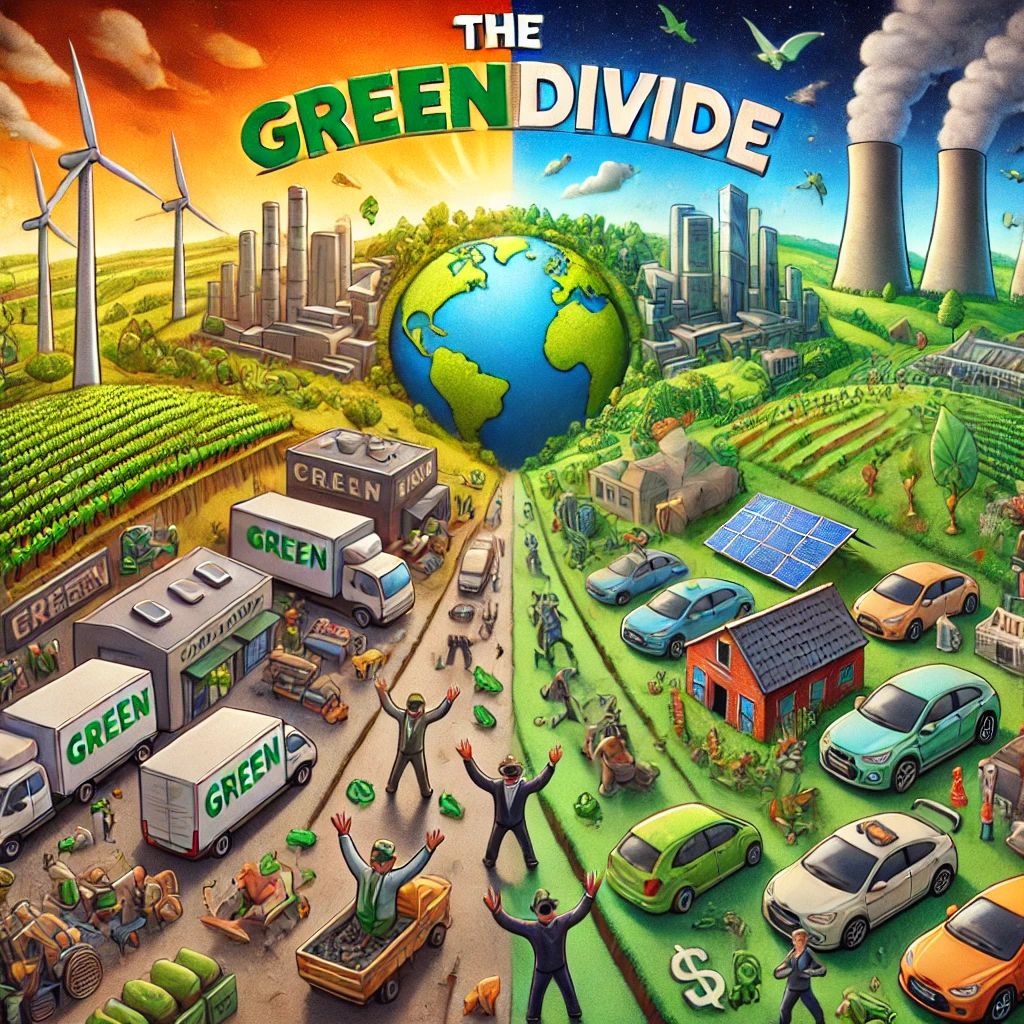
🚀 “The Dark Side of Sustainability: Are We Creating a Green Divide?” 🌍⚖️💰
Sustainability for whom? If green solutions leave half the world behind, is it truly sustainable?
As the world pushes for NetZero, EVs, CarbonTaxes, and SustainableFinance, a new reality emerges—TheGreenDivide.
📊 The Hidden Cost of Going Green
🔹 EV Affordability Gap: The average EV costs 50-70% more than petrol/diesel cars in India, making them a luxury, not a necessity. (IEA, 2024)
🔹 Carbon Taxes & Inequality: EU’s Carbon Border Adjustment Mechanism (CBAM) is expected to cost developing economies $16B annually as they struggle to decarbonize. (IMF, 2024)
🔹 Green Job Displacement: 2.7 million fossil fuel jobs are set to be lost globally by 2030, while only half will be replaced by green jobs. (WEF, 2024)
🔹 Rural Access to Sustainability: While urban India talks about solar panels & ESG investing, only 7% of rural households have access to renewable energy. (MNRE, 2024)
📌 RealityCheck: If sustainability leaves millions behind, is it truly progress?
💰 Who Wins & Who Pays?
🏆 Winners: Corporations & Wealthy Nations
✔️ Carbon Credit Traders: The voluntary carbon market hit $2B in 2024, but 80% of credits are purchased by MNCs to offset emissions instead of reducing them. (Bloomberg, 2024)
✔️ Developed Nations: US & EU firms control 90% of critical minerals used in batteries, keeping the supply chain monopolized. (World Bank, 2024)
✔️ Tech & EV Giants: Companies like Tesla & BYD gained over $400B in green subsidies, while developing nations struggle to fund clean tech. (IEA, 2024)
❌ Losers: SMEs, Emerging Markets & The Poor
🔻 SMEs: Over 60% of Indian MSMEs cannot afford ESG compliance costs, risking lost global contracts. (FICCI, 2024)
🔻 Developing Nations: Bangladesh & Vietnam are losing textile exports due to high sustainability requirements from EU buyers. (OECD, 2024)
🔻 Consumers: Sustainable products cost 30-50% more, pricing out low-income families. (McKinsey, 2024)
📌 RealityCheck: Green capitalism is real. Who’s paying the price?
📜 What Needs to Change?
🔹 Equitable Green Policies: Climate financing must prioritize developing nations.
🔹 Accessible Green Tech: EV & solar subsidies should be focused on affordability for the masses.
🔹 Real ESG Accountability: Stop “green compliance” from becoming a pay-to-play game.
🔹 Inclusive Sustainability: Policy reforms must address rural electrification, SME funding & job displacement.
🏆 KeyTakeaway: Sustainability Shouldn’t Be a Privilege
📌 Sustainability could be the great equalizer—if green policies support all economies.
📌 It should be accessible, not a corporate power game.
📌 If it remains profit-driven, it would be another tool of economic disparity.
Originally published on LinkedIn on 2025-02-24 07:22:32: https://www.linkedin.com/feed/update/urn%3Ali%3AgroupPost%3A82951-7299690143739764736
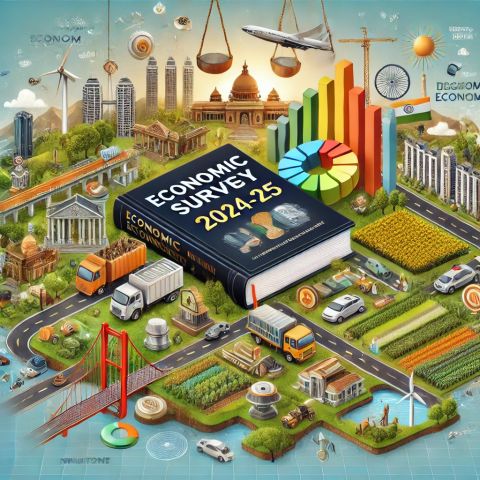
📊 India_Economic_Survey_2024-25: Growth, Resilience & Future Focus 🇮🇳📈
India’s economy is defying global uncertainties, powered by investment, reforms, and innovation. Here’s a concise breakdown of the key takeaways.
🌏 Economic Strength & Fiscal Health
✅ Growth remains strong, driven by domestic investment.
✅ Inflation moderate, but food prices remain volatile.
✅ Capital spending up, ensuring long-term stability.
🏆 Key Shift: India prioritizes investment over short-term spending.
💰 Banking & Financial Sector
✅ Low NPAs & strong credit growth signal a healthy banking sector.
✅ Global interest rate risks monitored to ensure market stability.
🏆 Key Shift: A robust financial system supports economic momentum.
🌐 Trade & External Sector
✅ FDI remains a focus, with business reforms easing entry.
✅ Export challenges persist, due to global trade tensions.
✅ Reducing import dependency on China to boost self-reliance.
🏆 Key Shift: Reshaping trade policies to adapt to global disruptions.
🏗️ Infrastructure & Industry
✅ Post-election boost to infrastructure—transport, digital, energy.
✅ MSMEs get policy push, enhancing industrial output.
🏆 Key Shift: Building for the future with targeted investments.
🌱 Climate & Sustainability
✅ Energy transition & green investments expanding.
✅ Air pollution & emissions remain critical issues.
🏆 Key Shift: Sustainability is now a policy priority, not an afterthought.
🚀 Employment, AI & Future of Work
✅ Upskilling & gig economy shaping future jobs.
✅ AI disruption expected, but workforce adaptation in progress.
🏆 Key Shift: Balancing tech advancement with job security.
📈 Vision 2047: India’s Long-Term Economic Strategy
✅ Deregulation & ease of doing business accelerating growth.
✅ Viksit Bharat 2047 aims to make India a developed economy.
🏆 Key Shift: From short-term fixes to long-term economic transformation.
🏆 KeyTakeaway
India’s Economic Survey 2024-25 highlights resilience, investment-driven growth, and policy innovation. The focus is on long-term stability, sustainability, and self-reliance.
👉 Is India ready for its next economic leap?
EconomicSurvey IndiaGrowth Infrastructure GreenEconomy DigitalIndia ViksitBharat2047
Originally published on LinkedIn on 2025-01-31 19:21:29: https://www.linkedin.com/feed/update/urn%3Ali%3Ashare%3A7291173766041059329
Is Green the New_Global_Superpower? How Climate Policies Are Reshaping the World” 🌍♻️🏛️
Climate policies are no longer just about saving the planet—they’re reshaping global politics, economies, and power dynamics. Welcome to the era of Green Political Global, where sustainability is the new currency of influence.
🌱 1. Is Climate the New_Geopolitical_Weapon?
✅ Carbon Tariffs & Trade Rules: The EU’s Carbon Border Adjustment Mechanism (CBAM) is forcing nations to cut emissions or pay the price.
✅ Green Trade Wars: Countries are using climate policies to favor domestic industries, from EV subsidies to clean energy export bans.
🚨 Who’s Winning? The US, EU, and China lead the green tech race, while developing nations struggle with compliance costs.
💰 2. Is Green Finance Replacing Oil Money?
✅ #$1.5 Trillion in ESG Investments: Global funds are shifting capital toward sustainable projects. (Source: BloombergNEF, 2024)
✅ Debt-for-Nature Swaps: Countries like Ecuador and Belize are cutting debt by committing to climate conservation.
🚨 Who’s Losing? Fossil-fuel-dependent nations risk economic isolation if they don’t transition fast enough.
⚡ 3. Who Controls the Future Energy Chessboard?
✅ China dominates solar & battery production, controlling 80% of global supply chains. (Source: IEA, 2024)
✅ US and EU investing billions in green hydrogen & rare earth mining to reduce dependence on China.
🚨 Who’s at Risk? Countries reliant on coal & oil exports face declining demand, reshaping global alliances.
🚀 4. Is Climate Politics the New Kingmaker?
✅ Green Politics is Winning Elections: Climate-focused leaders are gaining ground in Europe, the US, and Latin America.
✅ Corporate Influence Growing: Tech giants and carbon credit billionaires are shaping global climate policies.
🚨 Who’s Losing? Traditional fossil industries face increasing policy restrictions and legal battles.
🏆 KeyTakeaway
Climate policy is no longer just science—it’s global strategy. Nations that control green tech, finance, and trade rules will dominate the next economic era.
👉 Is your country leading the Green Power Shift, or falling behind?
ClimatePower Geopolitics GreenEconomy NetZero Sustainability FutureOfEnergy

Originally published on LinkedIn on 2025-01-30 11:06:32: https://www.linkedin.com/feed/update/urn%3Ali%3AgroupPost%3A2635374-7290686820978233345
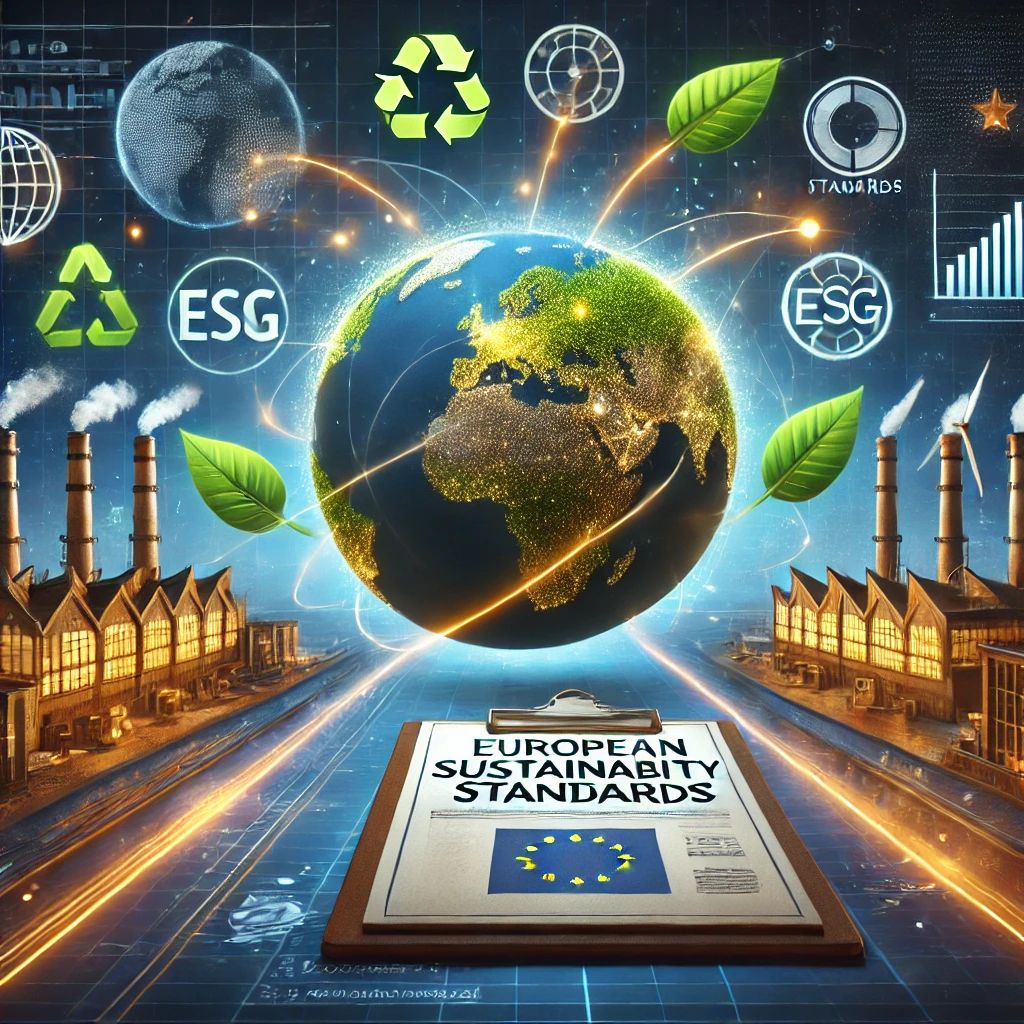
NamasteIndia ESRS_Ripple_Effect:Europe’s Global_Disruptor_Rules Reshape Indian Businesses” 🇮🇳
With the EU’s European Sustainability Reporting Standards (ESRS) coming into effect, Indian businesses are set to feel the heat. Here’s a data-driven breakdown of how these standards will impact India:
🔵 Indian Exporters Face Compliance Pressure
Fact: India exported goods worth #€65 billion to the EU in 2022, making the EU one of India’s largest trading partners. (Source: Eurostat)
Impact: Exporters must now meet ESRS-aligned requirements like carbon reporting, labor conditions, and water usage transparency.
Example: 45% of Indian textile exports go to the EU, which requires ESG disclosures from supply chains.
🟢 Subsidiaries of EU Companies Must Adapt
Fact: Over 4,000 EU-based companies have subsidiaries in India, spanning sectors like IT, pharmaceuticals, and manufacturing. (Source: EU Delegation to India)
Impact: Indian branches will face stricter ESG reporting as EU headquarters comply with ESRS.
Example: Indian operations of EU automotive giants must disclose scope 1, 2, and 3 emissions to support parent company reports.
🟡 Supply Chain Scrutiny to Intensify
Fact: 70% of EU companies rely on global supply chains, with India being a critical link. (Source: EFRAG)
Impact: Indian suppliers must provide accurate sustainability data or risk losing contracts.
Example: EU pharma imports from India, valued at #€8 billion annually, will require ESG-aligned disclosures like energy use and labor practices.
🟠 Regulatory Convergence in India
Fact: India’s BRSR framework, introduced in 2021, already mandates ESG reporting for the top 1,000 listed companies. (Source: SEBI)
Impact: ESRS accelerates India’s regulatory momentum, pushing companies to adopt global ESG benchmarks.
🟣 Opportunities in Green Tech and Consulting
Fact: The ESG consulting market in India is projected to grow at a CAGR of 35%, reaching #$1.2 billion by 2030. (Source: PwC India)
Impact: Indian firms offering ESG solutions—like software platforms for tracking emissions—stand to gain as EU firms outsource compliance support.
🔴 Competitive Advantage for ESG Leaders
Fact: 83% of EU investors prefer companies with strong ESG credentials. (Source: EY)
Impact: Indian companies with advanced sustainability practices will become preferred partners for EU buyers.
Example: Tata Steel’s carbon-neutral initiatives make it a strong supplier for ESG-conscious European firms.
Key Stats That Matter
#€85 billion: Total trade between India and the EU in 2022. (Source: Eurostat)
4,000+: EU-based companies with operations in India. (Source: EU Delegation to India)
35% CAGR: Growth of India’s ESG consulting market by 2030. (Source: PwC)
👉 Are Indian companies ready to navigate the ESG revolution and seize the opportunity?
SustainabilityLeadership ESRSImpact IndiaAndEU ESGCompliance GreenEconomy
Originally published on LinkedIn on 2025-01-27 11:33:17: https://www.linkedin.com/feed/update/urn%3Ali%3AgroupPost%3A3880479-7289606387402207232

