YR2045: The 7Business Trends Disrupting Economies
The future is not a choice between profit and planet — it is the profit of the planet itself.” Dr. Anju Sharma
1. Nature as CFO: $479B Lost, $2T Market Gained
Signal Today: Ecosystem degradation drains $479B annually from the global economy.
Trajectory 2045: Natural capital markets exceed $2T; companies are audited on soil, pollinators, and water.
Paradox: The more we destroy nature, the more expensive it becomes to prove we can’t live without it.
2. AI: The Server That Burns Coal Today, Polices Net Zero Tomorrow
Signal Today: Data centres consume 3% of global electricity, equal to the UK’s grid.
Trajectory 2045: AI evolves into a “Sustainability OS,” auto-policing emissions and resource use.
Paradox: The very machines fuelling emissions today will be coded to regulate them tomorrow.
3. Waste 2.0: From Overshoot to Intelligent Loops
Signal Today: Global waste will hit 3.8B tonnes by 2050, with <10% recycled.
Trajectory 2045: Waste 2.0 reframes garbage as a digital asset — tracked, priced, and looped through AI.
Paradox: The faster we overshoot in consumption, the smarter we must get at proving nothing is wasted.
4. Trade Shrinks to Survive: 79M Containers, Floating Hydrogen Ports
Signal Today: DP World moved 79M containers in 2024; green corridors are in pilot phase.
Trajectory 2045: Globalization fragments into modular hubs, with hydrogen-powered floating ports.
Paradox: Trade will endure not by getting bigger, but by shrinking into resilient pieces.
5. Purpose as Currency: $30T ESG Assets, Fraud for Purpose-Washing
Signal Today: ESG-linked assets exceed $30T, ~40% of global AUM.
Trajectory 2045: “Societal Dividend Reports” replace glossy CSR brochures.
Paradox: The louder companies shout about purpose, the less believable they become — until numbers speak.
6. Garbage Alchemy: 350M Tonnes Plastic, All Treasure by 2045
Signal Today: Plastic output is 350M tonnes annually, yet <10% recycled.
Trajectory 2045: AI-managed reuse loops transform garbage into perpetual feedstock.
Paradox: The more garbage piles up, the more valuable it becomes as tomorrow’s resource.
7. Watts Over Wealth: $3T Energy Spend, Gigawatts Replace GDP
Signal Today: Global energy investment hit $3T in 2024, with $2T in clean tech; 770M people still lack electricity.
Trajectory 2045: Nations are judged not by GDP but by clean gigawatt surplus.
Paradox: Power no longer lies in money — money lies in power, literally in watts.
By YR2045, business will not be measured in quarterly profits but in how many watts it creates, how much waste it eliminates, and how much water it preserves.
Source / shared link: https://datatopics.worldbank.org/what-a-waste/?utm_source=chatgpt.com
Originally published on LinkedIn on 2025-09-25 22:52:52: https://www.linkedin.com/feed/update/urn%3Ali%3AgroupPost%3A2153908-7377112887015854080
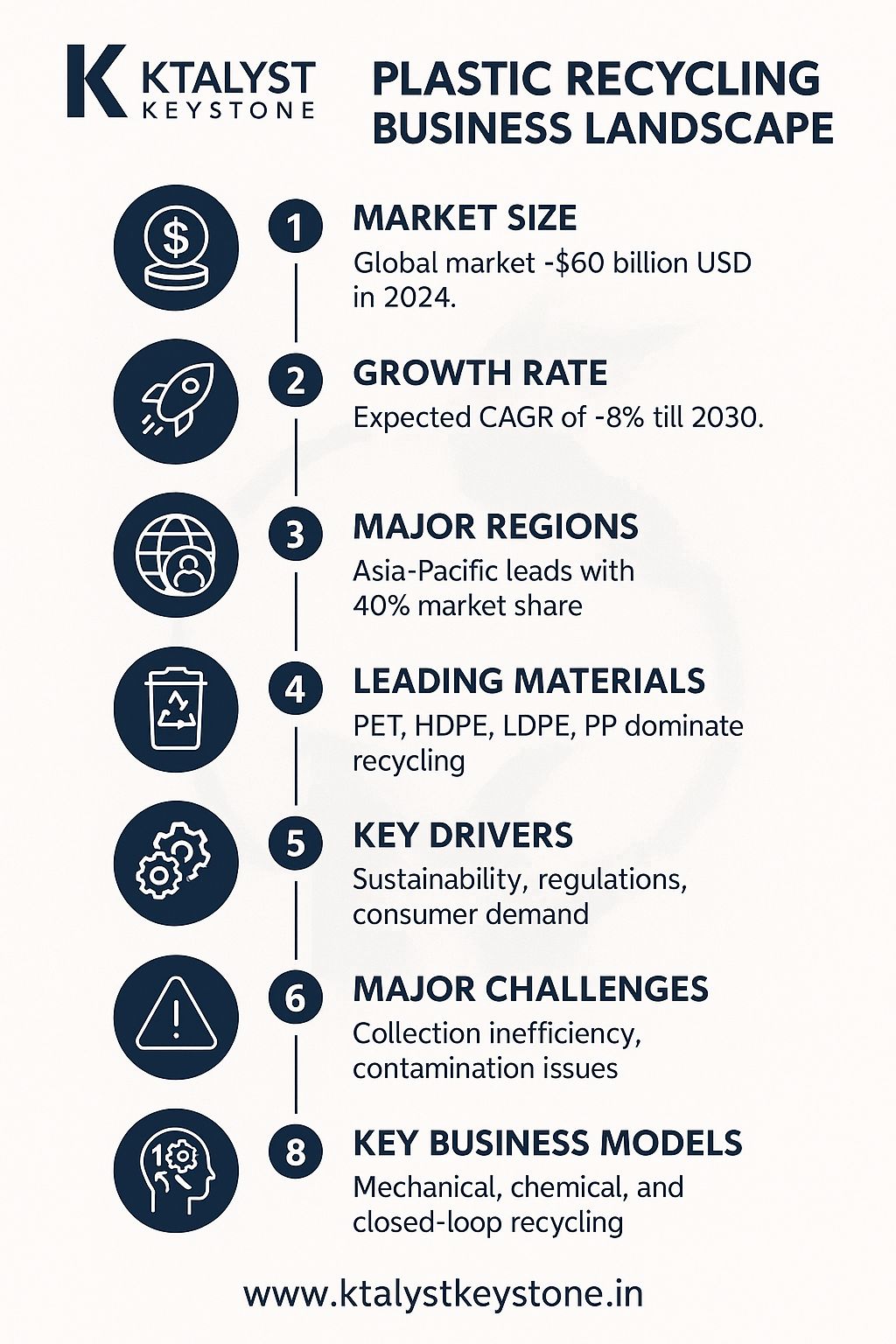
♻️ PlasticRecycling: TheSilentBillionDollarRevolution
isn’t just saving waste — it’s reshaping economies.
Discover the real market movers with KtalystInsights.
#♻️ “Recycling isn’t just renewal; it’s reinvention. Every plastic reimagined is a future reclaimed.” — KtalystKeystone
GlobalLandscape
🌎 MarketSize (2024): ~$60 billion USD
📈 ExpectedCAGR (2024–2030): ~8%
🗺️ TopRegions:
AsiaPacific (~40% share)
Europe (~25%)
NorthAmerica (~20%)
KtalystInsight:
Asia’s dominance is fueled by aggressive policyshifts (China’s Green Fence, India’s EPR regulations) — local recycling startups and global joint ventures are booming.
KtalystRecyclingRating
⭐ AsiaPacific: 8.5/10 — Rapid growth, moderate tech.
⭐ Europe: 9.2/10 — High regulation, tech leadership.
⭐ NorthAmerica: 8.0/10 — Innovation-led recycling but slower mass adoption.
⭐ LATAM & Africa: 5.5/10 — Emerging opportunity zones with infra gaps.
KtalystInsight:
Europe sets the goldstandard with circulareconomy laws, while Asia leads in volume but needs advanced tech and traceability upgrades.
5KeyApplications
🛍️ Packaging – Bottles, containers, films (PET, HDPE).
👕 Textiles – Recycled polyester for apparel and furnishings.
🚗 Automotive – Lightweight components from recycled PP and composites.
🏗️ Construction – Pipes, panels, roofing from recycled plastics.
🎮 ConsumerGoods – Toys, gadgets, daily-use products.
KtalystInsight:
Packaging & Textiles together consume over 60% of all recycled plastics — brands chasing ESG targets are pivoting toward 100% recycled content.
FuturePotential
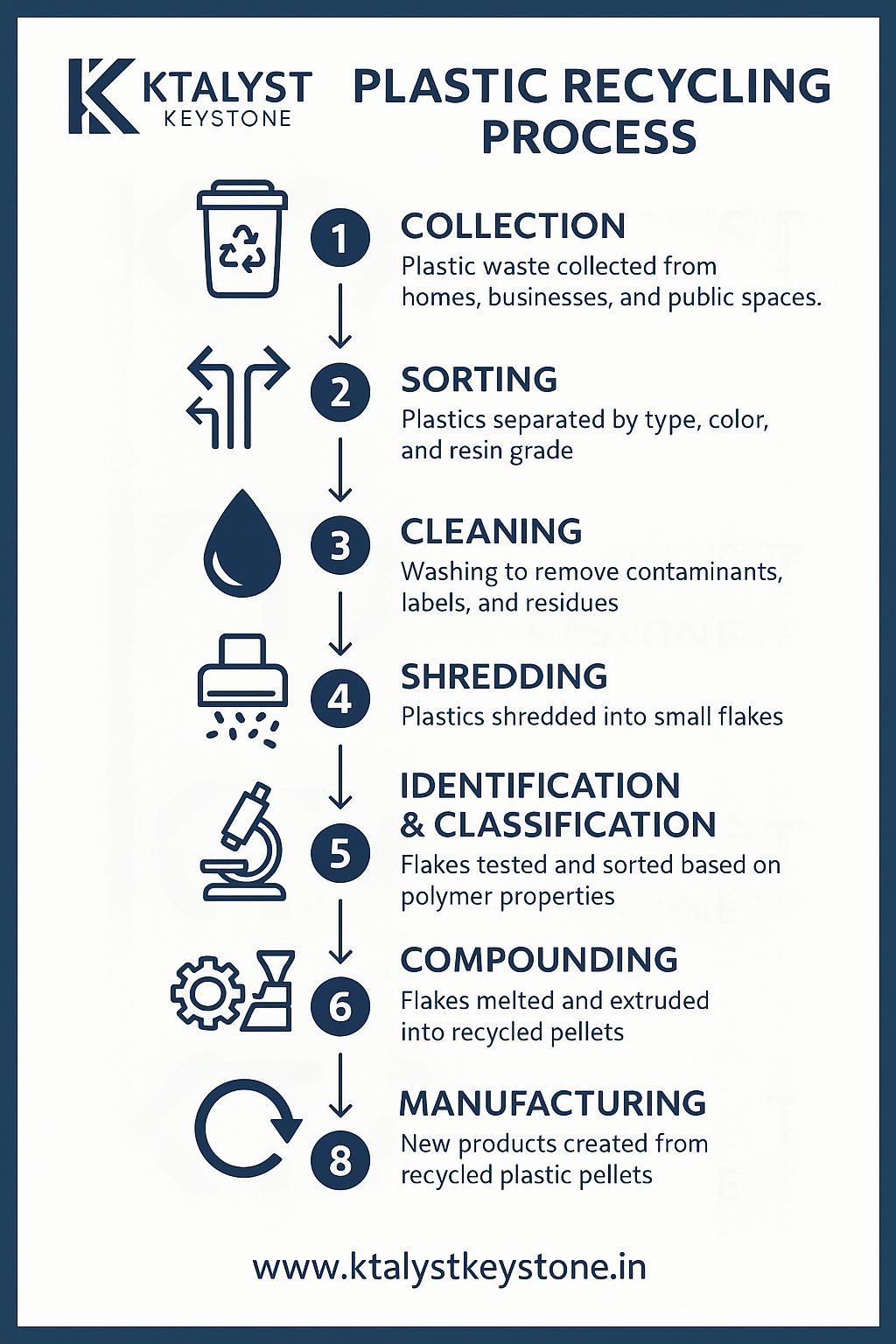
⚙️ AdvancedRecyclingTech (ChemicalRecycling): Unlocking hard-to-recycle plastics.
🤖 AIandRobotics: Smart sorting tech increasing plant yields by 25–30%.
🌿 BioplasticsHybridization: Next-gen materials mixing recycled polymers with bio-based resins.
KtalystInsight:
MechanicalRecycling dominates today, but ChemicalRecycling will be the investmentmagnet for the next decade, especially in Asia and the US, driven by stricter EPR mandates.
FinalThought
The PlasticRecycling economy is no longer a side act.
It’s the next trilliondollaropportunity, the ESGcredibility anchor, and a critical climatestrategy.
At KtalystKeystone, we believe recycling is no longer optional; it’s industrialevolution.
Originally published on LinkedIn on 2025-04-27 11:21:36: https://www.linkedin.com/feed/update/urn%3Ali%3AugcPost%3A7322218357754081280
🌍 As ESG (Environmental, Social, and Governance) policies evolve, global powerhouses—India, China, the EU, and the US—are reshaping their sustainability strategies. From relaxed reporting norms to renewable energy accelerations, here’s a data-driven snapshot of the latest regulatory shifts impacting corporate ₹sustainability.
The European Pivot: Climate Goals vs. Competitiveness
🔹 €40B+ saved: The EU proposes easing sustainability reporting for companies with fewer than 1,000 employees.
🔹 Softened ESG Rules: Climate disclosure mandates are reduced to maintain business competitiveness.
🔹 UK’s DE&I Backlash: Critics argue ESG-driven hiring fosters groupthink, while Labour MPs push for defense sector investments to be labeled “ethical.
📌 Sources: Reuters | WSJ
The US Cracks Down on ESG Disclosures
🔹 Mandatory Climate Risk Disclosures: The SEC is pushing for standardized ESG reporting.
🔹 Greater Transparency: Public companies must disclose climate risks and governance practices.
📌 Source: SEC
India’s Green Leap: Regulations Driving Change
🔹 BRSR Mandate: Top 1,000 listed companies must disclose ESG performance.
🔹 Green Steel Formula: Steel with <2.2T CO₂ per ton now has a new classification system.
🔹 Renewable Energy Push: From June 2026, clean energy projects must use domestically made solar PV modules.
📌 Sources: SEBI | Reuters
China’s ESG Strategy: Balancing Carbon, Coal, and Clean Energy
🔹 Methane Crackdown: Coal mines with ≥8% methane content must now capture emissions.
🔹 Steel Sector Standards: A new emissions reporting framework is under review.
🔹 2030 Green Target Achieved in 2024: China hit its 1,200 GW wind+solar goal 6 years early.
📌 Sources: Reuters | FT
TheBigPicture: What This Means for Businesses
💡 Global ESG policies are diverging: While the EU is loosening its reporting norms, the US and China are tightening disclosure requirements. India is using ESG regulations to boost domestic green innovation.
📊 Key Takeaways for Businesses:
✔ EU → Less reporting, more flexibility
✔ US → Greater compliance scrutiny
✔ India → Stronger ESG supply chain localization
✔ China → Increased carbon accountability
👉 Which ESG shift affects your industry the most? Let’s discuss! 💬

Originally published on LinkedIn on 2025-03-12 06:04:28: https://www.linkedin.com/feed/update/urn%3Ali%3AgroupPost%3A82951-7305468704958373888
TheSustainabilityReckoning: Data, Dollars & DueDiligence
📊💡 Sustainability is no longer a choice—it’s a business imperative backed by hard data. In 2025, companies face a stark reality: greenwashing lawsuits, evolving regulations, and shifting investor priorities are reshaping the LicenseToOperate. The cost of inaction? Fines, lostmarketaccess, and reputationaldamage.
Here’s what the numbers reveal:
3_Billion_USD_Lawsuit: Apple’s “CarbonNeutral” Claims Under Fire
Apple faces a classactionlawsuit challenging its carbonneutralityclaims, highlighting the #$20Billion+ global fines for greenwashing in 2024 alone. The lesson? Transparency and tangibleaction matter more than marketing.
🔹 EUSlashesSustainabilityReporting by 80%—But Not for BigPlayers
The EU’s CorporateSustainabilityReportingDirective (CSRD) has been relaxed, reducing compliance for smaller firms. However, largecorporations must still navigate stringentESGrequirements, ensuring verifiablesustainability efforts.
🔹 #$2Trillion in ClimateInvestments Defies ESGBacklash
Despite politicalheadwinds, globalclimateinvestments hit #$2trillion in 2024, with renewables and infrastructure leading. Resilientcompanies are attracting capital, proving that climatepositivebusinessmodels aren’t just ethical—they’re profitable.
🔹 WellsFargoDropsNetZeroTargets—A Sign of ESGRealignment?
One of the largestUSbanks has walked back its financedemissionsgoals, citing technological and policygaps. This shift signals a movefromoverambitious targets to pragmaticESGstrategies that align with businessrealities.
🔹 BCorpBoom: 2,400+ Certified Companies in the UK Alone
With consumerdemand for ethicalbusinesspractices soaring, over 2,400UKcompanies, including DanoneUK and GoodEnergy, have achieved BCorpstatus, proving that sustainability isn’t just compliance—it’s a competitiveadvantage.
🔹 #$1BillionCircularEconomyFund Eyes WasteToWealthGrowth
With globalwastecosts projected to exceed #$400billion by 2035, PlanetArk and BostonGlobal are launching a #$1billionfund to support circulareconomyinnovations. The future belongs to businesses that turn wasteintovalue.
📉🔍 TheVerdict?
✅ Sustainability isn’t a cost—it’s an investment in resilience.
✅ Regulatoryshifts are redefining corporateaccountability.
✅ Greenwashinglawsuits are a wake-up call—datadriventransparency is key.
IsYourBusinessFutureProofed for this SustainabilityReckoning? Let’s discuss how compliance, strategy, and innovation can secure your LicenseToOperate in this evolving landscape. Drop your thoughts below! 👇

Originally published on LinkedIn on 2025-03-01 07:39:37: https://www.linkedin.com/feed/update/urn%3Ali%3AgroupPost%3A2474261-7301506382598430720
🌍 AroundTheWorld: Sustainability News at a Glance! 🌱
Key updates shaping sustainability, business, and policy:
🔹 Policy & Regulation
📌 EU to Cut Sustainability Reporting Burden
The European Commission plans a 25% reduction in corporate reporting, saving businesses #€40 billion. (Read More)
📌 Australia Mandates Climate Reporting
Starting January 2025, 1,800 companies must disclose climate risks, aligning with global ESG norms. (Read More)
🔹 CorporateInitiatives
📌 United Legwear Tracks Scope 3 Emissions
The company adopts Worldly’s Impact Calculator, tracking 100% supply chain emissions toward a 42% reduction by 2030. (Read More)
📌 OSF HealthCare Reduces Waste
By remanufacturing medical devices, OSF cut landfill waste by 50%, earning the Sustainability Champion Award. (Read More)
🔹 IndustryTrends
📌 London Fashion Week Bans Exotic Skins
100+ designers now commit to zero exotic leather use, reinforcing ethical fashion. (Read More)
📌 Helsinki Ranked Most Sustainable City
With 80% renewable energy use and 90% certified green hotels, Helsinki sets an eco-tourism benchmark. (Read More)
🔹 Research & ConsumerBehavior
📌 Consumers Drive Sustainability
73% of Americans believe purchasing power influences corporate environmental policies. (Read More)
📌 Sustainable Materials Revolution
Scientists identify low-carbon topological materials, optimizing industrial applications for climate-conscious production. (Read More)
💡 Sustainability is an opportunity, not a challenge. Which initiative inspires you most? Drop your thoughts below! 👇

Originally published on LinkedIn on 2025-02-26 10:42:34: https://www.linkedin.com/feed/update/urn%3Ali%3AgroupPost%3A82093-7300465261634060289
🚀 Sustainability in 2025: Who’s Leading, Who’s Lagging & What’s Changing? 🌍📉⚡
If sustainability were a race, some are sprinting, some are jogging, and others are still tying their shoes.
In 2025, sustainability is no longer just about ESGCompliance—it’s about survival. But as regulations shift, businesses hesitate, and grassroots efforts grow stronger, the question remains: Who is truly walking the talk?
📊 1. Europe is Tightening Rules—But Not for Everyone 🇪🇺
🔹 EU’s Corporate Sustainability Reporting Directive (CSRD) is evolving—planning to raise the reporting threshold from 250 employees & €40M turnover to 1,000 employees & €450M.
🔹 Impact? This will exempt thousands of smaller companies while still holding big corporations accountable.
🔹 RealityCheck: Is this a win for business flexibility or a loophole for greenwashing?
📌 Source: Reuters
📊 2. CEOs Know Sustainability = Profit, But Are They Acting? 📈
🔹 PwC’s 2025 CEO Survey: 🌱 29% of Irish CEOs skipped climate investments last year due to regulatory confusion—yet companies that link sustainability to executive compensation see higher revenues.
🔹 The Dilemma: CEOs acknowledge climate risks but struggle with unclear policies.
🔹 RealityCheck: Are companies stalling progress just because it’s complicated?
📌 Source: The Times
📊 3. Grassroots Action is Filling the Gaps 🌱🏡
🔹 Local Sustainability Wins: In Iowa City, a retirement community has diverted thousands of pounds of food waste from landfills—something that big corporations fail to do at scale.
🔹 The Takeaway: Real impact isn’t just about billion-dollar pledges—it’s about execution, big or small.
📌 Source: The Gazette
🏆 KeyTakeaway: The Sustainability Race in 2025
✅ Regulators could be making reporting easier, but risks of weaker accountability loom.
✅ CEOs should be making sustainability a financial strategy, not just PR.
✅ Communities are proving that action matters more than announcements.
💬 What’s your take? Are we moving forward fast enough, or just shifting responsibilities? Drop your thoughts below! 👇
Sustainability ESG ClimateAction GreenBusiness CorporateResponsibility CircularEconomy
https://lnkd.in/d-EBgCzk
Source / shared link: https://www.reuters.com/sustainability/eu-pare-back-sustainability-rules-companies-draft-shows-2025-02-22/
Originally published on LinkedIn on 2025-02-23 03:52:40: https://www.linkedin.com/feed/update/urn%3Ali%3Ashare%3A7299274941965721601
🚨 “Sustainability is No Longer Optional: How Australia is Leading the Corporate GreenShift” 🌏♻️
Australia’s corporate sector is making headlines as a global leader in sustainability readiness, driven by strict upcoming climate disclosure laws set to roll out in January 2025. A Capgemini report highlights that Australian businesses are outpacing their global counterparts in energy tracking, workforce sustainability training, and green compliance efforts.
📊 KeyFindings: What’s Driving Australia’s Corporate Sustainability?
✅ RegulatoryPressure: Companies are proactively integrating sustainability due to strict government mandates and penalties for non-compliance. (Capgemini, 2024)
✅ ESGMetricsMatter: Over 70% of Australian businesses now measure their energy consumption, a significant rise compared to 45% globally. (Capgemini, 2024)
✅ BoardroomShift: 67% of senior executives now see sustainability as a profitability driver, up from 40% in 2022. (Capgemini, 2024)
✅ WorkforceTraining: Employees at 80% of Australian companies are undergoing sustainability-focused training, double the global average. (Capgemini, 2024)
📌 CaseStudy: Woolworths’ Sustainable Growth Strategy
Australian retail giant Woolworths is setting a benchmark for sustainability with:
✔️ CarbonNeutralGoal: Targeting net-zero emissions by 2050 with major investments in solar energy & supply chain decarbonization. (Woolworths Sustainability Report, 2024)
✔️ FoodWasteReduction: Diverted 100% of food waste from landfills through redistribution & composting programs. (Woolworths, 2024)
✔️ GreenTransport: Piloting 100% electric delivery fleets, reducing fuel dependency. (Woolworths, 2024)
⚖️ The Global Perspective: How Does Australia Compare?
🔹 Australia 🇦🇺: Leading in policy-driven corporate sustainability with mandatory ESG disclosure laws from 2025.
🔹 US 🇺🇸: Lags in mandatory ESG rules; SEC’s proposed climate disclosure law is facing resistance.
🔹 India 🇮🇳: BRSR mandatory for top 1,000 firms, but enforcement remains a challenge.
🔹 EU 🇪🇺: Corporate Sustainability Reporting Directive (CSRD) enforces strict green reporting, with huge penalties for greenwashing.
🔎 KeyLearnings: What Should Businesses Do?
📌 ProactiveCompliance: Companies must integrate sustainability before regulations force costly last-minute changes.
📌 BoardroomEngagement: Sustainability must shift from CSR to a core profitability strategy.
📌 DataTransparency: ESG data must be measurable & verifiable to avoid greenwashing risks.
🏆 KeyTakeaway
📌 Sustainability could be a compliance headache or a competitive advantage.
📌 Sustainability should be backed by real action, not just reports.
📌 Sustainability would be a financial risk if businesses don’t act before regulations hit.

Originally published on LinkedIn on 2025-02-22 05:21:28: https://www.linkedin.com/feed/update/urn%3Ali%3AgroupPost%3A9270968-7298934901536428032

