SevenWonders to MagnificentSeven to SpaceX 🚀
Dr. Anju Sharma MrsSustainability
The SevenWonders showed what humanity could build. 🏛️
The MagnificentSeven showed what markets could price. 📈
SpaceX is now testing what capital is willing to fund when ambition leaves the ground. 🌍
This is not a rocket story.
It is a capital-market architecture story.
SpaceX has entered public markets as one of the most valuable listed companies in the US.
Yet under the headline sits a sharper tension: about $18.7bn revenue in 2025, a near $5bn net loss, and a valuation richer than most conventional market logic would comfortably explain.
Add the SpaceX–xAI combination, bringing launch systems, Starlink connectivity and AI compute into one strategic perimeter, and the analyst question changes shape.
It is no longer only:
What is the company worth?
It becomes:
What becomes valuable when Earth is no longer the boundary condition?
KtalystKlues™ the questions that evolve in financial template:
1. Market leadership 🧭
What replaces the Magnificent Seven logic when leadership migrates from digital platforms to planetary infrastructure?
2. Valuation architecture 💰
With losses sitting under a trillion-dollar-plus market cap, how much of the price is current cash flow versus strategic optionality, quasi-monopoly expectation and founder premium?
3. Infrastructure classification 🛰️
Should orbit be valued like telecom towers, ports, cloud regions and defence corridors — or as a sovereign strategic asset with no clean comparable?
4. Capital-flow impact 🔁
If SpaceX becomes index-relevant, what gets reweighted, repriced or sold to make room in institutional portfolios?
5. Defence-tech multiplier 🛡️
Does this reset multiples for companies sitting between national security, satellite networks, AI compute and strategic communication?
6. Retail risk 😅
Is this democratised access to the future or FOMO entering portfolios in a spacesuit?
7. Planetary concentration risk 🌍⚠️
When one company becomes critical to launch access, connectivity, defence, AI infrastructure and orbital systems at once, does it become too strategic to fail?
Dr. Anju Lens 🔍
SevenWonders were monuments.
MagnificentSeven were platforms.
SpaceX may be something more complex: a listed expression of civilisational direction.
The financial system may now need a new lens.
Not just ESG.
Not just technology.
Not just growth.
But planetary capital allocation.
As SpaceX is not simply thinking outside the box.
It is asking whether the box was ever meant to be Earth!
Sourcenote | KtalystProofStack™: Built on Reuters & public market reporting around SpaceX’s IPO pricing, valuation, 2025 financials and xAI combination. Figures move with the share price.
Originally published on LinkedIn on 2026-06-14 05:12:02: https://www.linkedin.com/feed/update/urn%3Ali%3Ashare%3A7471791540621721600
QuestionForGroup CFOInsights: Is Sustainability a Cost or a Competitive Advantage? 🌍💰
As CFOs, we are often caught between short-term financial pressures and long-term sustainability goals. With global regulations tightening and investor scrutiny increasing, sustainability is no longer just an ESG checkbox—it’s a financial strategy.
The Big Questions:
🔹 Do you see sustainability investments (EV fleets, carbon offsetting, renewable energy) as a cost center or a revenue driver?
🔹 How is your company balancing profitability with net-zero commitments?
🔹 Are sustainability-linked financial instruments (green bonds, ESG funds) reshaping your capital allocation strategies?
Let’s discuss: How are CFOs redefining the business case for sustainability? Drop your insights below! 👇
Originally published on LinkedIn on 2025-03-15 15:55:56: https://www.linkedin.com/feed/update/urn%3Ali%3AgroupPost%3A126776-7306704716455960578
KnowledgeSeries: GreenFinance – The $80 Trillion Opportunity Reshaping Global Capital Markets
🌍 Sustainability = Economics.
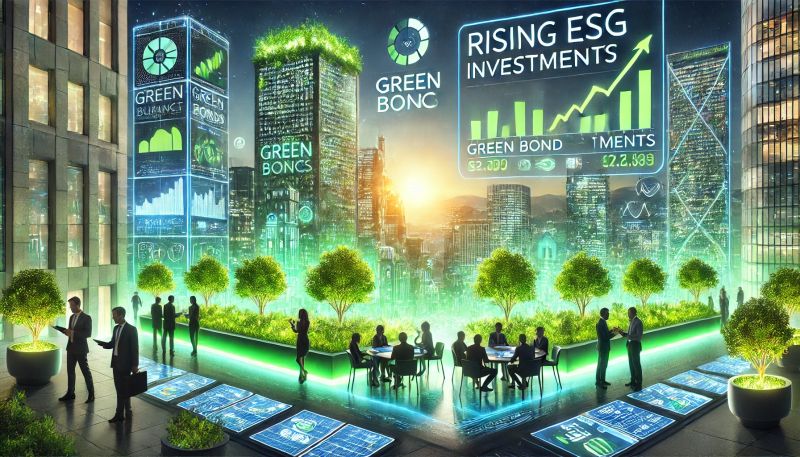
💰 GreenFinance is now mainstream, with ESG assets surpassing $50T in 2023, projected to hit $80T by 2030.
🚀 CapitalShiftAlert: Banks, VCs, and InstitutionalInvestors are prioritizing low-carbon businesses. Those who ignore GreenFinance risk obsolescence.
📊 WhyGreenFinance is Taking Over?
✔️ ESGOutperforms: Since 2015, ESG-aligned companies have outperformed markets by 30% (HarvardBusinessReview).
✔️ InvestorShift: ESGFunds saw #$650B inflows in 2023, while traditional funds saw outflows (Morningstar).
✔️ RegulationsTighten: EU & SEC climate disclosure rules mandate carbon reporting, forcing companies to prove sustainability.
✔️ GreenBondsSurge: #$1.5T issued in 2023, funding renewables, transport, and smartcities.
✔️ RiskAndProfitability: Banks raise borrowing costs for polluters, offering low rates to green firms.
🏦 Who’sLeading the GreenFinanceMovement?
✔️ Banks & AssetManagers: BlackRock, GoldmanSachs, JPMorgan—trillions in climate portfolios.
✔️ VentureCapital & PrivateEquity: ClimateTech funding up 210% in 3 years—battery storage, carbon capture.
✔️ SovereignGreenFunds: Norway, Singapore, UAE shifting billions from oil to renewables.
✔️ CorporateGiants: Apple, Microsoft, Tesla issue multi-billion-dollar GreenBonds.
✔️ CarbonMarketsExploding: VoluntaryCarbonMarket set to grow 15X by 2030.
💡 HowBusinessesCanLeverage GreenFinance?
✔️ IssueGreenBonds → Secure low-cost funding for sustainability projects.
✔️ AlignWithESGCriteria → Attract institutional investors & capital.
✔️ TradeCarbonCredits → Monetize emission reductions.
✔️ LeverageImpactInvesting → Tap into VCs, sovereign funds & ESG-focused investors.
✔️ AdoptSmartFinanceTools → Use AI & blockchain for transparent sustainability tracking.
🔍 ComingUpNext: “The Rise of ClimateUnicorns – Where VCs Are Betting in 2025
💬 IsYourBusinessReady for the ClimateEconomy? Let’s discuss!
Originally published on LinkedIn on 2025-03-09 17:24:23: https://www.linkedin.com/feed/update/urn%3Ali%3AgroupPost%3A9500072-7304552646428823552

