🚗⚡ EV KnowledgeSeries – Global_Perspective
🔋 What is an EV?
🔹 Uses electric motors for propulsion, reducing fossil fuel dependency.
🔹 Lowers carbon footprint, improves energy efficiency.
🔌 Types of EVs
🔋 BEVs: Fully electric, no fuel. ⚡ Tesla Model 3, Nissan Leaf
🔋 HEVs: Fuel + electric motor, self-charging. 🚗 Toyota Prius, Honda City e:HEV
🔋 PHEVs: Can be externally charged + fuel engine. 🔌 BMW 330e, Mitsubishi Outlander PHEV
🔋 FCEVs: Hydrogen fuel cell-powered. 💧 Toyota Mirai, Hyundai Nexo
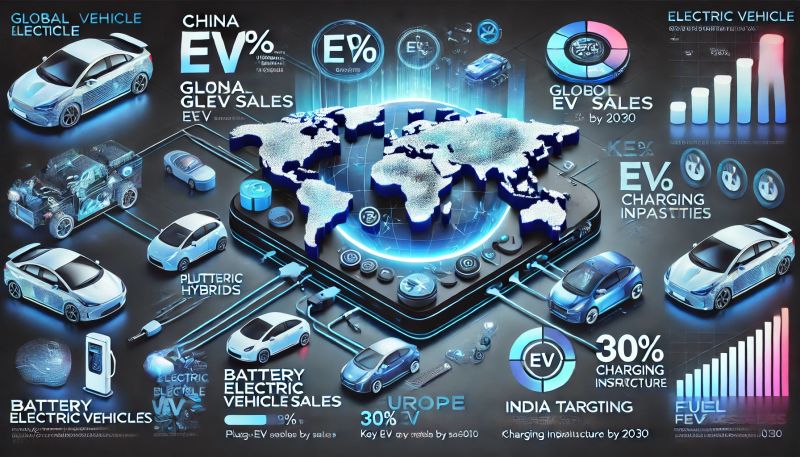
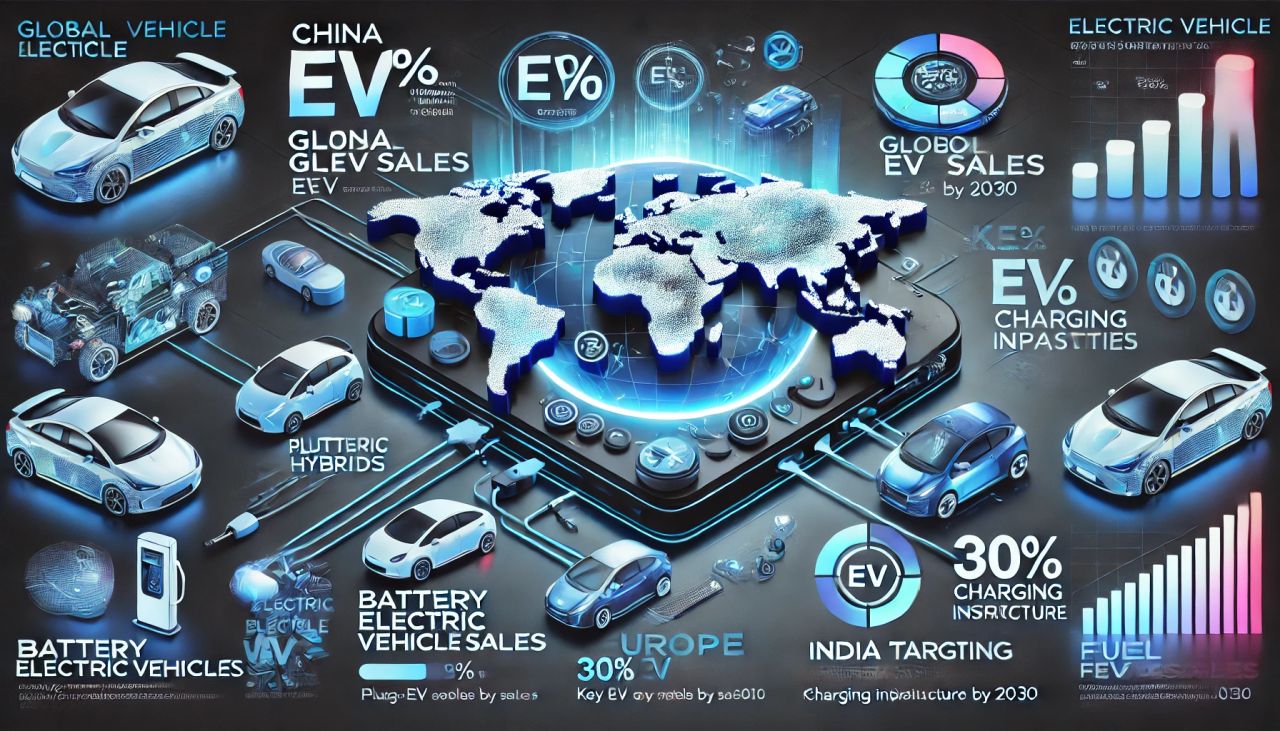
📈 Global EV Market Trends
🔹 #🌍 Market Share (2024)
🔋 China: 🇨🇳 60% global EV sales.
🔋 Europe: 🇪🇺 30%+ EV adoption, Norway 80% EV sales.
🔋 USA: 🇺🇸 Rapid Tesla-led expansion.
🔋 India: 🇮🇳 5% market share, 30% target by 2030.
🔹 #🚘 Top EV Brands (2024)
🔋 #🥇 BYD (China) – 3.0M units.
🔋 #🥈 Tesla (USA) – 2.5M units.
🔋 #🥉 Volkswagen (Germany) – 1.5M units.
🔋 #🏅 Hyundai-Kia (Korea) – 1.2M units.
🔋 #🎖 Tata Motors (India) – 200K units.
⚡ EV Charging Infrastructure
🔹 #🚀 Charging Types
🔋 AC Slow Charging: ⏳ 6-12 hours (home, public).
🔋 DC Fast Charging: ⚡ 30-60 mins (public stations).
🔋 Ultra-Fast Charging: 🚀 <15 mins (Tesla Superchargers).
🔹 #🌍 Global Charging Stats
🔋 China: 🇨🇳 5M+ chargers (largest).
🔋 Europe: 🇪🇺 2.5M+ chargers.
🔋 USA: 🇺🇸 800K+ chargers.
🔋 India: 🇮🇳 10K+ chargers, 1M target by 2030.
🏛 Government Policies & Incentives
🔹 #💰 EV Incentives (2024)
🔋 #🇺🇸 USA: $7,500 tax credit.
🔋 #🇨🇳 China: Subsidies + free EV license plates.
🔋 #🇪🇺 EU: CO₂ limits, ICE ban 2035.
🔋 #🇮🇳 India: FAME-II, 5% GST, state subsidies.
🔹 #🚫 Emission Regulations
🔋 EU: ICE ban by 2035.
🔋 California: 100% ZEVs by 2035.
🔋 China: 40% EV target by 2030.
🚧 EV Challenges & Solutions
🔹 #⚠️ Challenges
🔋 Battery Cost & Supply – Lithium shortage.
🔋 Charging Infra – Insufficient fast chargers.
🔋 Range Anxiety – Fear of running out of charge.
🔋 High Cost – EVs costlier than ICE cars.
🔋 Grid Strain – Rising power demand.
🔹 #💡 Solutions
🔋 #✅ Battery Innovation – Solid-state tech.
🔋 #✅ Faster Charging – Ultra-fast networks.
🔋 #✅ Policy Push – More subsidies & infra funding.
🔮 Future of EVs – What’s Next?
🔹 #📌 2030+ Predictions
🔋 #🔹 EVs = 40-50% of new sales.
🔋 #🔹 50% cheaper batteries.
🔋 #🔹 Hydrogen FCEVs for trucking.
🔋 #🔹 V2G tech: EVs power grids.
🔋 #🔹 Solar-powered EVs.
🚀 TheEVRevolutionIsNow SustainableMobility TheFutureIsElectric
Originally published on LinkedIn on 2025-03-10 13:29:07: https://www.linkedin.com/feed/update/urn%3Ali%3Ashare%3A7304855827301961729
KnowledgeSeries: The Future of CarbonCredits – A USD250B Market by 2050
The carboncredit market is no longer a side conversation—it’s becoming a mainstream financial instrument. With projections hitting #$250B by 2050, businesses and investors must pay attention.
Why? Because companies that integrate NetZero strategies today will gain a competitive edge, while those that don’t will face higher costs, regulatory risks, and shrinking investor confidence.
🌎 The Carbon Credit Boom: Why It’s a Business Imperative
✔️ The voluntary carbon market is set to grow 15X by 2030, reaching #$10B–$40B. (McKinsey)
✔️ Investments in carbon credits hit #$1.7B in 2023, up 50% YoY. (BloombergNEF)
✔️ 6,000+ global companies have set Science-Based Targets (SBTi), driving demand for verified carbon offsets.
✔️ Indonesia, Brazil, and Kenya are integrating carbon markets into their economies, generating revenue from forests, renewable energy, and carbon capture projects.
✔️ Article 6 of the ParisAgreement is enabling international carbon credit trading, boosting market credibility.
🚀 What does this mean for businesses?
✔️ A carbon credit strategy is no longer optional—it’s a business necessity.
✔️ Companies without a decarbonization plan will face higher compliance costs.
✔️ Investors are prioritizing NetZero leaders, making carbon credits a key ESG performance driver.
📊 Who’s Leading the Carbon Credit Race?
✔️ Big Tech & Carbon Capture:
Meta, Microsoft, and Google are securing multi-million-dollar deals in Direct Air Capture (DAC) to future-proof their carbon strategies.
✔️ Financial Institutions Going Green:
BlackRock, JP Morgan, and Goldman Sachs are launching climate-focused funds, treating carbon credits as an emerging asset class.
✔️ Corporate Adoption Soaring:
40%+ of Fortune500 companies are embedding carbon offsets into their business models.
✔️ Government-Led Action:
The EU, Singapore, and Japan are developing regulated carbon exchanges to ensure transparency & standardization.
🌱 What to Expect in 2025 & Beyond?
✔️ Stricter Regulations → Carbon credit verification will be tighter, reducing low-quality offsets & greenwashing risks.
✔️ Rising Prices → As demand outstrips supply, carbon credit prices could triple by 2030, making early adoption a smart financial move.
✔️ Emerging Markets in Play → Africa, Southeast Asia, and Latin America will dominate nature-based carbon solutions (reforestation, soil carbon, etc.).
✔️ Carbon as a Tradable Asset → Institutional investors are pushing for liquid carbon credit markets, making carbon a financialized commodity.
🔍 ComingUpNext: “The Business Case for Carbon Credits – Risks, Rewards & Strategy
Originally published on LinkedIn on 2025-03-08 07:02:05: https://www.linkedin.com/feed/update/urn%3Ali%3AgroupPost%3A82951-7304033651044839424
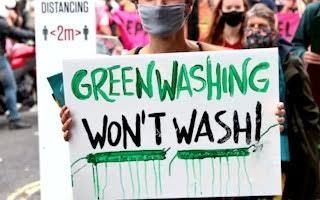
🚨 BigBrands, BIGGERFines: The Recycling Greenwashing Scandal Exposed! ♻💰
We’ve been told recycling is the answer to plastic waste. But what if the system itself is built on fraud and deception? BigBrands are now facing BIGFINES for misleading consumers about recyclability. Here’s how the deception unfolded over the years:
📅 TIMELINE OF GREENWASHING IN RECYCLING
🔹 YR1990s – The Recycling Illusion Begins
📌 Plastic industry documents reveal that producers knew recycling wouldn’t work on a large scale—but they marketed it as the solution to keep plastic production high. (Source)
🔹 YR2000s – Growth of the ‘Recyclable’ Label
📌 Brands like CocaCola, Nestlé, and Unilever start aggressively using recyclable labels, despite knowing that most plastic isn’t actually recycled due to contamination and lack of facilities. (Source)
🔹 YR2018 – China Bans Plastic Waste Imports
📌 China’s NationalSword policy ends global reliance on cheap recycling, exposing the broken system. The US and EU struggle to process their own plastic waste.
🔹 YR2022 – Keurig Faces Greenwashing Lawsuit
📌 KeurigDrPepper pays #$3M in Canada and $1.5M in the US for falsely claiming its K-Cups were recyclable, despite most recycling centers rejecting them. (Source)
🔹 YR2023 – EU Cracks Down on Greenwashing
📌 The EU introduces legislation requiring brands to prove their sustainability claims or face heavy fines.
🔹 YR2024 – ExxonMobil Sued for Recycling Lies
📌 California sues ExxonMobil, accusing them of knowingly misleading the public about plastic recycling.
🔹 YR2025 & Beyond – The Future of Greenwashing Accountability?
📌 Global brands will face stricter regulations and fines in the billions for misleading sustainability claims. Will it be enough to stop greenwashing?
🚨 THE REALITY CHECK: Only 5% of Plastic is Actually Recycled
📌 Despite all the marketing, 95% of plastic waste still ends up in landfills, oceans, or incinerators. We’re not recycling our way out of this crisis. (Source)
💡 The Takeaway: It’s time for big brands to face bigger consequences for deceptive sustainability claims. Recycling is NOT the solution—reducing plastic production is.
📢 What’s Next? Should governments ban false recycling claims? Should companies pay for end-to-end plastic responsibility? Let’s talk below! 👇
Originally published on LinkedIn on 2025-02-26 16:11:56: https://www.linkedin.com/feed/update/urn%3Ali%3AgroupPost%3A82951-7300548149285117954
Sustainability = ProfitMaximization
The most profitable companies of 2024 are proving one thing: Sustainability isn’t a cost—it’s an investment in future profits.
Here’s how the Top10 ProfitLeaders are turning green into gold:
1️⃣ SaudiAramco ($120.7B, Energy) – Started: 2021 | Net-Zero by 2050 | Invested $1.5B in clean tech. Focus: Carbon capture & hydrogen expansion.
2️⃣ Apple ($97B, Tech) – Started: 2007 | Net-Zero by 2030 (supply chain) | Issued $4.7B in green bonds. Focus: 100% recycled materials & carbon-neutral supply chain.
3️⃣ BerkshireHathaway ($96.2B, Financials) – Started: 2000s (via utilities) | No corporate net-zero target, but $30B+ invested in renewables. Focus: Largest wind energy investor in the US.
4️⃣ Google ($73.8B, Tech) – Started: 2007 | Net-Zero by 2030 (carbon-free energy) | Invested $3.5B in renewables. Focus: AI-powered energy efficiency & nuclear-backed data centers.
5️⃣ Microsoft ($72.4B, Tech) – Started: 2012 | Carbon Negative by 2030 | Launched $1B Climate Innovation Fund. Focus: Nuclear-powered data centers & carbon removal offsets.
6️⃣ ICBC ($51.4B, Financials) – Started: 2015 | Net-Zero by 2060 (China-aligned) | Largest green loan issuer globally. Focus: Financing renewables over coal expansion.
7️⃣ JPMorganChase ($49.6B, Financials) – Started: 2020 | Net-Zero by 2050 (portfolio-wide) | Committed $2.5T to sustainable projects. Focus: Phasing out fossil fuel lending.
8️⃣ ChinaConstructionBank ($47B, Financials) – Started: 2016 | Net-Zero by 2060 | Largest solar & wind financier in Asia. Focus: Cutting coal financing.
9️⃣ Meta ($39.1B, Tech) – Started: 2011 | Net-Zero by 2030 (value chain) | Invested $1B in sustainable data centers. Focus: 100% renewable operations since 2020.
🔟 AgriBankofChina ($38B, Financials) – Started: 2018 | Net-Zero by 2060 | Deployed $240B+ in green finance. Focus: Driving sustainable rural and agricultural tech investments.
Verdict: Sustainability = Profit
💰 Big Tech is using AI-driven energy savings to cut costs and scale.
💰 Finance giants are shifting capital into ESG and green bonds to hedge risk.
💰 Energy leaders are hedging fossil fuel decline with renewables.
These companies aren’t going green for charity—they’re doing it because sustainability is the most profitable strategy for the future.
Originally published on LinkedIn on 2025-02-14 17:14:01: https://www.linkedin.com/feed/update/urn%3Ali%3AgroupPost%3A2474261-7296215118588108801
What_You_Havenot_Heard_About_the_New_Income_Tax_Bill 2025 💼💰
While headlines have focused on new tax slabs and simplified tax laws, there are hidden provisions in the Income Tax Bill 2025 that could quietly reshape how individuals and businesses manage their taxes. Here’s what hasn’t made the news yet—but should be on your radar.
🔎 What’s New & What You Haven’t Heard Yet
📌 NRIs Now Have a Tax Wake-Up Call → If you earn over #₹15 lakh ($18,000) in India, you’re now classified as a tax resident. This means taxation on salary, property income, capital gains, and dividends from Indian sources. But foreign earnings? They remain outside India’s tax net for now.
📌 The Unspoken Impact on Gig Workers & Freelancers → With the rise of digital taxation and AI-driven audits, freelancers, content creators, and independent consultants who previously operated in a tax grey area may now be pulled into the formal tax system.
📌 Your Digital Footprint is Being Watched → The bill lays the foundation for AI-driven tax compliance tracking. Expect automated scrutiny of large transactions, crypto earnings, and foreign remittances linked to India.
📌 No Clear Carbon Tax Yet—But Watch This Space → Sustainability is a global priority, but this bill doesn’t yet introduce green tax incentives or penalties for high-emission businesses. However, future amendments may align India’s tax policies with ESG (Environmental, Social, and Governance) goals.
📌 Real Estate May No Longer Be a Safe Tax Haven for NRIs → With stricter capital gains taxation, NRIs who buy and sell Indian property may face higher tax liabilities, especially if they don’t reinvest in eligible tax-saving assets.
📌 More Tax Scrutiny for High-Income Earners → If you fall in the #₹20 lakh+ ($24,000+) bracket, tax authorities may now flag large transactions and offshore holdings, ensuring better compliance without manual intervention.
📉 What Should You Do Next?
✅ NRIs: Review your income sources from India and DTAA agreements in your country to avoid double taxation.
✅ Freelancers & Gig Workers: Ensure your earnings are properly declared to avoid potential penalties.
✅ Investors: Keep an eye on potential capital gains tax reforms affecting stocks, crypto, and real estate.
✅ Businesses: Start preparing for digital compliance requirements that could change audit processes.
💡 “The real impact of tax reform isn’t in what’s obvious—it’s in what changes behind the scenes.
💬 What are your thoughts? Have we missed an important tax change that will impact professionals and businesses? Let’s discuss!

Originally published on LinkedIn on 2025-02-13 11:43:42: https://www.linkedin.com/feed/update/urn%3Ali%3Ashare%3A7295769602515431426
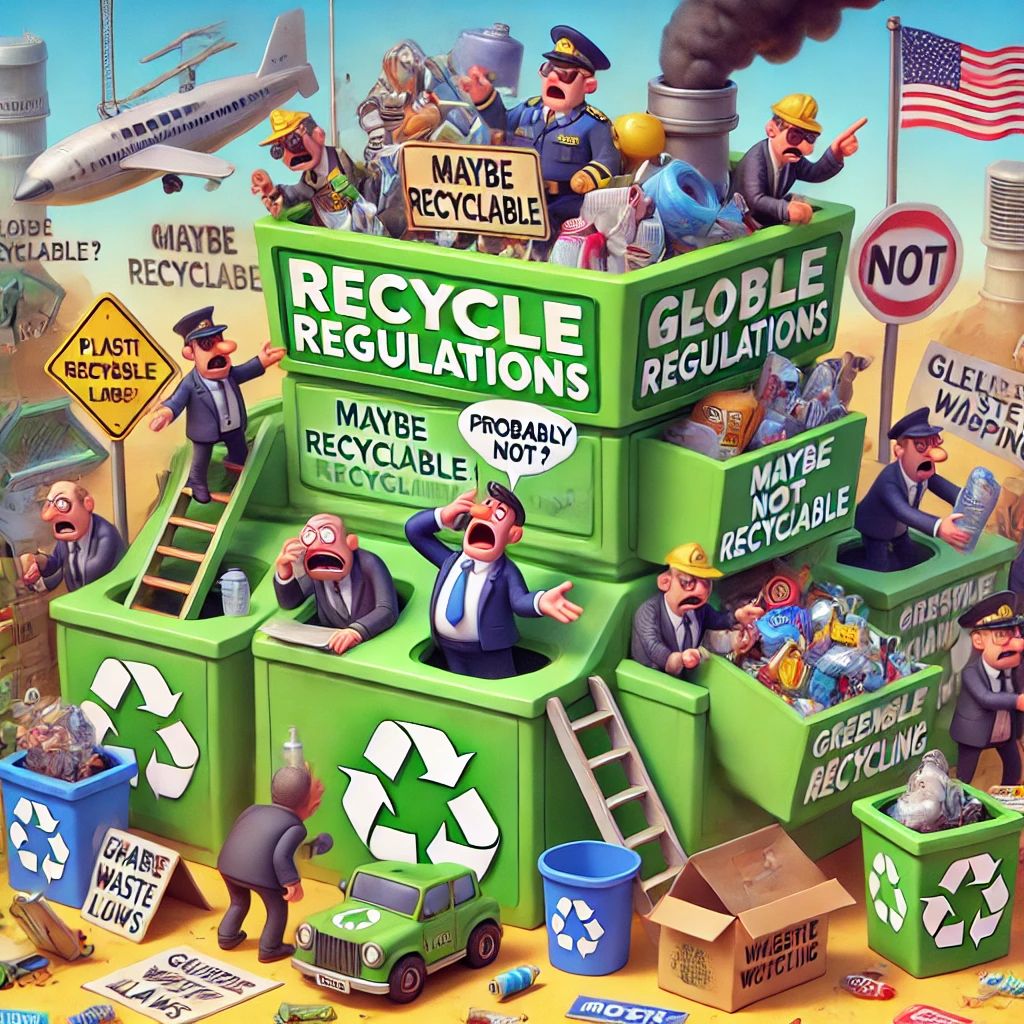
Recycle_Regulations: The New Gold Standard or a Global Mess?” ♻️🌍📜
Recycling isn’t just about throwing plastic into the right bin—it’s becoming a highly regulated industry with economic, environmental, and political implications. But are these recycle_regulations actually working, or are they just creating bureaucratic_chaos? Let’s break it down data-first.
📜 1. The Global Recycling Rulebook is Expanding
✅ Over 190 countries signed the Basel Convention, restricting plastic waste exports. (Source: UN, 2023)
✅ EU’s Circular Economy Package mandates 65% recycling targets by 2035. (Source: EU Commission, 2024)
✅ US States Are Taking the Lead: California’s SB 54 law requires 30% of plastic to be recyclable by 2028. (Source: CalRecycle, 2024)
🚨 The Problem? Many rules lack enforcement, and illegal waste dumping is still a #$10 billion global industry. (Source: Interpol, 2023)
⚖️ 2. Who’s Paying? The Battle Over EPR (Extended Producer Responsibility)
✅ Canada, EU & Japan require companies to fund recycling programs through EPR laws.
✅ India’s EPR Rules now hold businesses responsible for plastic recovery quotas. (Source: CPCB, 2024)
🚨 The Problem? Many companies shift costs to consumers, raising product prices.
🏆 Winner: Governments with strict accountability like Germany & South Korea.
❌ Loser: Developing nations drowning in imported plastic waste.
🛑 3. Greenwashing vs. Real Impact
✅ France bans ‘Recyclable’ labels unless companies prove 100% recyclability. (Source: French Gov, 2024)
✅ EU’s new Digital Product Passport tracks materials from production to disposal. (Source: EU Commission, 2024)
🚨 The Problem? 60% of ‘recyclable’ plastic isn’t actually recycled due to lack of infrastructure. (Source: Greenpeace, 2023)
🏆 Winner: Countries mandating transparency & product lifecycle tracking.
❌ Loser: Brands using misleading recycling claims.
🏗️ 4. The Future of Recycling Laws
📈 AI & Robotics to improve sorting efficiency & reduce contamination.
♻️ Chemical Recycling is gaining traction but faces cost & emissions concerns.
🚀 Global Agreements like the UN Plastics Treaty (2025) could reshape waste management worldwide.
🏆 Final Verdict: Recycling regulations are evolving, but enforcement is the real battle.
🏆 KeyTakeaway
Recycling isn’t just about being green—it’s about accountability. The future will belong to nations & businesses that get it right while others struggle with waste crises & regulatory chaos.
👉 Is your country leading or lagging in the recycling revolution?
RecycleRegulations CircularEconomy GreenLaws Sustainability PlasticCrisis NetZero
Originally published on LinkedIn on 2025-01-30 18:34:51: https://www.linkedin.com/feed/update/urn%3Ali%3AgroupPost%3A100646-7290799643045646336
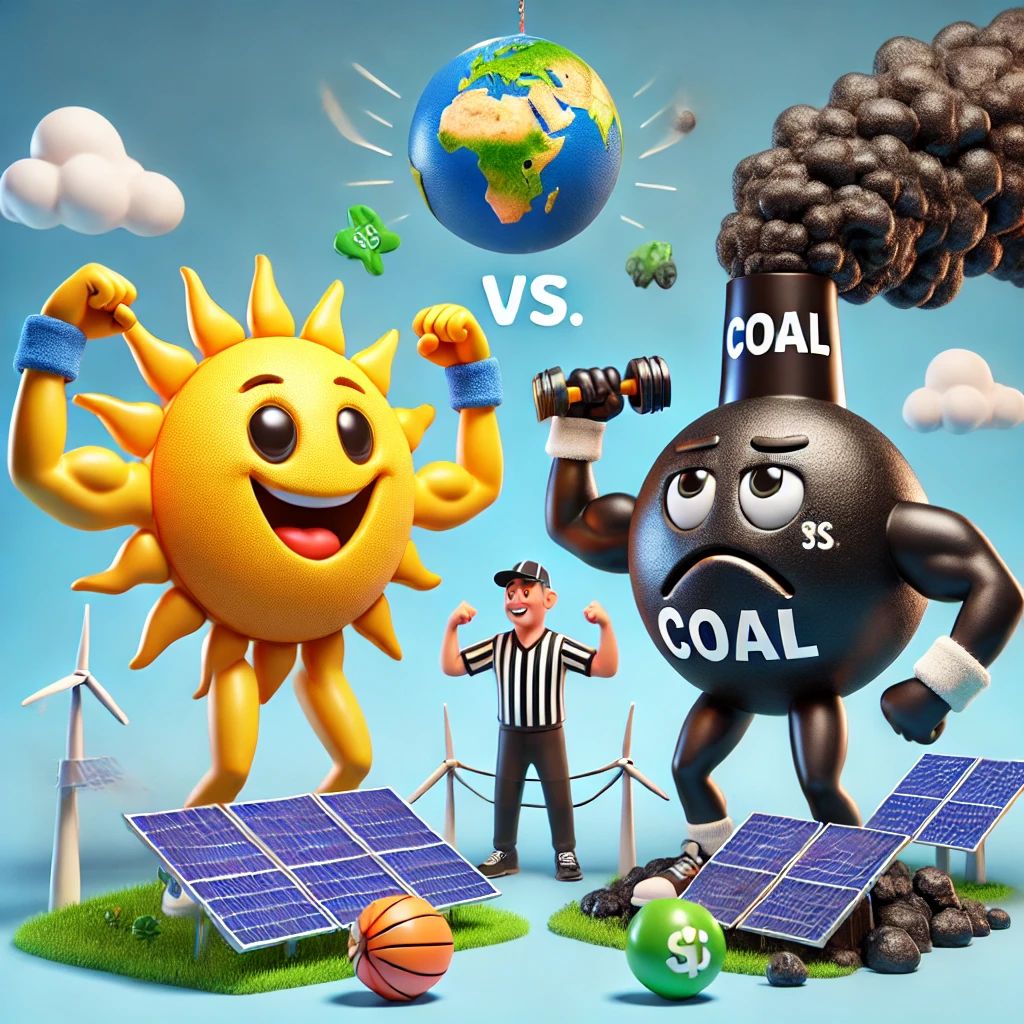
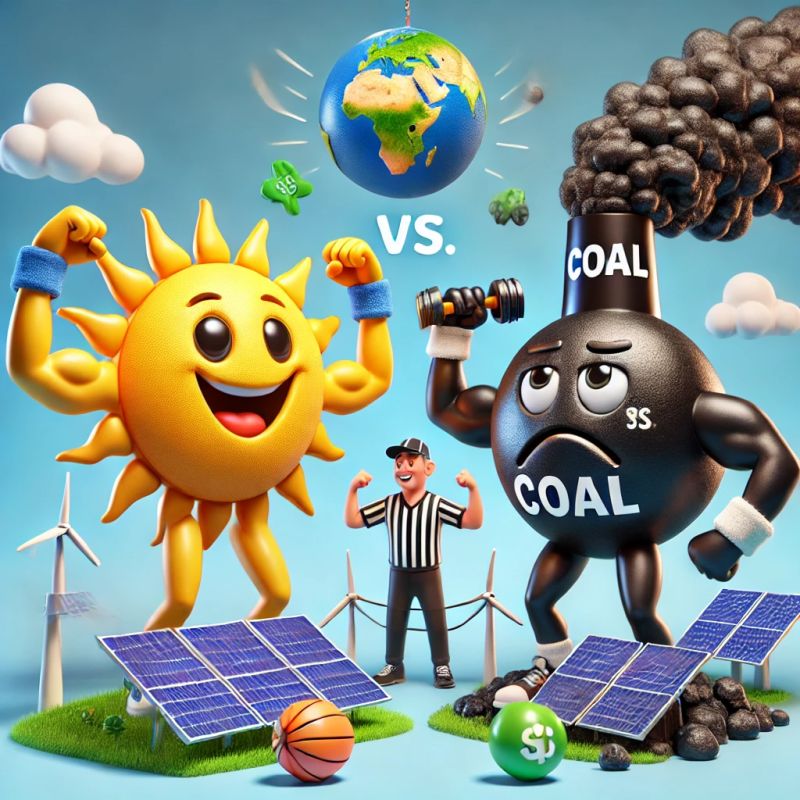
Solar vs. Coal: The USD10_Trillion Energy Disruption We Can’t Ignore” ☀️⚡🔥
Solar is cheaper, cleaner, and scaling fast, but can it fully replace coal? Here’s a data-driven breakdown of efficiency, cost, impact, and future trends.
🔍 Efficiency & Reliability
☀️ Solar – 15-22% efficiency, drops 80-90% at night. (Source: NREL, 2023)
🔥 Coal – 35-45% efficiency, generates 24/7 power. (Source: IEA, 2023)
🏆 Winner: Coal (for base-load power), Solar (for clean production).
💰 Cost & Scalability
☀️ Solar – #$25-$50 per MWh, 89% price drop since 2010. (Source: Lazard, 2023)
🔥 Coal – #$65-$150 per MWh, rising due to fuel costs & carbon taxes. (Source: IEA, 2023)
🏆 Winner: Solar (cheaper & getting cheaper).
🌍 Environmental Impact
☀️ Solar – Zero emissions, but 78M tons of solar waste by 2050. (Source: IRENA, 2023)
🔥 Coal – 820g CO₂ per kWh, highest among energy sources. (Source: IPCC, 2023)
🏆 Winner: Solar (cleaner, but needs better recycling).
🔋 Future Trends
✅ Solar Prices Falling – Expected 50% cheaper than coal by 2030. (Source: BloombergNEF, 2024)
✅ Coal Declining – 40% of coal plants to shut by 2040. (Source: IEA, 2023)
✅ Battery Breakthroughs – Solving solar’s intermittency problem.
🏆 Final Verdict: Solar ✅ (Cleaner, scalable, and cost-effective, but storage & recycling must improve).
KeyTakeaway
Solar is already outcompeting coal, but its future depends on energy storage & recycling innovations. The transition is happening—the only question is how fast.
👉 Will solar dominate, or does coal still have a future?
SolarVsCoal CleanEnergy Sustainability EnergyEfficiency FutureOfEnergy
Originally published on LinkedIn on 2025-01-28 11:16:10: https://www.linkedin.com/feed/update/urn%3Ali%3AgroupPost%3A10334500-7289964467918983170
🚨 CorporateGovernance The Lodha Brothers’ Brand Dispute: A Case of Legacy, Law, and Leadership
🔍 Overview
The high-profile legal battle between Abhishek Lodha (Macrotech Developers Ltd.) and Abhinandan Lodha (House of Abhinandan Lodha) over the “Lodha” brand is more than a family feud—it’s a masterclass in governance, brand strategy, and crisis management.
With over ₹1,700 crore invested in marketing and ₹91,000 crore in revenues attributed to the “Lodha” brand (FY14–FY24), the stakes are sky-high. At the heart of the dispute lies a YR2017 family settlement and differing interpretations of rights to the iconic name.
⚡ Why It Matters
Brand Equity: A four-decade legacy risks dilution.
Reputation: Public disputes among business leaders erode stakeholder confidence.
Financial Impact: Rebranding, legal costs, and operational distractions loom large.
📈 Key Lessons
1️⃣ Brand Governance: Clear ownership rights and robust agreements are non-negotiable.
2️⃣ Conflict Resolution: Mediation, not litigation, protects legacy and relationships.
3️⃣ Crisis Communication: Transparent messaging is essential to maintain trust.
4️⃣ Future-Proof Agreements: Regular reviews of family/business settlements can prevent ambiguity.
🎯 What’s Next?
The Bombay High Court will hear the case on January 21, 2025. The decision could reshape how family businesses approach brand governance and conflict management.
💡 Takeaway
For leaders and boards, this dispute serves as a wake-up call: protecting legacy requires more than just great business acumen—it demands foresight, clarity, and a proactive approach to governance.
What’s your perspective on managing brand rights in family businesses? Share your thoughts below!
https://lnkd.in/diXWty7C
Originally published on LinkedIn on 2025-01-21 13:13:50: https://www.linkedin.com/feed/update/urn%3Ali%3AgroupPost%3A2153908-7287457364532695040
🚨 CorporateGovernance The Lodha Brothers’ Brand Dispute: A Case of Legacy, Law, and Leadership
🔍 Overview
The high-profile legal battle between Abhishek Lodha (Macrotech Developers Ltd.) and Abhinandan Lodha (House of Abhinandan Lodha) over the “Lodha” brand is more than a family feud—it’s a masterclass in governance, brand strategy, and crisis management.
With over ₹1,700 crore invested in marketing and ₹91,000 crore in revenues attributed to the “Lodha” brand (FY14–FY24), the stakes are sky-high. At the heart of the dispute lies a YR2017 family settlement and differing interpretations of rights to the iconic name.
⚡ Why It Matters
Brand Equity: A four-decade legacy risks dilution.
Reputation: Public disputes among business leaders erode stakeholder confidence.
Financial Impact: Rebranding, legal costs, and operational distractions loom large.
📈 Key Lessons
1️⃣ Brand Governance: Clear ownership rights and robust agreements are non-negotiable.
2️⃣ Conflict Resolution: Mediation, not litigation, protects legacy and relationships.
3️⃣ Crisis Communication: Transparent messaging is essential to maintain trust.
4️⃣ Future-Proof Agreements: Regular reviews of family/business settlements can prevent ambiguity.
🎯 What’s Next?
The Bombay High Court will hear the case on January 21, 2025. The decision could reshape how family businesses approach brand governance and conflict management.
💡 Takeaway
For leaders and boards, this dispute serves as a wake-up call: protecting legacy requires more than just great business acumen—it demands foresight, clarity, and a proactive approach to governance.
What’s your perspective on managing brand rights in family businesses? Share your thoughts below! 👇
Originally published on LinkedIn on 2025-01-21 13:13:22: https://www.linkedin.com/feed/update/urn%3Ali%3AgroupPost%3A2205762-7287457247146733569
NamasteGreenIndia
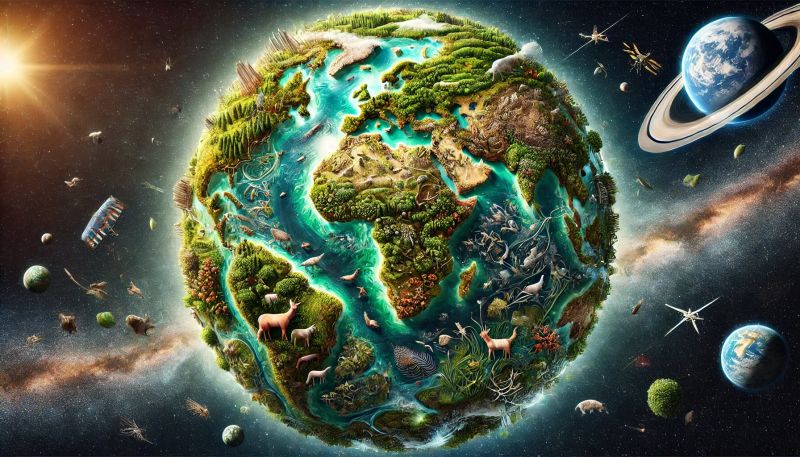
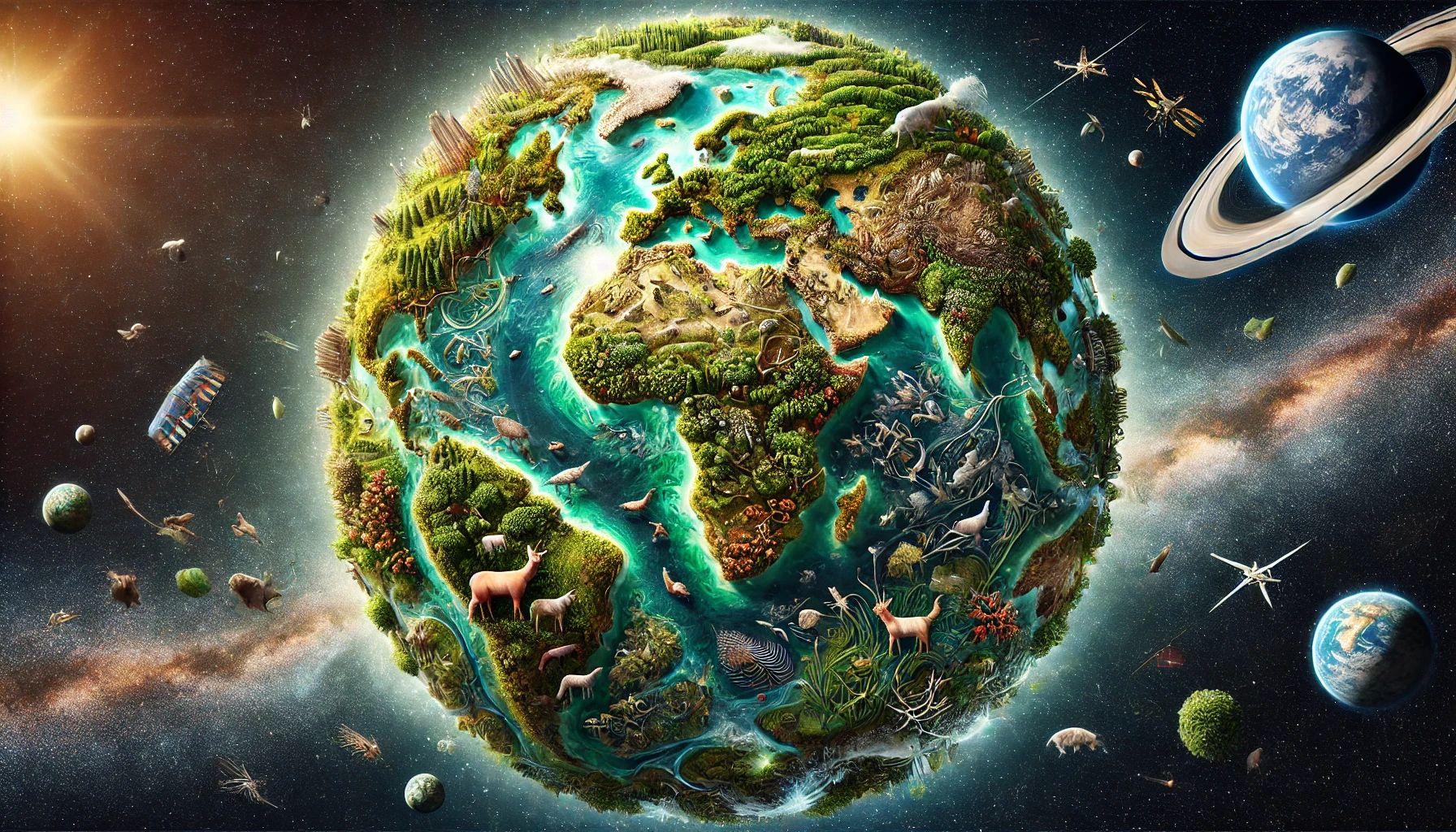
🌍 Biodiversity Credits: Financing a Sustainable Future 🌿
An innovative tool to bridge the $700 billion annual funding gap for global nature conservation.
🌲 Supporting Ecosystems:
The U.S. faces the risk of losing 40% of its ecosystems, while the EU protects 18% of its land through the Natura 2000 network. China safeguards 20% of its rich habitats, home to over 31,000 plant species. India, with its Western Ghats and Himalayan biodiversity hotspots, preserves habitats critical for sustaining life.
💊 Health Benefits:
Globally, 75% of cancer drugs originate from nature. The U.S., EU, China, and India rely on their diverse ecosystems to fuel traditional and modern medicine industries that save lives and drive innovation.
🌾 Food Security:
US agriculture: Relies on biodiversity for $100 billion in productivity.
EU initiatives: Preserve seed diversity for resilient food systems.
China: The world’s largest agricultural producer depends on diverse ecosystems.
India: Home to 455 crop species, ensuring food security for 1.4 billion people.
💰 Economic Value:
US ecosystems contribute $328 billion annually to GDP.
EU biodiversity fuels tourism and agriculture, driving billions in revenue.
China benefits from biodiversity in its $12 trillion economy.
India’s ecosystems generate services worth $1 trillion annually, supporting millions.
👩🌾 Supporting Livelihoods:
Natural ecosystems sustain billions:
US forests: Provide jobs to nearly 1 million people.
EU biodiversity: Empowers industries like agriculture and fisheries.
China’s resources: Support 300+ million rural residents.
India’s ecosystems: Sustain 275 million rural and tribal livelihoods.
🌟 Be Part of the Solution!
Investing in biodiversity credits is more than an environmental act; it’s a commitment to economic growth, health, and future resilience. Let’s bridge the gap and create a sustainable legacy.
💡 “Nature’s diversity isn’t just a resource—it’s our lifeline.
Originally published on LinkedIn on 2025-01-06 16:18:10: https://www.linkedin.com/feed/update/urn%3Ali%3Ashare%3A7282067935563513856

