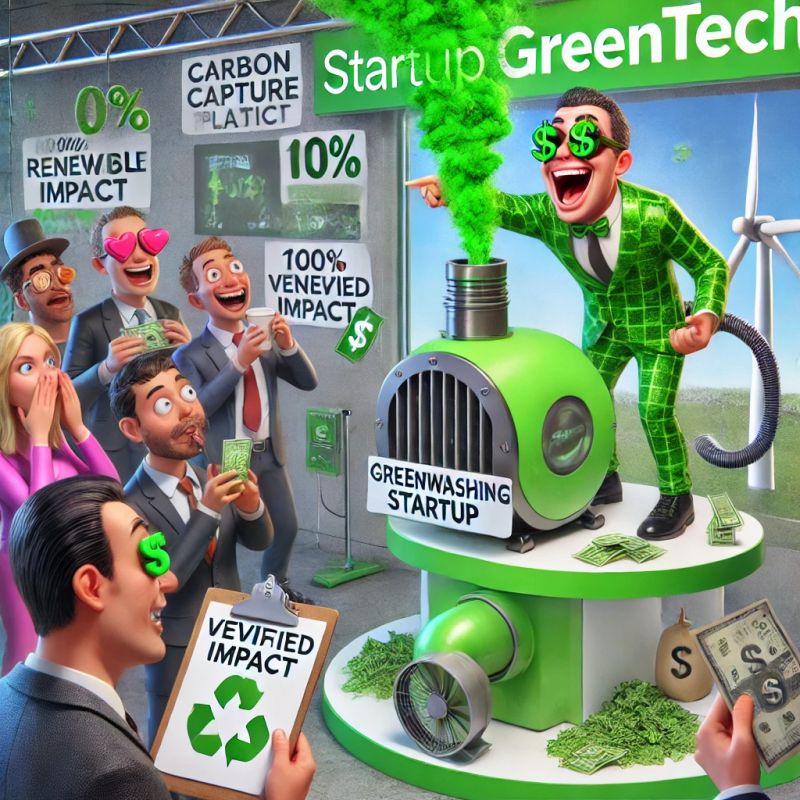
🌿💸 “The Billion_Dollar_Carbon_Mirage: Are Climate Startups the New Face of Greenwashing?
With venture capital flooding into climate tech, the world is betting big on startups promising net-zero innovations. But how many of these so-called ‘climate disruptors’ are truly sustainable, and how many are just cashing in on the green gold rush?
📊 The_Climate_Startup_Boom – Hype vs. Reality
✅ VC Money is Pouring In:
✔️ $60B invested in climate startups in 2024, a record high. (PitchBook, 2025)
✔️ Green energy & carbon capture saw a 310% funding surge in 3 years. (WEF, 2025)
🚨 Reality Check: Funding doesn’t equal impact—many startups prioritize valuations over verified sustainability.
🔍 How Climate Startups Greenwash Investors & Consumers
🛑 1. Carbon_Capture Scams: Startups claiming to remove CO₂ from air but with no independent verification.
🛑 2. ‘Green_AI’ That Isn’t Green: AI-powered sustainability platforms that run on carbon-heavy data centers.
🛑 3. Fake_Circular_Economy Models: Brands advertising “100% recycled” but only 10% of their product actually is.
🛑 4. Tree_Planting Offsets Without Proof: Companies raising billions on reforestation projects—but the land remains barren.
📌 Reality Check: Green startups can be just as guilty of false sustainability claims as big corporations.
⚠️ Biggest Climate Startup Greenwashing Scandals (2024)
❌ CarbonX: Raised $500M for direct air capture, but reports show 95% of emissions “captured” were never stored. (Forbes, 2024)
❌ EcoFuel: Claimed “cleanest biofuel” but emitted 2x more CO₂ than diesel. (Bloomberg, 2024)
❌ ReGen Plastics: Promised 100% ocean plastic recycling, but used only 8% in production. (Greenpeace, 2024)
📌 Reality Check: If climate startups mislead, are they solving the problem—or becoming it?
🏆 KeyTakeaway
The Climate Startup Boom could be a game-changer if real innovation leads the way, should be held accountable through independent audits, but would be the next greenwashing scandal if hype replaces real action.
👉 Are climate startups the future or just another sustainability bubble? Let’s discuss! 👇
Originally published on LinkedIn on 2025-02-17 17:37:01: https://www.linkedin.com/feed/update/urn%3Ali%3AgroupPost%3A4385073-7297308068034363394
NamasteIndia “Optical Illusions”: COP29 Climate Finance Controversy
Developed nations pledged $300 billion annually by 2035, significantly short of the $1.3 trillion deemed necessary by experts and developing nations.
Criticism from the Global South
Insufficient Funding:
The pledged amount of $300 billion falls far below the required $1.3 trillion annually.
Experts and vulnerable nations argue this level of financing will not address urgent climate challenges.
Disproportionate Impacts:
Developing nations are the most affected by climate change despite contributing the least to global emissions.
Countries like India and Nigeria criticized the agreement for not recognizing their immediate needs.
Strong Reactions:
Chandni Raina, India’s negotiator, described the agreement as an “optical illusion.
Representatives of the Global South feel abandoned and betrayed by the Global North.
Challenges in Negotiations
Tensions Between North and South:
Prolonged discussions highlighted the deep divide in climate priorities.
Developing nations demanded more robust financial support to address historical inequities in emissions.
Reluctance from Developed Nations:
Wealthy countries hesitated to commit to higher amounts due to economic concerns and competing domestic priorities.
Implications of the COP29 Agreement
Impact on Climate Cooperation:
The perceived inadequacy of commitments undermines trust between the Global North and South.
Future collaboration under the Paris Agreement goals may be at risk.
Barriers to Mitigation and Adaptation:
Insufficient financial resources could delay critical initiatives in vulnerable regions.
Progress on combating climate change globally could be hindered.
Bridging the Gap:
Acknowledging the disparity between the pledged amount and actual needs is crucial.
Developed nations must reassess their commitments to foster global trust and equity.
Ensuring Accountability:
Mechanisms to monitor and enforce financial pledges should be strengthened.
Focus on transparent and equitable distribution of climate funds.
The “optical illusion” of climate finance at COP29 emphasizes the need for tangible, equitable solutions to address the climate crisis and build trust across global communities.
The Great Escape from Baku: Global North abandons South, denies adequate climate finance at COP29 https://lnkd.in/dp_H8ry9
Originally published on LinkedIn on 2024-11-25 08:44:07: https://www.linkedin.com/feed/update/urn%3Ali%3Ashare%3A7266733380271046657
Namaste GreenWorld? Can we call this GreenWashing?
The Alliance to End Plastic Waste (AEPW).
AEPW Funding Overview
Pledged: $1.5 billion over five years.
Spent: $400 million by 2020, plus $368.8 million from external investors.
Key Initiatives: $500 million Circular Plastic Fund; $36 million for Indonesia’s plastic goals.
Challenges: Only 4,000 tonnes recycled (2019-2021), criticized for focusing on recycling over reducing production.
Despite significant funding, progress falls short of targets, drawing criticism.
1. Establishment:
Formed in 2019 by global plastic producers including ExxonMobil, Dow, Shell, TotalEnergies, ChevronPhillips, BASF, Procter & Gamble, Mitsubishi Chemical, and others.
2. Members and Reach:
Includes over 90 companies and partners from North America, Europe, Asia, the Middle East, and Africa, representing countries like USA, Germany, Japan, India, Saudi Arabia, and Singapore.
3. Original Goal:
Divert 15 million tonnes of plastic waste from the environment by 2023 by improving waste collection, recycling systems, and fostering a circular economy.
4. Progress and Achievements:
Reduced 120,000 tonnes of unmanaged plastic waste.
Valorized 130,000 tonnes of plastic into reusable materials.
Initiated over 50 projects globally to address plastic pollution.
5. Challenges:
The initial goal was abandoned in YR2023, termed “too ambitious.
Recycled only 4,000 tonnes between YR2019 and YR2021, significantly below the target.
6. Criticism:
Critics claim efforts focus more on promoting recycling than addressing overproduction, the root cause of plastic pollution.
Environmental groups argue the Alliance has failed to match its ambitious claims with measurable impact.
7. Key Regions of Focus:
The AEPW targets 100 high-risk cities, particularly in regions like South and Southeast Asia, where plastic pollution is most severe.
8. Outlook:
The Alliance continues to emphasize collaboration and systemic change but faces skepticism over its ability to drive substantial results amidst growing environmental scrutiny.
Originally published on LinkedIn on 2024-11-20 16:55:27: https://www.linkedin.com/feed/update/urn%3Ali%3Ashare%3A7265045087405920256
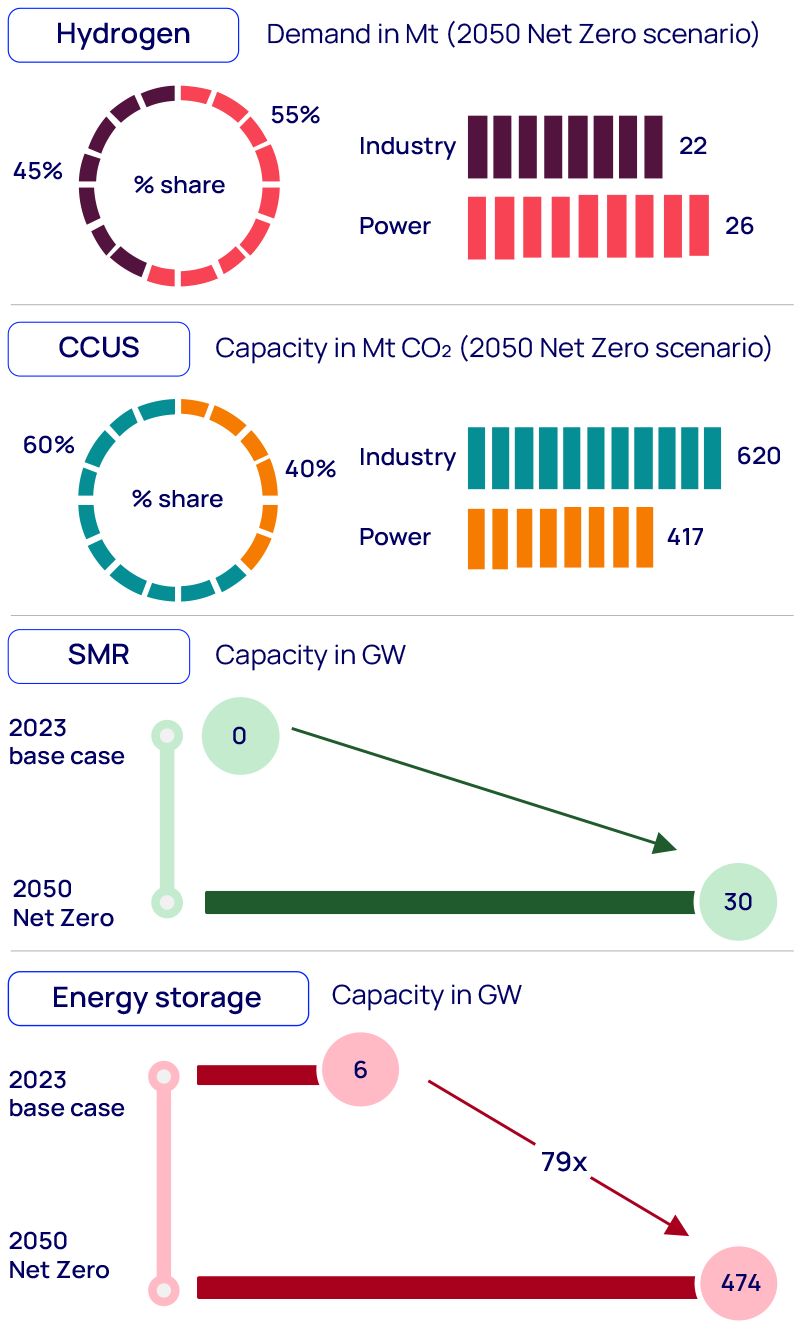
Namaste India pathway to net zero by 2070
1. Long-Term Low Greenhouse Gas Emission Development Strategies (LT-LEDS):
Submission to UNFCCC: In November 2022, India submitted its LT-LEDS to the United Nations Framework Convention on Climate Change (UNFCCC). This comprehensive document outlines the country’s pathway to net zero emissions.
Vision and Principles: LT-LEDS reaffirms India’s commitment to achieving net zero by 2070. It emphasizes principles of equity, climate justice, and the concept of Common but Differentiated Responsibilities and Respective Capabilities (CBDR-RC).
2. Seven Key Strategic Transitions:
Low Carbon Electricity Systems:
India aims to develop electricity systems that align with its economic growth while minimizing carbon emissions.
Investments in renewable energy sources (solar, wind, hydropower) and grid modernization are critical.
Efficient, Inclusive Transport:
The country is working toward an integrated, low-carbon transport system.
Initiatives include promoting electric vehicles, improving public transportation, and enhancing last-mile connectivity.
Urban Adaptation and Efficiency:
Sustainable urbanization is a priority.
Urban design, energy-efficient buildings, and green infrastructure play key roles.
Economy-Wide Decoupling:
India aims to reduce emissions while maintaining economic growth.
Decoupling economic development from carbon-intensive practices is essential.
CO2 Removal Solutions:
Research and deployment of carbon removal technologies (e.g., afforestation, direct air capture) are underway.
Enhancing Forest Cover:
Balancing socio-economic needs with ecological conservation.
Afforestation, reforestation, and sustainable forest management are emphasized.
Economic and Financial Aspects:
Transitioning to net zero requires innovative financing mechanisms and policy frameworks.
3. Afforestation and Green Credit Program:
**Compensatory Afforestation**:
Projects diverting forestland for non-forestry purposes must undertake compensatory afforestation.
This ensures a balance between development and environmental conservation.
Ek Ped Maa Ke Naam” Campaign:
Launched nationwide on World Environment Day 2024, this tree plantation campaign encourages citizens to participate actively.
Green Credit Program:
Encourages tree planting by individuals, organizations, and communities.
Generates green credits that contribute to India’s net-zero efforts.
4. ChallengesOpportunities:
Coal Dependence: India faces challenges due to heavy reliance on coal for energy.
Funding Constraints: Transitioning to net zero requires substantial investments.
Innovation and Collaboration: India seeks global partnerships and technological innovations to accelerate its net-zero drive.

Originally published on LinkedIn on 2024-08-04 14:56:29: https://www.linkedin.com/feed/update/urn%3Ali%3Ashare%3A7225877260304543744
NamasteGreenIndia
Gruner Renewable Energy has secured a whopping USD 60 million in funding to bolster its presence in the green energy sector.
Funding Amount ll: Gruner Renewable Energy received USD 60 million.
Expansion Plans: The company intends to establish new Compressed BioGas (CBG) plants across India.
Diverse Ventures: Gruner will strategically utilize the funds to venture into exciting new business verticals, including sustainable aviation fuel (SAF) and green hydrogen.
Founder’s Vision: Utkarsh Gupta, Founder & CEO of Gruner Renewable Energy, emphasized that this investment from like-minded partners is crucial for driving the transformation toward a circular economy and sustainable development.
Originally published on LinkedIn on 2024-07-29 15:50:01: https://www.linkedin.com/feed/update/urn%3Ali%3AgroupPost%3A131340-7223716408138829824
NamasteGreenIndia
Gruner Renewable Energy has secured a whopping USD 60 million in funding to bolster its presence in the green energy sector.
Funding Amount ll: Gruner Renewable Energy received USD 60 million.
Expansion Plans: The company intends to establish new Compressed BioGas (CBG) plants across India.
Diverse Ventures: Gruner will strategically utilize the funds to venture into exciting new business verticals, including sustainable aviation fuel (SAF) and green hydrogen.
Founder’s Vision: Utkarsh Gupta, Founder & CEO of Gruner Renewable Energy, emphasized that this investment from like-minded partners is crucial for driving the transformation toward a circular economy and sustainable development.
Originally published on LinkedIn on 2024-07-29 15:49:54: https://www.linkedin.com/feed/update/urn%3Ali%3Ashare%3A7223716376769695744

